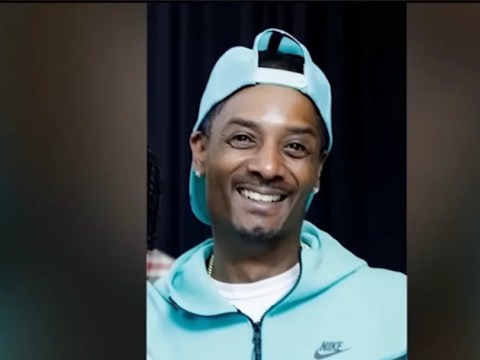
Chawn Jackson said her eldest son, who is graduating from Cal State University, Chico, in a few weeks, might not have gone to college if it weren’t for the support he received from Berkeley High School’s Bridge program, which supports students of color on a path to higher education.
“He kind of struggled because he didn’t know whether he was going to go to college or not,” Jackson said. “His grades were average, but the program turned his thoughts around and got his mind set on going.”
Jackson’s son is a first-generation college student, and she said his achievements have inspired his two younger siblings, who also participated in Bridge. Her middle child is studying engineering at UC Davis, and her youngest was accepted into Xavier University of Louisiana, a private historically Black college.
Bridge, which started at Berkeley High 15 years ago, is a four-year high school and college readiness program that offers students wraparound academic support, including help applying to college. This academic year, the program is serving 148 mostly first-generation African American and Latinx students across all four grade levels.
Participation requires a significant time investment on the part of students, including a summer program prior to freshman year, and after-school meetings and weekend study sessions in years following. According to BUSD, Bridge students spent between 150 and 250 additional hours on their education in program activities. Cohort teachers also invest a lot of time into the program, oftentimes supporting a group of more than 20 Bridge students in addition to their six regular class periods each day.
“It’s also a community,” Jackson said. “When the kids are in the Bridge program after school, they’re all there supporting each other and uplifting each other.”
Families are also very involved in the program, according to its founder and director, Jessie Luxford. Bridge coordinators contact parents at least 48 times a year, including for weekly updates on academic progress, two family meetings, and multiple texts sent for summer sessions and dual enrollment opportunities. Parents whose students earned D or F grades will be contacted by Bridge staff even more often about tutoring opportunities and other student supports.
Jackson appreciated the communication because it was sometimes difficult to track how all her children were doing in school while she worked full-time. She said Bridge was like having “a second pair of eyes on your student.”
Ursula Sanders, the parent of a Berkeley High senior in Bridge, agrees and said the support “was like having a second parent.”
Sanders said she had her hands full running a daycare business and caring for her elderly parents. During her son Nicholas’s first year at Berkeley High, his grandmother died unexpectedly of a heart attack. “I wasn’t as available to him during that time because I was grieving and then I started caregiving for my father, who has Alzheimer’s,” she said.
Nicholas said his grandmother’s death took an emotional toll, causing him to turn inward, and his grades slipped. The Bridge program helped him a lot during this time, he said.
“Just having that small group of friends in my Bridge cohort stopped me from completely isolating myself because isolation is not very good, especially for a high school student coming out of COVID,” Nicholas said.
In August, Nicholas will attend Southern University and A&M College in Louisiana where he plans to study either biology or economics. He said he’ll spend this summer in Berkeley, playing sports and working to save up for college.
Students who participate in Bridge show higher academic achievement
Data collected by program coordinators shows that Bridge is succeeding in getting low-income, first-generation students to college. Since its inception, the program has helped to graduate and send more than 300 low-income and first-generation students to 4-year institutions.
According to data presented at a recent Parent Advisory Committee, students in the Bridge program have higher attendance and lower rates of chronic absenteeism compared to the general BHS population. They also tend to be more prepared for college: In 2024, 110 Black students graduated from BUSD, but only 23 met the subject requirements to attend a UC or CSU school, also known A-G requirements. Fifteen of those students were in Bridge.
This year, most Bridge students had above a C average, with 62% of the cohort averaging above a B. Most juniors and seniors, and half of the sophomore students, took concurrent college credit courses. Of the 52 students graduating from the cohort this June, 96% were accepted to a 4-year college.
“Bridge is more than a college readiness program,” said Julie Sinai, who as the chief of staff of former Berkeley Mayor Tom Bates, helped bring the program to the attention of city leaders. “It helps kids thrive at Berkeley High and be ready for their next step. Both qualitative and quantitative data show kids feel more connected. They feel like they belong and they’re succeeding.”
Graduation rates tend to be high overall in BUSD. However, of the high school students graduating from Berkeley Unified in 2024, just over half met state standards for career or college readiness, according to recent data from the California Department of Education. Students needing the most support in these areas are unhoused and socioeconomically disadvantaged youth.
Bridge was created to narrow those gaps as part of 2020 Vision, an initiative created in 2008 to address academic achievement gaps between racial groups in Berkeley schools.
“We have kids with incredible uphill battles, challenges and real-life stressors,” Luxford said. “Our philosophy, as adults who care, we are going to step in and help direct and keep them on the right path.”
As staffing cuts loom, parents and students hope to keep the Bridge program whole
While the program’s track record has been consistently strong (barring some setbacks caused by the COVID-19 pandemic), funding for Bridge hasn’t been enough to meet the demand. According to program coordinators, 85 students had applied for one of the 25 spaces available in next year’s incoming 9th-grade Bridge cohort.
The program’s long waitlist is complicated by a budget deficit at BUSD. The district sent notices to several hundred staff members in March whose positions were identified for possible layoffs or reassignments. Ten of these were sent to middle and high school counselors, including intervention and academic counselors and program-specific roles in the Bridge program at Berkeley High. The notices are not a guarantee that any of the staff members who received them will lose their jobs; some notices have since been rescinded, and the district has said final notifications about layoffs will be made by May 15.
But concerns over the potential impact of budget cuts on Bridge — and federal threats to divest from educational programs advancing racial equity — have led counselors, students and parents to show up at recent school board meetings and urge leadership to protect the program’s funding.
“There’s always hard decisions to make, but I think when you look at homegrown programs like these, staffed by BUSD teachers and counselors, that have a proven track record — those are the programs that should be very last on the list to cut,” said Ty Alper, a law professor at UC Berkeley who previously served on the BUSD school board.
The school district currently pays for Bridge cohort teachers, a part-time counselor and part of the summer sessions. Luxford has written a grant to the city of Berkeley every four years since 2012 to receive additional funding to support mentors and tutors who work with students in-person and via Zoom (including on weekends, holidays and evenings), pay for college applications, fund university tours, and provide snacks for students.
“[Berkeley High] is a very large campus, and anyone can get lost, but I don’t feel like my child has gotten lost in the shuffle due to the Bridge program,” Sanders said. “They cater to Black and brown families, and it’s important to have a dynamic like this at campus to make sure that they don’t fall through the cracks.”
Jackson said her oldest son is interested in becoming a high school or community college counselor or working in the field of restorative justice. During his college years, when he was back in Berkeley for the summer, he would help out in the Bridge program, talking with students about his experiences and the importance of higher education.
“It’s important having another ally outside of a parent, because sometimes parents just kind of sound like, ‘Wah wah wah wah.’ But you have someone like Jessie who’s really advocating for you and telling you that you can do it,” Jackson said.
Former Bridge students have also invited cohorts to tour their colleges and share their experiences with younger students. Lidya Milikit, a freshman at Cal State University, San Jose, recently led a group of BHS students on a tour of her college.
“We found that our tour guides weren’t really invested, but when we get our Bridge alums to do it, they do such a phenomenal job,” said Jennifer Hammond, a Bridge counselor and cohort teacher. “They give really honest information and speak to that transitional experience of coming from high school to college and being the first in their families to do that.”
Milikit said keeping in touch with Bridge is about more than giving back — it’s also supporting herself. “Even now as a college student, I could always go to them for anything, whether it’s advice or a recommendation or to just talk,” she said. “They also care about your mental health and help you feel seen.”
Senior Bridge student Zamahra “Winta” Clark, who also serves as BUSD’s student school board representative, said she struggled in 8th grade and in her freshman year of high school at BHS after quarantining during the pandemic.
“I think I would have continued to fail most of my classes if it weren’t for having Bridge after school every day,” Clark said. “It’s strict, but with a lot of love.” She said the weekly text messages updating her parents about her grades kept her grounded.
Clark said the program also supported her in securing paid internships, joining student leadership, engaging in extracurriculars and taking rigorous courses in high school. Bridge also paid for 26 college applications. She hasn’t committed yet between studying political science at Cornell University or Howard University, another historically Black private institution.
“This program is an equity push,” Hammond said. “Students need extra counseling, extra services, extra time at school, extra teachers, extra case management, and extra services in order to be as successful as their more affluent peers.”
Related stories

BUSD layoffs: Families fear after-school cuts will further weaken understaffed program

BUSD pandemic recovery continues, but so do opportunity gaps

Achievement gap in Berkeley schools has long been among the nation’s very worst