Chattanooga’s rich Black history is steeped in the sounds of the blues and the scent of slow-smoked barbecue. The heritage of the city’s African-American community can be traced through its music, food and the institutions dedicated to preserving its cultural impact.
At the heart of this history is the Bessie Smith Cultural Center, which has spent decades honoring the stories of Chattanooga’s Black residents, particularly through the lens of blues music.
Elijah Cameron, the Director of Community Relations & Development at the Center, explains that the museum has been a cornerstone of cultural preservation since its founding in 1983.
“We’ve been playing a role in preserving and shaping the history of Black Chattanooga since that time,” Cameron says.
Much of that history took place on 9th Street — now known as Martin Luther King Boulevard, but once famously called “The Big 9.” During its heyday, the street was a bustling hub for Black entertainment, similar to Memphis’s Beale Street and Atlanta’s Auburn Avenue.
“Chattanooga was once a destination spot where people came from all over the South to party,” Cameron recalls. “The clubs were supposed to close at 3:00 [a.m.], and of course, we did close at 3:00. But then we’d clean the tables off, open back up at 4:00, and start partying all over again.”
“Blues and R&B were a part of what would take place on that street back in those days, up until the late ’90s,” Cameron says. “When people eat and play the blues, they forget about their struggles and hardships that they go through.”
One of the most famous names to emerge from this scene was Bessie Smith, the “Empress of the Blues.” Raised in Chattanooga, Smith got her start singing and dancing on 9th Street alongside her brother, Clarence. Her legacy is immortalized at the Cultural Center, which houses an exhibit called “Black Soundtracks of Chattanooga.” This exhibit also showcases other musical icons from the city who left their mark on blues, gospel and R&B.
Drummer and guitarist Yattie Westfield, a Cleveland, Tennessee, native, spends a lot of time in Chattanooga, often playing jazz and blues and continuing to keep that musical tradition alive.
Known for his soul-stirring guitar work and deep, gravelly vocals, Westfield grew up immersed in the sounds of blues legends like Muddy Waters and Howlin’ Wolf. Today, he performs across the South, ensuring that Chattanooga’s blues culture is not forgotten.
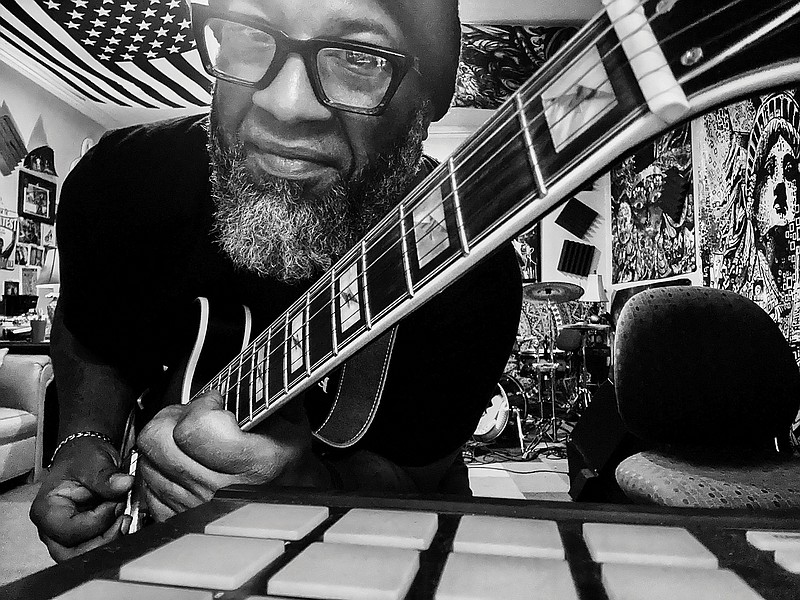
“The blues is storytelling, and our stories have always been told through music,” Westfield says. “It’s about struggle, love, loss and celebration — all things that Black folks in Chattanooga have lived through.” Despite changes in the city’s music scene and the decline of live blues clubs, Westfield remains steadfast in his belief that the blues will never die.
“You can close the clubs; you can tear down the juke joints — but you can’t kill the music,” he says. “It’s in the people. It’s in the way we live.”
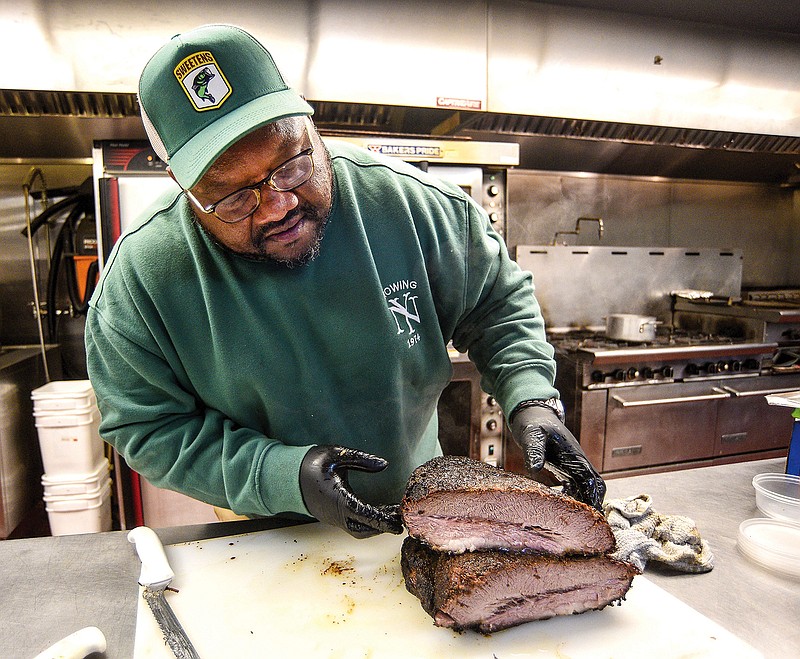
Yet the blues isn’t the only cultural thread tying the city’s Black history together. Food — especially barbecue — has played an equally significant role in community gatherings and celebrations. For Brandon Ellis, owner of Chatter Box Cafe, food has always been about bringing people together.
“Growing up, barbecue was a big part of my family,” Ellis says. “We farmed; we raised pigs. And every big gathering was centered around food.”
Ellis, who moved to Chattanooga from Kentucky in 2006, struggled to find a barbecue spot that met his expectations. So he took matters into his own hands. He started cooking for friends, which led to catering gigs, food truck ventures and, eventually, two restaurant locations. What makes Chattanooga’s barbecue scene special, Ellis explains, is its lack of a strict regional identity.
“Memphis has its own style. The Carolinas have theirs. Texas has its own thing,” he says. “Chattanooga is still building its name in the barbecue world, which gives us freedom to be creative.” That creativity is evident in how food and music come together in the city’s cultural spaces.
“Music and food go hand in hand,” Ellis says. “When people gather to eat, there’s music. When people go out to hear live blues, there’s barbecue. It’s just the way it’s always been.” Chatter Box Cafe has partnered with local events like Chattanooga’s Nightfall concert series to merge the two art forms.
“Chattanooga is an artsy town,” Ellis says. “Food is a culinary art, just like music is a sonic art. The two are meant to go together.” As Chattanooga’s cultural scene continues to evolve, institutions like the Bessie Smith Cultural Center, musicians like Yattie Westfield and chefs like Brandon Ellis ensure that the city’s Black history remains at the forefront.
Through the rhythms of the blues and the aroma of smoked ribs, Chattanooga’s Black community continues to thrive — one note and one bite at a time.
Find out more at chatterbox423.com and bessiesmithcc.org.