Three childhood friends reconnect, reflecting on their Albina roots and the community they still call home.
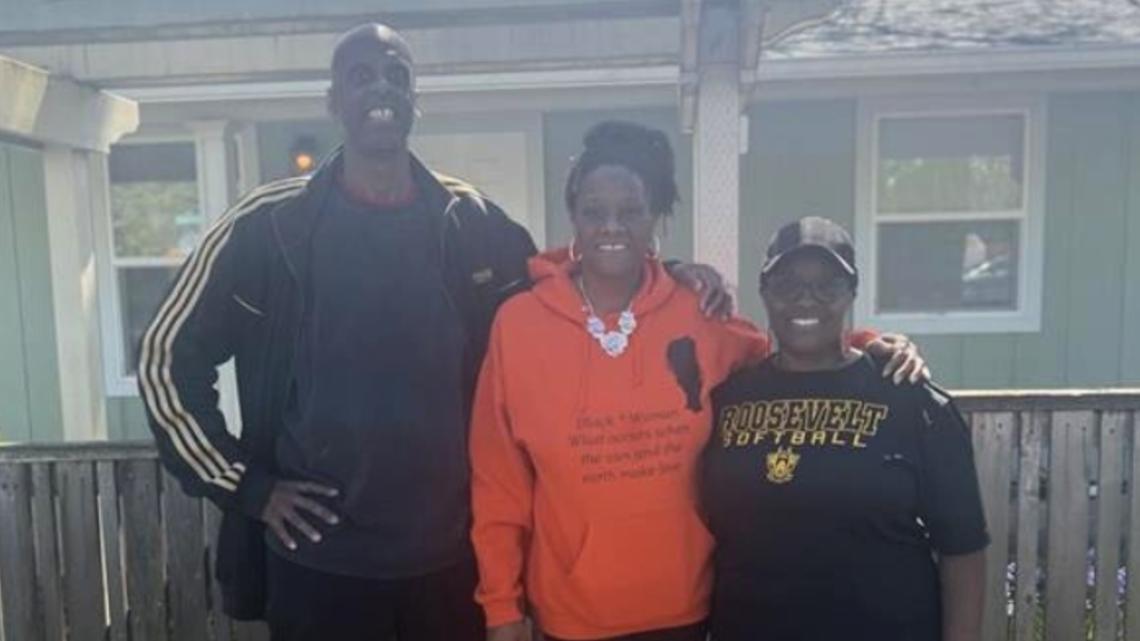
PORTLAND, Ore. — Three childhood friends who grew up in Portland’s Albina neighborhood during the 1970s and ’80s say the experience was shaped by challenges and strong community bonds. Now adults, Paulie Blamont, Roshan Ozan Armstrachan and Noralee D. Mathews still live in the neighborhood and carry forward the values their mothers taught them.
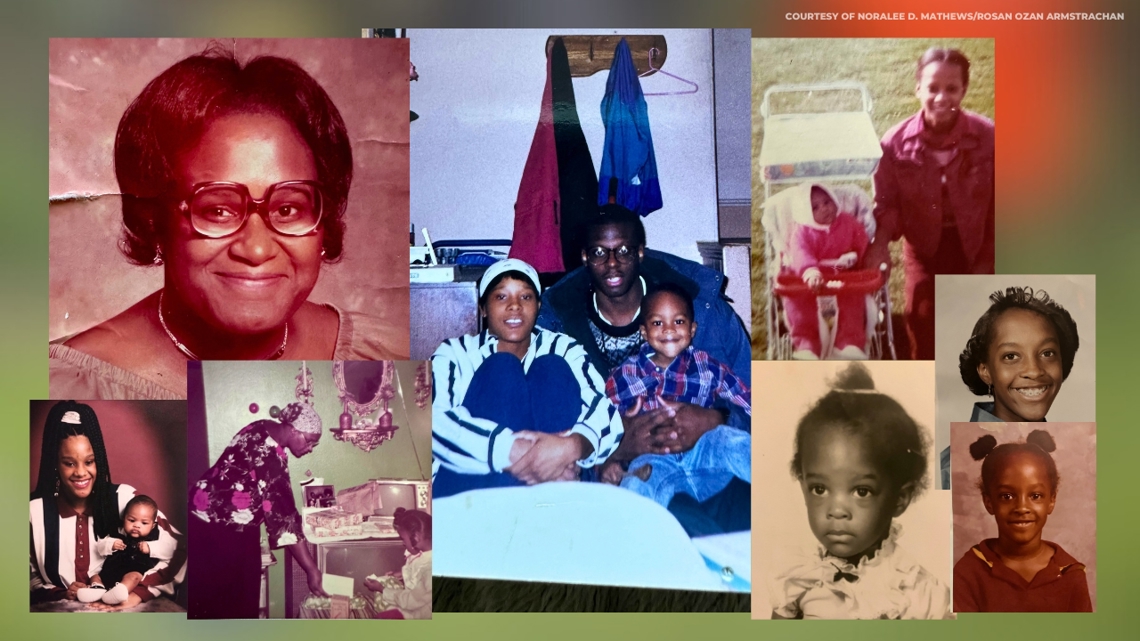
Last February, KGW aired a story featuring archival footage from a 1980 KGW documentary, showing children playing and families living their everyday lives in Albina — footage that Ozan Armstrachan spotted and recognized immediately.
“It was amazing. I kept rewinding, and I was looking like, is that them? When I saw them, I thought, that’s my friend who I grew up with on this video,” said Ozan Armstrachan, a childhood family friend who is now married with four children. She works in social services with Albina Head Start and remains deeply connected to the community.
Blamont, who works in corrections for the state of Oregon, was moved by seeing himself and his sister on screen after so many years. “All these years I wondered, where did that video go?” he said. “How often do you get to see yourself moving and on video at 9 years old? Because back in 1980, a lot of people didn’t have video recorders.”
Mathews, an entrepreneur behind the brand House of Jewels by Nono, was also touched. “When I saw it, I did shed a few tears just ’cause … seeing my mom and hearing her voice,” she said. Their mother, Maggie Marks, a single mom of six, raised the family in their childhood home on North Skidmore Street — a place central to their sense of belonging.
RELATED: ‘Cultural hub of Blackness’: Once home to a thriving Black community, Portland’s Albina neighborhood is on a slow road to healing

Community, discipline and identity
The mothers of these three friends created a community where children felt protected yet free, building lifelong memories. “My mom, she was a caregiver. Some of the kids she would watch after school until their parents got off work,” Mathews said.
Growing up Black in Albina during the ’70s and ’80s meant learning lessons about identity and respect — values they carry today. “There were certain dos and don’ts,” Mathews said. “You do not talk disrespectfully to anybody grown. If our mom found out, we’re in a world of trouble,” Blamont added. Ozan Armstrachan also added, “My mom always told me, ‘Remember, you have to do things 10 times better than the white child because they’re going to be looking at you to mess up.'”
Technology and communication were different then. “If you liked somebody, you would have to write down the number. There’s no texting, there is no phone that you can call anytime,” Blamont said.
Though gentrification has transformed Albina, all three still live here. “The ZIP code that I was born in is the same ZIP code that I live in now,” Blamont said.
Mathews hopes for community unity: “I would like to see the community come together because we want to, not because we have to.”

Efforts to rebuild and reconnect
Significant efforts are underway to restore and revitalize Albina. The Albina Vision Trust’s Albina One housing development, nearing completion, will add affordable homes to the neighborhood. The trust also recently acquired the historic Paramount Apartments, another sign of investment in Albina’s future.
The 1803 Fund, a Black-led investment group supporting Black communities in Portland, is a key partner in these revitalization efforts. Juma Sei, communications director of the 1803 Fund, explained the group’s mission: “We are investors in and for our people. Our work begins with Albina, grounding Black folks’ pride and permanence in the historic heart of our community.”
The name “1803” honors a pivotal moment in Oregon’s Black history. “1803 was the year that York, a man enslaved by William Clark, joined the Lewis and Clark expedition. Without York and Sacagawea, that journey would not have been successful,” Sei said. “We named our fund after him to honor what might have been possible in Oregon Territory — a land where liberation could have been achieved.”
The 1803 Fund approaches investment like building a home: “Our work at 1803 is like a house — with investment as the roof, community partnerships as the living room, and real asset investment as the kitchen,” Sei said.
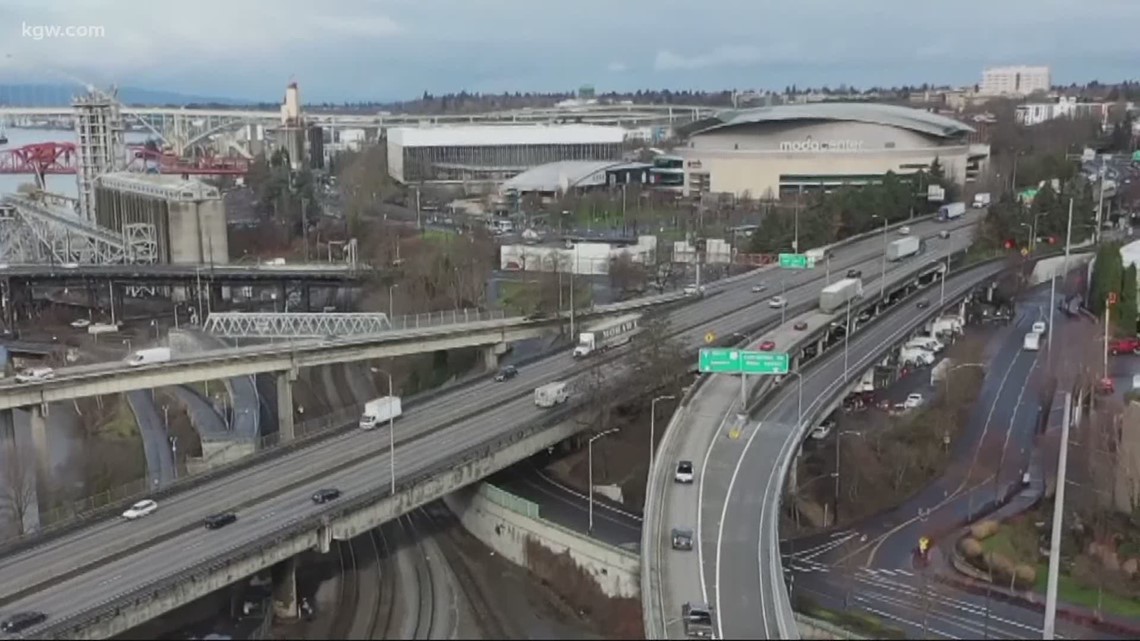
Another transformative project is the planned highway cover over Interstate 5, designed to reconnect Albina’s divided neighborhoods. Oregon’s federal delegation secured $488 million last year to fund the construction, which could change the neighborhood’s landscape.
RELATED: US Department of Transportation to fund Rose Quarter Improvement Project, bring ‘highway cover’ to I-5

Calls for justice and inclusion
Albina remains at the center of a significant federal lawsuit filed in 2022, addressing historic displacement and systemic inequities faced by Black Portlanders — descendants and survivors displaced from Albina — against the city of Portland and Legacy Emanuel. As of March 2025, a settlement is underway with a court-approved extension. KGW reached out to all parties involved in the lawsuit for comment and is currently awaiting responses.
Sei emphasized 1803’s commitment to the value in ensuring that it’s investments are centered around Black voices and protects long-term residents from displacement.
“We work in a way that is not going to spur further displacement — either physically, spiritually or kind of like just emotionally.” Sei emphasized. “I go back to the point that — Portland is our home.”
For Mathews, Blamont and Ozan Armstrachan, the archival video and ongoing changes are reminders of both the resilience of their community and the work still needed.
“The changes in the neighborhood are bittersweet, but they’ll eventually fade,” Mathews reflected. “It’s just the follow through is what we always look for. It’s not always there,” she added.
Ozan Armstrachan affirmed, “It’s not about reverse racism, it’s about leveling the playing field.”
Together, these three friends continue to build their lives and families in Albina, carrying forward the spirit and strength their mothers modeled — hoping the neighborhood’s future honors its rich past.