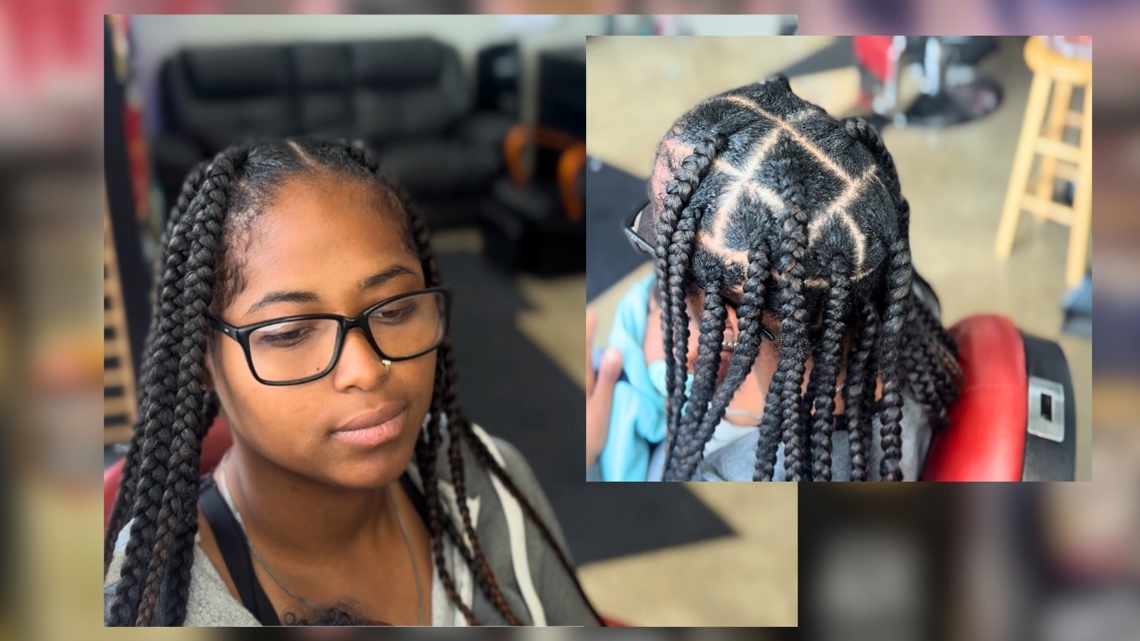
Oregon beauty supply, shop owners seek alternatives after Consumer Reports finds cancer-causing chemicals in all 10 braiding-hair brands tested nationwide.
OREGON, USA — Amarea Priddy has been getting her hair braided and using extensions since she was a little kid.
“I like getting my hair braided. I also do like my own hair, like when my brother does it. I’ll bring my own, but I like getting my hair braided. I like, you know, the different styles, you can deal with braids,” she said.
Amarea is careful about the products she uses.
“I like to protect my hair, so I kind of want to like not damage it in a way. So I do try to be careful of the products I do use. I usually ask my mom because, you know, as you said, she has a beauty shop. So I tend to go to her for products about my hair,” she said.

Toxic chemicals found in synthetic braiding hair
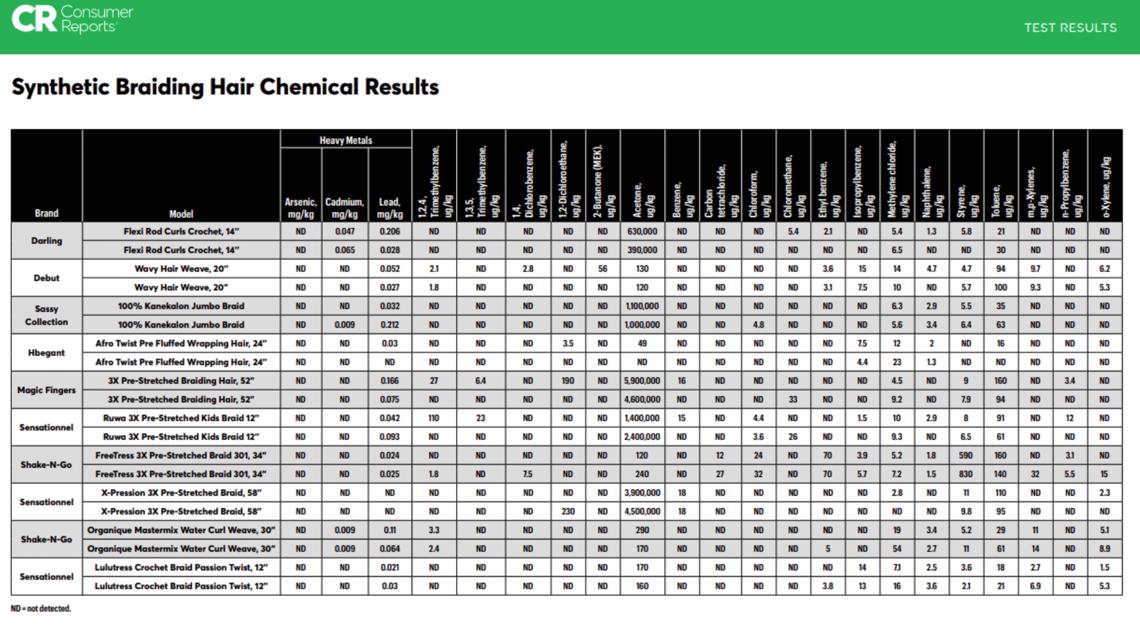
But new research suggests even careful consumers may be at risk. A recent Consumer Reports study tested 10 popular synthetic braiding hair brands, including Magic Fingers, Shake-N-Go and Sensationnel, finding cancer-causing chemicals in all of them. The findings are particularly concerning for Black communities, who are the primary users of these products.
Dr. James E. Rogers, director of product and food safety research and testing at Consumer Reports, led the groundbreaking study after consulting with Black mothers about their concerns.
“We spoke to a working group of Black mothers, Black women, to ask them within the personal care space, what are you concerned about? And artificial braiding hair was at the top,” Rogers said in an interview with KGW.
The study found alarming levels of toxic chemicals.
Lead, a toxic heavy metal, was detected in nine of the 10 brands at concerning levels. “We question whether a chemical such as benzene, or chemicals such as lead — where we have reported that there is no safe level of lead in food and water — should be in these products,” Rogers said.
Benzene, a known carcinogen linked to leukemia that Rogers called “a very hazardous chemical,” was present in three brands.
Volatile organic compounds were found in every product tested. “Every product that we tested had some VOC in it, and many had multiple VOCs,” Rogers said.
At least two products contained high levels of acetone.
The testing focused on brown and black colored synthetic hair made from kanekalon fiber, a flame-retardant synthetic material used in most braiding products.
“Nine out of the 10 products were labeled ‘made from kanekalon,’ which is an artificial synthetic fiber that’s used for these products,” Rogers explained. “We believe that, as long as you test these kanekalon-type, fiber-based products, you’re going to discover some chemicals.”

Health risks from long-term exposure
Rogers emphasized the chronic exposure risk, noting that “women wear these products — the braids, the artificial braiding hair — for four to six weeks at a time. Sometimes they wear them back-to-back, so that would represent a chronic exposure to these chemicals that could cause harm.”
The health risks are particularly concerning for children, Rogers said, because lead “can lead to developmental problems, a loss of IQ points, delayed brain development.”
Multiple exposure routes compound the danger. Rogers said there are “three different exposure routes,” including oral, contact in skin and inhalation. “As you probably know, when you get your hair braided, you have to close the end of the braid with heat — with boiling water, with a curling iron — that releases those VOCs in the air.”

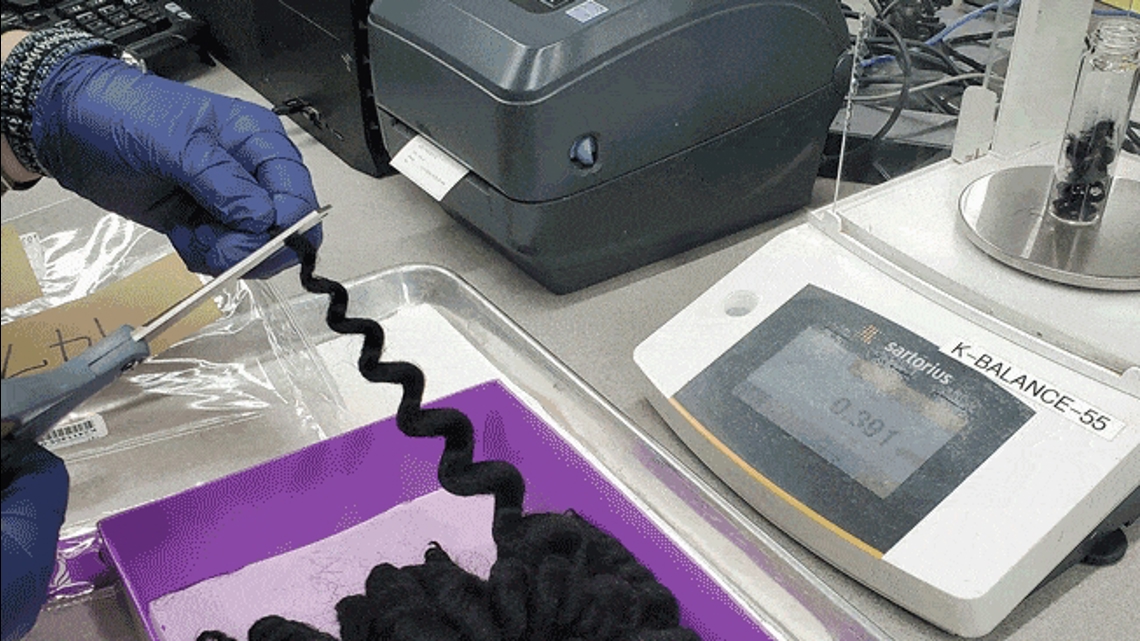
Rogers, a father of two daughters who use these products, stressed the study wasn’t meant to cause panic. “Do not panic. We did not say in the article, ‘stop using these products,'” he said. Instead, Consumer Reports recommends reducing wear time from four to six weeks down to two to four weeks and extending periods between braiding sessions.
Some consumers are already taking precautionary steps. Rogers noted hearing about methods like “stripping” with apple cider vinegar or witch hazel, though he cautioned: “We don’t have any data yet as to, does that make a difference? We don’t have any data whether it removes some of the chemical.”
One Portland woman, Kanika Collier, shared with KGW that she and her daughter have started using pre-washed apple cider vinegar braiding hair from an online Black-owned company. They’ve noticed the braiding hair is lighter, softer to the touch, has minimal tangling, smells cleaner with no chemical odor, and their scalps don’t itch like they used to since switching to the pre-washed hair. She said her hairstylist was so impressed with the smell, touch and texture that she threw all her other braiding hair away and partnered with the company to start using its hair for braiding clients.
Before using the pre-washed hair, Collier said she would itch within two days, at most, and used to develop scabs, which was not normal. Over time, she realized — and believes — that the synthetic braiding hair caused it, and now she refuses to use non–pre-washed apple cider vinegar braiding hair.
“There was one social media influencer I talked to that said she actually washes her hair in the washing machine. I don’t know how she kept it from getting tangled up, but she washed it in the washing machine,” Rogers said.
Lack of regulation and industry response
The lack of federal regulation compounds the problem. Rogers revealed that when Consumer Reports contacted the FDA, “at least the first response was, ‘We don’t regulate this product.'”
“There is no federal regulation to ensure the safety of this product by our own Food and Drug Administration and we believe it should be under the Food, Drug and Cosmetic Act,” Rogers said.
The regulatory gap extends to labeling requirements. “There are no rules as to what the packaging can say,” Rogers said. “There’s no requirement for those ingredients to be listed on the outside.”
When manufacturers Sensationnel and Magic Fingers responded to the findings, Rogers said both “did not agree with our testing methodology, but then when we asked them, ‘Well, do you test? Do you have any data to show that, you know, the products that we tested didn’t have these chemicals?’ we never got a response.”
Rogers defended the study’s credibility, noting that “everyone that was involved with this testing at Consumer Reports were Black” and that the team includes “two PhD-level chemists.” He also pointed to supporting research: “There were other peer-reviewed articles that have reported issues with artificial braiding hair.”
RELATED: Oregon women, lawmakers weigh the impact of FDA’s proposed move to ban cancer-linked formaldehyde in hair relaxers
These findings highlight the lack of regulation in an industry whose products are widely used by Black consumers — an issue that has long concerned advocates like Oregon’s 5th District Congresswoman Janelle Bynum.
“Women are putting themselves at risk for the sake of beauty. There are a number of things that we do to our bodies — but putting formaldehyde in our hair or things that turn into formaldehyde, that’s really a challenge,” Bynum, then an Oregon state representative, said in a December 2023 interview with KGW. It was in regards to the FDA’s inconsistent push to enact a proposed a ban of formaldehyde, a highly toxic chemical found in hair-straightening products that is believed to have links to hormonal cancers.
This sparked many Black women across the country, including in Oregon, to take legal action against beauty companies that supply these products. As of June, there have been no new developments from the FDA regarding the progression of the ban proposed in 2023.
“It’s absolutely imperative that our federal government and our state government protect women’s reproductive health,” Bynum said at the time.
Lack of regulation and industry response
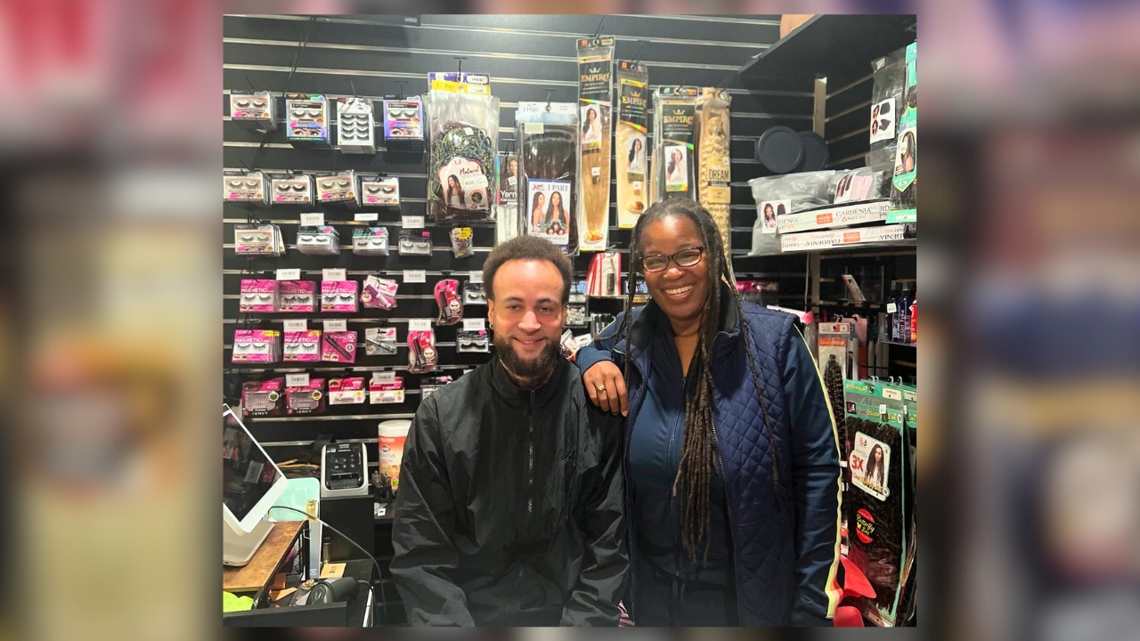
The impact of these findings is being felt across Oregon’s Black communities. Yolanda Priddy, co-owner of Ezalia’s Beauty Supply and Heavie’s Above The Cut in Salem, explained the family history of her businesses.
“Heavie’s Above The Cut was initially started by my brother. He passed away in ’23 and so I kind of inherited it, cause me and him actually kind of worked it together. We were business partners and so now it’s myself and my son Kendrick,” she said.
The beauty supply store is named after Yolanda’s grandmother, Ezalia. Eugene Ferro, Yolanda’s brother, encouraged her to open the store.
Her son Kendric Priddy, co-owner and stylist, shared concerns about product safety.
“It’s really important to me to keep the hair healthy. When you do braids or extensions, it can be damaging if you don’t use the right stuff or take care of it properly. People should really look at what’s in the products they use, and not just follow trends. Your hair is your crown,” Kendric said.

For Amarea, the study’s findings create uncertainty about future hair-care choices.
“Sometimes I’m kind of like, I don’t want to get my hair done anymore because it’s like you don’t really know what products you can use and what products you can’t use,” she said. “It’s kind of difficult when you want your hair done and you don’t know what to use, like, you know, product wise.”
Still, she believes regulation is necessary.
“You have to regulate them,” she said.
Asked why, she replied: “Just to protect people’s hair. You know, hair is everybody’s go-to. You know, it makes you look nice. So you got to make sure what you’re putting in your hair keeps your hair, you know, healthy.”
Rogers said Consumer Reports plans to expand testing to include alternative braiding products, wigs, clip-ons and other personal care items marketed to Black consumers. The organization is also petitioning the FDA for regulation and working with beauty justice groups to push for change.
“We want Black women and Black men to join us in the petition process of petitioning the FDA and petitioning local governments to make these products safer,” Rogers said.
Rogers emphasized this is “a journey and it’s going to take some time,” but expressed hope that manufacturers will follow the example of the one product in their study that contained no heavy metals.
“Hopefully, as I noted, there was one product that had no heavy metals in it, that type of finding will be imitated across the product line,” he said. Consumer Reports said they plan to test more hair products used by Black consumers and have alerted the FDA. They’re calling for stronger oversight and safer options.