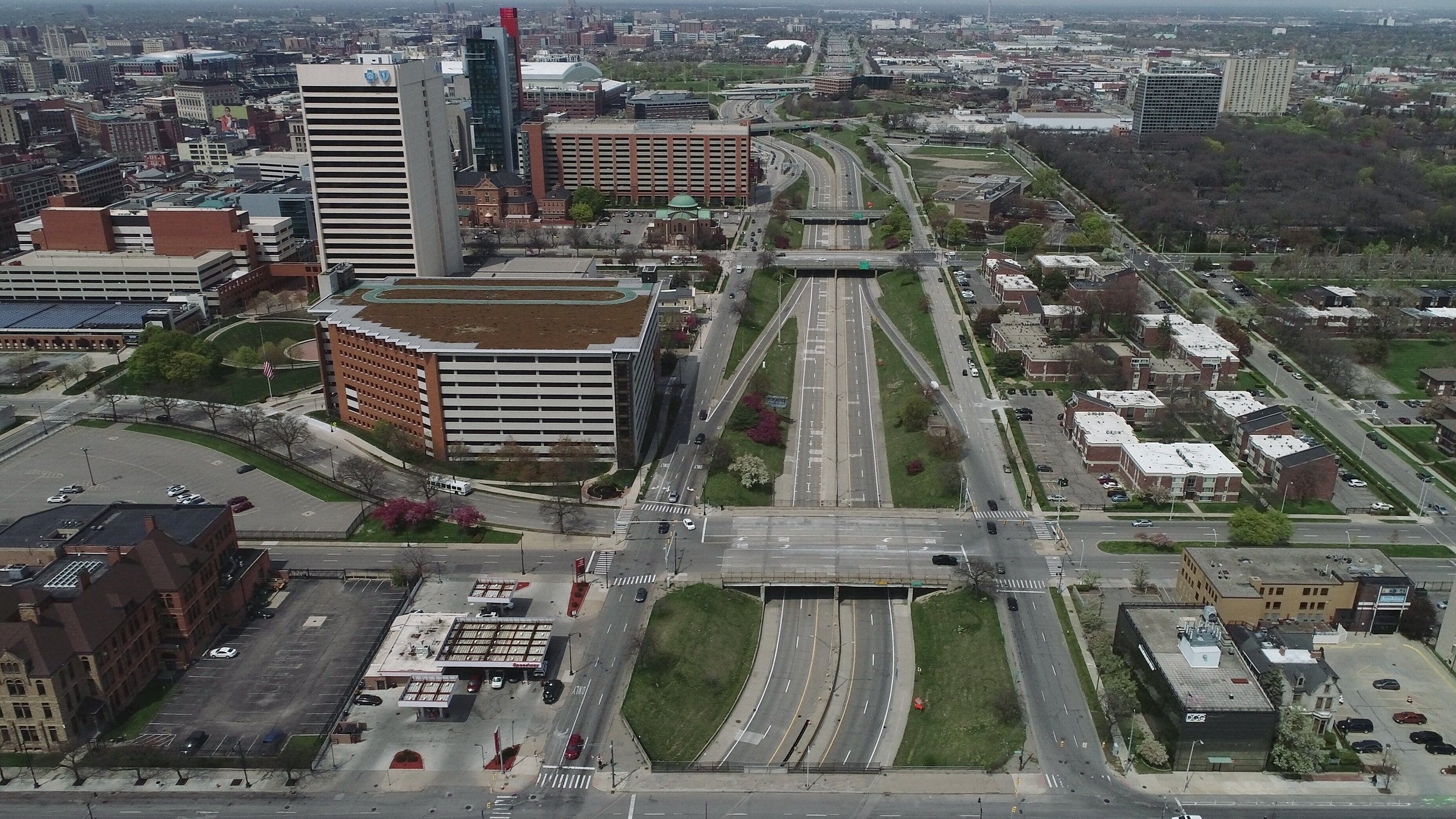

MDOT’s I-375 project in Detroit finds skepticism from residents
Residents, particularly from Detroit’s east side, express skepticism towards MDOT’s plans to transform I-375 into a surface-level boulevard.
- Construction was supposed to start before the end of the year.
Michigan transportation officials are pausing a roughly $500 million project in the heart of Detroit after concerns over the cost and local pushback to planned changes.
Supporters said turning the I-375 freeway into a traditional boulevard was supposed to revitalize communities, including the city’s Black Bottom and Paradise Valley neighborhoods previously wrecked through the creation of the highway and other developments. But outspoken opposition — including from Wayne County Executive Warren Evans — appeared to play a role in the decision to rethink the plan.
The Michigan Department of Transportation news release from Monday, Aug. 11, cited issues involving “rising costs, longevity of the final project and roadway, and public concern over design elements” as the reasons for delaying construction.
Department spokeswoman Jocelyn Garza specifically cited labor and material cost increases, pointing to inflation. She noted the likely longevity of the project − the current road was built approximately 60 years ago, and new materials are expected to last longer − made it more important to ensure the project is right for the community.
While multiple aspects of the project received pushback, she singled out designs for interchanges and capacity for the boulevard.
“We have one opportunity to get this project right,” said Bradley C. Wieferich, state transportation director, said in a news release.
“I-375 has been open for more than 60 years, and we expect the new I-375, whatever design it may be, to be in place much longer. Getting this right for the community and our stakeholders, while remaining good stewards of tax dollars, will remain our priority.”
A group opposed to the current plans for changes to the expressway heralded the pause. In an initial statement the coaltion echoed previous comments about the need to remove leaders of the project, but in a separatement statement focused on the need to double-down on community involvement.
“This project pause is a healthy acknowledgement by MDOT of what the Rethink I-375 Community Coalition has known for the past five years: that I-375 is a complex project. While roads are part of the puzzle, this project needs to follow from a vision that respects the complexity of the land use, transportation, urban design, local business, and restorative justice issues at play in the I-375 corridor,” reads a statement from the ReThink I-375 Community Coalition, provided by a spokeswoman.
“Going forward, residents, businesses, Black Bottom descendants, and other stakeholders should be engaged in a public-private partnership to develop a vision that the entire community can support, and a project whose results will be worth the inevitable disruption and cost of a massive infrastructure project in downtown Detroit.”
Initial estimates put the project cost at roughly $300 million, with related costs associated with a connected reconfiguration of an I-75 interchange pushing total costs estimates last year to approximately $425 million. Now, Garza said estimates top $500 million.
Work would impact neighborhoods across the city, from Eastern Market and downtown to Lafayette Park and Elmwood Park. Construction was supposed to begin before the end of the year. A spokeswoman did not immediately say how much money has been spent on the project or planning to date.
In 2022, then-U.S. Transportation Secretary Pete Buttigieg came to Detroit to announce awarding more than $100 million in federal funds for the project. Joined by Gov. Gretchen Whitmer and other leaders, he cribbed her campaign slogan to discuss the importance of the project.
“Sometimes, fixing the damn roads means facing the repercussions of how the roads were originally built, who was included in that process and who was not, who was empowered and who was displaced,” Buttigieg said.
As in many communities across the country, the creation of the freeway through the city caused havoc in traditionally Black neighborhoods. However, Evans and other opponents argued plan architects were not actually acting on information received from local residents in creating the re-imagined road.
“Today, the proposed redesign of the I-375 corridor is struggling to push the narrative that the new design will help heal the racial wounds of the past with intentional inclusivity that will provide all sorts of benefits to Black people,” Evans wrote in a 2024 op-ed for the Free Press.
“Please. Are you serious? Show me the evidence, and I mean specifics. Show me the clear and itemized benefits that this project will provide to the Black community, and exactly how it will repair and compensate for the unprecedented damage that was done all those years ago. Don’t paint a pretty picture, just give me the facts.”
Detroit Mayor Mike Duggan also said earlier this year he is not focused on the project, according to the Detroit News.
The state plans to “reevaluate design alternatives and prepare additional public engagement,” according to the news release. The release says they remain committed to ensuring the road is safe, noting several bridges have “exceeded their service lives” and need to be replaced soon.
Reach Dave Boucher at dboucher@freepress.com and on X @Dave_Boucher1.