Bricolage (n) – bri·co·lage – ˌbrē-kō-ˈläzh
Construction (as of a sculpture or a structure of ideas) achieved by using whatever comes to hand.
Bricoleur (n) – bri·co·leur ˌbrē-kō-ˈlər
One who engages in bricolage.
The term was coined by French social anthropologist Claude Levi-Strauss who sought to express how the artist creates beautiful and useful things out of whatever they have at hand. It is a mode of thinking and creation that draws on improvisation rather than relying on established ideas and rigid plans.
My friend Max (Dr. Hunter to you, if you and he don’t go way back) introduced me to this word and concept a few weeks ago during a conversation about a new curriculum he is developing to help young people prepare for higher education. He made the point that bricolage is also at the heart of the work we do at Wa Na Wari. He went on to talk about the idea of “sustained improvisation” as a defining feature of Black life. The rigors of America have required Black people to maintain a heightened state of awareness, flexibility, creativity and responsiveness, all culminating in a never-ending process of cultural, social and political reinvention and innovation. Borrowing from concepts of quantum physics, I riffed on this line of thinking and suggested that Black American culture, at its core, exists in a state of expressive “superposition.” The culture is always ready to reimagine itself based on changes in the prevailing environment and, more importantly, the expanding experiences and considerations of the people themselves. These are qualities intrinsic to all cultures; the difference, I think, is the pace and dynamism of the change we have seen emerging out of Black culture over the past century. I see this change as driven by survival and the necessity for collective self-actualization.
Wa Na Wari is a living expression of bricolage. Everyone who participates in sustaining and expanding who we are and how we exist in community is a bricoleurs. We are a living assemblage—a sculpture built out of necessity from the materials of elder care, family legacy, home-retention and community preservation. The binders holding these things together are imagination, courage, connection, creativity, determination and love. Out of these materials, Wa Na Wari emerges as something greater than the sum of its constituent parts by orders of magnitude. Claude Levi-Strauss talks about how bricoleurs don’t only create new things; they create new meaning and mythologies, new ways of seeing and understanding our place in the world.
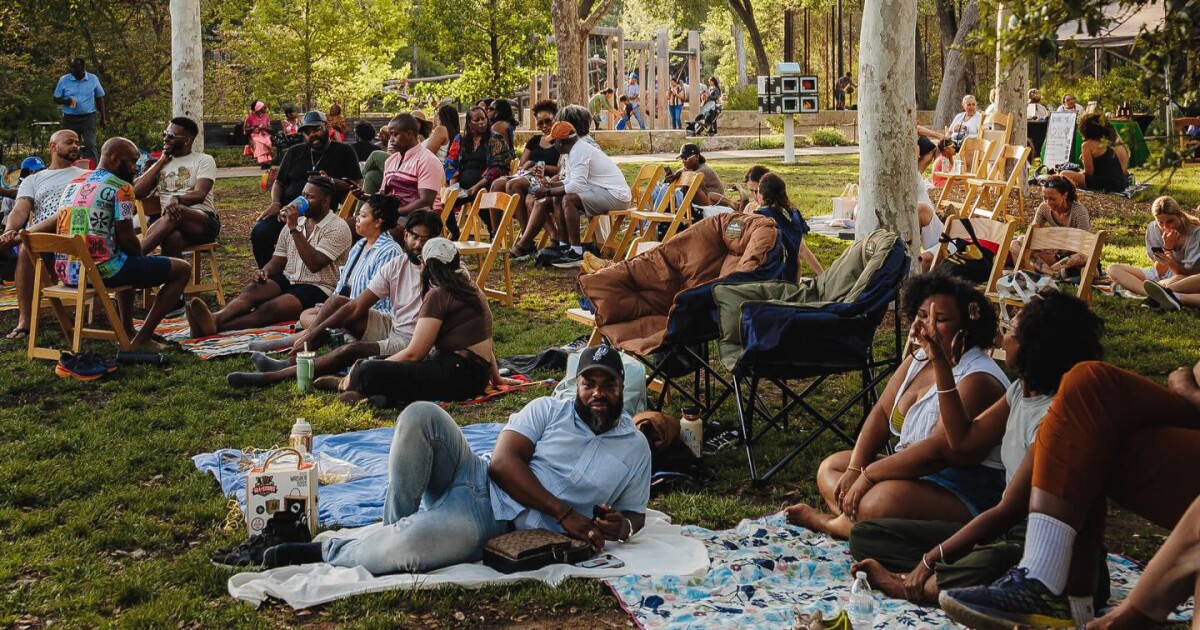
Over the past two years, we have been progressively embracing the notion that Wa Na Wari is an emerging hub for community resilience and social innovation. We began to test our ability to activate ideas with new ventures. We always conceived of Walk the Block, our annual neighborhood art festival, as the synthesis of all of our programs, values and visions for our work. It engages neighbors, artists, Black community organizations and businesses and community members in the act of transforming Central District streets into places that reflect the power and beauty of the historic Black community. It is a collaborative act that invites everyone to imagine a future where Black people continue to live and thrive in Seattle. For us, it is a creative community-building event that punctuates our year round work.
In 2024, we created Walk the Block Institute to explore some of our more intentional ideas about what creative community building can look like in practice. Walk the Block Institute is the sibling event to the art festival and focuses on collective learning, visioning and strategizing through workshops, lectures, classes, discussion salons, community design charrettes and more. While Walk the Block Art Festival engages the product of Black artists, Walk the Block Institute centers the process of creative thinking as the most important tool in addressing challenges like food insecurity, economic development, institution building, the loss of family homes and the retention of community stories and collective wisdom.
In 2025, we committed to the expansion of our Seattle Black Spatial Histories Institute so that it can have a physical home in the second Green Family property in Mt. Baker. In 2026, we are reimagining Love Offering as a space where we not only offer food for the body, but workshops, salons, lectures and talks that build our collective capacity to create the community we want together.
Circling back to my friendship with Max (Dr. Hunter): Max and I met as students at Seattle Central Community College and became fast friends. Our relationship revolved around our shared eclectic tastes in music ranging from reggae, new wave, ska, hip hop, soul and jazz. Our similar upbringing in homes immersed in Black radical politics meshed seamlessly with all the other cultural streams of Black community life, from devout Baptist and Pentecostal relatives, to friends involved in street life, The Nation of Islam and sundry other ways of being that flowed in and out of one another. Even with these personal similarities, the communities we grew up in were very different. Seattle’s Central District is my home, and he is from southeast San Diego’s Lincoln Park neighborhood. As much as we had in common, the differences in our communal experiences were just as important. The contrasts help expand our perceptions and sharpen thinking about what it means to be Black, self-aware and curious about the meaning of it all.
Our friendship feels like one long philosophical conversation that has paused and resumed over the course of almost four decades, following the ebb and flow of our respective lives and travels. We recently resumed the conversation—this time about how Wa Na Wari fits into it all. I am thinking about how important sustained discourse is in the process of developing new ideas and increasing our creative acuity. Our friendship is defined by harmonies and tensions that, despite having very different paths through life, have taken shape as a kind of sustained, lifelong conversation. This conversation that recently has helped me clarify my ideas about Wa Na Wari. As we evolve the work of Wa Na Wari, it is my supreme wish that it can bring more people together in friendship, collaboration and sustained, lifelong conversations about the depth of understanding, the expansiveness of possibility and the joy of creating something together. It is my wish for these relationships to exist within and beyond the bounds of Wa Na Wari as an organization.
It feels fortuitous that Max and I are having these conversations now. Wa Na Wari is six years into this work, and I am more excited than ever about the possibilities. I am finally confident enough to say that Wa Na Wari is a creative society championing social innovation.
In the wake of two decades of rapid displacement, we are doing our part to create a new mythology about Black resilience, creativity and joy. We are The Black Bricoleurs. As my 2017 solo show at The Frye Art Museum title said, “This Is Who We Are.”
Read more of the Nov. 12-18, 2025 issue.