by Aisha Adams
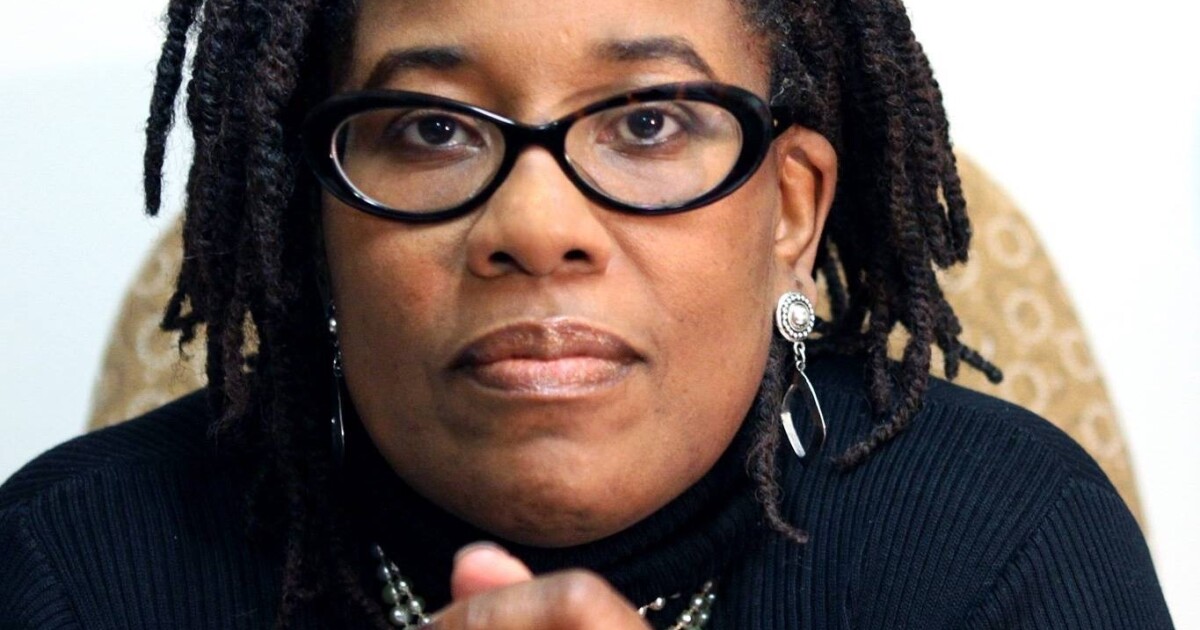
One thing I loved about Andrea Clark was her hugs. They felt like rest. She held you just long enough for your breath to settle back into your body. Her humor worked the same way: warm, witty and grounded in quiet knowing. Andrea had a way of settling you into a room, into a moment and into a legacy.
Her grandfather James Vester Miller was a master brickmason who built homes, churches and public buildings across Asheville. He laid his legacy in brick. In 2020, Andrea honored that legacy by creating the James Vester Miller Historic Walking Trail with support from CoThinkk, a local giving circle that invests in area communities of color. She later partnered with UNC Asheville and Explore Asheville to help bring the project to life. For Andrea, understanding what her grandfather built and for whom he built it affirmed her sense of belonging in Asheville, even though she was born in Massachusetts. She made sure others felt like they belonged, too.
Color and wisdom

Andrea was best known for her photography, but her artistry moved across mediums. She wove baskets at the YMI Cultural Center, wrote plays and told stories like a seasoned griot. Her accounts of summers on Martha’s Vineyard were rich with color and wisdom. She’d drop one detail that made you laugh from your gut, then pause just long enough for the lesson to land.
Some mornings, she’d call before the day had even begun.
“I love what you’re doing,” she said once. “Interviewing folks, being cute, but stop fidgeting on camera. People won’t trust you if you move like a weasel.”
I still hear her voice every time I sit down to record.
Space for understanding
I never met my in-laws. They were gone before I entered my husband’s life. But Andrea had known them. She checked in on us, celebrated our wins and, when guidance was needed, offered it with a calm certainty that felt like care, not judgment.
Asheville can be difficult to navigate if you’re Black without legacy ties. Andrea knew my husband’s people, and her memory held parts of our history I didn’t even know I was missing. Through her stories, I learned how they traveled to the National Black Theatre Festival, how Bill knew jazz like Scripture and how Evelyn loved her sons with deliberate tenderness.
One afternoon, as we sat in her living room, Andrea told me about the year their youngest son, Hasani, passed away. She didn’t tiptoe around the grief. She spoke plainly about how loss reshapes a family and how it settles in the bones. She said she could never tell whether Evelyn died from illness or from heartbreak. Mom. Dad. A baby brother. All gone.
Andrea’s memories didn’t reopen wounds. They created space for understanding. She helped me know the man I love and the family I had stepped into. My sense of belonging followed.
After one of her hospital stays, we brought her a signed Betty Carter album. She was on bed rest, but still herself, holding court from her parlor. She laughed, remembering how my father-in-law once followed Carter around, trying to get her attention. When her laughter turned into coughing, the home health aide peeked in. Andrea waved her off. After a quiet pause, she said, “You know, I’m glad he found you. You’re good for him. The two of you belong together.”
I hadn’t known I needed to hear it, but I did.
That was Andrea. Tender. Insightful. Always documenting not just our hearts, but our history.
Capturing our lives
Andrea didn’t just share warmth. She bore witness. Her lens confirmed our existence. Urban renewal stripped Black communities of homes, churches and businesses. But Andrea took thousands of photographs, archiving who lived here, how they lived and what was taken. Her images aren’t just beautiful. They are evidence.
Her collection now lives at Buncombe County Special Collections at Pack Memorial Library. In 2020, the Historic Resources Commission of Asheville & Buncombe County sought to honor Andrea with the Sondley Award, named after Foster A. Sondley, whose will bequeathed his extensive personal library to the City of Asheville in 1931 — but whose terms restricted access to “well conducted white people.” Andrea made it clear she would not accept the award unless the name changed. She opened a conversation, and the award was renamed the Historic Resources Champion Award. That was Andrea, correcting the narrative and claiming space for those long excluded.
I remember the night last year that her photography exhibition opened at the Asheville Museum of History, where she served on the board of trustees. Andrea sat at the center of the courtyard, her locs wrapped high like a crown, gold earrings catching the light, her African attire flowing with ease. She carried a purple bag I’d once given her, a quiet nod just for me. That evening, she had my husband, Raf, play jazz. The music rose between photographs and memory. Andrea smiled and swayed gently in her seat, as if the rhythm were dancing in her bones. Laughter moved through the air, confident and layered.
I didn’t realize goodbye would come so soon.
She captured Asheville’s erased stories so they would not be buried again. Andrea passed on Oct. 29, but what she preserved lives on in all of us. She mothered me — and this city — into memory.
Aisha Adams is the author of This Is What Made Me, her debut memoir on healing, systems and survival. Find out more at AishaJohnsonAdams.com.