Some say that when the infamous Russian revolutionary Leon Trotsky — born Lev Bronstein — lived in the Bronx at the beginning of the last century, he worked as a dishwasher in a beloved kosher eatery, Hyman Trotzky’s restaurant. According to one legend, the Bolshevik even adopted the famous restaurateur’s name because he loved his food so much. There were also rumors that the two men were related.
When asked about the familial connection, Hyman Trotzky once responded: “Bah! That fellow, his name isn’t even Trotzky. His name is Bronstein. When he lived in New York in 1917, he used to come here to eat. He liked my kosher dishes. He came often. He found that I was honest and respected… This Bronstein knows he is not trusted and wants to be respected, so he borrows my name. Bronstein calls himself Trotzky. What shall I do? Change my name every time someone takes mine? Bolshevik? Bah! How can an Orthodox Jew be a Bolshevik?”
While assertions of any meaningful connection between the two men have been debunked, the all but forgotten story of Hyman Trotzky and his restaurant is far more interesting than any tangential relationship he may have had with a controversial Soviet political theorist.
Like many, Hyman Trotzky immigrated to the United States from Eastern Europe at the end of the 19th century, working as a peddler before opening a humble cafe and later a legendary kosher eatery. He established the latter in the Broadway Central Hotel, which at one point had been the world’s most expensive hostelry, a meeting place for some of the era’s most well-known figures, including Mark Twain. It was also the place where baseball’s National League was officially established in 1876.
Yet with its heyday behind it, Trotzky was able to set up shop in the hotel, making it the “heimeshe” version of what it once was. If it previously served as a meeting place for the who’s who of mainstream America, Trotzky made it that for Jewish America — a place where the likes of Cantor Yossele Rosenblatt and Rabbi Meyer “Max” Manischewitz (yes, that Manischewitz) would kibbitz over some strictly kosher fare.
Ultimately, Trotzky would be muscled out of the premises by Manischewitz, who would transform the Broadway Central into America’s first luxury kosher hotel.
Trotzky, Rosenblatt and Manischewitz are a few of the colorful characters Henry H. Sapoznik introduces to his readers in his recently published book, “The Tourist’s Guide to Lost Yiddish New York City.” The Broadway Central Hotel is just one of many sites he explores, and the pastrami presumably eaten by those men at Trotzky’s is just one small taste of food once enjoyed by the millions of Yiddish-speaking Jews who lived in New York about a century ago.
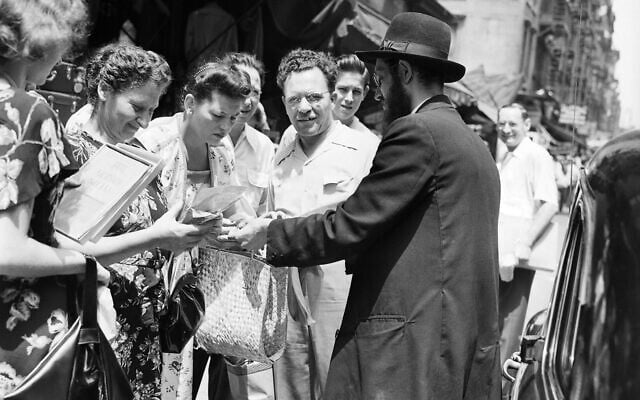
As its name implies, the guide is by no means run-of-the-mill. In fact, it would be hard to define it as much of a tourist guide at all. Many of the buildings and sites mentioned in it have not existed for decades. The people highlighted are largely forgotten, as is the language in which they conversed and lived.
Yet it presents a fascinating study not just for those interested in New York City history, but also, much more broadly, those who would like to better understand the foundations for much of what became the “mainstream” American Jewish experience over the last century and a half, from Dr. Brown’s to Al Jolson and much in between.
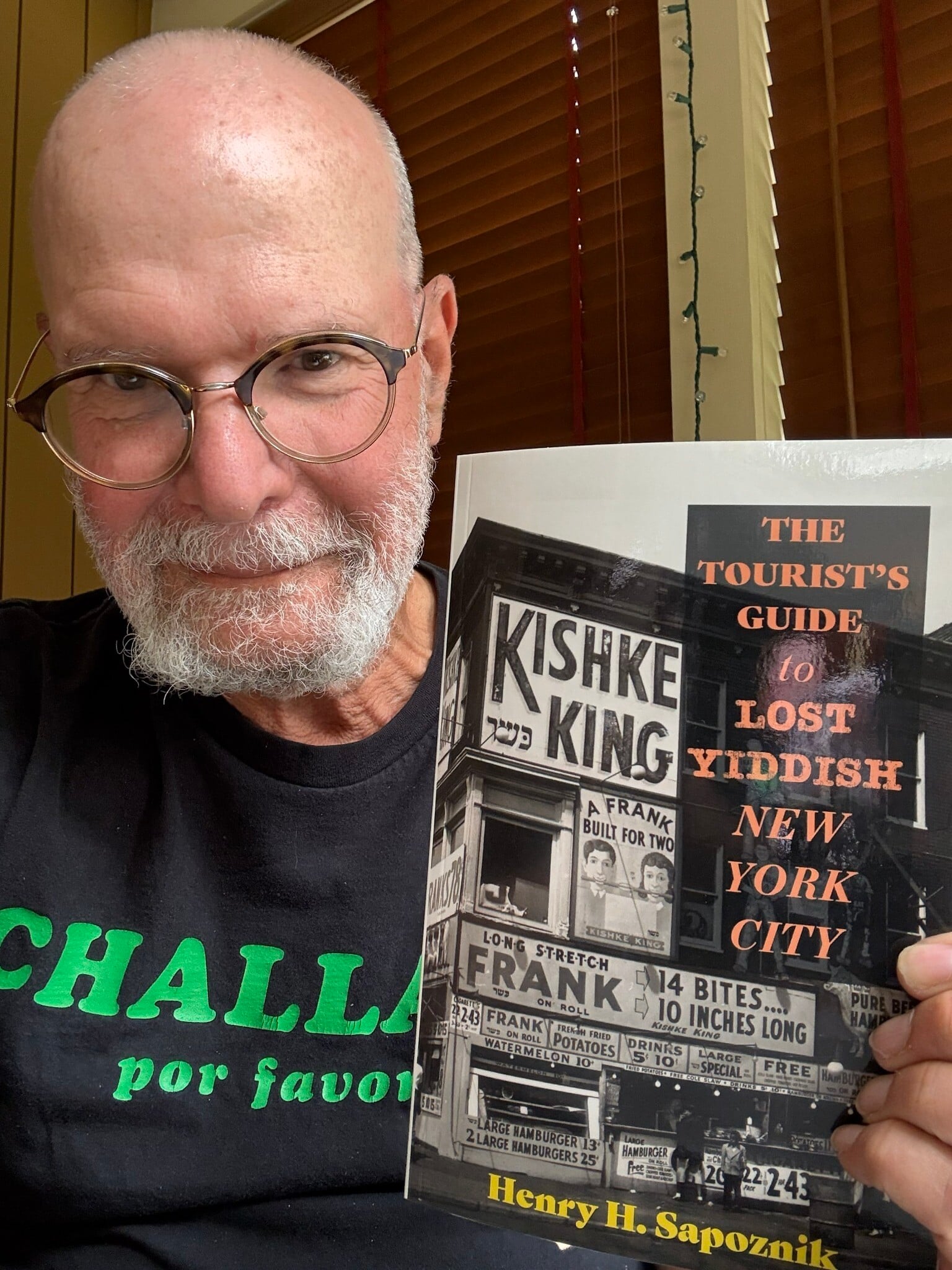
Since the 1970s, few have done more than Sapoznik to shed light on various facets of Yiddish culture and history. Sapoznik, a native Yiddish speaker himself, is an accomplished klezmer musician and renowned expert on Black cantors, among other things. For more than a decade, he served as the founding director of the Max and Frieda Weinstein Archives of Recorded Sound at the YIVO Institute for Jewish Research. As a Grammy-nominated performer and producer and the founder of multiple Yiddish arts and culture organizations, including KlezKamp: The Yiddish Folk Arts Program and Living Traditions, he has managed to both help preserve and disseminate cultural elements that might otherwise be lost to history.
The Times of Israel recently interviewed Sapoznik about his latest book, which hit shelves in July, as well as the significance that a world so seemingly lost and distant holds for readers today.
The following interview has been edited for brevity and clarity.
The Times of Israel: You are the child of Holocaust survivors, a prolific historian and a native Yiddish speaker. In the introduction, you mention the bloody October 7, 2023, Hamas-led invasion of Israel and skyrocketing antisemitism in the United States and worldwide, wondering if you “have written a book about one lost Jewish world on the eve of another.” Are you able to point to a specific element of your identity, personal experience or studies that led you to write this book specifically at this point in time?
Henry H. Sapoznik: I didn’t choose the time so much as the time chose me. By COVID, my work as a performing musician had slowed down, and I wanted another creative cultural outlet, so a friend built me a website and I started a blog. The first entry in 2020, on my recent discovery of a 78 rpm recording of Black cantor Thomas LaRue Jones for which I had been searching for 40 years, netted nearly 70,000 hits, a half dozen follow-up blog entries and a BBC documentary. My way was clear.
Subsequent blog entries, newspaper features and a series of lectures led me into areas of Jewish life about which I’d long been interested (food, architecture, film, crime, etc.) but about which I had never before written. In 2022, a friend who was acquisitions editor at a small academic press invited me to anthologize and expand these earlier essays and write new ones. About the time I was finishing one of the last edits, October 7 happened, putting my work in a radically different historical and cultural contextual light. It was then that I rewrote the last paragraph framing my book and the Weinreich Yiddish phrase book, both of which were created in the aftermath of historic Jewish tragedy, as sad bookends.
As someone who grew up speaking Yiddish, do you feel loss over the fact that outside of the ultra-Orthodox world, few people speak Yiddish today — and certainly not as a first language?
While it is true that Yiddish is alive and well in the Hasidic world, it has been years since it was the sole home to the language’s continuity. One of the great unintended consequences of the klezmer resurgence of the 1970s was the rekindled interest in the culture that produced the music. Events sprang up around the world celebrating Yiddish language, music, dance, and food, with Yiddish language and culture courses found at universities, while venerable organizations like YIVO, the Yiddish Book Center and the Worker’s Circle offer Yiddish language and history courses online to ever-expanding audiences who have taken the language a few more steps back from the brink.
But if there is one thing about which I do feel a loss, it is that I am one of a rapidly disappearing community of Yiddish-speaking children of Holocaust survivors, the last carriers of the particular regional dialects which our family spoke. I greatly miss hearing and speaking the Yiddish of my Volhynian family with all of its familiar and unique characteristics, but which is not to be found among any Hasidim or taught in any Yiddish language course.
These fragile and rare speech groups will soon be gone forever.
When most people think of Yiddish, they probably think first and foremost about the Yiddish language. The book has many wonderful images, especially of Yiddish ads and newspaper clippings — but despite its name, on the surface at least, much of the book doesn’t seem to directly connect to the Yiddish language or even necessarily to Yiddish culture. Is it safe to say that you see Yiddish as more than a language? Why did you opt to title the book this way?
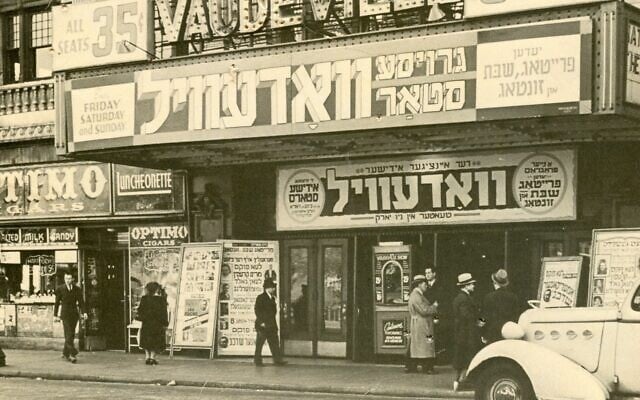
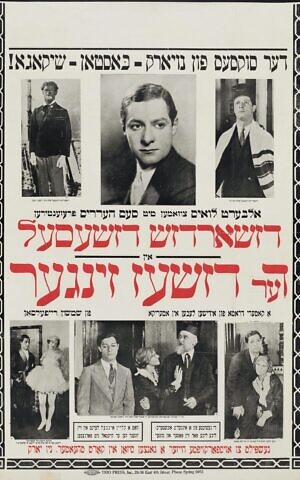
In the mid-1970s, New York’s YIVO Institute became the beehive of an exciting renaissance of reexamining Yiddish culture. By dispensing with the rigid received interpretation of Yiddish as solely a language, it revealed a broad dynamic culture behind the language through what was once dismissed as “ephemera.” Suddenly, previously ignored recordings, movies, photographs, theater posters, restaurant menus, vaudeville shows, etc., became gateways for illuminating exciting and heretofore hidden cultural histories of the Yiddish-speaking world.
It was in this dynamic environment that I first arrived and was able, among others, to become one of the architects of the new burgeoning klezmer movement and my passion about examining the Yiddish world in contrast to dominant American culture. So because of this more defined and calibrated cultural observation, calling my Yiddish-centric book “Jewish New York” would have been inaccurate, as it does not include other period “Jewish New York” communities such as Ladinos, Palestinians and non-Yiddish-speaking Ashkenazim.
The book does, however, cover a fascinating diversity of Jewish life in early 20th-century New York City. Many often think that Eastern European Jewish immigrants were of a single homogenous culture, yet that certainly wasn’t the case, especially when it came to things like food, entertainment, and certain religious traditions. What were some of the most striking differences between these cultures that you found as you were writing the book? How about areas of unexpected symbiosis?
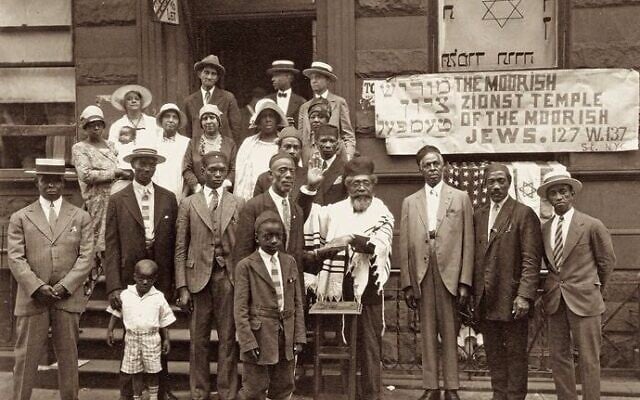
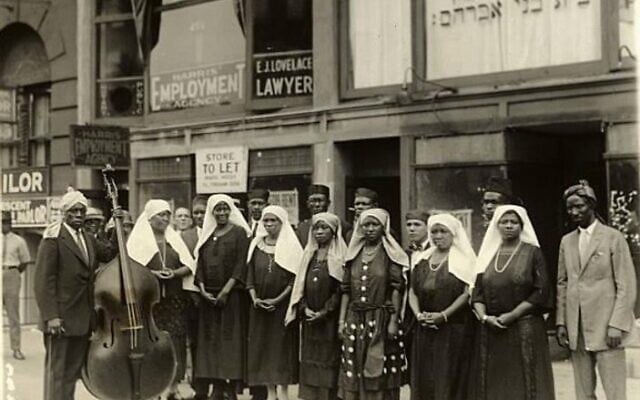
Far and away the ne plus ultra of unexpected symbiosis was rediscovering the lost world of Black cantors, the so-called “shvartze khazonim.” As I note in the book, Jews are used to the idea of Jews becoming carriers of other people’s art or music, but not so much when non-Jews take on our culture. Perhaps the greatest discovery within the discovery was that of the dozen active Black cantors, all but two did so, not surprisingly, as a function in their Black Hebrew congregations. The two who did not, Thomas LaRue Jones and Glayds Mae Sellers (who both also sang in Yiddish) were not even Jews, and so developed their prodigious skills solely to entertain on the Jewish culture circuit.
The book is broken up into sections on food, architecture, music and theater. How did you come to include these sections specifically? Were there sections you considered having but chose not to include, like art or religion, for example?
When I first started writing, the sections had not occurred to me, as I was just writing about what interested me. Only when I sent my first draft in did my editor suggest framing sections.
There were a number of chapters I considered having but did not include. For example, in addition to theater architecture, I did much research on the architects who designed New York City synagogues. However, the more I dug, the more I realized how much more I needed to dig (there were way more synagogues than theaters), so I felt it would have been ill served by a mere chapter and deserving of a book of its own. The same was true of Yiddish radio, but in that case, I was fortunate that I had already been approached for a book on that (due out next year), so I could smoothly continue the larger/longer narrative there.
You open the book with a whole section about food. Safe to assume that wasn’t by accident?
At first, given my background, my book opened with music, but as I continued to write, I found my food writing expanding like a waistline at a bar mitzvah buffet. When I realized food had become more than half the book, opening with that was the only way to go.
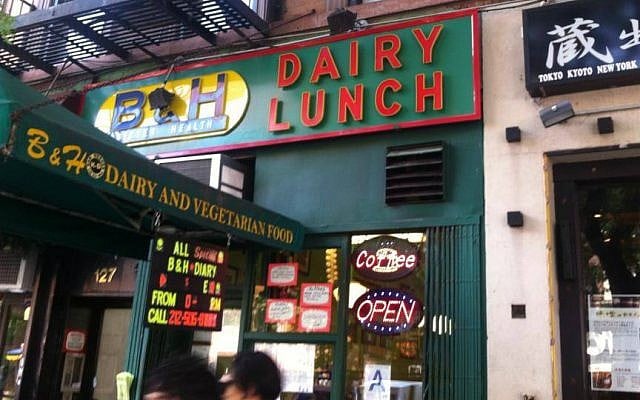
While Ashkenazi cuisine is largely known for its heavy meat dishes, you also discuss a vibrant culture of not only restaurants that served dairy foods due to Jewish dietary restrictions, but also kosher vegetarian restaurants that promoted healthy living. Did that aspect of early 20th-century Jewish culinary life surprise you? Can you share a bit about the Schildkrauts and how they were influenced by mainstream non-Jewish American healthy living trends of the time?
Having grown up in the sunset days of the old dairy restaurants, I was already aware of their provenance alongside the turn-of-the-20th-century vegetarian restaurants. The peak period of Ashkenazic emigration to the United States overlapped with a parallel moment in America of the spread of utopian communities and mass movements that stressed physical culture and pure food.
The Schildkrauts came up during that period, and thanks to Sadie Schildkraut’s innovative cooking ideas, grew the movement. Her greatest contribution was creating dishes that had the taste and mouthfeel of meat by using the slightly mysterious-sounding “protose.” A portmanteau word mixing “prot” (from the word “protein”) and “ose” (“abounding in”), this peanut and gluten-based mixture would become the basis of her “protose steak,” itself to become a cornerstone of Jewish dairy restaurant menus.
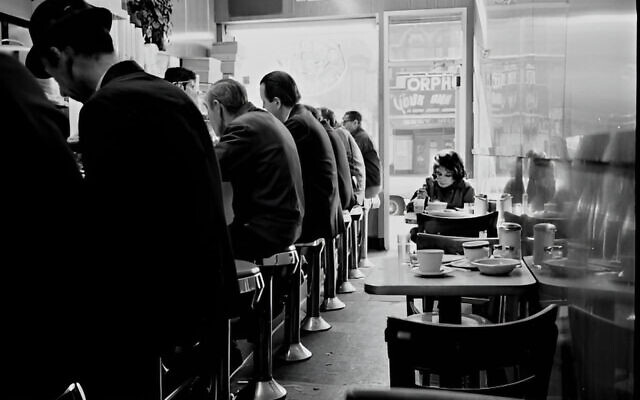
Oddly, the wide success of “protose” in the Jewish world stands in stark contrast to its inventor J.H. Kellogg, the brother of the man who conceived Corn Flakes. After moving on from his involvement in health food, J.H. Kellogg fell under the sway of eugenics and enforced sterilization of “undesirables” (aka Jews), the very people making his protose popular.
I must say that the most surprising thing I learned about Jewish culinary life is that, given that over 75% of Ashkenazic Jews suffer from lactose intolerance, how widespread Jewish dairy restaurants were.
Many legendary Jewish New York restaurants, like Ratner’s for example, survived even into this century before shuttering their doors. What was your favorite historic eatery and why? If you could eat at any of them right now, where would you go? Do you see a potential resurgence or has this style of restaurant gone out of fashion for good?
My favorite historic Jewish eatery was just outside of the scope of my book: Catskill hotels.
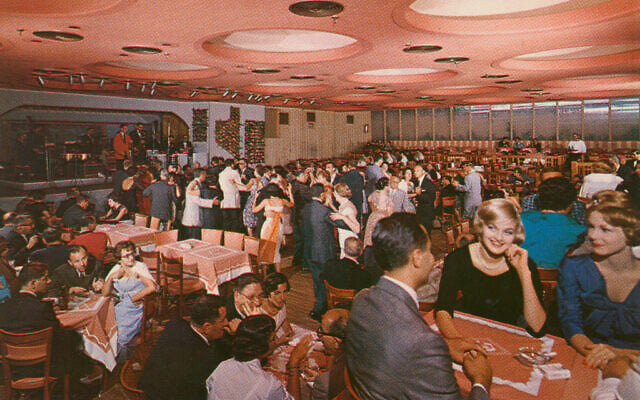
My late father was a cantor at a number of Borscht Belt hotels, and I grew up in that world, which, among the many other wonderful things the Catskills offered, was the grand theater and spectacular cornucopia of their dining rooms. The vast and varied Catskill hotel menu was a reminder of traditional cuisine common and reflective of the lives of the hotel guests and a gateway to new dining traditions.
Matching the food was the dazzling and hypnotizing choreography of the hundreds of waiters and busboys deftly moving around the packed dining room, delivering the seemingly limitless amount of food to the clamoring, voracious diners, many of whom, like my parents, were Holocaust survivors who, until quite recently, were unsure where their next meals would come from.
Years later, when I founded the first traditional Yiddish music and arts event (“KlezKamp”), it was at The Paramount, one of the last of the once plentiful Catskill hotels.
Yiddish architecture is probably not a topic most people have ever thought about, yet you devote an entire section of the book to it — structures built for bastions of Yiddish culture, from the Forverts to the “Million Dollar Yiddish Theater,” even the Fillmore East. What makes architecture Yiddish?
Form follows function. In synagogue architecture, while the building designs have to follow a proscribed layout to conform to ritual function, their decorative design also displayed murals and set pieces drawn as much from religious symbolism and nature as Yiddish folk tales and axioms.
That was also true in the design and layout of buildings destined for secular Jewish use — whether it was stylistic elements like Harrison G. Wiseman’s use of traditional Jewish visual elements in his Yiddish theater designs (images out of Yiddish operas, folk song and plays) or in structural components, such as the old-fashioned beis midrash [house of study] and shul [synagogue] inserted into S. Jarmulowsky’s towering multi-story otherwise classical Beaux Arts bank. While Jewish architects were not unknown, stylistic Jewish elements did not migrate into standard architectural nomenclature.
It’s interesting to note that for a significant period of time, Harlem was the neighborhood home to New York City’s second-largest Jewish community. What were Black-Jewish relations like at that time? Were they fraught? Cordial? Productive? Anything we can learn that might be relevant today?
The history of Black-Jewish relations has always been an uneasy and constantly shifting mix of neighbors, employers/employees, customers, inspirations, allies and enemies. In neighborhoods like Harlem, Jews had already established an infrastructure of business, cultural and social agency roots, which acted as a model for the incoming Black communities migrating from the South.
My book covers several cultural overlaps between Blacks and Jews: Jewish adoption of jazz, the early 1900s Yiddish Uncle Tom shows and the period of the shvartze khazonim.
In all cases, these intercultural borrowings revealed an uneasy toggling between admiration and racism in accepting the already in-place, distorted American view of Blacks. Despite understanding the negative caricatures in the warped popular performance style of blackface minstrelsy, Jews did so in the face of the cold logical entertainment economics that, in order to move up the socio-economic ladder, you have to portray someone farther down that ladder.
Many of us associate Yiddish music with klezmer, a topic which you have also written about extensively. Yet you discuss some other interesting, lesser-known Yiddish musical traditions in the book, like Black cantors (another topic you’ve researched more broadly) and the khazntes, which you described as “a nearly half-century phenomenon of women mastering khazones, the difficult and venerated synagogue liturgy ordinarily sung solely by men.”
You discuss how widespread this phenomenon was with performances across the Eastern seaboard and beyond, but would you say that it ever actually made it into the mainstream of American Jewish culture? When was its heyday, why did it peter out, and why do you think it has all but been forgotten? What’s its cultural or historic legacy?
The arrival of Eastern European Jews at the end of the late 19th century corresponded with the rise of American popular culture, with its voracious appetite for novelty. American vaudeville’s permissiveness allowed for the rise of new hybrid entertainment forms such as the khazntes in the late ‘teens on stages both in and outside of the Yiddish world.
For nearly 50 years, there were nearly a dozen women (Sophie Kurtzer, Bas Sheva, Freidele Oysher — sister of cantor/actor Moishe Oysher — Brayndele the khaznte, etc.) who parlayed their skills in internalizing the male-dominated cantorial repertoire in performances on radio, the stage, films, recordings and television.
However, the khazntes’ popularity mostly skewed toward those who retained an affection for and knowledge of traditional Ashkenazic religious/folk culture, and not those in more assimilated Reform congregations.
The khaznte era lasted nearly into the 1970s, which saw the first women officially ordained as cantors. While the new breed of women cantors were either unaware of or felt they owed no debt of gratitude to the earlier generation of khaznte pioneers, yet, the omnipresence of the secular khazntes normalized the reality of women mastering cantorial singing, making it that much more possible for this new generation of women to rise up to the bimah [dais].
Towards the end of the book, you quote George Jessel’s 1950 eulogy for Al Jolson, the legendary entertainer who presented traditional Jewish cantorial music and the tension between old and new world Jewish culture to mainstream American audiences for the first time in the 1927 film, “The Jazz Singer,” and who was also famous for his performance in blackface. In the eulogy, Jessel wrote, “Jolson is the happiest portrait that can ever be painted about an American of the Jewish faith.” Do you agree? Was it accurate at the time? How about today?
The scene at Al Jolson’s graveside was a funeral not just for “The World’s Greatest Entertainer,” but for the world he represented.
Yes, Jessel’s assessment of his bete-noir was still true at the time: As the only Yiddish-speaking emigre of many popular entertainers like Eddie Cantor, the Marx Brothers, and George Jessel — who were all born in America — Jolson was the Jewish embodiment of Horatio Alger’s popular fictional characters who worked their way up from poverty to success.
Things soon changed as American popular entertainment was still in its blissful pre-rock’n’roll/teenage culture days.
While Jolson is still revered today among some fans of early 20th century mass American culture, he has become an unwanted poster child for the issue of cultural appropriation as numerous film histories point to his blackface performance in “The Jazz Singer” as the embodiment of systemic cultural racism in America even though burnt cork film portrayals continued for decades after the original “Jazz Singer.”
We are now almost exactly 75 years after Jolson’s death. Given the additional historical depth and perspective we now have, who would you say is “the happiest portrait that can ever be painted about an American of the Jewish faith,” and what lessons would you like people to take from your guide today?
The lesson I would like people to take away from my book is about the insistent persistence of period Yiddish culture and how, in the words of American author William Faulkner, “The past is not dead; it is not even past,” which has become a dynamic generational touchstone.
The attempt by a new generation of Jews and non-Jews to take part in the lively reanimation of Yiddish language, music and culture stands as a validation of the emigre community of over a century ago, who chose to navigate through the process of assimilation without losing their inherited cultural heritage.
In this way, my book is a tourist’s guide not merely through a physical space but also through a dynamic of inherited literacy and cultural ownership.
The Tourist’s Guide to Lost Yiddish New York City by Henry H. Sapoznik
This article contains affiliate links. If you use these links to make a purchase, The Times of Israel may earn a commission at no additional cost to you.