- Details
- By Levi Rickert
-
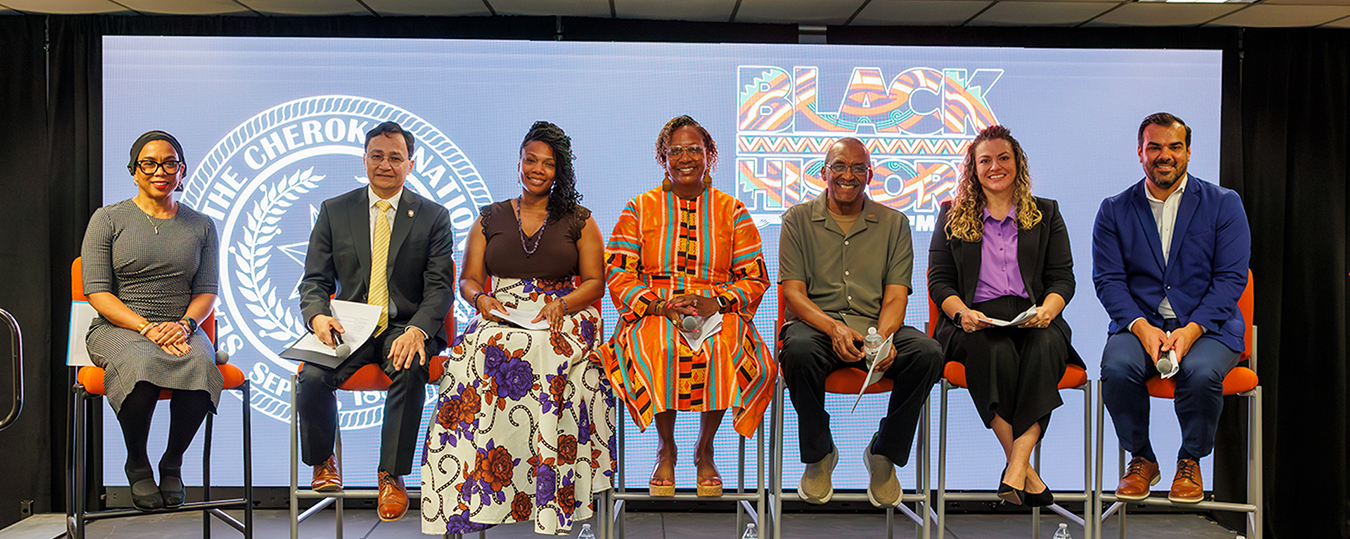
Guest Opinion. Each February, we pause to honor the achievements and enduring contributions of Black Americans. At the Cherokee Nation, Black History Month also calls to examine our own history honestly and to commit ourselves to telling the full truth about who we are. We have a responsibility of telling the full story of our past, including our Nation’s participation in the enslavement of Black people and the enduring experience of Cherokee Freedmen.
This week, we published the findings of the Task Force to Examine the Impact of Enslavement on Cherokee Nation’s 19th Century Economy and Infrastructure. The report presents clear and sobering historical facts. It is not simply an academic exercise, but rather an act of moral responsibility.
Prior to removal, about 6.74% of Cherokee households — largely mixed-blood families with ties to white ancestors — comprised an enslaver class. Prominent Cherokees were among them, including 11 of the 12 signers of the 1827 Cherokee Constitution. By 1835, Cherokees owned nearly 1,600 enslaved people. Enslaved people operated plantations, built roads and public buildings, and were pivotal to rebuilding the Cherokee Nation following the 1838–1839 forced removal.
These are difficult truths. But they are truths, nonetheless.

The Treaty of 1866 guaranteed citizenship rights to formerly enslaved people, or Freedmen, and their descendants in perpetuity. These rights were not conditional. Freedmen should not have needed to struggle for more than 150 years for their rights or be told to go beg for their rights at the ballot box. We must recognize that the long struggle to honor that promise is also part of our history and our responsibility.
The report will guide future dialogue. Additionally, a new executive order will ensure that Cherokee Nation museums, historic sites and related materials comprehensively reflect the history of Cherokee Freedmen. We cannot celebrate Cherokee self-determination while ignoring its complexity. We cannot champion justice today, without acknowledging where we fell short in the past. Our sovereignty is not diminished by the truth. It is strengthened by it.
Black History Month events across the Cherokee Nation Reservation, which includes the historic Greenwood District in Tulsa, remind us that our history is deeply intertwined with many communities. Cherokee Freedmen families helped build the businesses, churches and neighborhoods that shaped Oklahoma’s history. That legacy is one of perseverance in the face of adversity.
Our commitment must extend beyond words toward action. That is why we recently completed a $2.2 million Cherokee Nation North Tulsa Community Building, where an elder nutrition program will launch this summer.
We have selected artist Stanley Boydston’s design for a Freedmen monument to be placed at the Cherokee National History Museum’s Capitol Square in Tahlequah, establishing permanent acknowledgment in the heart of our capital city.
And through late April, we will showcase the exhibit “We Are Cherokee: Cherokee Freedmen and the Right to Citizenship” at the Anna Mitchell Cultural Center in Vinita.
As Principal Chief, I believe our sovereignty is strongest when grounded in truth. Cherokee values, like community and responsibility, demand that we confront difficult history head-on with courage.
The Cherokee Nation has endured because we adapt and grow. Black History Month gives us the opportunity to affirm that the Cherokee story includes Freedmen history. Black Heritage is not a footnote but an essential part of who we are. We’ve made a promise to future generations of Cherokees: we will not hide from history but learn from it.
Chuck Hoksin, Jr. is the principal chief of the Cherokee Nation.
More Stories Like This
Jesse Jackson Changed Politics for the Better
Native News Online at 15: Humble Beginnings, Unwavering Mission
From the Grassroots Up, We Are Strengthening the Cherokee Nation
Friday the 13th: When Superstition Proves More Powerful Than Law
Help us defend tribal sovereignty.
At Native News Online, our mission is rooted in telling the stories that strengthen sovereignty and uplift Indigenous voices — not just at year’s end, but every single day.
Because of your generosity last year, we were able to keep our reporters on the ground in tribal communities, at national gatherings and in the halls of Congress — covering the issues that matter most to Indian Country: sovereignty, culture, education, health and economic opportunity.
That support sustained us through a tough year in 2025. Now, as we look to the year ahead, we need your help right now to ensure warrior journalism remains strong — reporting that defends tribal sovereignty, amplifies Native truth, and holds power accountable.
 The stakes couldn’t be higher. Your support keeps Native voices heard, Native stories told and Native sovereignty defended.
Stand with Warrior Journalism today.
Levi Rickert (Potawatomi), Editor & Publisher
About The Author