

MOUNT PLEASANT, S.C. (WCSC) — Residents of a Black settlement community in Mount Pleasant have found a way to preserve their history amid ongoing gentrification seen through developments, mansions and a demographic shift.
Scanlonville was initially developed as a historic Black post-Civil War community, but now, less than 10% of land remains with the original families. From a court battle to protect their buried ancestors to the excitement of an upcoming heritage park, the community is fighting to protect that small percentage that’s left.
“It’s a big difference,” Walter Olsten, a 96-year-old resident of Scanlonville, says. “Back then, well, we ain’t had nothing but a little horse and wagon road. Just about all of the old folks is about gone now back from what I grew up with. I hope to keep it alive.”
Many descendants of the original Scanlonville residents now make up part of the East Cooper Civic Club, an organization with a mission to uphold and promote the historical value of their community.
“We’re persistent, resilient, we just keep on going,” Edward Lee, East Cooper Civic Club president, says.
The community began in 1868, when freedman John L. Scanlon purchased 614 acres of land comprising the former Remley Plantation for $6,100. He then founded the Charleston Land Company to provide land ownership to freed slaves and create a self-sufficient community. About 100 freedmen then purchased land and established a thriving community right on the Wando River.
“Kinship is the key there for the preservation of their community and even knowing the history of the community, the stories have passed down from generation to generation,” Kate Miller, principal planner with the Town of Mount Pleasant, says.
That community consisted of several landmarks that become hotspots for the Black community, including the first Black beach in the area called Riverside Beach and the accompanying pavilion, the first Black motel and nightclub East of the Cooper called White’s Paradise and Remley’s Point Cemetery.
“It’s like a garden of Eden,” Gary Simmons, a longtime resident of Scanlonville, says. “I’m so blessed to have grown up in the area that’s so rich in history.”
However, the County sold the beach to developers in 1975 and the motel and nightclub were demolished in 1993, which made way for the current boat landing in a neighborhood Scanlonville residents say they no longer recognize.
While the beach and motel have historical markers, the cemetery is a little harder to find, but residents say it’s on purpose with a mission of protecting their history and ancestors.
From being a part of a tight-knit community to experiencing significant gentrification driven by high-end redevelopment, rising property values and expensive new housing, residents are pushing to preserve their history.
“You see all the development coming and encroachment coming that is trying to change everything,” Simmons says. “And I hate losing the culture that we had here.”
That’s where the grassroots movement to preserve comes in.
“We’re trying to preserve,” Lee says. “Along with the physical things that are here, we got to preserve that culture and that cohesiveness and we got a number of projects.”
Community rallies to protect Remley’s Point cemetery in a reclamation of heritage
A cemetery known as Remley’s Point Cemetery is tucked between marsh and houses along 5th Avenue, and residents want to keep it that way.
The cemetery was first established by freedman Robert Scanlon in 1868 as part of the Remley’s Plantation community. It currently contains more than 40 marked graves, but experts say there may be over 1,000 people buried there.
“My grandma was down there,” Olsten says. “Got an aunt down there and more people down there.”
Remley’s Point cemetery dates back to the 19th century, but it was almost entirely disturbed in a court battle more than 20 years ago between longtime residents and a local developer.
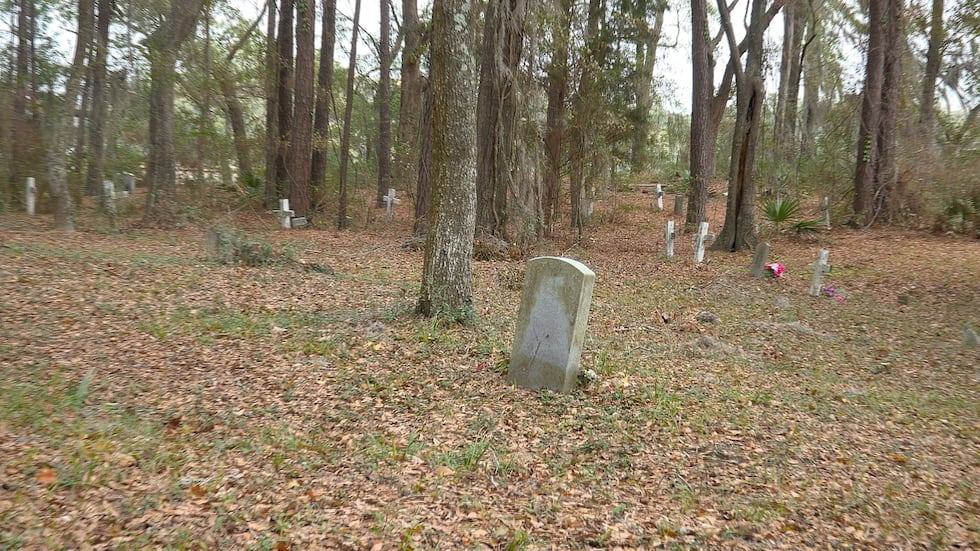
In the East Cooper Civic Club v. Remley Point Development LLC case in 2005, the defendants alleged the land was never publicly dedicated and that the cemetery was abandoned through non-use and neglect.
“It was very disturbing,” Jacqueline Gore, a longtime resident of Scanlonville, says. “That was a community and still is a community graveyard. We need to keep it that way.”
Lee shared the same sentiment and says hearing the claims that the cemetery was abandoned still sticks with him today.
The court declared the graveyard had been publicly dedicated and it was in fact never abandoned. The cemetery was later identified as one of South Carolina’s most endangered historic places by the Palmetto Trust for Historic Preservation.
Although the cemetery was officially nominated to the National Register of Historic Places in 2002 and met all the criteria, since the community didn’t own the cemetery at the time, it didn’t make it onto the register. With the help of a grant for underrepresented communities, town officials say the outcome will most likely be different this time around.
“We’ve hired a consultant and they actually just finished the nomination and put the application in,” Miller says. “So, we expect the Scanlonville cemetery to go on the National Register this year, so that’s a really exciting preservation effort that we were able to help them with through that grant.”
Miller says the cemetery could be added to the register as soon as this year.
The Remley Point Cemetery is the last of three African American cemeteries in the immediate area. Across the sacred grounds, residents have placed items that their loved ones could always be found with like pots and pans, mugs and even beer cans.
“In our community or in our culture, death is not the end,” Lee says. “Death is a transition, so the thought of it being what you need in your life on this earth, you’re also going to need after in the afterlife.”
Another key detail is the way the graves are facing and their location next to a body of water.
“The sun goes East to West, it sets in the West and it’s the end of life,” Lee says. “The water will represent the separation between life and death, so on the west side it represents you’ve passed on and you transition.”
Burials still happen today with more recent gravestones joining their ancestors.
“Since we won the cemetery back, we’ve had a number of burials,” Lee says. “If you walk around, you can see the headstones and you can see the tributes on the ground with all the flowers, so it’s open. We’re open for business.”
Residents say the cemetery is a prime example of their culture and the proper way to preserve it for future generations.
Town of Mount Pleasant to honor community with upcoming heritage park
At the corner of Mathis Ferry Road and 5th Avenue sits a work in progress – Scanlonville Park set to tell the full history of the settlement community.
The East Cooper Civic Club put out an international design competition where numerous professors and students created a design for the park. The winning plans for the park feature details telling a bigger story, including a sweetgrass weave pavilion, gold Gullah statues and a praise house. The park will highlight the area’s rich Gullah heritage, featuring a Sweetgrass Pavilion, a praise house entrance and various displays detailing the community’s history.
“This is all to really preserve the culture and the history of Scanlonville and be able to do that through this park is what they’ve envisioned for years to come,” Miller says. “It’s part of the history of Mount Pleasant. It’s a shared history and that’s an important piece of the history of Mount Pleasant.”
The park is a collaboration between the East Cooper Civic Club and the Town of Mount Pleasant. The park is also set to be part of the upcoming Mount Pleasant Way set to roll out numerous bike and walking trails throughout the town.
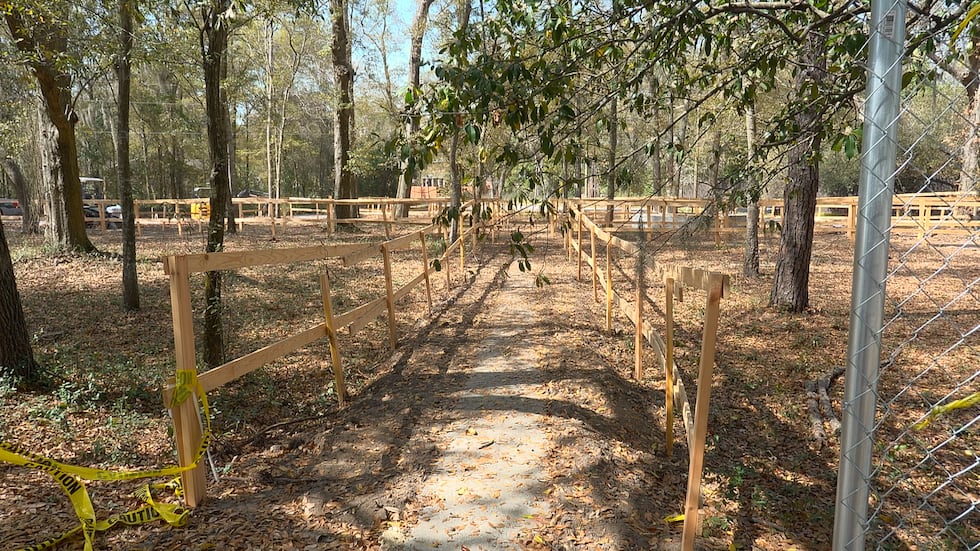
“That was a just a natural partnership,” Miller says. “That was community led. They came up with their own design.”
It also aligns with the recent funding from Charleston County for various settlement community projects, including money to improve greenspace access at the Scanlonville Memorial Park.
Residents say they’ve learned how to work with the town to ensure their preservation efforts are supported.
“I definitely feel a responsibility to these historic settlement communities,” Miller says. “They are an important piece of Mount Pleasant history and it’s a collaborative effort to really preserve and respect and protect that history.”
Scanlonville residents also say keeping the land within their families will ensure their history and culture doesn’t die with them.
“With all the development coming in, it’s a little tough at times to see people selling their houses,” Simmons says.
Amid ongoing gentrification, they feel it’s even that much more important because it’s not just passing down property, but land with a long-lasting legacy.
Copyright 2026 WCSC. All rights reserved.




/https://tf-cmsv2-smithsonianmag-media.s3.amazonaws.com/filer_public/8c/04/8c0478a5-02e7-46e0-beb8-0fa04e7244e9/tougaloo-nine.png?w=480&resize=480,240&ssl=1 "Nine Black College Students Were Arrested in 1961 for Reading at a Segregated Public Library. Their Contributions to the Civil Rights Movement Have Long Been Overlooked")

