Men donning suits and ties and women wearing dresses and heels flooded the ArtsTech center in Kansas City on Saturday night, a noticeable difference to the youth usually there.
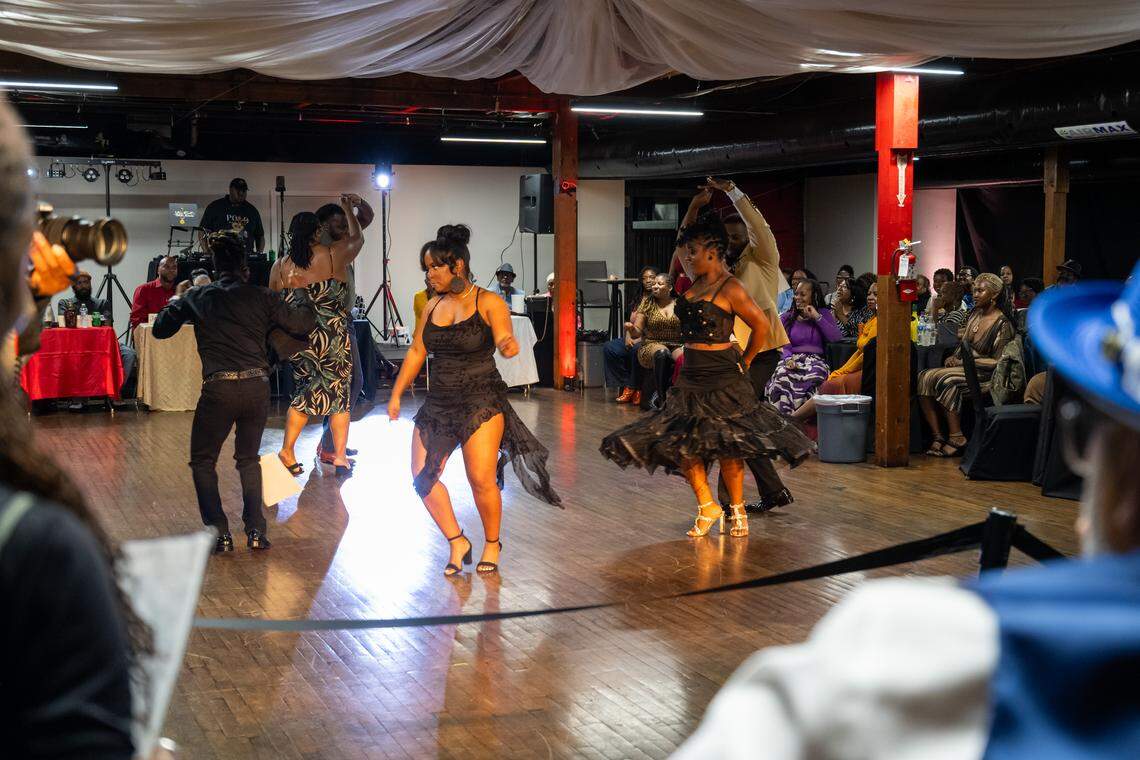
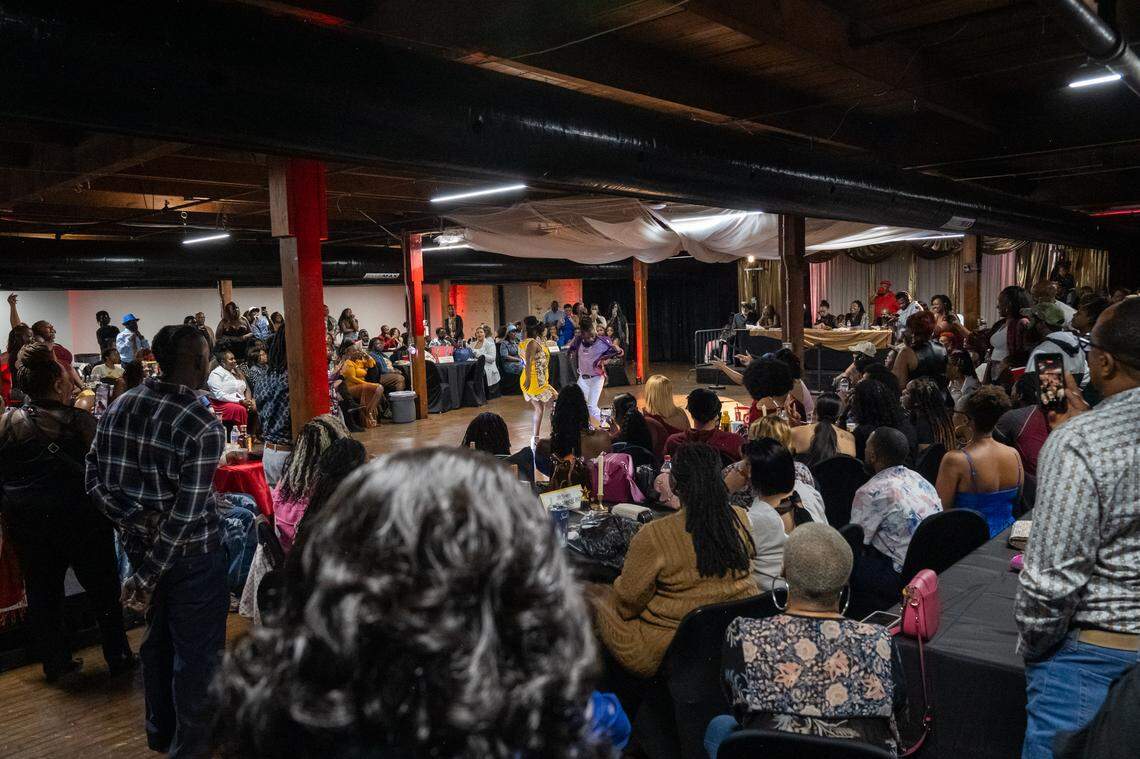
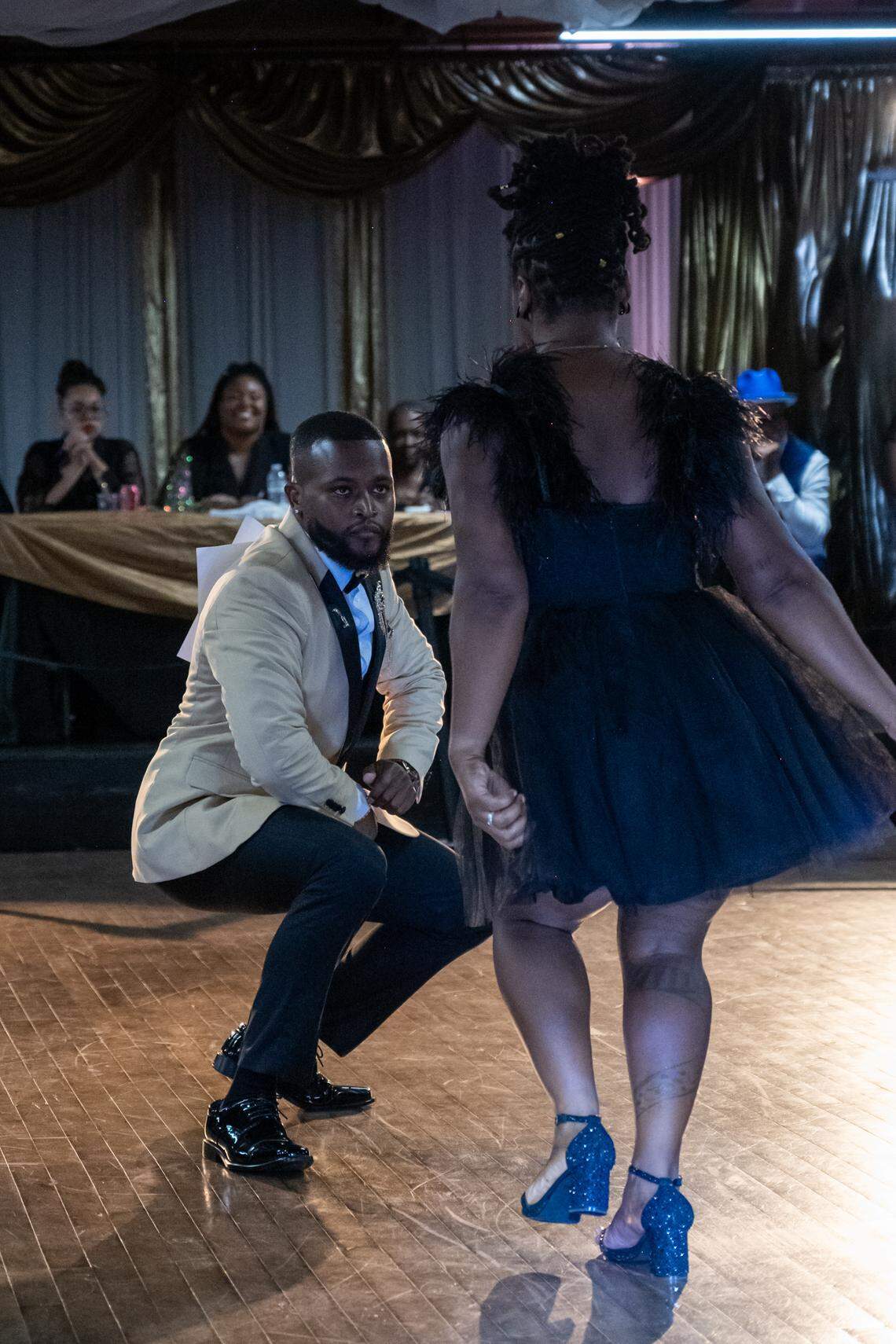
Dresses swished and dress shoes clacked against the floor as couples danced for bragging rights in one of the biggest celebrations of Black culture in KC.
On almost every table read a sign: “20 Years! The Big StepOff 2025.”
At this annual dance competition, coupled participants showcase their best Kansas City two-step routine to try to become the “King and Queen” of Kansas City. The Big StepOff celebrated its 20th anniversary on Saturday.
But the historic dance goes back decades before that. In the city’s Black community, two-stepping is as quintessentially Kansas City as jazz or barbecue.
“Mama De, do you need anything?”
“Mama De, you good?”
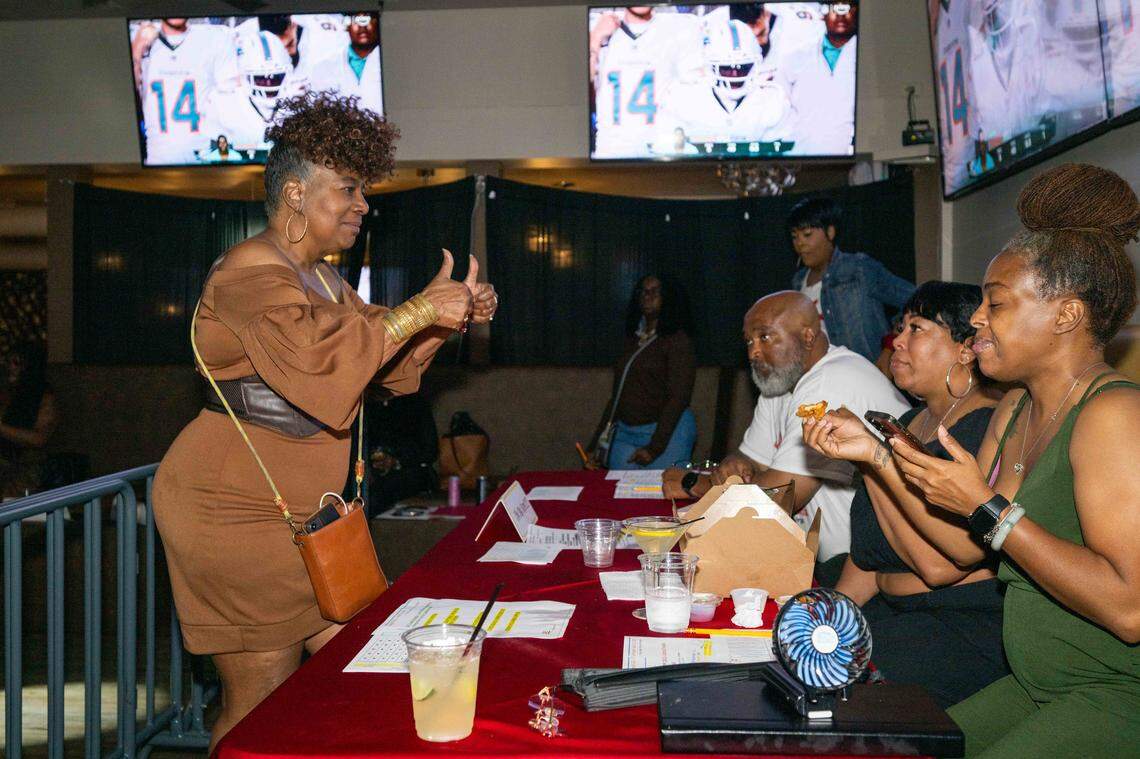
Thoughtful concern for De Barker, producer and co-founder of the competition, rattled off throughout the evening as the “queen of Kansas City two-step” ushered around the room.
“The fact that this is the 20th year of the Big StepOff speaks volumes to what she has committed her heart to with regards to the Kansas City two-stepper,” said Deneane Hancock, proudly standing alongside her husband Rafael and their first-place trophy.
“That was also part of the reason why we got into it because our love for [De Barker].”
“You can’t tell me nothing about De Barker,” her husband Rafael added. The Hancocks won first place in the Big StepOff in 2016 and took the crown again this year.
The competition was different this year, too. Called the “Queens Court Fall Fest,” this year’s Big StepOff only featured contestants who had placed first place in previous contests, including weekly mini competitions Barker held every week in September.
“I hope (Kansas Citians) say (the Big StepOff) represented our city successfully, adequately and culturally represented our culture,” Barker said.
“That it represented our mother’s cooking … the flat tires that our daddies fixed … it represented when we used to burn trash in the backyard in barrels … it represented families, cousins, of large families … it represented walking to church … walking to school in the snow with high boots and galoshes … it represented hopscotch.”
“It represented all the things that were good for our family and pleasing to our family and made us a family,” Barker smiled.
The history of Stepping in KC
The Kansas City two-step, also known as 2step, has long been a defining piece of Black culture for local Kansas Citians.
The ballroom-style dance is believed to have evolved from the jitterbug and the Lindy Hop dances of the famous Big Band years — also called the swing era — that peaked from the early 1930s to late 1940s.
Both the jitterbug and Lindy Hop (which is often referred to as the granddaddy of the swing era dances) are lively, energetic swing dances that involve quick spins, sharp footwork and pure joy between a pair to a booming live band playing. They blend athleticism and charisma in vibrant moves between partners.
While Big Band music has roots tracing back to New Orleans, its major hubs included New York, Chicago and Kansas City. Around this time in KC, 12th Street near downtown had over 50 jazz clubs. The swing era started to decline around the late ‘50s, making way for the emerging Rhythm and Blues genre, aka R&B — a mix of blues, jazz and gospel.

So Kansas City dancers adapted, too.
Local teens in the early ‘60s adjusted to the slower tempo of R&B, while not having the physical space to do full-out swing moves of the previous decade. So those teens created a simpler dance: two-stepping as we know it today.
A slower, smoother style of dance, two-stepping is a couples dance defined by connection, romance and grace that’s rooted in rhythm unique to Kansas City culture.
“It’s smooth … it doesn’t look like a workout and a lot of these steppers from other cities … (where) it looks like we’re at a workout class,” said Theron Alcorn Sr. who has both competed and judged in the Big StepOff in KC alongside his partner, Ti’Ara Alcorn.
Whether couples are dancing to a silky smooth R&B ballad or an upbeat groove, the rhythm continues on with each dance move of the dance.
It goes like this: One step forward, and back, then one step back and forward. Those are the two steps the name comes from. Next, three swaying rocks. The more experienced steppers intertwine the basics with spins, walks and more. The man traditionally takes the lead in guiding the pair’s dance.

Other cities boast their own dance traditions, especially in the Midwest and South, but Kansas City two-stepping stands in a lane of its own, Ti’Ara Alcorn said.
“Kansas City two-step is a little bit more versatile [than other cities] in the way that we can dance to all kinds of different music,” she said. “I think some of the other cities that have a step, they have to have a certain type of beat tempo to step.”
De Barker, known around town as the “queen of Kansas City two-step,” has been stepping since she was a teenager in the early ‘70s. She’s 69 now, and has taught many groups of all ages and dancers of all ethnicities from all across the metro area how to step.
“I’ve graduated thousands from my two-step classes.” Barker said.
Barker also started the two-step graduation certificate ceremony. A trend two-step teachers often adopt, the graduation officially certifies dancers as steppers after they’ve completed a certain number of class hours.
“I did the certificates because I’m always trying to reward people,” Barker said.
“I wanted people to invite their families. … It’s a camaraderie,” she added. “You come together and say, ‘look what I’ve done.’”
A Kansas City native, Barker remembers learning the dance from her family prior to starting high school at Paseo Academy. She remembers how two-stepping was a social and popular form of connection.
“You couldn’t get to high school and not know how to step,” Barker said. “My older cousins told me, ‘Don’t come to this school and not know how to two-step.’”
“For the men, you had to know how to step to appeal to the girls,” Barker laughed.
Now, stepping in Kansas City is shifting to a younger crowd that is eager to learn how to do the dance and continue on the legacy.
“When growing up you’d just hear two-stepping with the older generation,” said Danielle Williams, also known as DW, who won the 2024 Big StepOff with her partner. She’s also a two-step instructor.
“Now it’s a lot more of the younger generation that’s like yeah, I want to learn.”
Everyone steps in KC
But two-stepping has never had an age limit.
On almost any given night at Culture X (formally The Epicurean Lounge) at 7502 Troost Ave., or the Kansas City Juke House in the 18th and Vine District, you’ll see generations moving together.
A gentleman in his 60s might glide his partner, or multiple partners simultaneously, across the floor like he’s never missed a beat. A twenty-something-year-old could be leading his partner with new-school flair on the dance floor. The common rule in KC stepping is that the man leads his partner in the dance — queuing the spins, turns and overall flow of movement.

The seasoned steppers usually carry an effortless chemistry that electrifies the room. The best DJs at two-step events don’t just play slow jams — they craft mixes.
Their mixes flow so seamlessly that every transition feels like a part of the song itself, like a heartbeat guiding the dancers across the floor.
“I like to bring that mix of old school and new school vibe to not only The Big StepOff, but to any two-step event period,” said Ernest Parks, also known by his stage name DJ Foots, who is a popular DJ in the stepping community and also curates the music for The Big StepOff event.
It’s a harmony that Williams and her partner Trayvon Butler embody naturally. Butler leads with steady confidence, and Williams follows with a dainty, graceful flow that draws every eye in the room. On the floor, they execute the language of closeness — that sweet spot between control and chemistry — without missing a beat.
Both are millennials, but from opposite ends of the generation’s spectrum — Butler is 30, and Williams is 41.
Williams said she was inspired by watching her parents step when she was growing up. She recalled being scared to learn how to two-step at the Juke House in 2018 before she joined the group Steppers of Kansas City (SOKC).
“This gentleman asked me to step at the Juke House and I was so scared, saying I didn’t know how,” Williams recalled. “But the vibe for KC two-stepping is so welcoming and that made me feel so comfortable … that’s where I fell in love with it.”
“It became my therapy,” she said.
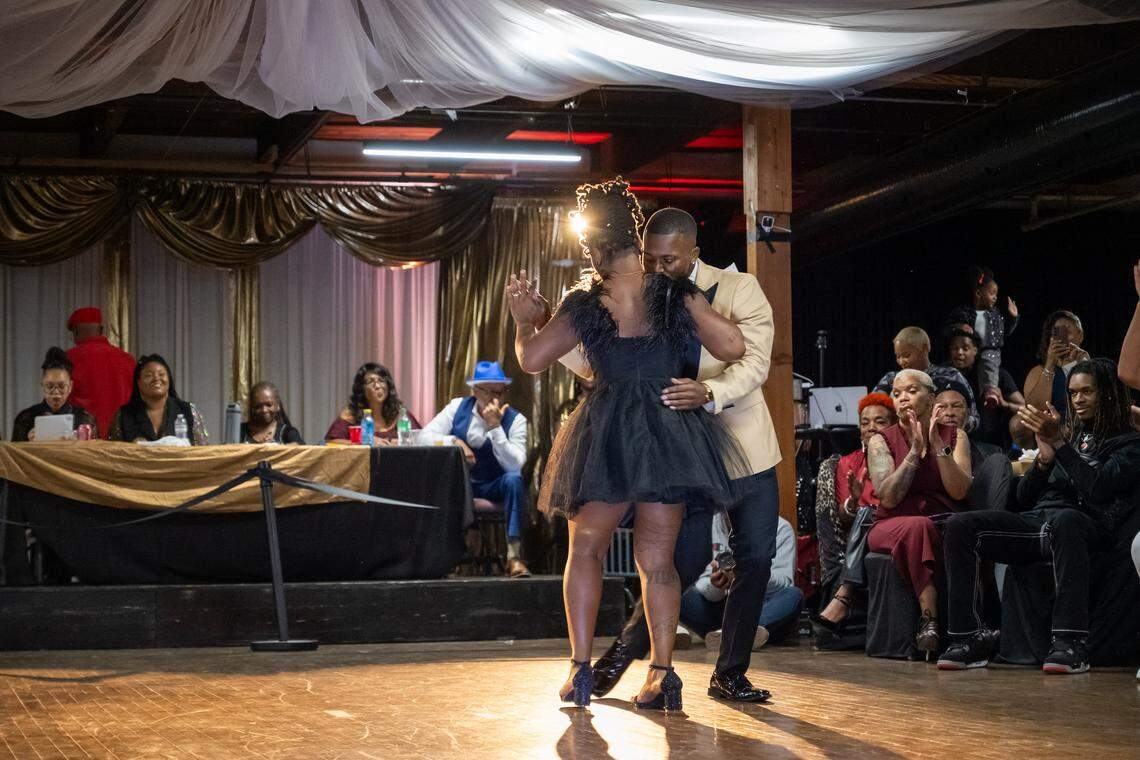
Butler, who now teaches a two-stepping class at Culture X, found his passion at Gerron Greenfield’s 2StepGameNight in Kansas City. Greenfield, 36, said he wanted to provide a space for everyone, especially people around his age, to enjoy stepping and to connect.
“It enables individuals from diverse age groups, spanning 21 to 65 years old to connect in a single space,” Greenfield said over text. “Now that’s special.”
“Even with the older generation, they embrace the younger generation,” Butler added. “And how we are elevating the game and trying to keep the two-step community alive.”
‘The Queen’ in KC
For years, Barker has been at the helm of Kansas City’s two-step community.
“I just take my hat off to her,” said Theron Alcorn Sr. “This whole production takes a lot out of her, but she consistently shows up and delivers.”

In the early 2000s, local filmmakers and two-steppers Rodney Thompson and Stinson McClendon approached Barker about making a documentary about two-stepping.
“They said we need somebody who’s in the community with the steppers,” Barker explained. “So they picked me. I had just moved back home just before 2000. … I was already in the club stepping and teaching and in the nightlife. And so, I knew a lot of people.”
In 2003, Thompson and McClendon premiered “A Conversation in Dance.” But that wasn’t the only thing that came from the documentary.
That’s when the Big StepOff was officially introduced, too. It was paused a couple of years including for COVID, but has continued to keep its momentum.

“They were going off to do other films and other things, and then they said, ‘De, you’ve been with us and you really put a lot of work into this. So, would you like to take it over?’ So I grabbed the name and made it my own,” Barker recalled.
Along with running the Big StepOff, Barker is also the community program director and event manager for ArtsTech in downtown KC. The ArtsTech center provides programs and services for young people and the community to help invest in their artistic and technical skills.
“Our city is full with youth that are very talented, but don’t know they have that talent,” Barker said. “So ArtsTech is the place they could find that talent and cultivate that talent and create through that talent and possibly become enterprising with that talent.”
It doesn’t stop there. Barker also teaches two-step classes at Crossroads Middle School and University Academy.
“The principal at UA previously placed in the (Big) StepOff and since then she had said ‘I got to bring De Barker in to teach two-stepping,’” Barker said.
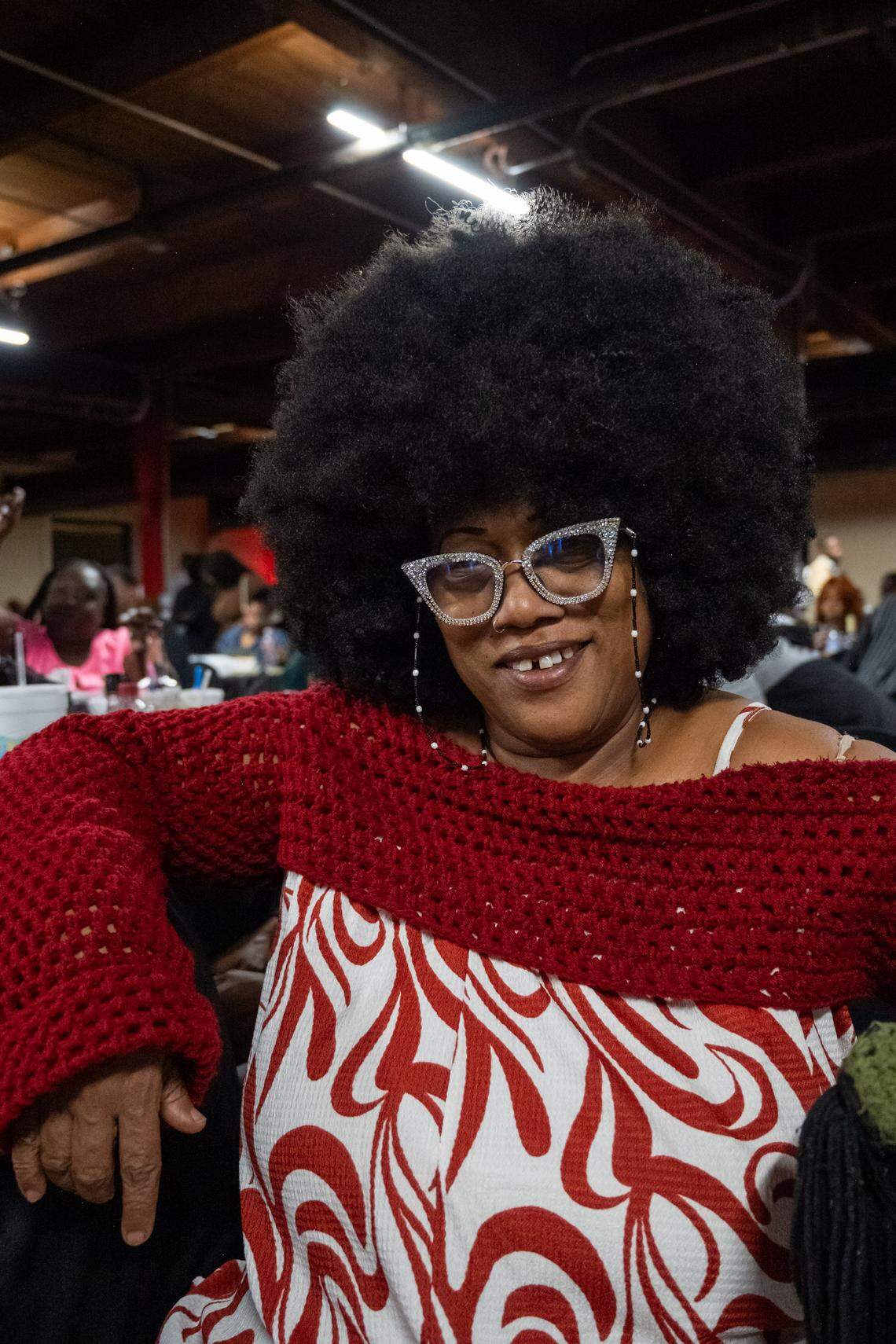
Barker hopes that teaching younger generations how to step will carry on the Kansas City legacy for years to come. She’s been teaching her granddaughter how to step since she was 3, and dreams of creating another competition for young adults.
“I want to create a teen competition for ages 13-19 for a two-step competition next year,” Barker said.
Where can you two-step in KC?
Almost any night of the week, you can find somewhere in Kansas City that is hosting a two-step class or event.
Barker teaches soul line dancing and two-step classes at her I Dance with De (IDWD) sessions every Tuesday at the ArtsTech at 1522 Holmes St. All classes are $5 each.
Butler, Williams and Greenfield also teach classes around Kansas City. Williams and Greenfield teach on Thursdays at Elevation Grille at 6141 Blue Ridge Blvd. in Raytown for Greenfield’s 2StepGameNight. Doors open at 8 p.m., with class starting at 8:30 and running until 10, with an open floor the rest of the night. The cost for admission is $10.
Butler and a few other steppers teach at Culture X off of 75th and Troost on Fridays. Class starts at 7 p.m., and after 9 p.m. there’s an open dance floor. Admission starts at $5 then increases to $10 at 9 p.m.
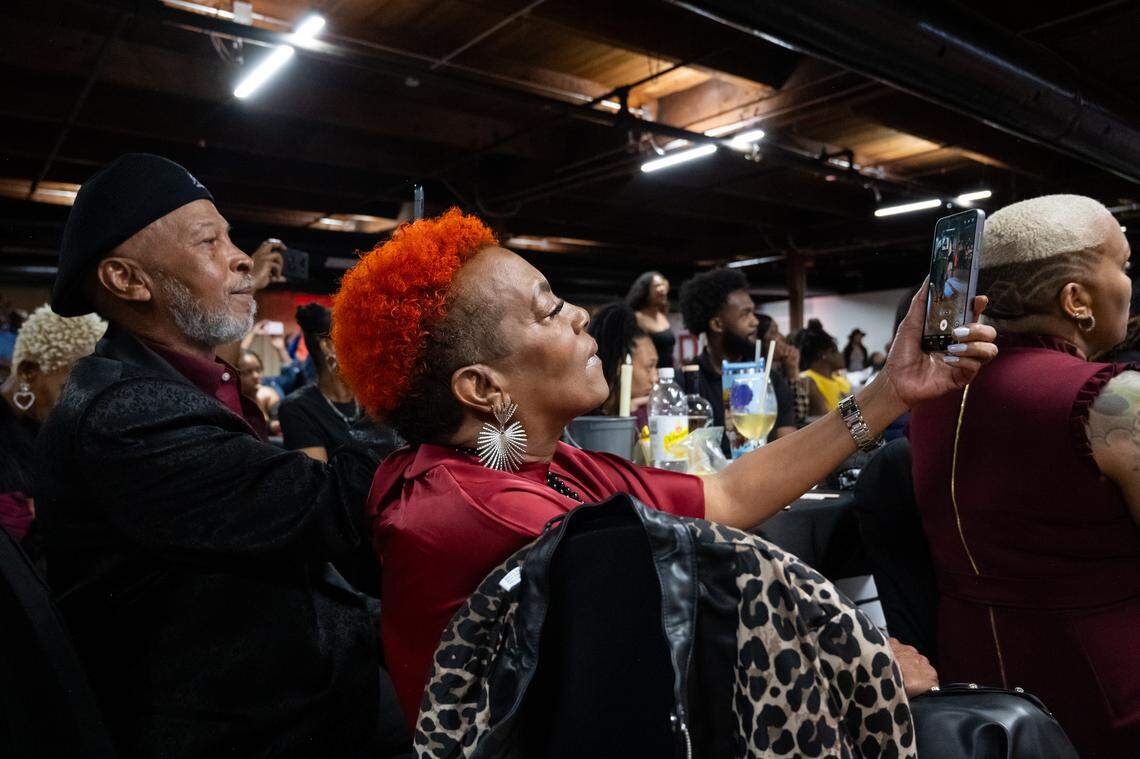
The KC Juke House, where DJ Foots often spins, hosts two-stepping every Wednesday with doors opening at 5 p.m. Entry is free until 7 p.m. then starts at $5.
All levels of steppers are welcomed to these two-stepping classes.
KC two-steppers brought the house down
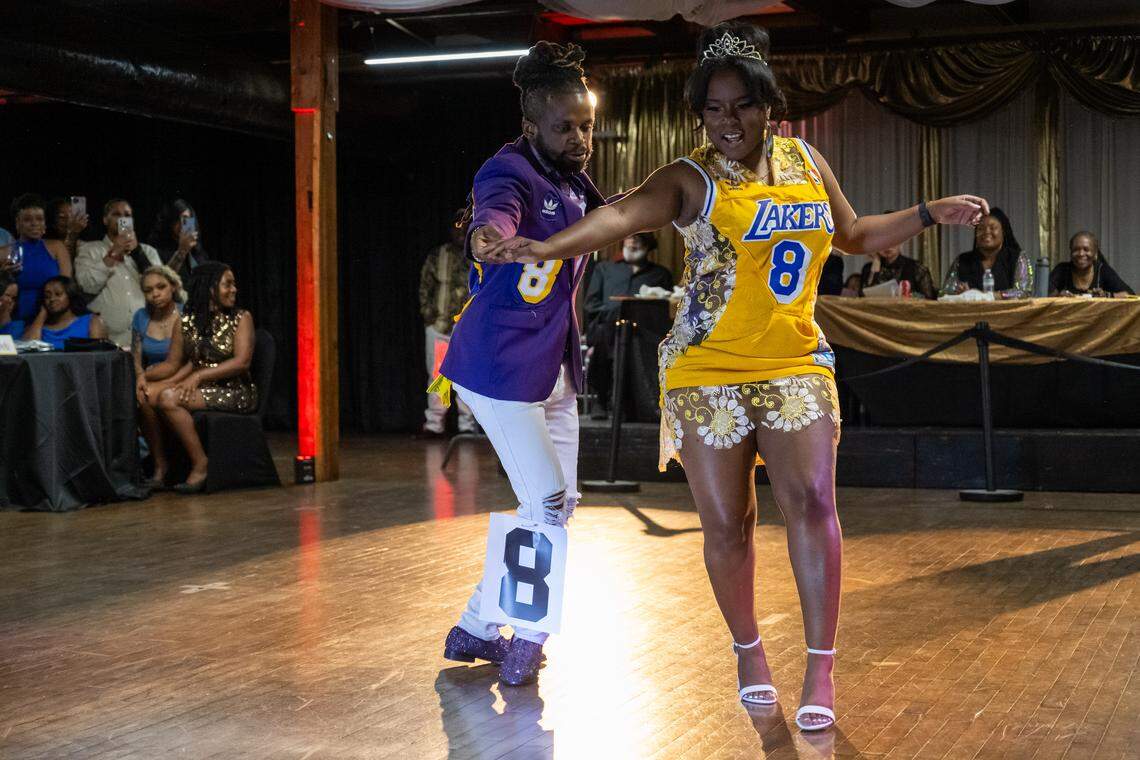
Nine couples competed for bragging rights at the 20th anniversary of the Big Stepoff on Saturday, Oct. 18. Each couple was dressed for a black tie affair, matching their respective partner eloquently.
Many two-step groups were also in attendance at the event, including FLOSS KC, Steppers of KC (SOKC), IDWD, Stepp-tacular and more. These groups host two-step classes, events, and more throughout the community.
The night began with an open floor — a time when judges and guests stepped with each other while participants prepared to take center stage.
Then, the competition started, beginning with a group dance where all nine contestants stepped in front of the judges without being scored. The judges panel included people who had competed in the Big StepOff previously, including some who had even competed in the inaugural competition in the early 2000s.
Couples were judged on a scale of 1-5 on their technique and style, timing and rhythm, compatibility, use of floor, crowd appeal and overall appearance of their attire.

While the actual scores weren’t revealed, judges emphasized how hard it was to score this year with previous first place winners going head-to-head for the title.
Warren “Stylez” Harvey and Teresa “Reece” Hawkins placed third with their eccentric style of step.
The couple that placed second, Mike Henderson and Billie Watkins, serenaded the crowd with their “Old-School Style” of KC two-stepping. Their sets were a nod to the soulful R&B of the ‘70s and the ‘80s, and included stepping to a mixed version of “Lets do it Again” by The Staple Singers released in 1975. Henderson led with a smooth step that was anchored in tradition, while Watkins – who had just turned 60 – moved with ease and an elegant grace.
Rafael and Deneane Hancock, who took first place, stunned the crowd with a C-Walk midway through their second scored couples dance. The married duo — who last won first place almost a decade ago in 2016 — shut the floor down like veterans reclaiming their crown. They opened that dance gliding effortlessly across the floor, to the song “Folded” by Kehlani

Then suddenly, “Eastsidaz, come out and play” blared through the speakers. The crowd looked to the left and right — this wasn’t a traditional two-step song.
Instantaneously, the Hancocks started crip-walking in the middle of their dance, bringing the room to their feet. They joined each other center stage to command their two-step to “I Luv it” by The Eastsidaz — a Long Beach, California, hip hop trio comprised of Snoop Dogg, Goldie Loc and Tray Deee.
The married duo never missed a beat as they stepped to the G-Funk song, or Gangsta Funk, a genre that hailed from the West Coast. It was Deneane’s idea for the couple to add that to their dance set, she said.
“We just want to give so much love to the other contestants, this was not an easy competition,” Deneane said afterward.
“We knew we had to bring our A-game because they are that good … so, we’re just grateful and honored that we won,” she added.
“I’m grateful to De Barker for the legacy that she has created with two-step and our job was to keep the authenticity of it going.”

This story was originally published October 21, 2025 at 6:00 AM.
.jpeg)
Alexa Stone
The Kansas City Star
Alexa “Lex” Stone is a vertical video creator for the Kansas City Star, where her focus is highlighting Kansas City through digital storytelling across platforms. A proud Kansas City native, she earned her bachelor’s degree from Mizzou and her master’s degree from Georgia State University. She has a deep passion for culture, sports and community.