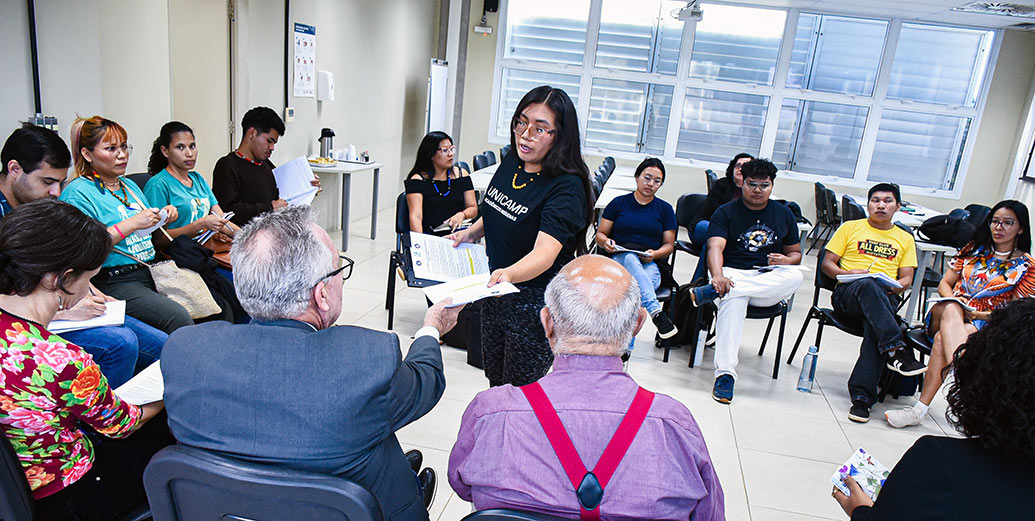
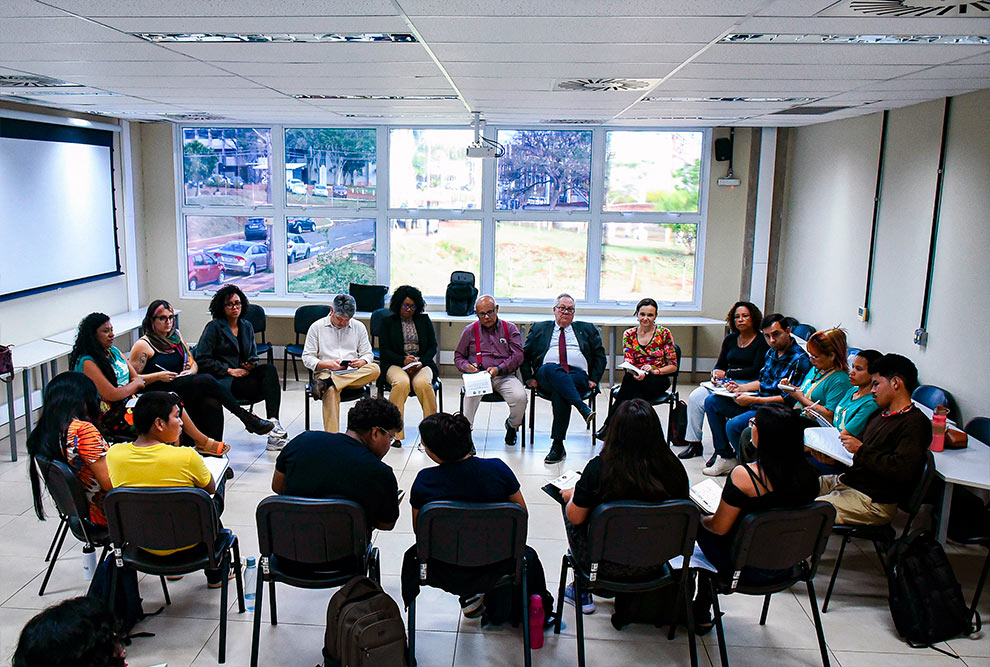
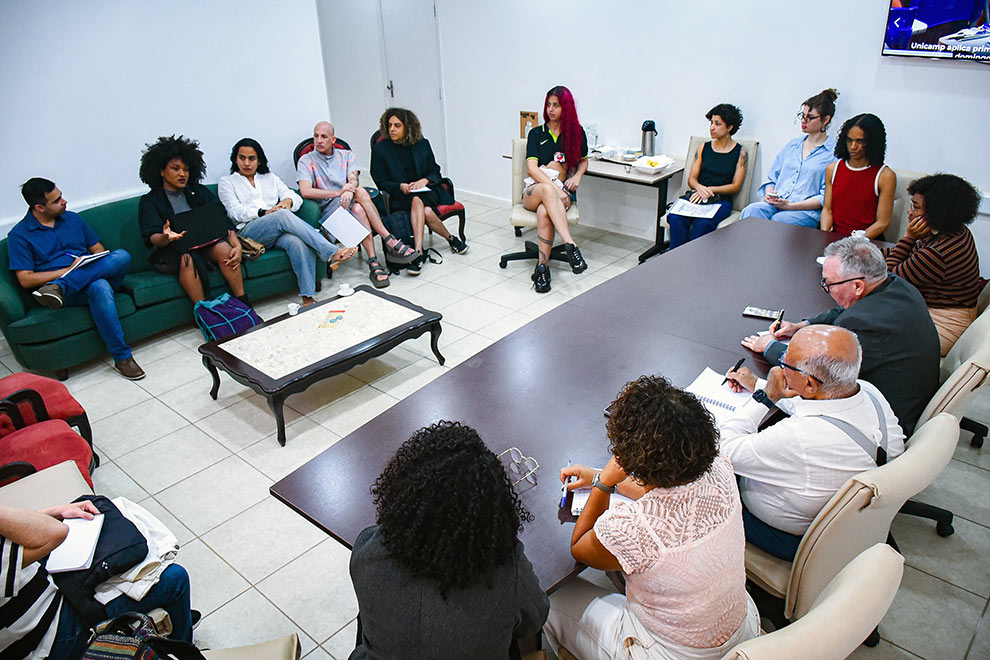
The Unicamp rector’s office held a series of meetings to open what it defined as “listening channels.” The meetings were held with members of the Central Student Directory (DCE) on June 25; Indigenous collectives on October 9; the Black movement on October 13; and trans collectives on Thursday, October 23. Unicamp rector Paulo Cesar Montagner emphasized the importance of keeping these channels open. “The goal is to listen to people in our community to implement joint projects with clear actions,” he explained.
For the University’s general coordinator, Fernando Coelho, listening is “extremely important” to finding solutions and implementing actions quickly and efficiently. “The idea of this periodic conversation circuit will serve to streamline processes. Now, we will survey the issues and demands to organize the next steps. We will establish a calendar, call on the leaders and group representatives, and implement a policy of collective development,” he emphasized.
At the opening meeting, DCE representatives called for changes to how university restaurants operate on weekends, greater accessibility for people with disabilities, and the renovation of student housing, among other demands. “There are open channels at all levels, and we noticed that there are clearly defined demands and others shared by all groups,” the general coordinator assessed.
Indigenous hut
At the meeting with indigenous groups, students from various ethnicities and programs from the Campinas and Limeira campuses presented their demands. One of them is a space for coexistence, culture, and spirituality—an “indigenous maloca.” “We emphasize that our struggle is not individual, but collective, and carries the commitment to ensuring that indigenous peoples continue to occupy, transform, and enrich university spaces,” states the document submitted by the Limeira indigenous group.
Topics such as support for Indigenous mothers and specific health services were also discussed. According to Coelho, an Indigenous outpatient clinic is already under discussion at Unicamp. “There’s a chair dedicated to ancestral knowledge in undergraduate and graduate programs,” he stated. Unicamp’s Executive Director of Human Rights, Elisdete Maria Santos de Jesus, who participated in the meetings, emphasized that, in the health field, “the doors are open. We’re mobilizing.”
black movement
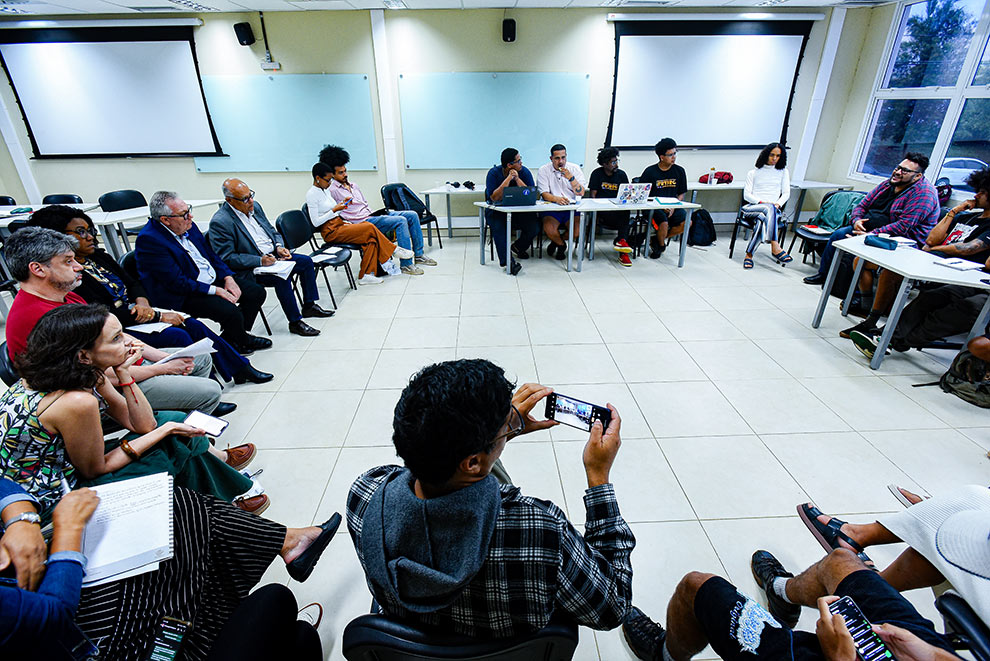
“First of all, it must be said: this is a historic meeting,” said graduate student Robson Sampaio on October 13, the day the rector’s office met with representatives of the Black Movement – the third meeting in a series of community consultations.
At the meeting, the group of approximately 15 students, representing various groups, grouped their demands into four themes: retention policy, voluntary extension, student participation in institutional representation bodies, and standards for postgraduate studies.
The group also called for the creation of a Provost’s Office for Affirmative Action—which, the students said, could channel and guide the agenda presented at the meeting. They say several Brazilian public universities already have this type of institutional regulation.
The students also called for broader retention policies to benefit not only Black and Brown students, but all poor students currently attending the University.
They also requested improvements to the Student Housing and more active participation in the occupancy policy for the new phase of the Housing program—a 44,000-square-meter site acquired by the University will have the capacity to house up to 1,400 students. Currently, the Housing Program accommodates 1,000 students.
The students also discussed changes to social grant systems and called for the University to work more closely with communities and populations living in the most economically vulnerable regions.
Trans mobilization
At the meeting with trans collectives, which included the participation of members of groups such as the Núcleo de Consciência Trans (NCT) and the Ateliê TransMoras, demands were made for the implementation of a pre-university course aimed at trans students and specific services for this population at both the Community Health Center (Cecom) and the Center for Comprehensive Women’s Health Care (Caism). In addition, issues related to the reception of students approved through the new quotas in undergraduate courses for people who self-identify as trans, transvestite, or non-binary, with places made available in the Enem-Unicamp Public Notice – approved in April of this year –, with demands related to the updating of teachers and staff, for example.
The focus is on welcoming new students with some issues already addressed, such as the implementation of gender-neutral bathrooms. Luá, from Unicamp’s Pro-Neutral Bathrooms Front, submitted a draft with what she considers “the minimum” to move the proposal forward. “A more structured project involves renovations, but initially, what we need is to make the bathrooms accessible, with signs and signage.”
The group has organized events to reinforce its advocacy, such as the “(Trans)Formative Cycle II: Bathrooms from a Trans-Referenced Perspective,” with a program that began this Friday (October 24th) dedicated to developing proposals for the creation of trans-inclusive, gender-neutral, and multigender public bathrooms at Unicamp. “Recognizing that trans student retention also depends on the material culture and infrastructure of these spaces, the cycle combines research, activism, and practice, with workshops, lectures, and discussion groups to discuss gender and public space.”
Cover photo: