Every year, University of New Mexico undergraduate students work with faculty on their research topic of choice during the annual Undergraduate Research Opportunity Conference (UROC). UROC is a professional research conference that spotlights undergraduate research. This year’s event was held in April, with a total of 151 students submitting abstracts resulting in 187 presentations throughout the day.
The goals of UROC are to:
-Provide an opportunity for undergraduate students to present their research projects in and outside of the classroom/lab.
-Create opportunities for undergraduate students to network with faculty, graduate students, and the greater UNM community.
-Showcase undergraduate research to UNM communities, including donors, policymakers, local businesses and industries, and other stakeholders. At UROC 2024, a total of 185 presentations happened throughout the day.
UROC 180
The UROC 180 Competition, like an elevator pitch, challenges students to present their research in just 180 seconds to the general audience with no background in your research area. The top three winners receive scholarships. During the conference, UROC 180 presenters are assigned to one of three heats. The judges then select the three top presenters from each heat to compete at the UROC 180 final.
UROC 180 winners are:
First place – Gabriella Gonzales: Roe, Roe, Roe Your Vote: Women Lawmakers and the Politics of Abortion in Congress and the States. In the wake of the Supreme Court ruling that the Constitution does not confer a right to abortion decision–state legislatures across the country swiftly pursued restrictive abortion laws and bans, while federal efforts to codify abortion rights stalled. Gonzales tracked bill sponsorship, voting patterns, and passage rates of abortion legislation from June 2022 onward, assessing trends by party and gender. She hypothesizes that Democratic women are the most consistent opponents of anti-abortion legislation, with women of color assuming the most assertive pro-choice stance.
Second place − Eliana Merhege: Communicating the Importance of Refining Water Treatment Methods to improve Waste Management from the Oil and Gas Industry. Merhege discusses creating new ways to treat highly polluted wastewater to ensure sustainable management of water waste. If sustainable methods of management are not developed, the current methods will become more dangerous which would be detrimental to the environment and public health. Merhege emphasizes the importance of building awareness with a video.
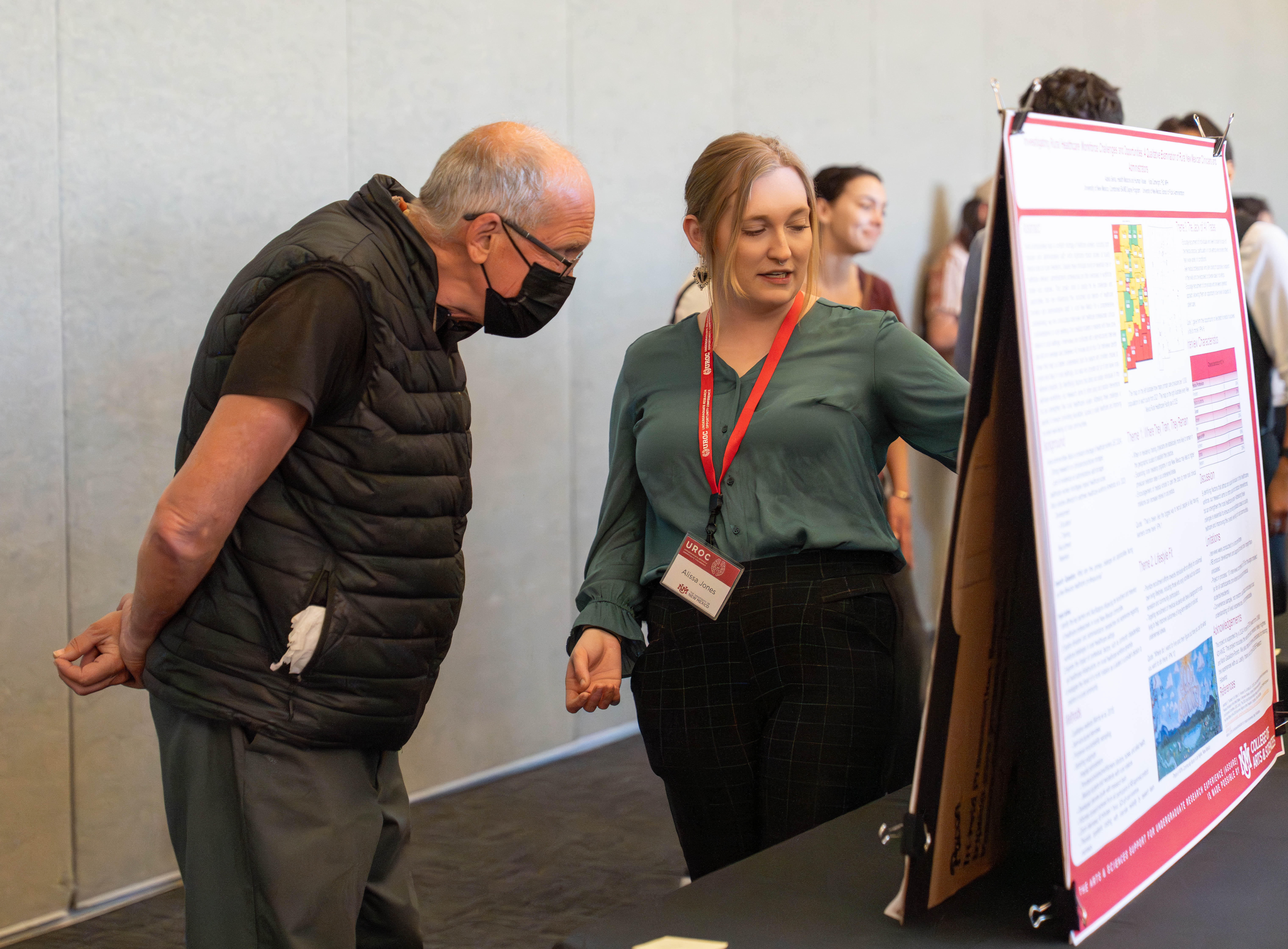
Third place – Adela Sena: Investigating Rural Healthcare Workforce Challenges and Opportunities: A Qualitative Examination of Rural New Mexican Clinicians and Administrators. Sena and her team analyzed the key challenges and opportunities that are influencing the recruitment and retention of healthcare providers and administrative staff in rural New Mexico.
Other UROC 180 participants were Janna Martinez, Lourdes Cazares, Diego Ruiz, Teresa Parraz, Miriam Reichsfeld, Collis Bousliman, Josiah Kingston, Redhesh Patel, Edward Donham-Stradling, Maryjo Armas, Ava Clayton, Felana Chee, Delino Kapelianis-Donado, Alexander Kaltenback, Jaimie Ritchie, William Holmes, Dewey Devivi, Carl Sanfilipo, Maia Hizny, Isabelle Torivio, William Crabtree, Brandon Jackson, Ashanty Solorzano, Audrey Lee, Maya Niblett, and Alissa Jones. 
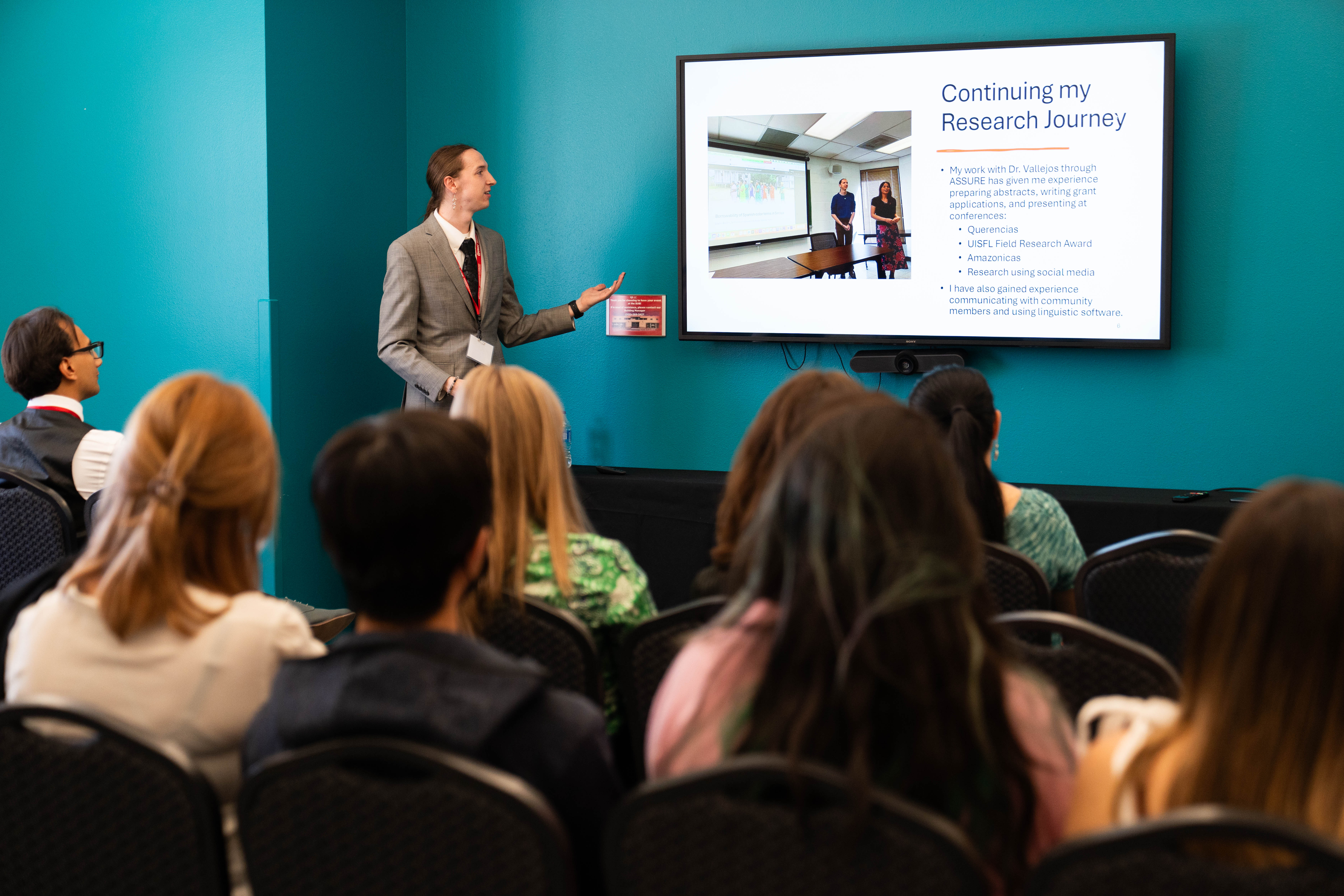
Research Story winners:
Maria Clara Pedroza Santos – This study challenges the negative connotation attached to the informal markets’ definition by redefining their role in absorbing workers who do not identify with formal employment arrangements. It advocates for policies that integrate regulatory reforms while granting social security through localized economic strategies acknowledging community-driven practices as sustainable alternatives to dominant economic models, providing policymakers with a framework to transform informal work from sites of exclusion into pathways for empowerment.
Savannah Phelps – During the height of Spain’s Hapsburg Empire and Counter-Reformation, Spanish art academies were hard at work codifying a standard for what religious art was allowed to depict and how it ought to depict it. Phelps argues that The Crucifixion is a response to contemporary debates within the academic about the superiority of painting versus sculpture as well as a highly moralistic argument about how religious imagery should be treated in the Counter-Reformation church.
Teresa Austin – Climate-driven environmental change is reshaping ecosystems worldwide, making it essential to understand how mating systems influence a population’s adaptive potential. This project investigates how assortative mating affects maintaining genetic diversity during shifting selective pressures.
Poster presentations
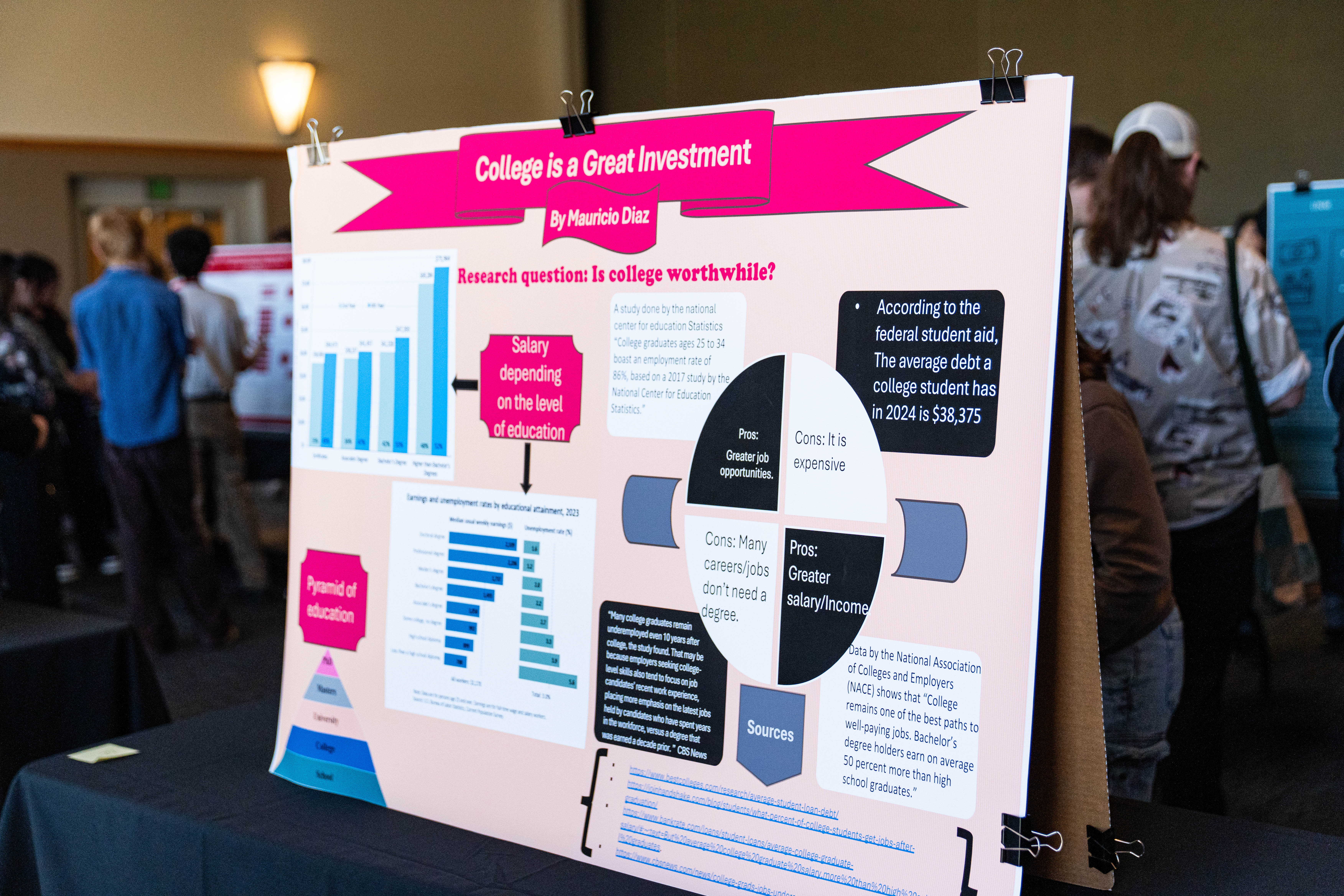
The posters are a concise, visual representation of student research. Students explain their research projects during UROC to faculty, staff, students, and other visitors. Volunteers also meet with the students, discuss their research, and give them feedback on points such as command of their topic and how well they engage with visitors.
Poster presenters were William Homes, Malaya Ramos, Dewey Devivi, Anthony Languit, Christopher Somer, Isabella King, Zachary De Lay, Maia Hizny, Elena Perez, Omar Ornelas, Omotara Kuponiyi, William Crabtree, Karina Bolanos, Brandon Jackson, Frank Hakan Gurler Hatch, Ashanty Solorzano, Audrey Lee, Mia Baca, Mikayla Ranspot, Alissa Jones, Isaac Romero, Leigha Reinig, Marie Walper, Gabriela Baca, Rafael Payne, Mary Funk, Mauricio Figueroa, Ryan Smith, Elfego Pinon IV, Ivan Hernandez, Dulce Barraza, Angel Munoz, and Keilee Leeds.
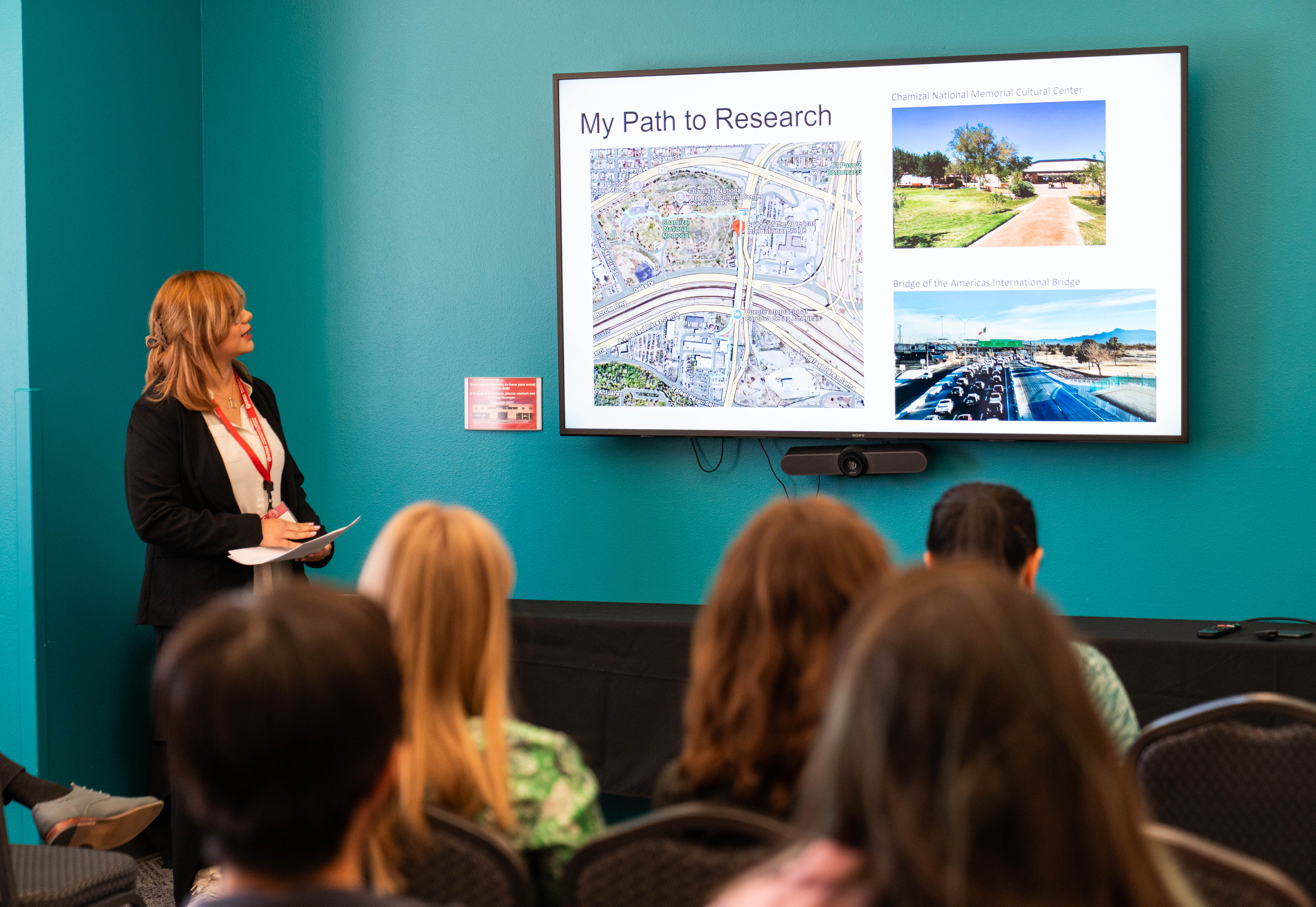
Oral Presentations
Oral presentations are 10 minutes long, allowing a more in-depth review of each student’s research, lets students explain how they became interested in their research in STEM, Humanities, Social Sciences, Medicine/Health Sciences, Business, Education, and Art and Design. See all oral presenters and their abstracts here.
Oral presenters were Julian Angel, Hailey Aragon, Charlotte Auh, Andrea Bencomo, Areya Bevan, Hannah Bradley, Michael-Angelo Brooks, Lourdes Cazares, Dewey Devivi, Sandro Sebastian Espinosa y Mann, Manuel Gomez, Melanie Gonzales, Trinity Griffus, Serena Helewicz, William Holmes, Jacelyn Hurley, Richard Justice, Sarah Lee, Evany Lopez, Eva Marques, Alanah Martinez, Kayla McPherson, Abel Molinar, Teresa Parraz, Savannah Phelps, Malaya Ramos, Dustin Roberto, Jazmin Rodriguez Lopez, Gabriella Salmeron-Ceballos, John San Nicolas, Ashanty Solorzano, Scott Spencer, Anthony Tomaziefski, Isabelle Torivio, Hector Triana Ruiz, and Nicholas Underwood.
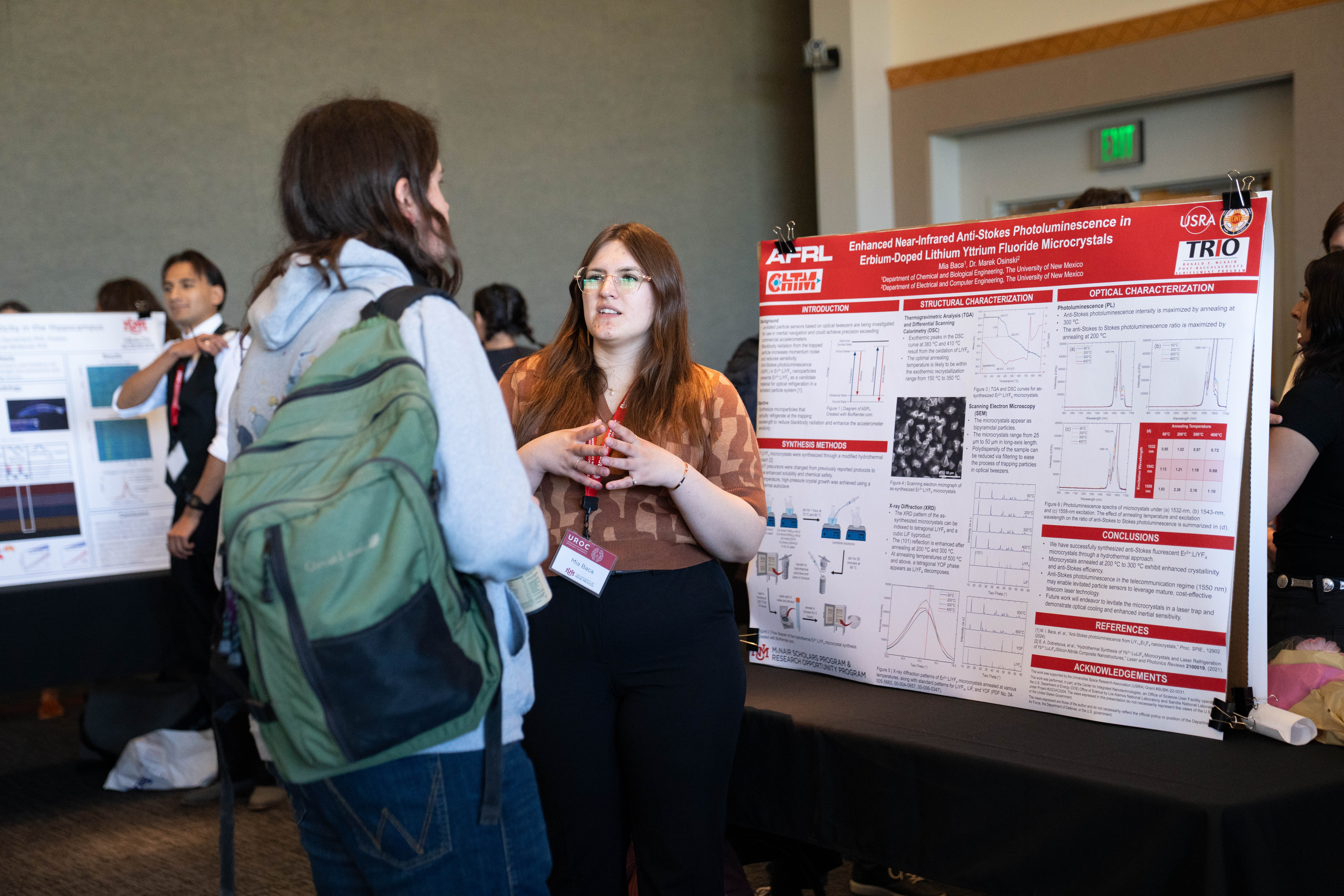
Special Group Presentations
There were two special groups this year—the Grand Challenges Water Science Communication Fellows and the African-American Student Services Ubuntu Program. Learn more about the Water and Climate Science Communication Fellowship event here.
Special Group Presentations abstracts are available here.
There were 9 Ubuntu scholars who focused on a wide array of subjects from business to social and health sciences.
Alexis Adams – Asks what are the Strategic Cognitive Responses of Black Paranoid Reactionary Conservatives to Anti-Blackness from Non-Black Conservatives?
Edrea Akosu – Research looks into the intersection of race-related psychological stressors, cultural health practices, and systemic inequality. Previous research has shown that stereotype threat- the fear of falling into negative racial stereotypes- can lead to poor cardiovascular responses, and eventually, hypertension.
Tiwalola Anawo – Drawing on the Biopolitics theory, this research highlights how beauty standards and regulatory failures create inequities in healthcare in the US.
Zandria Ellis – By exploring these generational shifts, this study will seek to highlight the causes and lasting effects of changes in parenting styles within the Black Community, and how this has shaped the present family dynamics.
Emmanuel Mitchel – The goal of this piece is to find methods and strategies that can be implemented into the K-12 education system, creating a less hostile environment for black students when it comes to positive and negative interactions with educators leading to disciplinary action.
Michelle Njonkou – This research aims to discover the potential overlap of a Black woman’s childhood and their capabilities in the workplace later in life. More specifically, how do the pressures placed on the eldest daughter impact who they are, and how does that translate to their professionalism?
Naserian Olemako – The purpose of my research is to investigate why climate change disproportionately affects Black women in the South, which may include—but is not limited to—factors such as environmental racism, housing segregation, and economic and health disparities.
Darrian Smith – Investigates the relationship between gendered roles within African American Christian churches and their influence on gender norms in everyday life. Employing a queer theological framework, this study deconstructs traditional interpretations of gender within religious contexts, specifically examining how these interpretations shape and reinforce gender expectations within the Black community.
Gabriella Surodjawan – The purpose of this research is to help us understand how we can avoid putting ourselves in negative connotations and rather empower ourselves within the boxes the industry has historically put black women into.
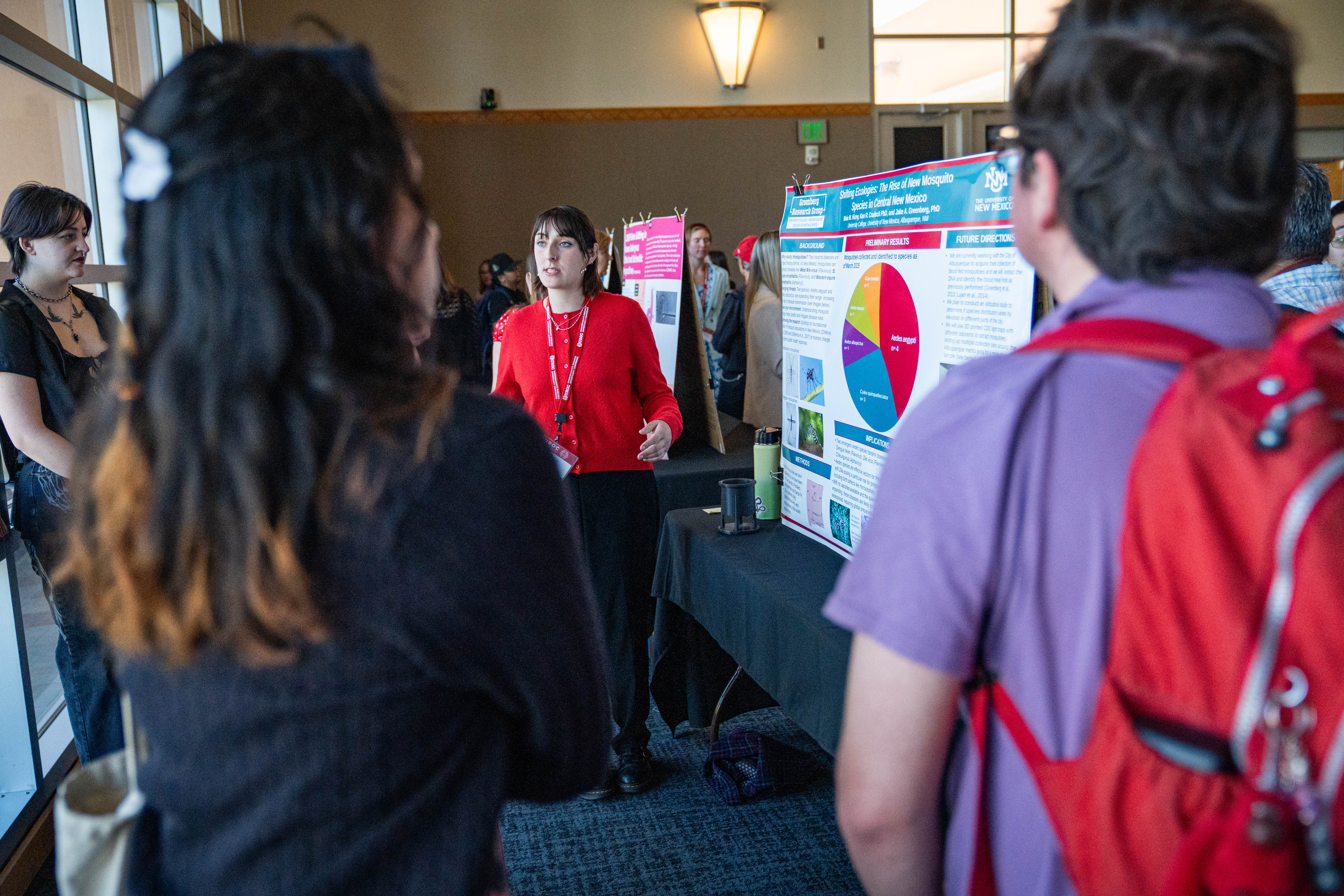
Excellence in Undergraduate Arts Research Award
The UNM Excellence in Undergraduate Arts Research Award is an award in recognition of outstanding arts research by students at any of UNM’s campuses. This award is co-sponsored by the UNM College of Fine Arts and the Undergraduate Research, Arts & Design Network.
This year’s “Excellence in Undergraduate Arts Research” award went to Evany Lopez, Art History Major, for her project which examines the intersections of feminist performance and participatory art in Mexico as a powerful response to the ongoing crisis in femicide.
This year’s Honorable Mention winner is Christopher Tran, Art Studio Major, for his project that documents art movements and periods from the past through art pieces that employ the traits and core of each art movement.
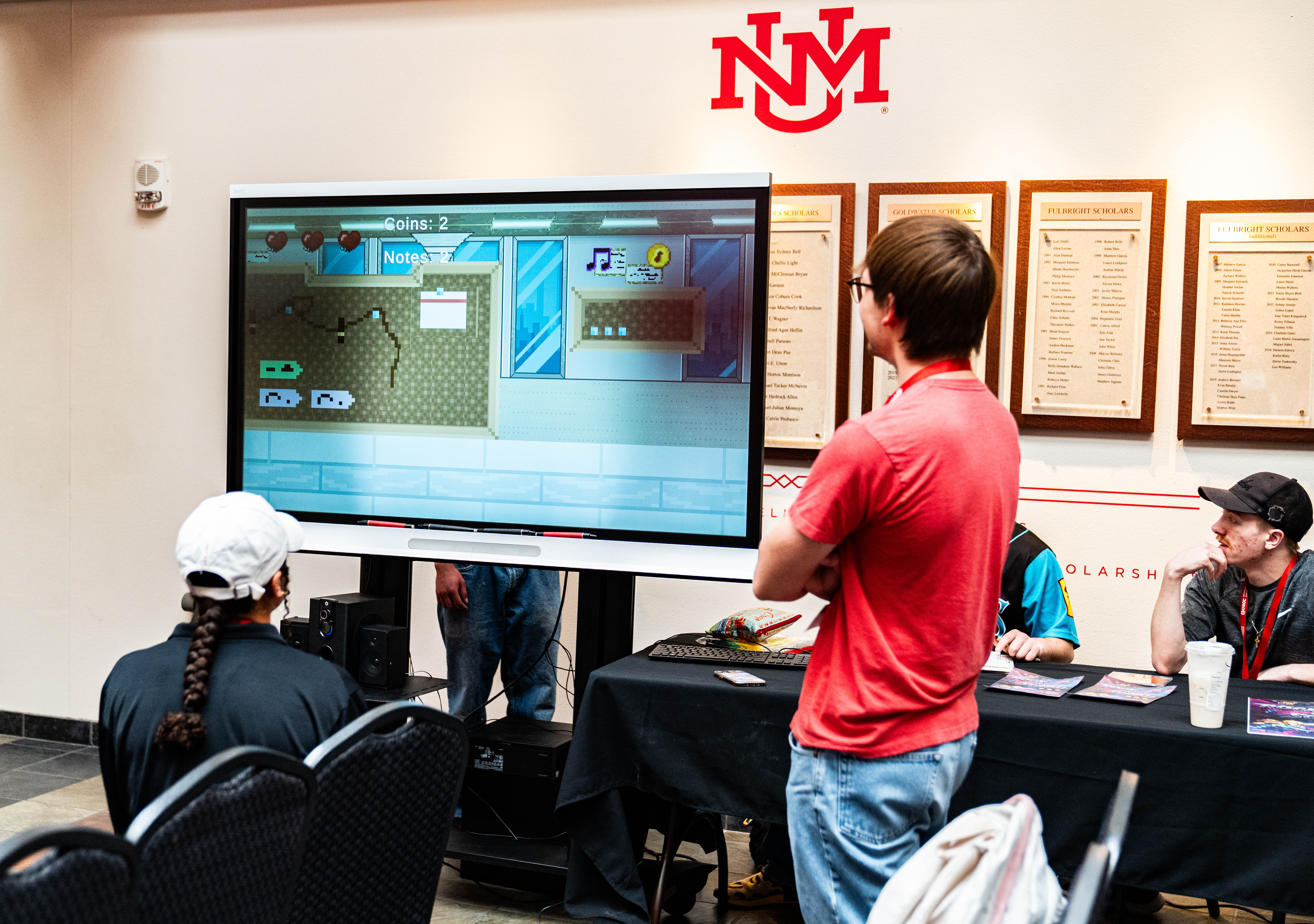
Animation and Video Game Showcase
This year, UROC showcased outstanding digital creations from some of UNM’s most creative students. Film and Digital Arts students showcased their original animations and video games in the atrium and were evaluated by a jury of UNM faculty.
UROC was created to give visibility to all undergraduate students, giving them the chance to present their work and gain invaluable conference experience. The conference was created to be inclusive of all research types, majors, and fields of interest, and dispels the myth that research is only done in the sciences.
UROC 2025 was sponsored by the UNM Office of Academic Affairs, College of Arts & Sciences, UNM Division of Student Affairs, Engineering Student Success Center, ECURE, Grand Challenges, Honors College, McNair Scholars/ROP, Office of the Vice President for Research, School of Engineering, University College, University Libraries, and URAD.