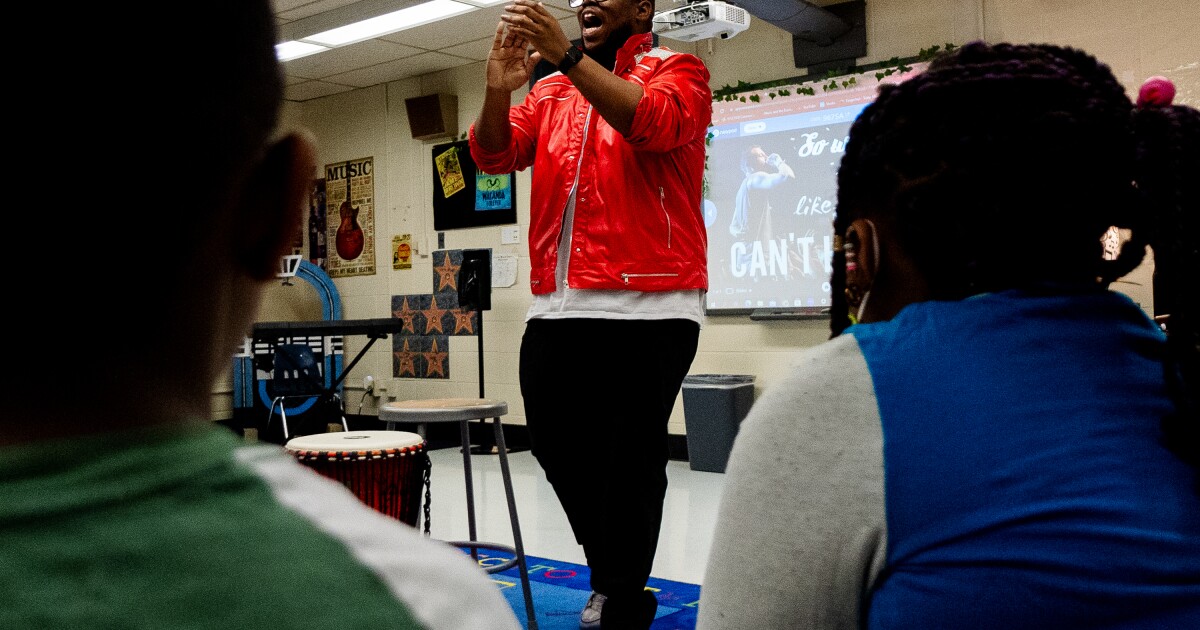
United Theological Seminary of the Twin Cities in St. Paul will host a new book launch on Wednesday, Nov. 19, of Rev. Dr. Gary F. Green III’s first book, “Playing the Game: Embodied Brilliance beyond the Moral Limits of Race in Sport” (Fortress Press). Green is a pastoral theology and social transformation associate professor and director of the seminary’s Racial Intelligence Systems.
Green also is a former Division I football player with hopes of playing pro football, but an injury derailed those plans and eventually steered him on an academic track. He is qualified to speak on the various subjects discussed in his book.
“I’ve had multiple experiences that illustrate what I’m talking about in the book,” said Green in a recent MSR phone interview. “But even beyond my experiences, I draw on other examples about how this stuff shows up in our culture routinely, and just how we’re not seeing it.”
The “stuff” Green refers to is how Black athletes are too often portrayed in media and society, sometimes seen and treated as non-humans, or suggesting their athletic skills are something magical and not based on hard work.
“Playing the Game” investigates the intersection of race and ethics in cultural misinterpretations of Black athleticism in the United States, says a press release. Green’s book is a little over 200 pages, and each of the five chapters breaks it down in non-academic fashion.
“The same kind of dehumanizing caricatures that have been inscribed onto Black men’s bodies also have been inscribed onto Black women’s bodies.”
He cites three Black former or current athletes — Marshawn Lynch, Steph Curry, and Deion Sanders — as case examples. “It took me nine months” to write the book, said Green.
“This is a book that I wrote from scratch, and I needed to do that because I otherwise wasn’t inspired to really tell the story. I needed to do it my way. This book is not my dissertation.”

Playing the Game supports our consistent argument that race and sports can’t be considered separately because they are too intertwined.
“I think America often fetishes Black athletes to the point where we expect Black players to play, but we still haven’t learned to appreciate the depth of what they’re doing in front of us,” stressed the author. It can be even worse for Black female athletes, he added.
“The same kind of dehumanizing caricatures that have been inscribed onto Black men’s bodies [also] have been inscribed onto Black women’s bodies because they also live at the intersection of sex and gender,” reaffirmed Green. “I would say there still needs to be another book written on Black female athletes alone.”
Asked about his book’s target audience, Green replied, “I think it’s for people who care, regardless of their race, who want to do good and do right by people, and particularly for those who want to do better by Black athletes.”
“I think [readers] will find this book refreshing, challenging, certainly, but ultimately I think they’ll find a silver lining in it,” concluded Green. “Hopefully that kind of provides another way for us to relate to each other more mindfully.”
Next: A post-event report on three panelists — Union Presbyterian Seminary’s Dr. Lakisha R. Lockhart-Rusch, Minnesota Vikings fullback CJ Ham, and Union student and staff member Tamice Spencer-Helms — who are expected to offer their insights during the Nov. 19 book launch at United, starting at 7:00 pm.
Charles Hallman welcomes reader comments to challman@spokesman-recorder.com.