

A nonprofit is hoping to change the narrative around Black representation in aquatics, as data from the Centers for Disease Control shows drowning-related deaths in kids are up in Georgia.
With Black children being especially vulnerable, the non-profit Diversity in Aquatics recently hosted some of Atlanta’s Black youth at Morehouse College for a water safety festival.
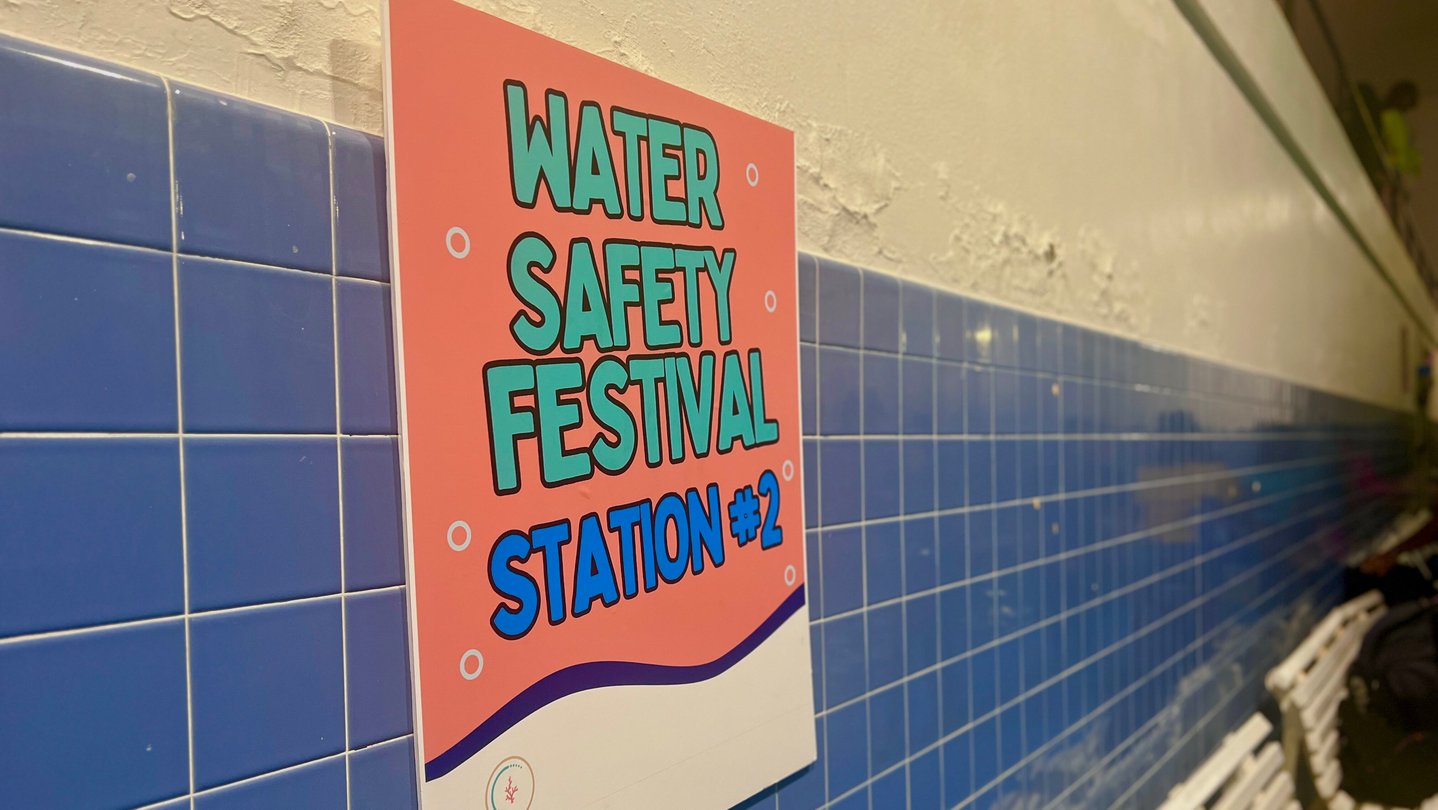
Nonprofit, Diversity in Aquatics spreads awareness of the lack of Black representation and access in aquatics by hosting a celebration weekend at Morehouse College, featuring a water safety festival for youth. (DorMiya Vance/WABE)
“The school I go to, I’m one of the only Black kids in my class,” said 12-year-old Hunter Jackson, who attended the festival with his mom. “But just seeing a lot of people who look like me is definitely a good refresher, coming from a place where I don’t see a lot of people that have the same skin color as me.”
Jackson said he already knew how to swim. However, the USA Swimming Foundation reports 64% of Black children don’t have the skill.
And long-time water safety advocate Maritza McClendon believes that gap still exists because of limited access to aquatics in Black communities. In 2004, she became an Olympic Silver Medalist and the first woman of color on the U.S. swimming team.
“That’s a big reason why a lot of our communities don’t swim,” McClendon said. “Swimming is actually the only sport that is a life-saving skill. So, we have to think about it, as this is our right to learn. It’s not a privilege.”
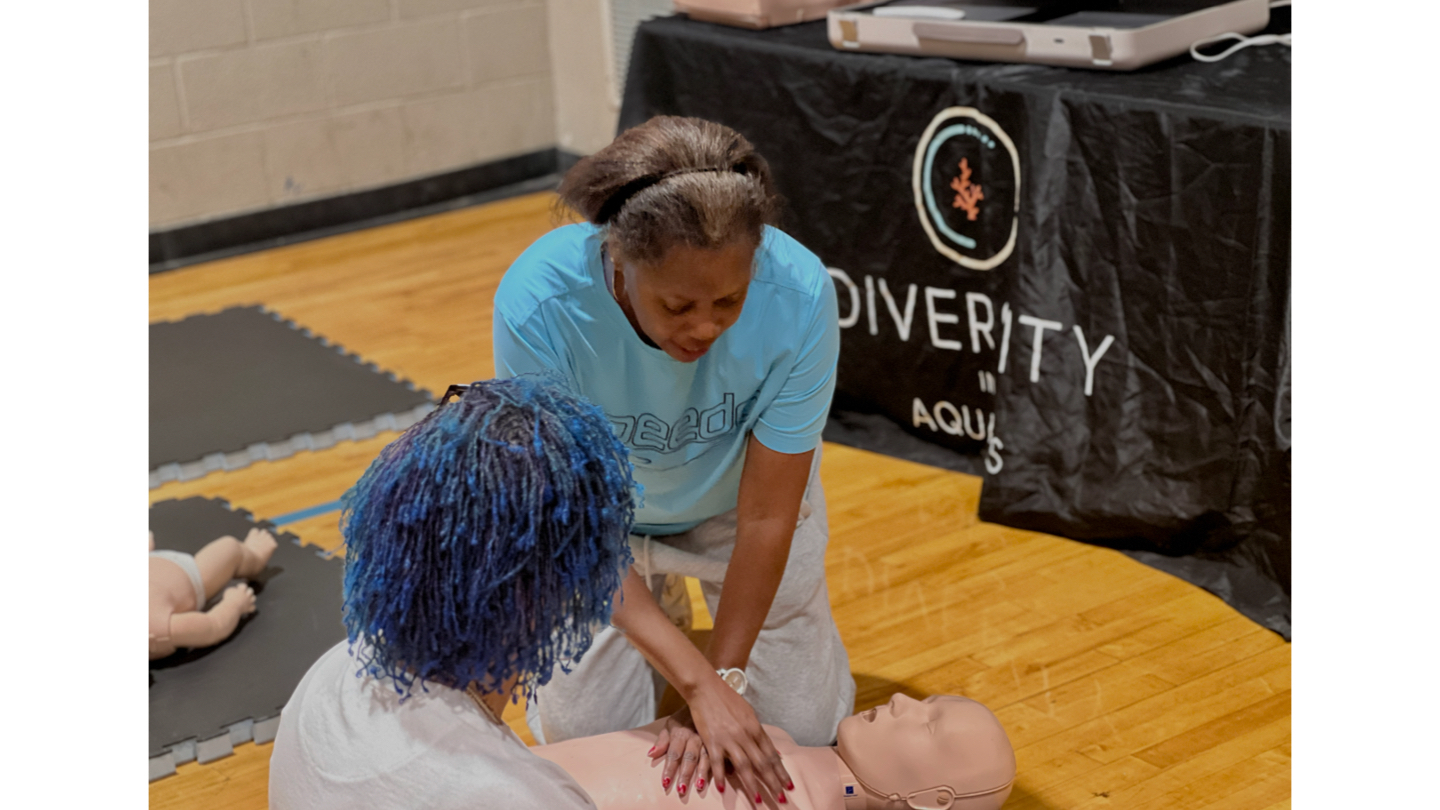
Staff with Diversity in Aquatics demonstrates CPR for a small group of parents amid the nonprofit’s water safety festival. (DorMiya Vance/WABE)
McClendon said racism and stereotypes also play a role in kids not knowing how to swim. Diversity in Aquatics Executive Director Miriam Lynch agrees.
“We have to understand that the story that has been told outside of our community, about our community, sometimes is misrepresented. And that’s the same story about swimming. When we were enslaved, they wanted water to be something that was feared because… they knew that was a way of escape,” Lynch said.
But Lynch wants to change that narrative by actively growing a more inclusive space for people through Diversity in Aquatics, though there is still work to be done on further expanding representation.
“We are going into the communities because we are from the community. And then we’re also finding different avenues in which we are trying to reach our community with water safety education. We’re going directly to our youth,” Lynch added.


