

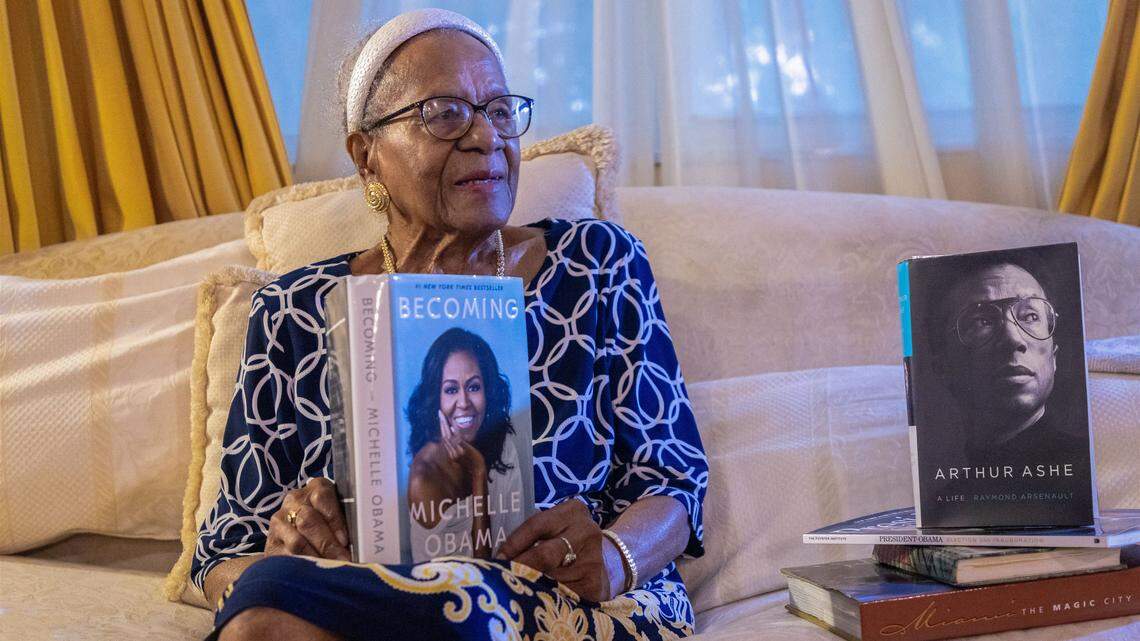
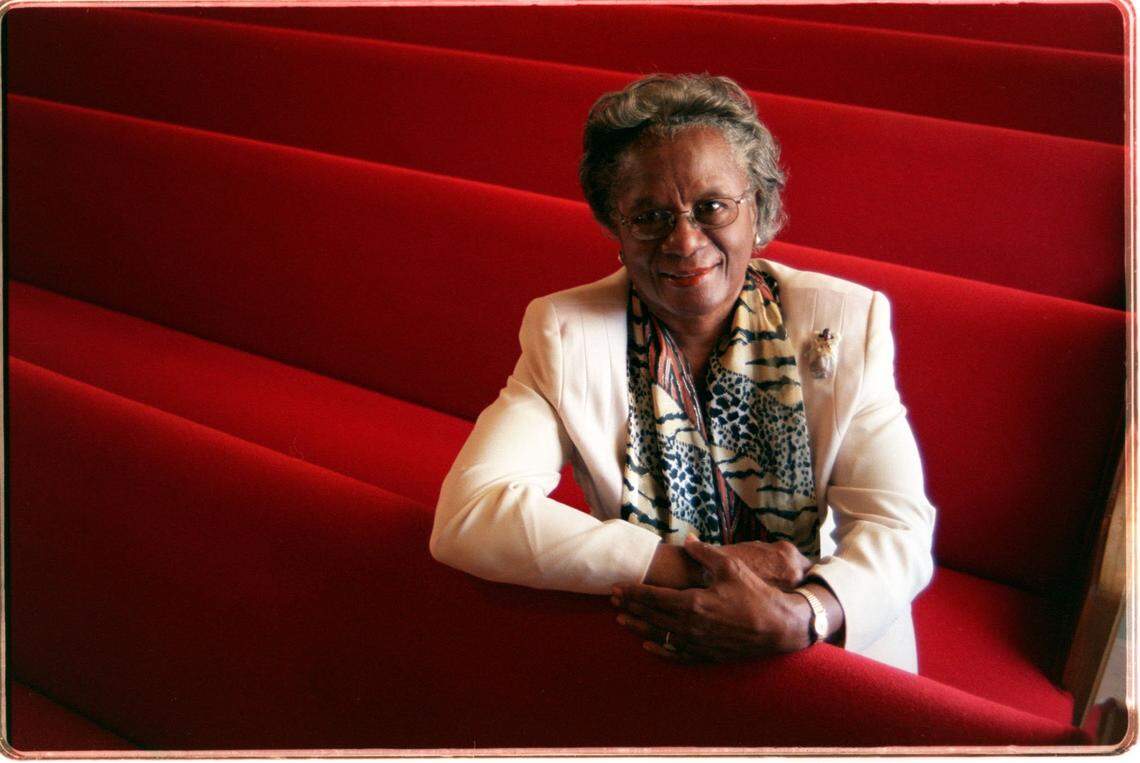
Thelma Gibson, the cherished icon of Coconut Grove, is celebrating her 99th birthday this month. A dedicated educator and an advocate for civil rights, Gibson played a vital role in promoting social justice and equality. She was instrumental in establishing programs that empowered youth and fostered cultural awareness.
cjuste@miamiherald.com
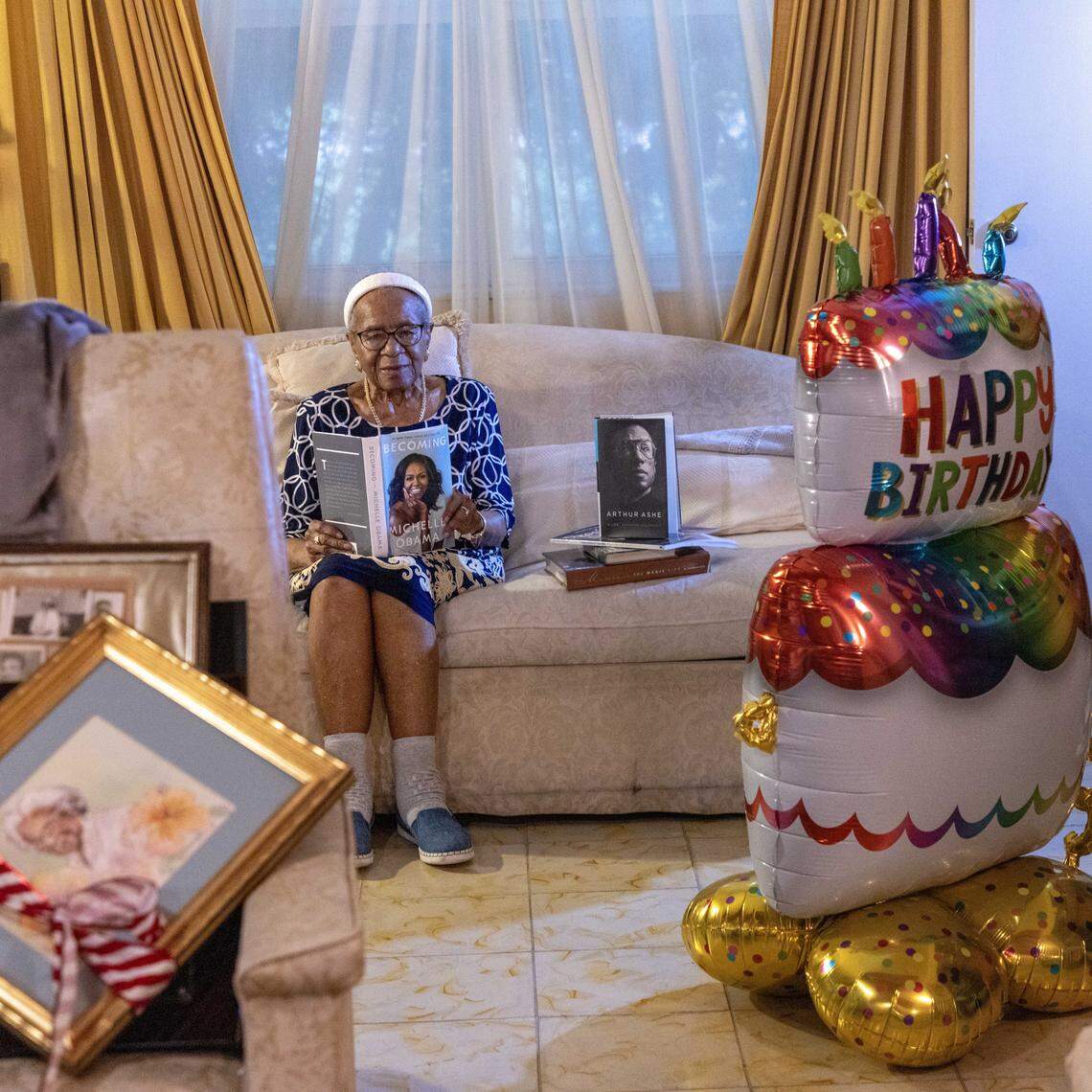
Sepia and colored photos of Thelma Gibson’s family line the walls inside of her flamingo pink home on Franklin Avenue in Coconut Grove where she’s lived since 1976. There are photos of grandneices and nephews at graduations; her brothers and uncles in their military uniforms; an older one of a man she dated in college. There is also a photo of her celebrating her 80th birthday with a host of family and friends.
She eyes the photos around her kitchen fondly , particularly one with her mom and her two brothers.
“I sit with family all the time,” she says.
Gibson’s beaming smile and spirited candor contrast the overcast December day as she recounts nearly a century on earth. In her lifetime, she has seen several wars, Jim Crow, gains made during the Civil Rights Movement (and now the reversal of many of them), Roe v. Wade (and its repeal), and the first (and only) Black president.
Gibson will turn 99 on Wednesday, but her memory is crystal clear as she recalls her childhood address, growing up during segregation, the guy who first tried to court her while she was in nursing school, and the changes in Coconut Grove that she has fought to be called “Little Bahamas.”
“God had a reason for keeping me here so I could tell these stories, I guess, because I don’t know what ever would have been told if I didn’t tell it,” she said.
One of Miami’s first Black nurses at Jackson Memorial Hospital, Gibson has dedicated her life to education, health care advocacy, and cultural preservation. Gibson made history in 1964, when she became the first Black Assistant Supervisor of Nursing in the Dade County Health Department.
Gibson founded the Thelma Gibson Health Initiative and the Women’s Chamber of Commerce of Miami-Dade County, promoted affordable housing in Coconut Grove, and preserved the history and heritage of the area’s Black residents. Her work has empowered generations of young people and cemented her legacy as a beloved community icon whose influence extends far beyond her neighborhood.
“We all looked up to her, she’s just been a big cheerleader for all of us, coming to almost every special event, graduations, weddings, you name it,” said her niece Alvetia Anderson. “She’s been there for us, and for her to have been here 99 years, it’s amazing.”
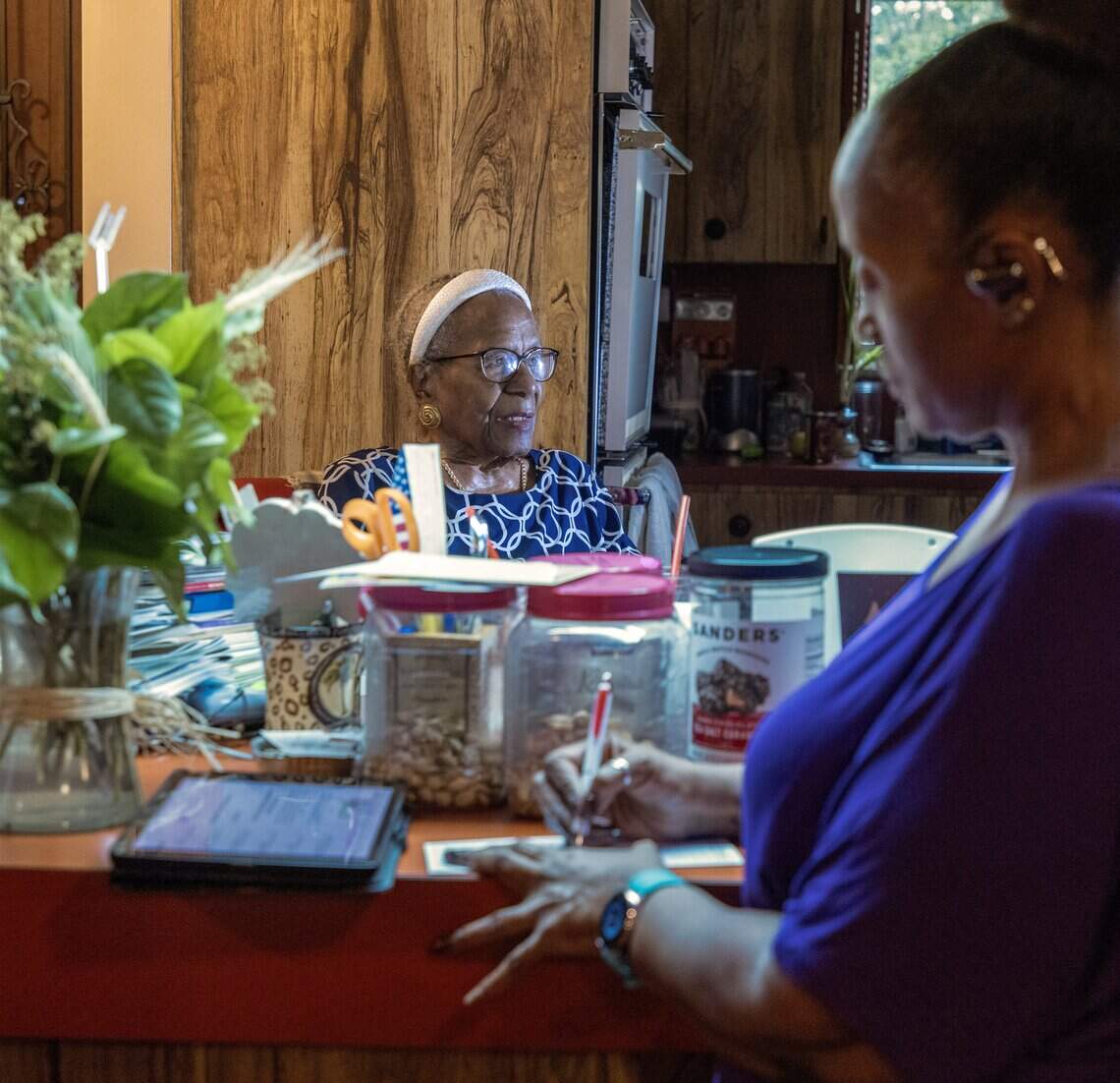
The celebrations will continue all week. On Friday, the Thelma Gibson Health Initiative is holding a birthday celebration for Gibson at the Woman’s Club of Coconut Grove, which also will double as a fundraiser to establish a permanent office for the nonprofit. And on Sunday, Gibson’s church, Christ Episcopal Church will host festivities, and a Bahamian feast at her home will close out her birthday.
“To describe Mrs. Gibson is to say she is just an extraordinary lady,” said Merline Barton, TGHI president. “Every time a door closed, a window would open, she would find a way to make things happen.”
But for Gibson, she’s just been happy to be along for the ride: “The fact that I’m still here is all that I’m thankful for,” she said. “God has given me this opportunity to live for 99 years.”
Growing up in the Grove
Born Thelma Anderson in 1926, Gibson’s childhood home address, 3382 Charles Street, is seared in her memory along with her life growing up in what was once known as Colored Town, a part of Coconut Grove that only Black people could live in.
“It was interesting coming up in Colored Town,” she said. “We had to go to White Town to go to the grocery stores, Winn-Dixie and Piggly Wiggly, and all those stores were up in White Town. We couldn’t go to Coconut Grove Bank. When we were coming up, you couldn’t put colored money in white banks in White Town.”
Money in the Anderson house was tight, but they learned how to make do. Gibson’s mother worked for white people earning $8 a day, which was a lot of money for Black people at that time, she said. Still, her uncle provided the family with fish, and a family friend often gave them leftover bone meat from chicken he’d cut up to sell to white people. The family picked fresh fruit from their mango tree and on occasion she and other small children would grab avocados or lemons from a nearby neighbor’s trees.
“It was no matter of eating, because everybody looked out for one another,” she said. “So that was an exciting time for me growing up.”
The third of 11 children, Gibson helped raise her siblings and was often viewed as a mother figure. “After our mother died, she raised us,” her brother Herman Anderson said.
Though Gibson went off to college in North Carolina Gibson made sure to keep the family unified. “Even though we didn’t grow up together, she kept us together,” Herman Anderson said.
Gibson grew up in a house with no running water or electricity, so when she got her first nursing job she used her first paychecks to wire the family home. When they finally got electricity, the first thing she bought was a refrigerator.
“My brothers were so excited about the ice cubes, and they didn’t know how to take the trays out, so they used the ice pick,” she said, chuckling as she told the story. “I had to have more repairs done on the ice trays because they would use the ice pick to try to get the trays out of the ice box.”
Living through segregation
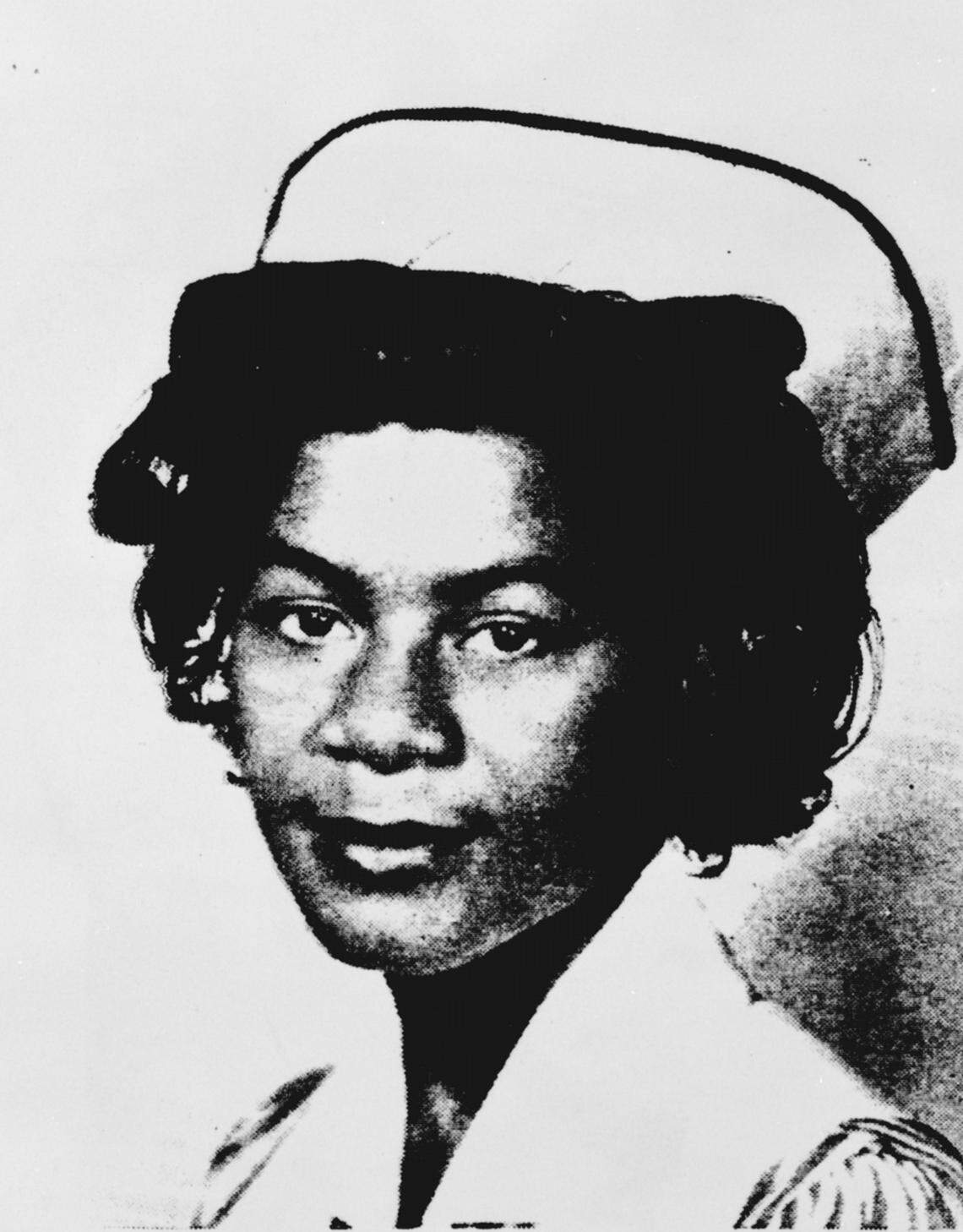
Gibson’s parents stressed the importance of an education to their children. Gibson graduated from George Washington Carver High School a semester early in January 1944 at age 17, then headed out to St. Agnes Nursing School in Raleigh, North Carolina, a nursing school for Black people.
“I tell everybody that segregation was not the best thing, but it was not the worst day either, because we got education, and our education was just as good as everybody else’s education,” she said. Gibson was able to attend college for free through the Cadet Corp program, created by the United States government to teach and train nurses as a result of a nursing shortage during World War II.
Gibson would return to Miami, where she worked at Jackson Memorial Hospital as one of the hospital’s first Black nurses. But the path as a nurse wasn’t without its hurdles. Gibson recalled when she insisted on being called Ms. Anderson, as her white counterparts were referred to, as opposed to simply “Nurse Anderson.”

Though Gibson was frustrated because she wasn’t allowed to work in operating rooms because of segregation, she was able to achieve other goals, like continuing her education and working with young people.
“So you just never know why one thing is good, and another thing is not,” she said.
‘God let me live this long’
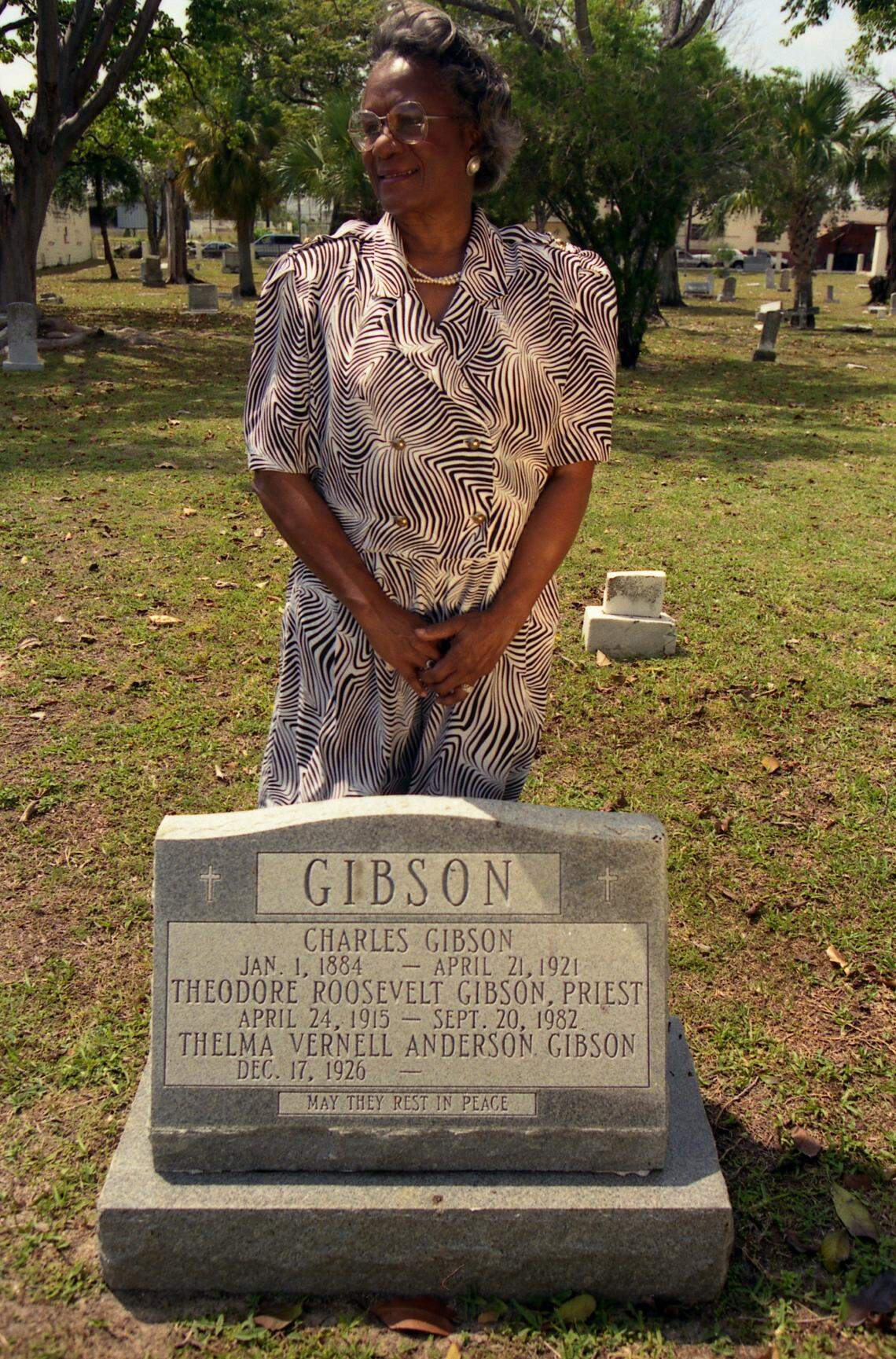
Gibson’s indomitable spirit during the era of segregation is likely what drove her to her husband, late pastor and activist Theodore Gibson, a pioneer of desegregation, having led the effort to integrate then-Dade County Public Schools. The two married in 1967 and were together for 15 years before his death in 1982.
“It’s amazing when I tell you, I never dreamed I’d end up marrying an Episcopal priest,” she said. “In fact, I never thought I’d get married, period, because I wasn’t for sitting down in no one place. I was always moving from place to place.”
Gibson continued to preserve her husband’s legacy and advocacy efforts, and in 1983, created the Theodore Gibson Memorial Fund, which has worked to bridge the gap between diverse communities in Coconut Grove. The fund has helped open the senior living facility Gibson Plaza Community and Educational Center and created a youth initiative focused on STEM education.
Gibson also worked to build affordable houses for residents in Coconut Grove through the Coconut Grove Local Development Corporation, and entity that worked to revitalize the Coconut Grove community through housing, tackling blight, and creating youth programs, alongside Barton, who said she was introduced to Gibson through a friend about 36 years ago.
“I called her a warrior. Every time something was told to her that she couldn’t do it or it couldn’t be done, she made sure that it happened,” Barton said.
Gibson would also go on to found the Women’s Chamber of Commerce of Miami-Dade County and later the Thelma Gibson Health Initiative, of which she still sits on the board, working to improve the lives of those living in improving lives in low-income neighborhoods.
A lot has changed since Gibson grew up in that Charles Avenue home. The area now has experienced gentrification, and some Black residents have left due to rising costs.
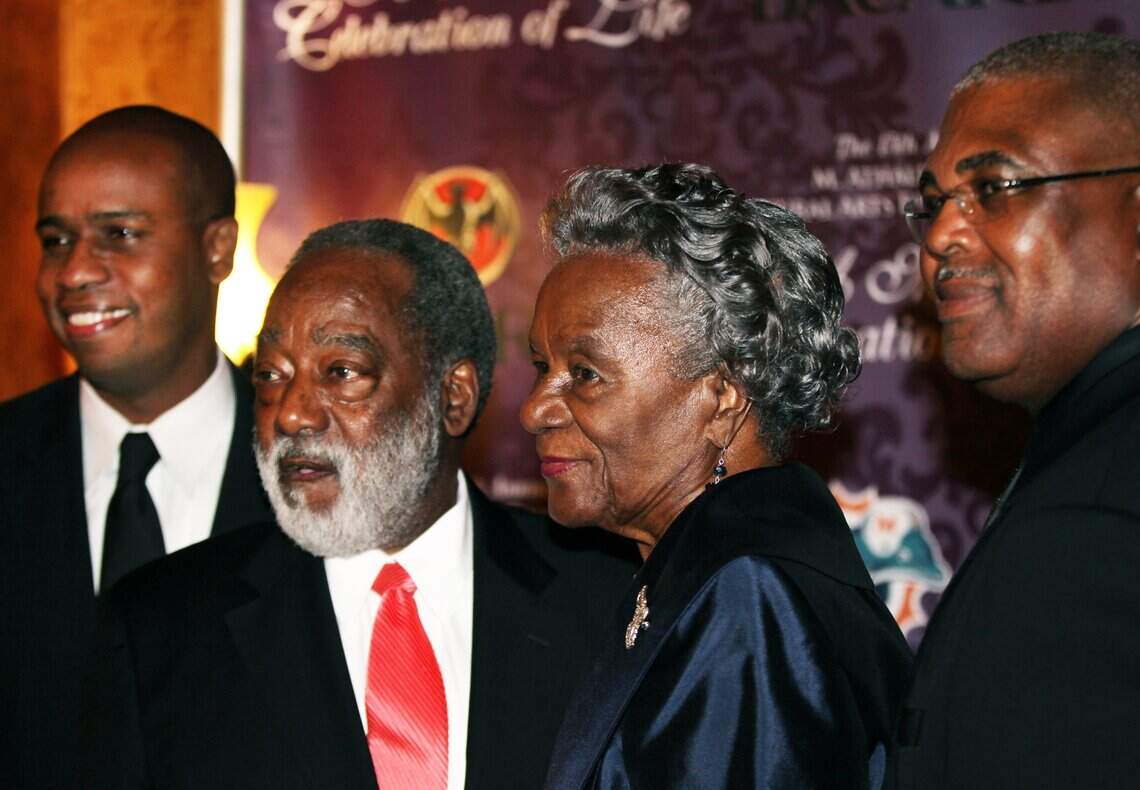
But Gibson is grateful to be able to serve her community throughout the changes.
“The fact that God let me live this long, is all that I’m really thankful for and the fact that I’ve been able to do whatever I could to help make change take place,” she said. “But recognition is not something I’m looking for.”
This story was originally published December 16, 2025 at 3:58 PM.


