

What are journalists missing from the state of Delaware? What would you most like WHYY News to cover? Let us know.
Kwanzaa was created in 1966, during the height of the Black Power era, as a way for African Americans to reconnect with their cultural roots and reaffirm shared values of community, family, and responsibility.
Celebrated each year from December 26th to January 1st, Kwanzaa is a cultural observance, welcoming people of all faiths and backgrounds to reflect on seven guiding principles known as the Nguzo Saba.
Those principles –– Unity (Umoja), Self-Determination (Kujichagulia), Collective Work and Responsibility (Ujima), Cooperative Economics (Ujamaa), Purpose (Nia), Creativity (Kuumba), and Faith (Imani) –– serve as the foundation of Kwanzaa celebrations across the country. Each day, a candle is lit to honor one principle, creating space for reflection, conversation, and community connection.
In Wilmington, that tradition has been carried on for more than three decades. For 30 years, an organization known as the African Connection led the city’s Kwanzaa celebrations before passing the responsibility to Culture Restoration Project Inc. five years ago.
“They approached us and asked if they could pass the baton over to us. We said absolutely we accepted and we now maintain the responsibility of Kwanza in the city of Wilmington,” said Richard Watson, program director of Culture Restoration Project Inc. “We were honored to accept that responsibility and continue this celebration of African-American culture and history.”
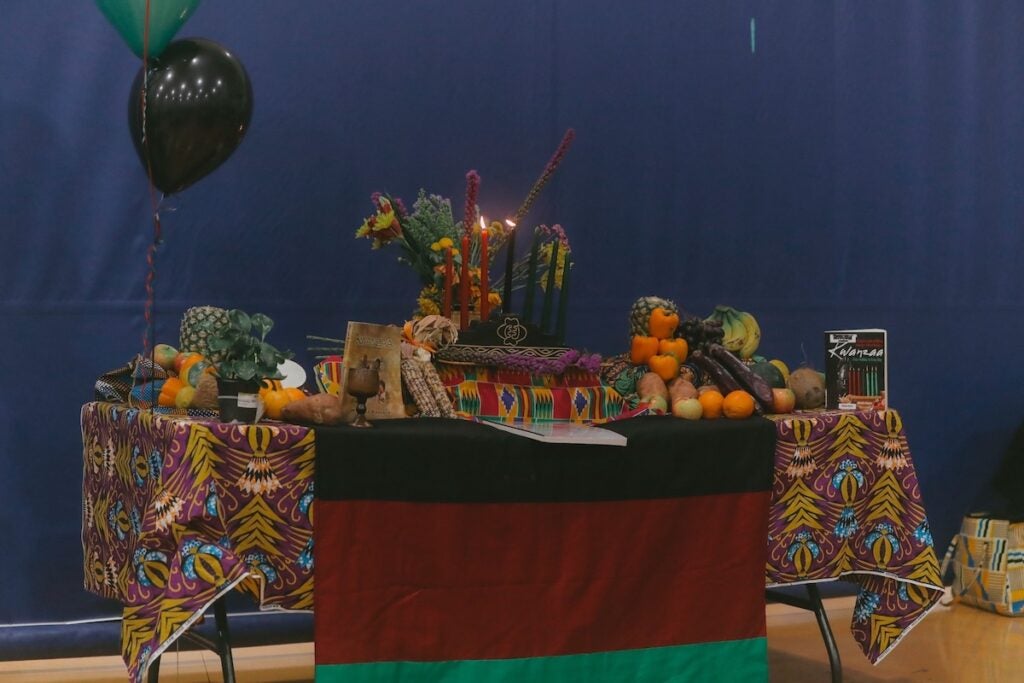
Watson said Kwanzaa was modeled after harvest festivals found throughout Africa, blending traditions to create a unifying observance for people of African descent across the diaspora. The word ‘Kwanzaa’ itself comes from a Swahili phrase meaning ‘first fruits.’
“It’s a celebration that was established to bring African-Americans together and to celebrate their culture, their heritage, and to reaffirm communal values, community values,” Watson said.


