A Culture and History Displaced
and Almost Forgotten
By Maya Johnson | Credit: February 12, 2026
Tanya Spears Guiliacci was the first Black Santa Barbara native I ever met, five years into living in this city.
We met through my job at the Independent, the only two Black people working in our office. This experience of isolation in Santa Barbara is something I, and many other Black folks, have long been accustomed to.
Being Black in Santa Barbara, it is not uncommon to find oneself as the “only” in the room. When we Black Santa Barbarans do see each other around town, we throw a wave or a smile, compliment each other’s hair, and maybe even swap numbers and promise to connect, but community — a real sense of Black community — is difficult to find here.
Yet, surprisingly, Santa Barbara’s Black population has a lengthy history.
From the 1920s through the 1980s, a small but thriving Black community existed in Santa Barbara. In 1970 the population peaked, making up 3.7 percent of the city’s population with more than 2,000 Black residents recorded in the U.S census. Today, less than one percent of Santa Barbara’s population is made up of people who identify as Black or African American.
Guiliacci told me stories of what experiencing that community was like for her: large community get-togethers, cook-outs, baby showers, and Easter celebrations on the Eastside. But also cultural celebrations, such as Juneteenth, Kwanzaa, and Martin Luther King Jr. Day, were once a strong presence within the community, though some are still celebrated to this day.


Tanya Spears Guiliacci as a child and today | Credit: Tanya Spears Guiliacci
Today, much of Guiliacci’s own family has long since been displaced from the Central Coast. I resonate deeply with these stories because my own history, like that of most Black Californians, is inextricably linked to a diaspora.
As we shared a quiet moment of connection — reminiscing about culture and what it means to be Black in a city where there are so few — we said to ourselves: Where has the Black community in Santa Barbara gone?
This was the question I sought to answer.
I know that this piece will not speak for every Black person in Santa Barbara. But it is the story of my own experience finding a community I was not sure existed.
I Knew the Story Well
On a cold evening last November, Stephanie Blair led me into her home on Santa Barbara’s Westside. A former model, Blair, now in her eighties, told me that her family purchased the home in the 1920s. Unlike many Black Santa Barbarans, Stephanie has been able to retain her family home, which allows her to afford to stay here.
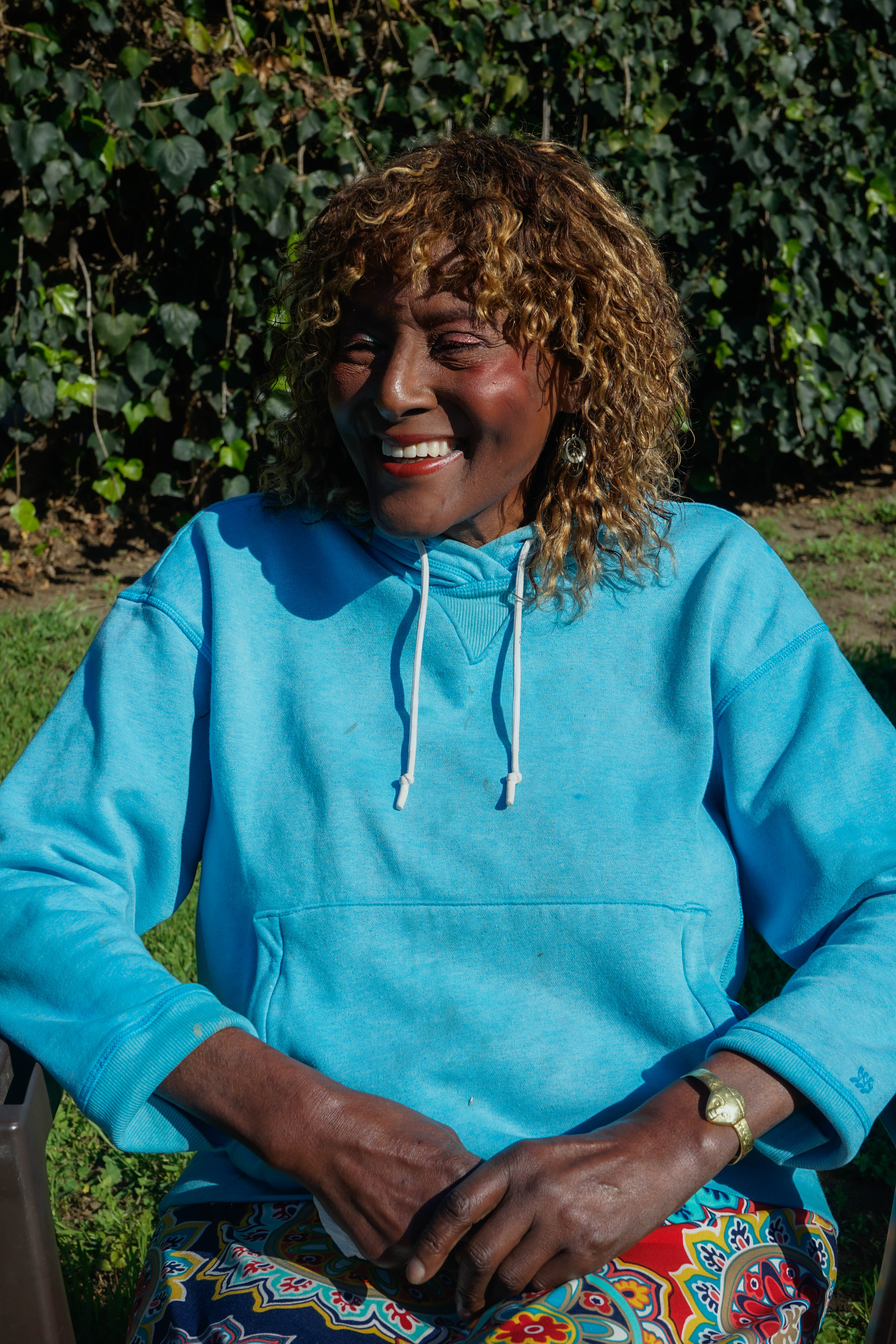
Having lived in the city most of her life, the stories Blair told me — of being one of the only Black hairstylists in the city and visiting Black nightclubs and soul food restaurants on Haley Street — was a Black history that has faded as Santa Barbara’s Black community dwindles.
I began to interview Black residents in the Santa Barbara area. Some are transplants, some are natives, and some are the last in their families to remain. As I asked them about their experiences — what the alleged golden age of Black Santa Barbara was like and how a Black community even came to be here — I realized I knew the story well.
My paternal grandmother, our family’s late matriarch, left Mississippi at the age of 16 to move out West. She ended up in Santa Monica, where my father was raised and where few in the family can afford to live today.
The history of Santa Barbara’s Black population dates back to the 1500s. The City of Santa Barbara’s African American and Black Historic Context Statement, produced by the Black-founded nonprofit Healing Justice Santa Barbara and architectural history consulting firm, Page & Turnbull, details this rich history. Santa Barbara’s early Black population was made up of those with Afro-Latino ancestry and “escaped formerly enslaved Africans the Spanish recruited to serve as soldiers….”
The first census to acknowledge Black folks in Santa Barbara in 1870 recorded 38 Black residents in the city’s 7,784-person population.
From then on, the largest increase of Black residents in Santa Barbara came during the time of the first and second Great Migrations from 1910 to 1930 and 1940 to 1970. Across the country, nearly 5 million African Americans moved their families out of the rural South en masse in an effort to escape racial violence post-enslavement.
The idyllic beachfront setting of Santa Barbara attracted many. From 1920 to 1930, Santa Barbara’s Black population nearly tripled from 186 people to 524. Stephanie Blair’s family was a part of this first migration, which resulted in a population of laborers and domestic workers.


Stephanie Blair’s old modeling photos from a collage she keeps in her home | Credit: Courtesy
Tanya Guiliacci’s family, however, was a part of the second migration wave, defined by an effort of Black working professionals to establish real communities: businesses, churches, and community organizations. Their motivations for migrating, however, remained the same decades later.
Over coffee, Geneice Banks, a cousin of Guiliacci’s, told me the story of their family’s journey.
Banks’s aunt, Mary Spears, was 13 years old and living in Talladega, Alabama when the Birmingham racial riots were happening in 1963. One day, walking to town on a path that many Black folks took into town, Spears saw a Black man hanging above the path. The lynching was a threat, Banks told me: “If anybody cut him down, there’d be two more to take his place.”
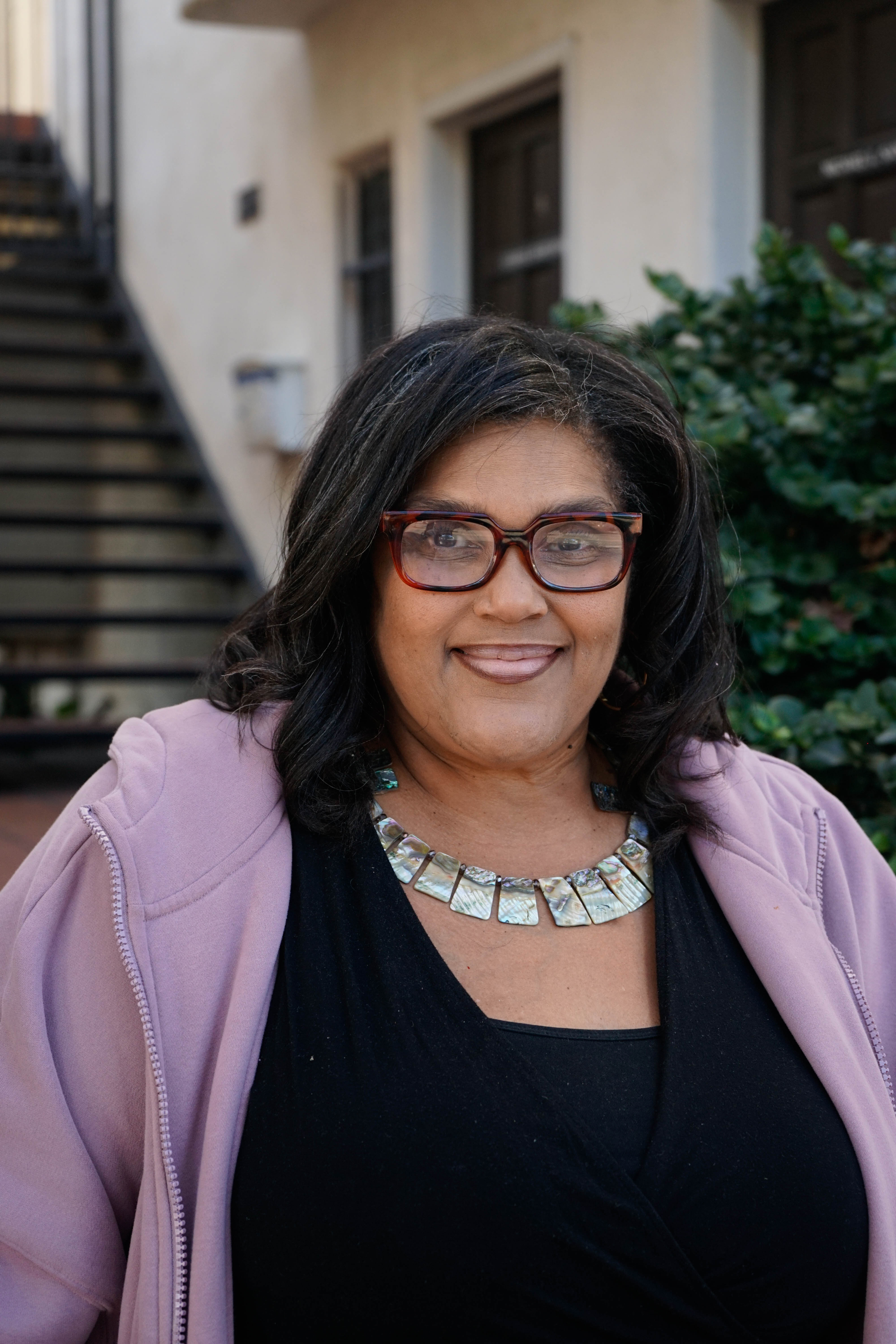
“Aunt Mary told me that story, what was it, maybe 10 years ago?” Banks said. “She was 70-something, and she broke down crying like it was yesterday.”
At the same time, in Santa Barbara, Black folks had begun to form close living communities such as the Eastside neighborhood. Another resided in what is today known as the Funk Zone.
As the city’s Black Historic Context Statement states: “Despite projecting to the world the reputation that Santa Barbara was a peaceful, welcoming community, African American and Black residents in the city continued to face intractable racial discrimination in all areas of their daily lives that continuously limited the community’s progress.” This came in the form of anti-Black hiring processes, discriminatory housing practices, and the prevalence of the Ku Klux Klan, whose 2,000 members marched down Santa Barbara’s State Street in 1923.
Like most parts of the country, African American residents were not welcomed with open arms.
However, when Mary Spears’s family came in caravans in search of a better life, Santa Barbara was rural, made up of
hippies and farmers, Banks told me, and so was very reminiscent of where her family had come from.
“They saw the ocean and said, ‘This is where we’re going to settle,’ ” said Guiliacci.
A week after the family had settled in Santa Barbara, they got word that their house back in Alabama was burned during the riots. Now, there was no returning home.
This is what many Black people have had to sacrifice to not walk a path where the bloody reminder of prejudice hangs overhead by a rope.
Should I Stay or Should I Go?
Many people do not realize the privilege that exists in having spaces within your community — places such as restaurants, hair salons, and clubs — where you are able to see yourself represented and accounted for.
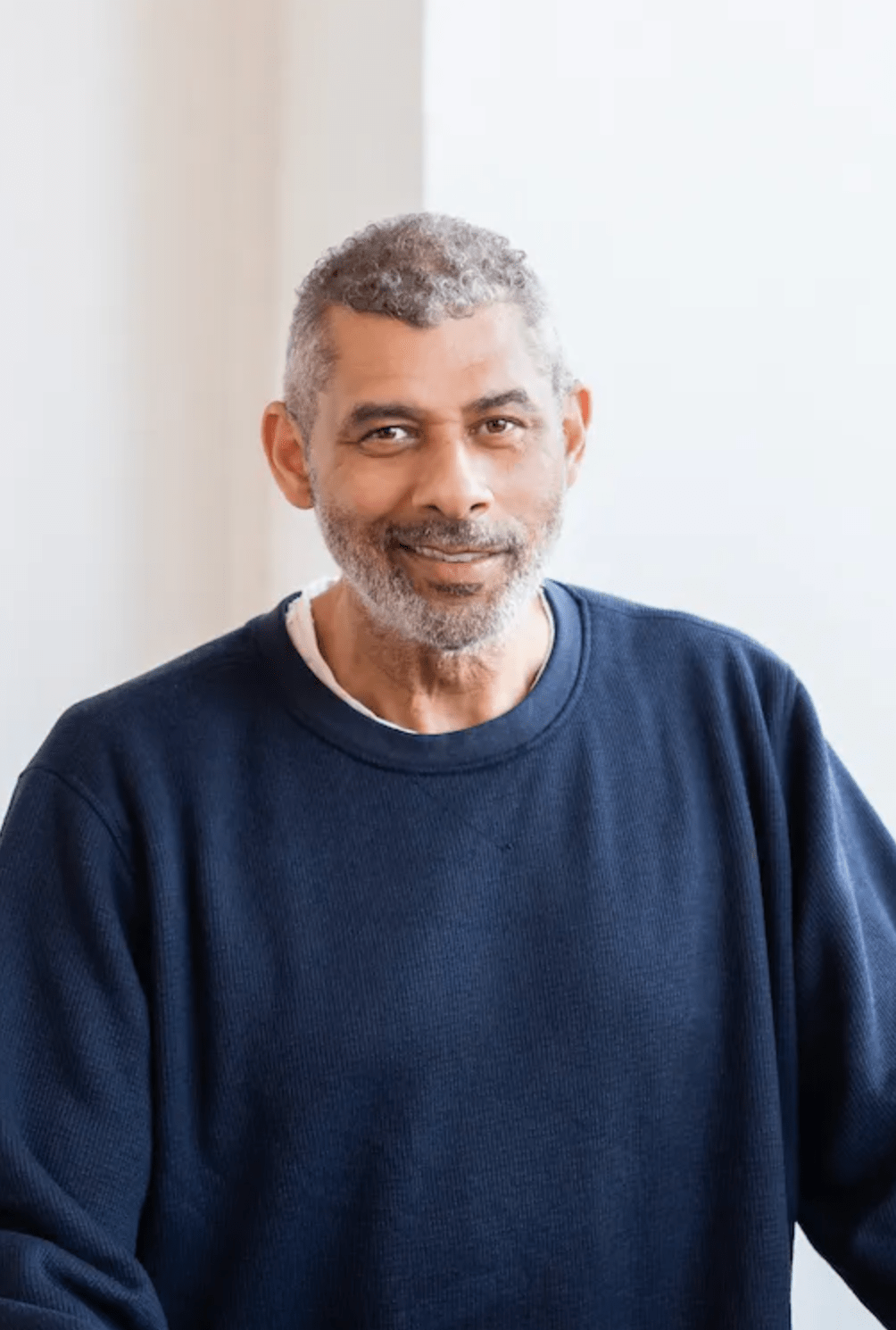
In Santa Barbara, I and many others have found ourselves endlessly searching for casual moments of community: the ease of finding a hairdresser that can accommodate your texture, or a grocery store or restaurant that serves your culture’s cuisine. When many of one’s daily experiences are that of being the “only,” community and connection become necessary to survival.
It’s the difference between staying and leaving.
For Stirling Nix-Bradley, who grew up in Oxnard and spent much of his time visiting Santa Barbara — a place he perceived as the “Black Beverly Hills” — opening his soul food restaurant Soul Bites in 2022 was an act of love for his community.
“I knew there was a lack of soul food in the area, as well as Black-owned businesses,” said Nix-Bradley.
In a city where a diverse restaurant culture thrives — Thai food, Mexican food, Italian food, Indian food — there is not a single soul food restaurant for miles.
Nix-Bradley spoke to me about the importance of seeing the food that he grew up on valued: “I wanted to see it [soul food] get the justice it deserved. I feel like it is the original American cuisine, and it deserved a higher place in the food echelon.”
During its tenure in Santa Barbara, Soul Bites became more than just a restaurant. It was a place of education for those who did not know what soul food was, as well as a hosting space for the Black community.
Having to commute daily from Los Angeles to Santa Barbara, Nix-Bradley found his dream of running an all-Black kitchen here unsustainable. Soul Bites faced difficulty staffing while dealing with dwindling foot traffic on lower State Street. Tariffs causing food prices to rise were the nail in the coffin. Soul Bites closed its doors in 2025.
“I’m super proud of what Soul Bites did in Santa Barbara, of the friends we made and the relationships we built,” said Nix-Bradley.
From 1963 to the early ’90s, a predecessor to Soul Bites’ dream of a Black-owned soul food restaurant in Santa Barbara was the Golden Bird Café. Run by Fred Sims, the restaurant on East Haley Street was a cultural mecca serving bean pies, sweet potato pie, smash burgers, and other family recipes he had brought with him from Texas.
Wendy Sims-Moten, niece to Fred Sims, served on Santa Barbara Unified’s school board for eight years, the second Black person to do so in 53 years. She said that changing times led to the restaurant’s eventual closing: “The town is evolving and again, as the [Black] population was decreasing; how do you sustain that?”
A similar impermanence exists for other Black cultural resources in Santa Barbara, with many of my interviewees remarking on the difficulty of finding reliable hair care. Wanda Thomas remembers having to drive to Oxnard or L.A. for Black hair care and even makeup in the ’60s. Gary White fondly remembers a two-chair barbershop in the basement of UCSB’s UCEN in the ’80s where he would get his hair cut after a hairdresser at Supercuts attempted to use scissors to style his curls. Jordan Killebrew, who moved to Santa Barbara in 2006, remarked that after finding a hairdresser who could style his hair, he once offered to pay extra just to keep them in the area.
Often, the businesses and services that prioritize Black folks are run out of homes and cannot be found through a quick Google search. Or, they are brick-and-mortar places tucked into parts of the city where you wouldn’t normally wander. Most of them are shared through word of mouth, so without community organizing, we find ourselves out of luck.
The Weight ofUpward Mobility
Community organization in the form of mutual aid, activism, education, and culture was a necessity of survival. For Lelia Richardson, however, it was just the way things were.
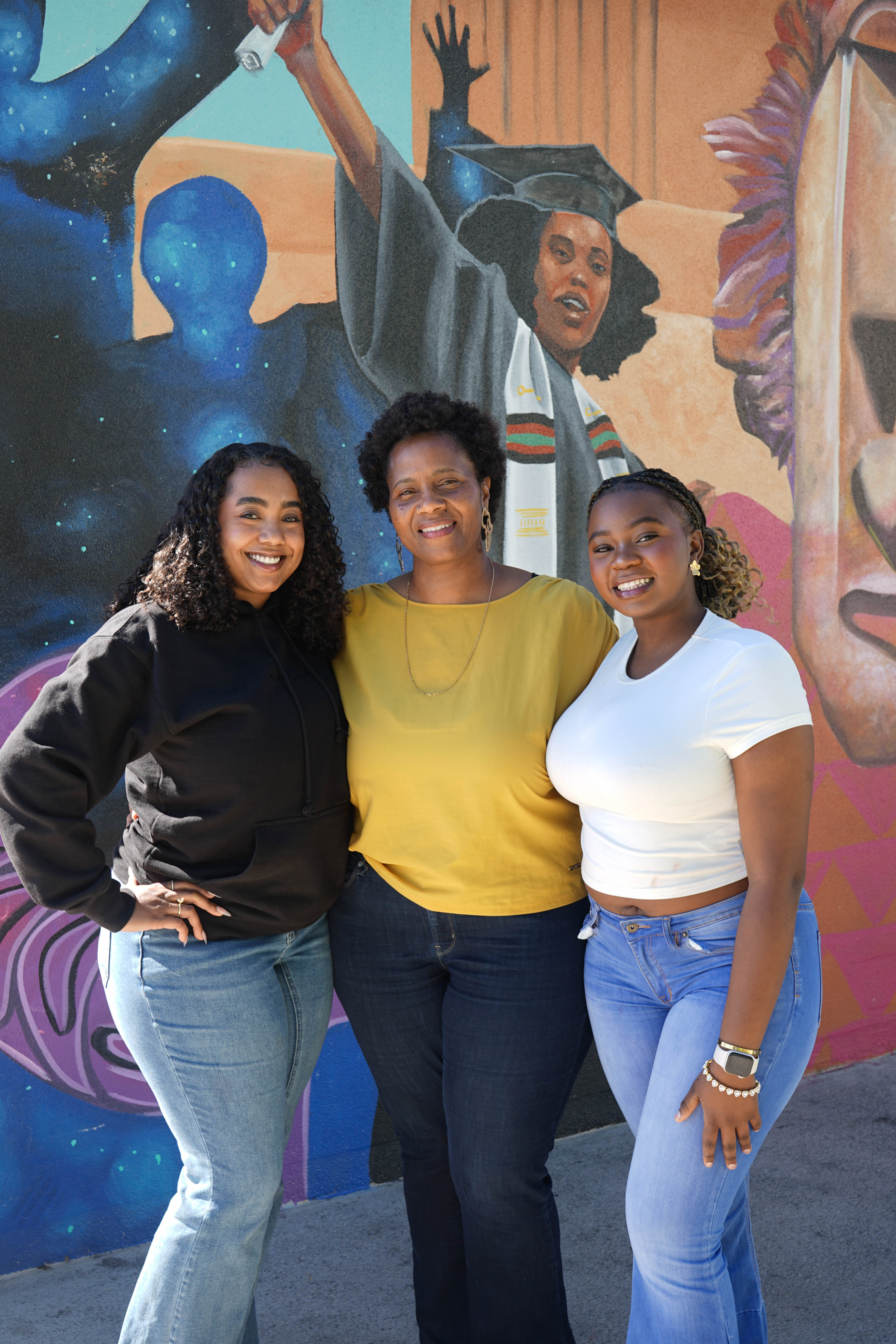
Richardson was born and raised in Santa Barbara. Her mother, Lillian Campbell, was a full-time advocate and activist. Her mother realized what many African Americans did at this time: that education about Black history and culture was key to the Black community’s survival in an isolated environment.
I met Richardson at Santa Barbara City College’s Umoja Center, where she works as a Umoja Program advisor. Umoja is a Kiswahili word meaning “unity.” The center itself is a space on SBCC’s campus decorated in pan-African colors, imagery of Black pride, and words of affirmation for the students who come to study, rest, and find community. The statewide program exists in 74 campuses across California, particularly where Black populations are small.
From her formative years, Richardson recalled cultural celebrations at the Franklin Community Center (known at the time as the Afro-American Center), a dedicated community space for Santa Barbara’s Black residents. There was also what Richardson called the “Alternative School,” where Black parents volunteered on a rotating basis to provide free breakfast, teach Black history, and provide childcare during the summer. Her mother also organized Black book fairs, Black art shows, even a large Juneteenth celebration at Oak Park decades before the organization Juneteenth Santa Barbara was established.
“She wanted it [Juneteenth] to receive the same type of reverence as other cultural festivals,” said Richardson.
As an adolescent Richardson took visits to UC Santa Barbara for Black events and lectures and attended award ceremonies held by the Endowment for Youth. There, Black students from public and private high schools gathered to be awarded for their academic achievement in front of their community.
“Looking back, I was constantly immersed with Black culture and Black art and Black folks and Black brilliance,” said Richardson.
Richardson’s involvement in Santa Barbara’s Black activism and education at a young age inspired the work she does now to uplift Black individuals from all over who come to Umoja.
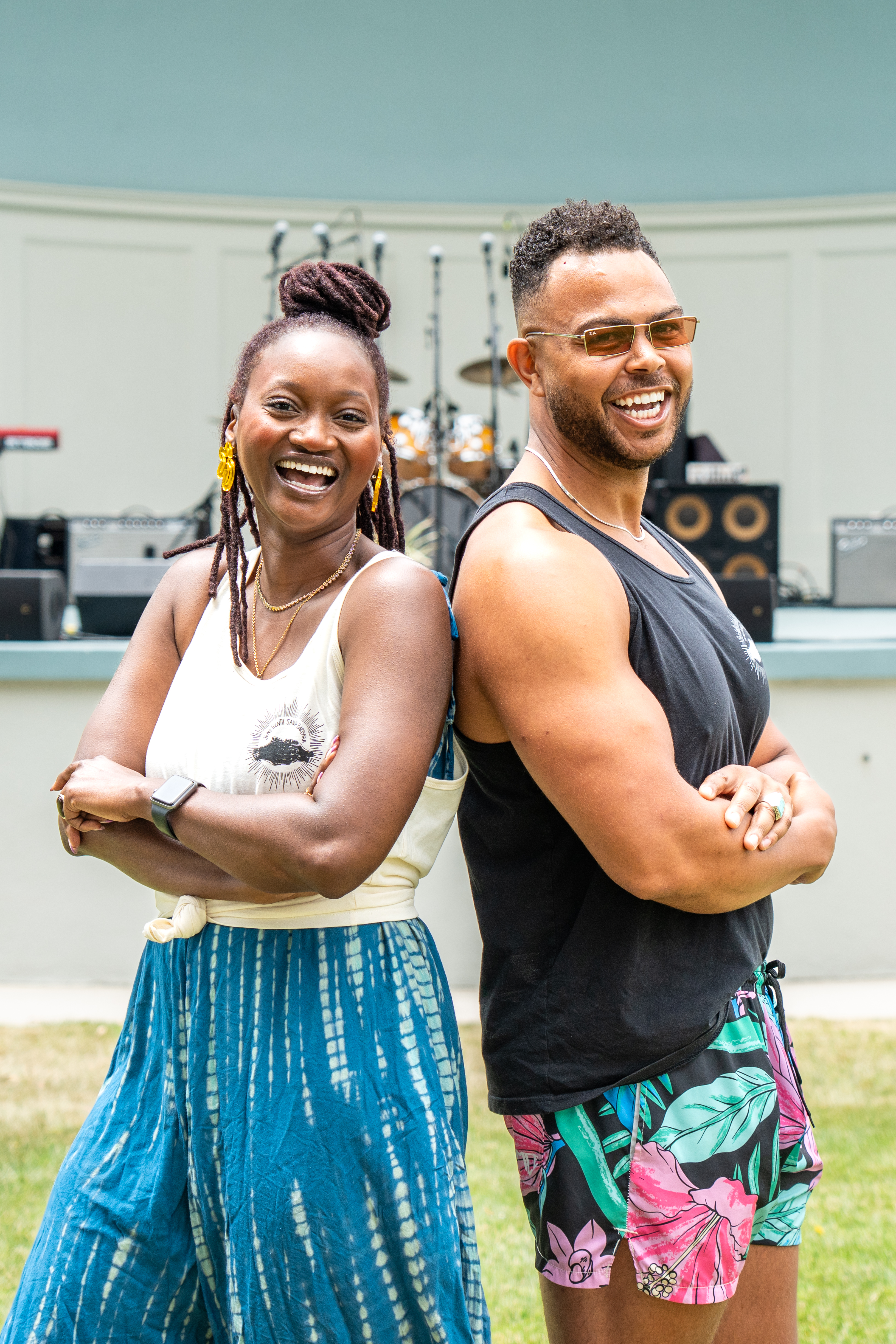
“At least once a week, I go down there [the Umoja Center]…. That fuels me,” said Killebrew, executive director of Public Affairs & Communications for Santa Barbara City College.
Having attended UC Santa Barbara in 2006 and lived in the Santa Barbara area for more than 20 years, Killebrew said, “I kept on finding myself in white spaces and spaces where I was the only Black person, and it became frustrating.”
These feelings inspired Killebrew along with Chiany Dri and Simone Akila Ruskamp to found Juneteenth Santa Barbara, an organization that has been hosting local Juneteenth celebrations for the past eight years. Their first celebration at Santa Barbara’s public library included 30 people, according to Killebrew. The second year, nearly 400 were in attendance.
“I literally witnessed two longtime Black individuals who’ve lived in Santa Barbara for 30- or 40-plus years. And they met for the first time there … that’s another joyous thing for Juneteenth. We can make those connections in real time.”
At one point, Richardson and Killebrew had felt the weight of having to be the change they wanted to see in Santa Barbara.
“I said I’m tired of the things that I want to see, I have to create,” said Richardson. “I want to move somewhere where I don’t have to create the things I want to see.”
Now that Richardson is older, 49, she has a different perspective: “I’m like, ‘Well, you gotta roll your sleeves up. You wanna see it happen, you gotta do it.’ ”
Flowers for Sojourner
Simone Akila Ruskamp is a part of a wave of younger Black Santa Barbarans coming together to take over for the elders that paved the way for them. Healing Justice is a Black-founded nonprofit with a goal of connecting and uplifting the Black community by hosting events such as Black family cookouts and raising money for local Black youth through the Black Is Beautiful Gala.
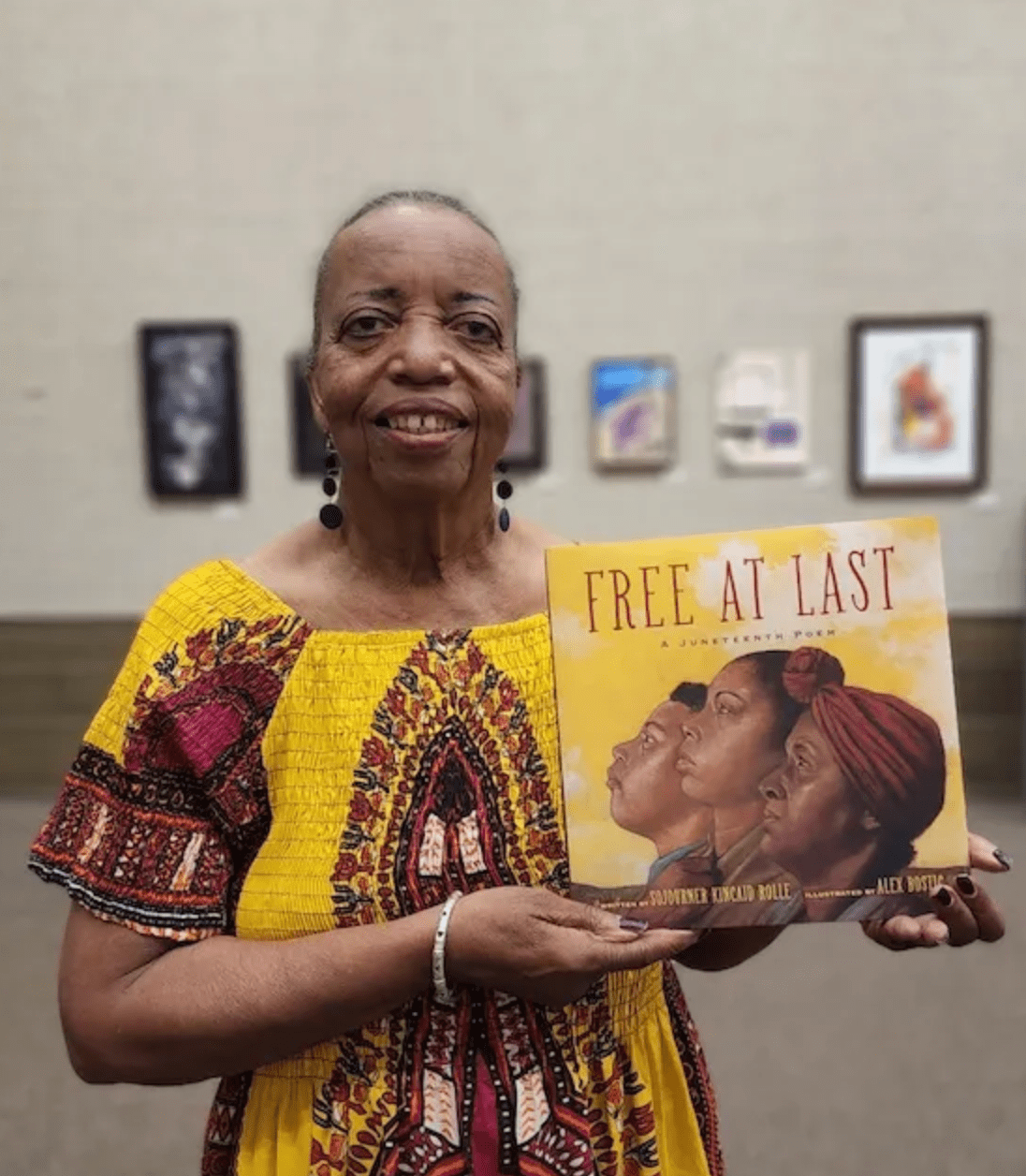
One of their larger goals has been gathering and archiving the history of Black people on the Central Coast. This was largely guided with the help of elder Sojourner Kincaid Rolle, who died in 2023. As well as being Santa Barbara’s Poet Laureate from 2015 to 2017, Kincaid Rolle was an author, artist, historian, and activist who helped guide the creation of the Franklin Community Center and lobbied for citywide recognition and celebration of Martin Luther King Jr. Day.
To Ruskamp, and to many others in the community, Kincaid Rolle was a mentor and a revered elder. Kincaid Rolle led Ruskamp and others at Healing Justice in their goal of historical preservation of Black landmarks in Santa Barbara.
“Sojourner would come to us and say, ‘I love what you’re doing, but these people need help. What about this church…,’ ” Ruskamp told me, referring to Healing Justice’s work establishing St. Paul African Methodist Episcopal Church (AME), the first African-American church in Santa Barbara, as a historical landmark. This type of preservation can help slow gentrification, giving places like St. Paul AME a chance to survive.
This landmark and many others can be found in Ruskamp’s children’s book We Were Here, We Are Here: A Living History of Black Santa Barbara. In the book, Sojourner Kincaid Rolle teaches three children about the city’s Black history. The book represents kids in Santa Barbara who look like Ruskamp and has allowed Kincaid Rolle’s spirit and lessons to be passed on to a new generation.
“This one Black woman who was very clear, I will not allow Santa Barbara to forget us….”
I wonder the same for historical Black institutions such as St. Paul AME.
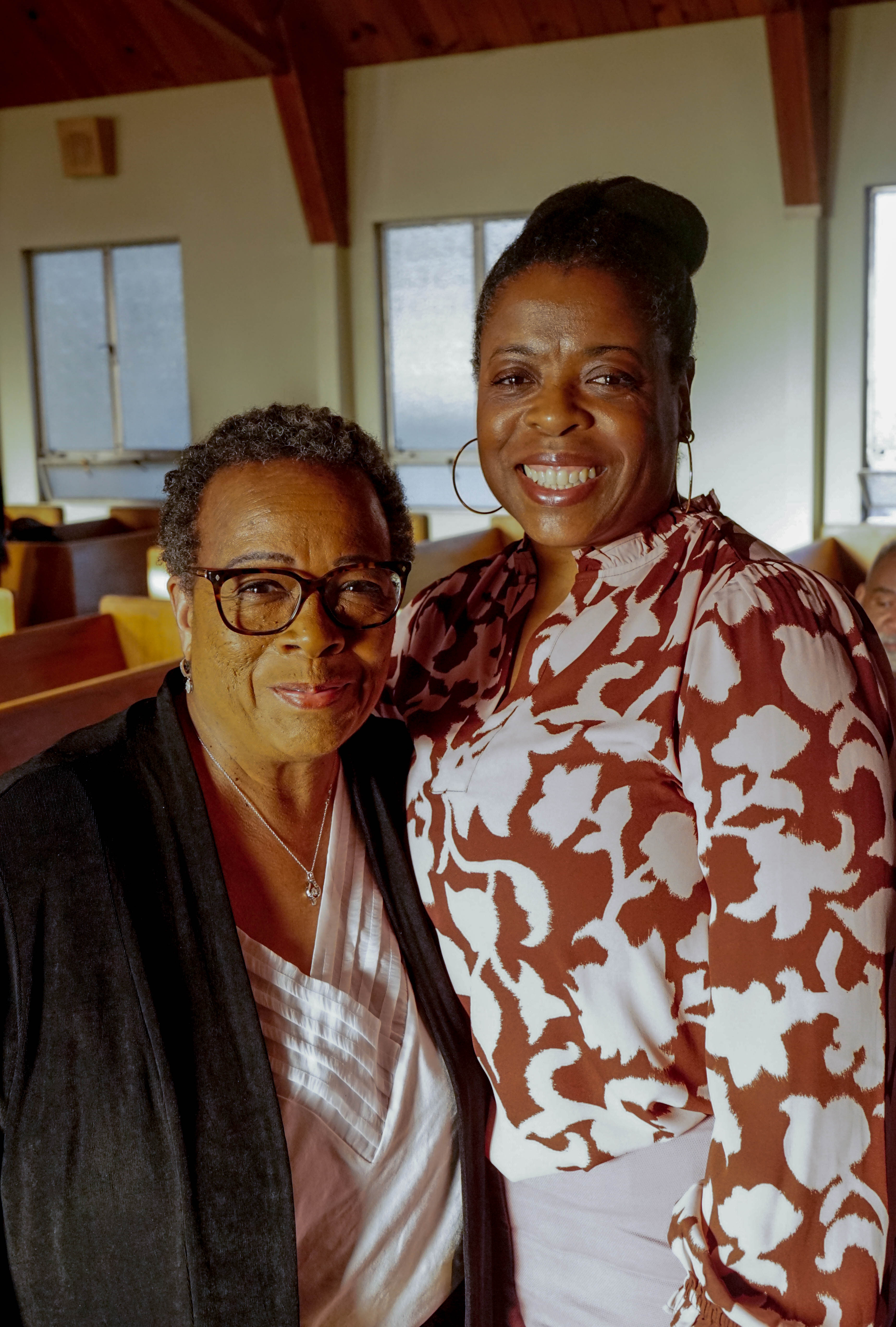
Throughout my search for community, connecting with the Black church was a priority. The Black church has been instrumental to Black political organizing for as long as it’s existed.
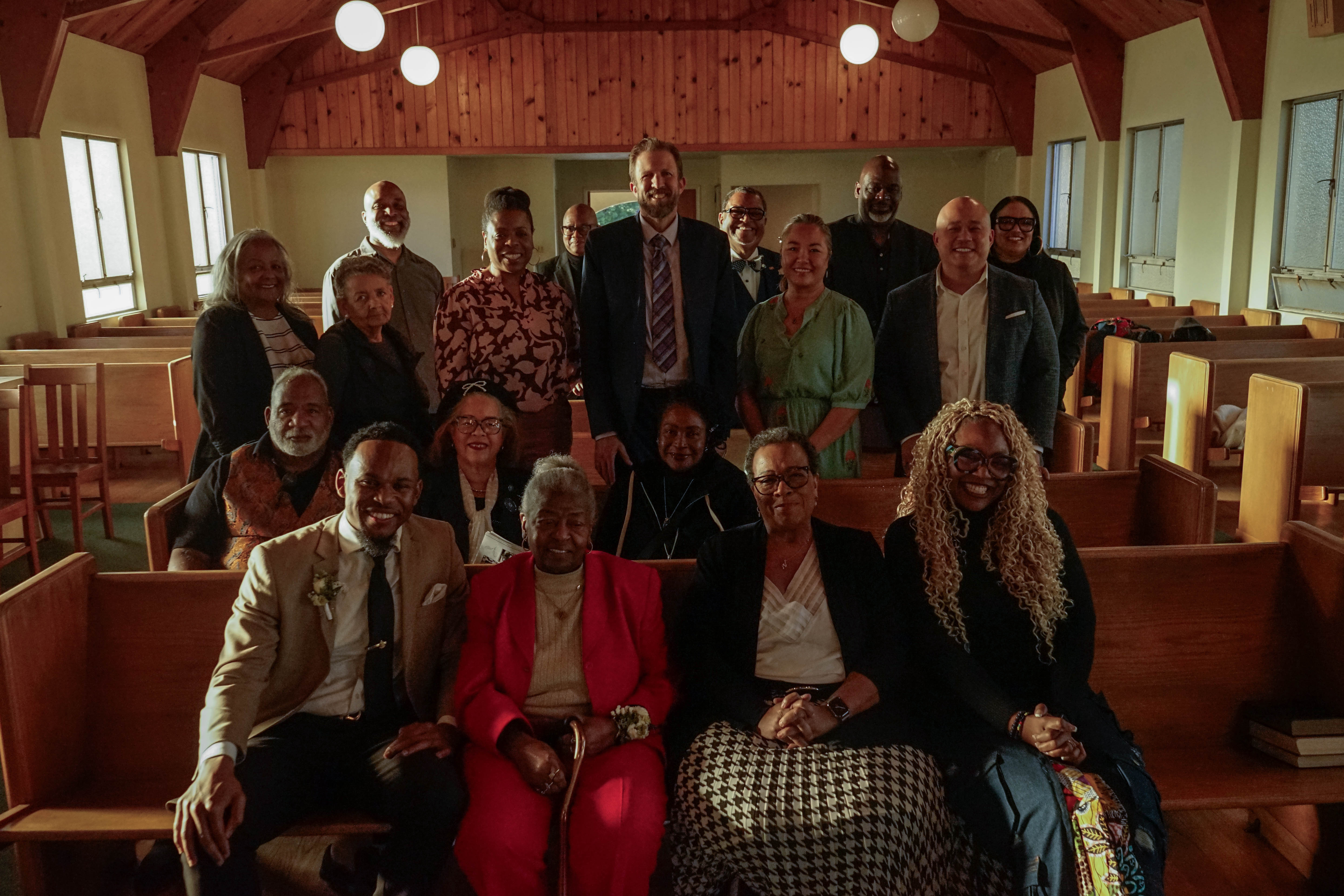
“The church was the foundation of Black families back in the day, and during the Civil Rights era,” Wanda Thomas, the Worship Leader of Santa Barbara’s Lewis Chapel Christian Methodist Episcopal Church, told me.
With this year celebrating their 80th anniversary, Lewis Chapel CME was built in 1957 on East Gutierrez Street.
“I used to sit across the street on that top step and watch them build this church,” recalled one of the church’s elders and cousin to Thomas, Julia Simms.
I could feel the history of the church through the welcoming nature of the congregation and the sweet sounds of the gospel hymns. It made me feel at home.
For the church’s 80th anniversary, they were honored with city proclamations: a Certificate of Commemoration as well as a Resolution Honoring the 80th Anniversary of Lewis Chapel Christian Methodist Episcopal Church in Santa Barbara. However, while the church’s longstanding place in the community is celebrated by the city, Lewis Chapel is in grave need of structural repairs.
Will Santa Barbara find a way to help keep the church open? It is up to the city as much as it is to us as individuals to retain our Black history and make sure it is not erased.
Who will give us our flowers while we are still living?


Lewis Chapel Christian Methodist Episcopal Church | Credit: Maya Johnson
This story is by no means comprehensive. I do not speak for the entire Black community. But I believe Black Americans who have been displaced or feel isolated can look to the past to find purpose and community again. How can we reimagine what it means to be Black in Santa Barbara? It can’t simply be something that’s lost to us forever.
Until then, Santa Barbara’s Black residents must lean on our history and on each other.