This story originally aired on the March 1, 2026 episode of Inside Appalachia.
One of America’s pioneering filmmakers had nothing to do with Hollywood but nevertheless left his mark on the emerging industry.
Oscar Micheaux was a homesteader, who then turned his attention to making movies in the early 1900s. He was a Black man, who made movies for Black audiences at a time when they weren’t allowed into mainstream, white-only theaters. And for several pivotal years in the 1920s, he operated out of Roanoke, Virginia.
“Generally Oscar Micheaux was one of the most prolific independent filmmakers in American history, but he was also a pioneer in Black film,” says E.B. Smith, executive director of the Harrison Museum of African American Culture in Roanoke.
“He was one of the first mainstream filmmakers back in the silent era and moving into the talkies and the ’30s,” Smith says. “He spent a good portion of his career in Roanoke, here on Henry Street, making movies here in town.”
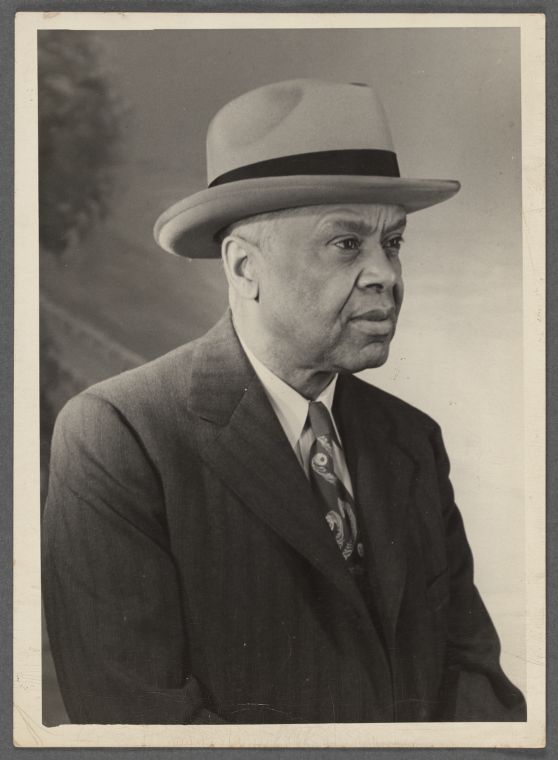
Courtesy of the New York Public Library
Micheaux was born in Illinois and worked as a Pullman porter on the railroad before becoming a homesteader in South Dakota. He wrote a novel, “The Homesteader,” about the experience, and was subsequently approached by a company that wanted to make it into a feature film. Micheaux decided he’d do that himself, and launched his career as a producer and director.
He went on to make more than 40 movies, and not only that: he handled all the business around his films.
“Behind the camera, he was somebody that protected and insulated his entire creative process,” says Ian Fortier, executive director of the Grandin Theatre, an independent Roanoke filmhouse that dates back to 1931. “Not just the vision of the artistic nature of the film in his head to paper, but all the way through casting, all the way through shooting, all the way through editing, and all the way through the rights and the deals of distribution. He really protected his product, and he wanted to make sure the art and messages he was creating were not tarnished or influenced in any way.”
Micheaux’s first film adapted “The Homesteader.” His second, “Within Our Gates,” was an artistic response to DW Griffith’s racist blockbuster “Birth of a Nation,” which vilified Black men and glorified the Ku Klux Klan.
“He challenged Jim Crow, and he challenged the sort of predominant narrative created by a ruling class by showing not only incredibly productive aspects of the Black community, but highly educated, highly engaged,” Fortier says. “I think that was one of the greatest things he contributed, was creating a narrative that helped shift social aspects about the contributions made by the black community in the American landscape.”
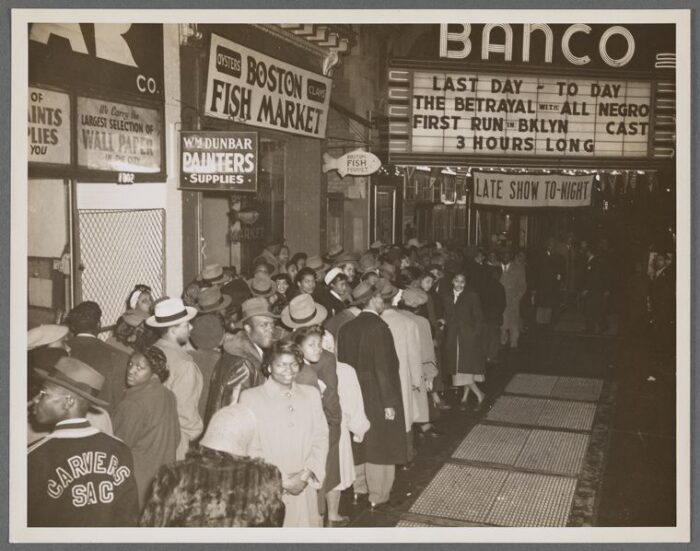
Courtesy of the New York Public Library
Soon after “Within Our Gates” was released, Micheaux opened up offices in Roanoke, Virginia. At the time, Roanoke was home to a booming Black business district on Henry Street.
“During that time Henry Street was sort of a mini-Harlem,” says Jordan Bell, a neighborhood leader and historian of Roanoke’s Gainsboro neighborhood, which is home to Henry Street. Bell says when Micheaux was in Roanoke, he was just an entrepreneur filmmaker.
“But now, he’s recognized around the world for his films,” Bell says. “Just imagine if Tyler Perry had his film studio here. Imagine what that would look like. Well, that’s who he [Micheaux] was in 1922.”
Roanoke, and specifically the Gainsboro neighborhood, was part of the global movement that became known as the Harlem Renaissance.
Micheaux stayed in a hotel directly across the street from his film offices. He may well have frequented the Lincoln Theatre, a 700-seat venue that was open for decades under various names, and hosted Duke Ellington, Ella Fitzgerald, Count Basie and other jazz musicians.
Micheaux operated in Roanoke from 1922 to 1925, producing eight films during that time. Including “Body and Soul,” which launched the career of standout actor Paul Robeson. And “The House Behind the Cedars,” which featured a cameo by future civil rights lawyer Oliver Hill, Sr.
E.B. Smith says Micheaux didn’t just show the world a different side of Black life. He used his control over the process to take on ideas that just didn’t appear in white cinema.
“He was chronicling migration and movements for Black life that a lot of people weren’t,” Smith says. “He was also showing the world a side of African American life that was not widely explored or accepted, especially within the arts. His films were not the sort of traditionally digested vaudeville exports that a lot of Black characters in cinema were at the time. He was telling very serious stories about whole people, and that was revolutionary.”
That revolutionary spirit made a big impression on Black filmmakers, in a way that continues today.
Remembering people like Oscar Micheaux is very important because it sort of inspires the next generation,” Bell says. “I’m sure Tyler Perry knew who Oscar Micheaux was. I’m sure Spike Lee knew. I’m sure the small filmmakers that are making short films today, I would hope they know exactly who he is.”
Oscar Micheaux died in March of 1951. Many of his films, including all of those shot on location in Roanoke, have disappeared. Film stock doesn’t always hold up, and is susceptible to breaking down. But some of Micheaux’s fans hold out hope that his Roanoke films are still out there, and may yet appear. In the meantime, several of his films still can be seen, either in collections or on streaming services.
The Grandin Theatre and Harrison Museum of African American Culture showed several of them in February for Black history month. And the crown jewel in Micheaux’s filmography, “Within Our Gates,” is available to view online.