Joel Benoliel was leading a tour of historic Sephardic sites in the Central District a few years ago when his group stopped at Tolliver Temple Church of God in Christ. Adorning the church’s imposing brick building were more than a dozen six-pointed Stars of David — revealing a Jewish past.
Inside, the church’s pastor invited Benoliel to speak to the congregation. Then in his late 70s, he looked around. “I had goose bumps,” he recalled.
In terms of the building, virtually everything was the same as he remembered from almost 65 years before, when it was a synagogue called Sephardic Bikur Holim and he had his coming-of-age bar mitzvah there.
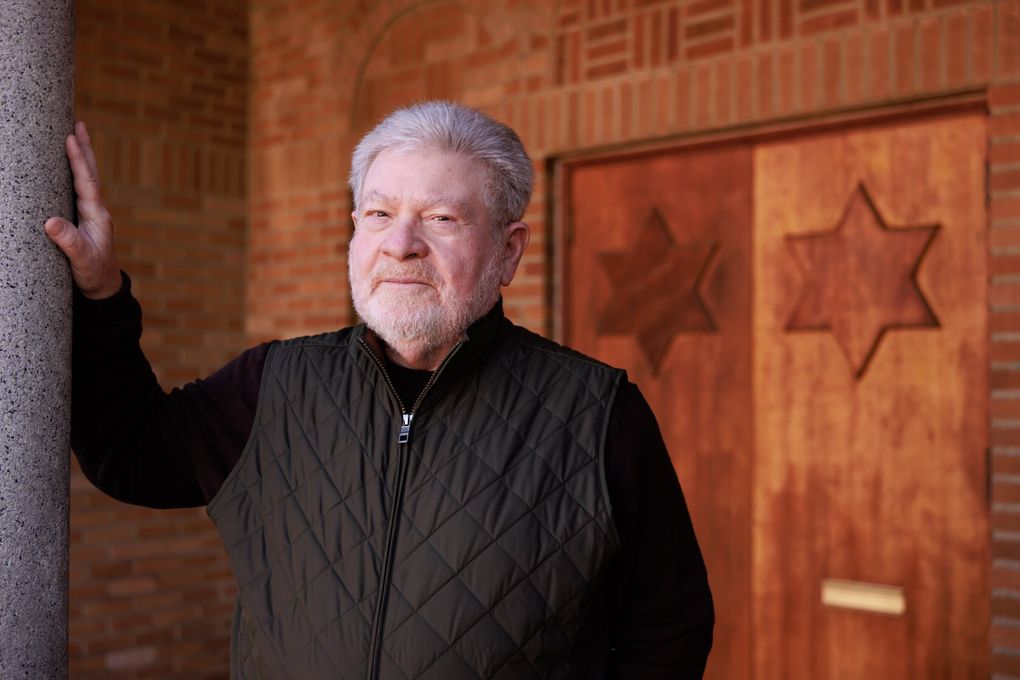
Joel Benoliel outside of Tolliver Temple Church of God in Christ in Seattle. The historic building was originally built as the Sephardic Bikur Holim synagogue, and Stars of David can still be seen on its doors. (Erika Schultz / The Seattle Times)
Joel Benoliel outside of Tolliver Temple Church of God in Christ in Seattle. The historic building was originally built as the Sephardic… (Erika Schultz / The Seattle Times)
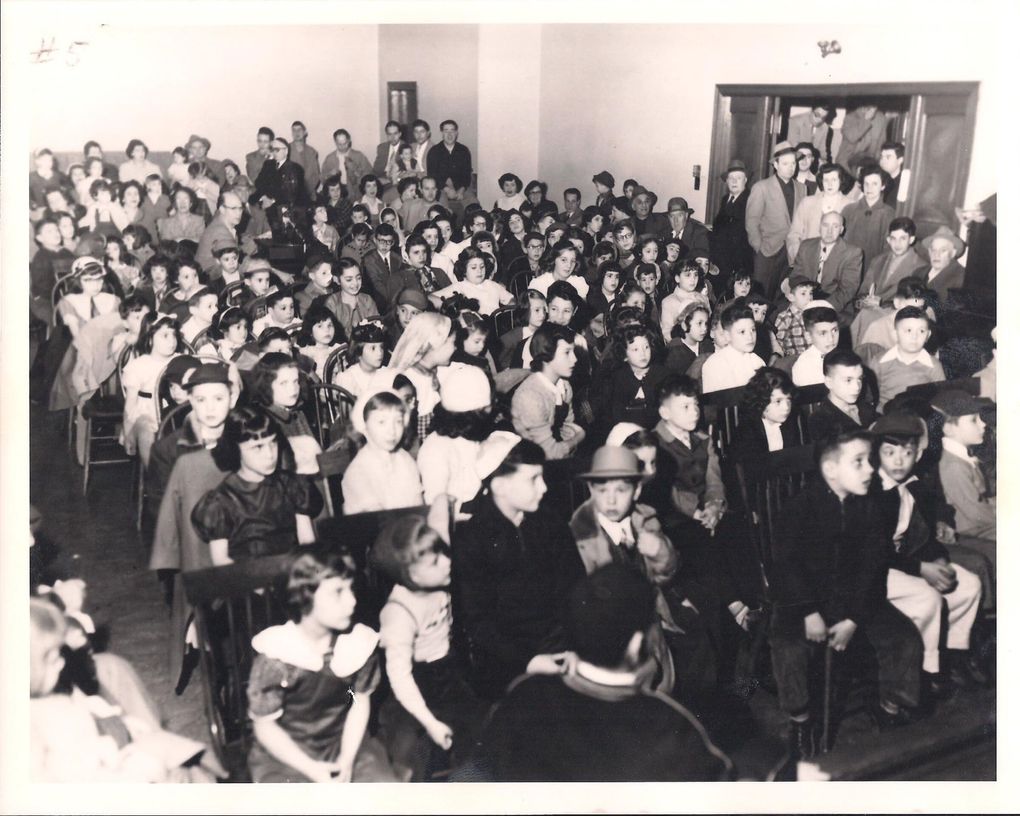
The congregation of Sephardic Bikur Holim gathers in the early 1950s, when the synagogue was located in the Central District. Many of the children, including Joel Benoliel (second row center, hands folded in his lap), are there to see a movie. (Courtesy of Joel Benoliel)
The congregation of Sephardic Bikur Holim gathers in the early 1950s, when the synagogue was located in the Central District. Many of the children,… (Courtesy of Joel Benoliel)
“It was an amazing experience,” Benoliel said, and not just because of nostalgia. He delighted in the building’s current use as a predominantly Black church, with congregants dressed in their Sunday best and music fostering a festive, joyous atmosphere.
One community had picked up where another had left off, allowing the building at East Fir Street and 20th Avenue to remain a house of worship for nearly 100 years. Its storied history, entwining tales of Black and Jewish life and serving as a reminder of the Central District’s remarkable diversity over the years, led the city to pronounce Tolliver Temple a historic landmark in 2023. Now, the church is embarking on a push to have the church listed in the National Register of Historic Places.
Becoming a national landmark would open a door for people across the country to learn from the building’s history, said Edith Harrison, chair of the church’s landmark committee. They would get a lesson about love and connection between two communities, she said.
The bond between many Black and Jewish people — particularly apparent in the Civil Rights Movement — has been strained at times by political divides, class friction, racism and antisemitism. But those tied to Tolliver Temple and the synagogue that came before say their shared history illustrates a bond nonetheless. It’s one that’s been strengthened as Jews have returned to the Central District site, on Seattle Sephardic Network walking tours and other visits, and received an enthusiastic welcome.
“I cannot find adjectives to describe to you how that makes me feel, makes us feel,” Harrison said of the visits.
Jack Gottesman, president of modern-day Sephardic Bikur Holim, which moved in 1963 to Seward Park, noted Tolliver Temple’s members could have scraped off the building’s Stars of David long ago. “They’ve kept the tribute to the building’s original inhabitants for all this time and that’s very meaningful for us,” he said.
The site, Gottesman added, “brings us together as neighbors and friends.”
‘A wonderful time’
Lilly De Jaen was born in 1929 — the same year Sephardic Bikur Holim celebrated opening its almost 5,000-square-foot Central District building with art deco touches.
“It was built by immigrant families,” De Jaen said. Each contributed small amounts in a door-to-door fundraising effort.
Like her parents, the families hailed from Turkey, one place Sephardic Jews settled after they were expelled by Spanish and Portuguese inquisitions. In Seattle, they were part of a growing Jewish population that included Sephardim from the Mediterranean island of Rhodes and a larger population of Ashkenazi Jews with roots in Eastern Europe.
Most of Seattle’s Jews lived in the Central District, free of racially and ethnically restrictive housing covenants then prevalent elsewhere in Seattle. Synagogues proliferated, their legacy seen today not only at Tolliver Temple but other notable buildings like the Langston Hughes Performing Arts Institute, whose building once housed Seattle’s oldest synagogue, founded in 1891.
People of other races and ethnicities clustered in the Central District too, often for the same reason. De Jaen remembers Black and Chinese American schoolmates and friends. A Japanese immigrant used to hand flowers and white radishes from her garden over the fence to De Jaen’s family. Another neighbor who became a close family friend had emigrated from Italy.
“It was a wonderful time,” De Jaen said.
It was also a time of political resistance to immigration nationally, reminiscent of today. Restrictive laws held up the arrival from Turkey of one of Sephardic Bikur Holim’s first rabbis, according to Tolliver Temple’s thorough application to Seattle’s Landmarks Preservation Board. But Rabbi Abraham Maimon, who became Benoliel’s grandfather, and Gottesman’s great-great-grandfather, finally made it. He led the congregation as it built the Fir Street synagogue.
The synagogue, Da Jaen recalled, “was an extension of your family.” She loved walking home after services with other congregants, everyone greeting each other and sharing family news. They typically spoke Ladino, a Judeo Spanish language that is to Sephardim what Yiddish is to Ashkenazi Jews.
In the late 1950s and early 1960s, many Jews moved out of the Central District. In Seattle, discriminatory covenants were lifting and Jews looked to neighborhoods that had once locked them out. For Sephardic Jews, Seward Park became a destination. Sephardic Bikur Holim put its Central District gem up for sale.
‘This is the place to be’
Bishop L.E. Tolliver’s storefront Central District church needed more space. Credit, in part, the Great Migration of Black people leaving the South.
“Come to Seattle. This is the place to be,” the first to arrive here wrote back to relatives, said Rose Wallace-Croone. Her grandparents in Texas received such a letter and packed up nine kids in 1943.
As the late historian Quintard Taylor wrote, jobs in the Pacific Northwest opened up to Black people as World War II increased labor demands. Once-pronounced discrimination eased at Boeing, in shipyards and elsewhere. Seattle’s jazz scene was sizzling.
When the newcomers arrived, Wallace-Croone said, “the first thing they do is they find churches.”
Tolliver, who came from Mississippi, ended up working with a group of new Washingtonians to found their own church. They incorporated the Church of God in Christ with the secretary of state in 1926, roughly 20 years after the now international Pentecostal denomination began in Memphis, Tenn.
Tolliver formed his own congregation sometime later and by 1963 was ready to take the next step: a new church home. The Central District, whose Black population had steadily grown into a dominant presence, was the natural place. Tolliver’s congregation snapped up Sephardic Bikur Holim’s property, paying $85,000.
A new church home “of that magnitude,” one “that was available and within our reach,” thrilled its membership, said Alvin Moore Sr., a current Church of God in Christ bishop in Washington.
The church flourished there, becoming the denomination’s biggest in the region, serving some 600 families. Moore, 59, attended a different church as a child. “I could not wait to get out of our church and come by Tolliver Temple,” he said. “I knew it was a gathering place.” He’d see friends from across the state.
The church held many revivals, funerals and weddings, including for Wallace-Croone, Moore’s cousin.
“The church was everything,” she said. If congregants wanted to buy houses, Tolliver would lend money for down payments. A later pastor regularly brought people looking for work to meet with her dad, a longtime Boeing machinist, to see about finding a job for them at the company.
The connection with Jews who had spent so many years in the building remained largely in the past until one day in the mid-1990s, when Wallace-Croone’s mom, Erma Byrd-Wallace, ran into Regina Amira at the Safeway.
Reconnecting
“Hey Regina!” Byrd-Wallace called out, as her daughter, also there, recalled. “How are you doing?”
Both women, now deceased, had graduated in the 1950s from the Central District’s Garfield High School, then as much of a melting pot as the surrounding neighborhood. Years later, they served as secretaries together at the school.
Byrd-Wallace was one of the nine children brought by their parents to Seattle from Texas. She cherished Tolliver Temple and attended in elaborate hats she made herself. Amira arrived in Seattle with her family at 14 as a World War II refugee. She was a master baker who taught the younger generation to make traditional treats in Sephardic Bikur Holim’s kitchen.
The two women made friends easily, with each other and all sorts of people in and outside of their religious circles.
“We were having some kind of event at the church,” Wallace-Croone said, and her mom invited her old friend to come. Amira, who shared she had gotten married there, said she’d love to.
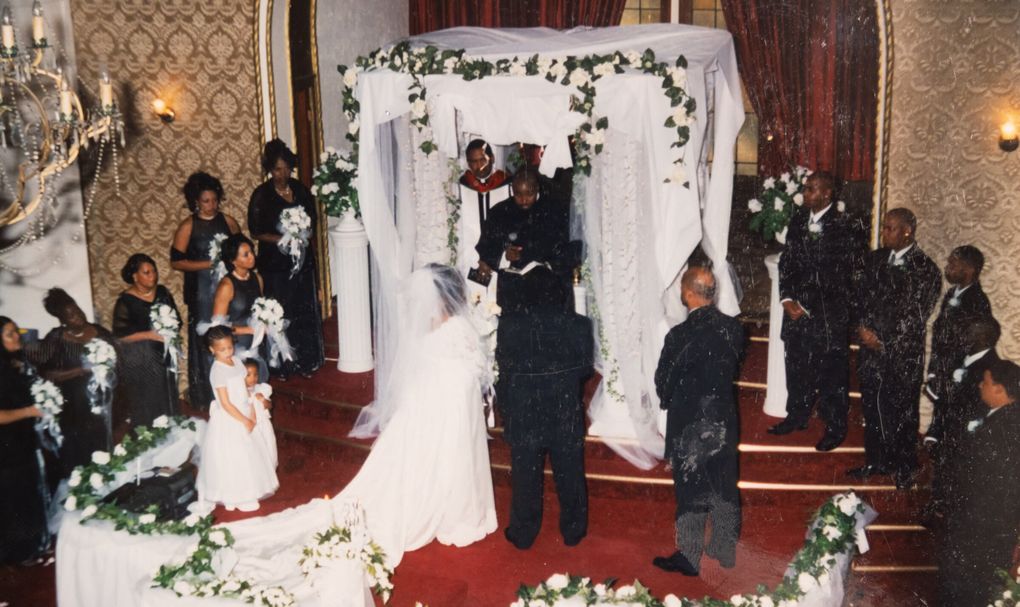
Rose Wallace-Croone’s wedding is photographed inside Tolliver Temple Church of God in Christ in Seattle’s Central District on Aug. 25, 2001. (Courtesy of Rose Wallace-Croone)
Rose Wallace-Croone’s wedding is photographed inside Tolliver Temple Church of God in Christ in Seattle’s Central District on Aug. 25,… (Courtesy of Rose Wallace-Croone)
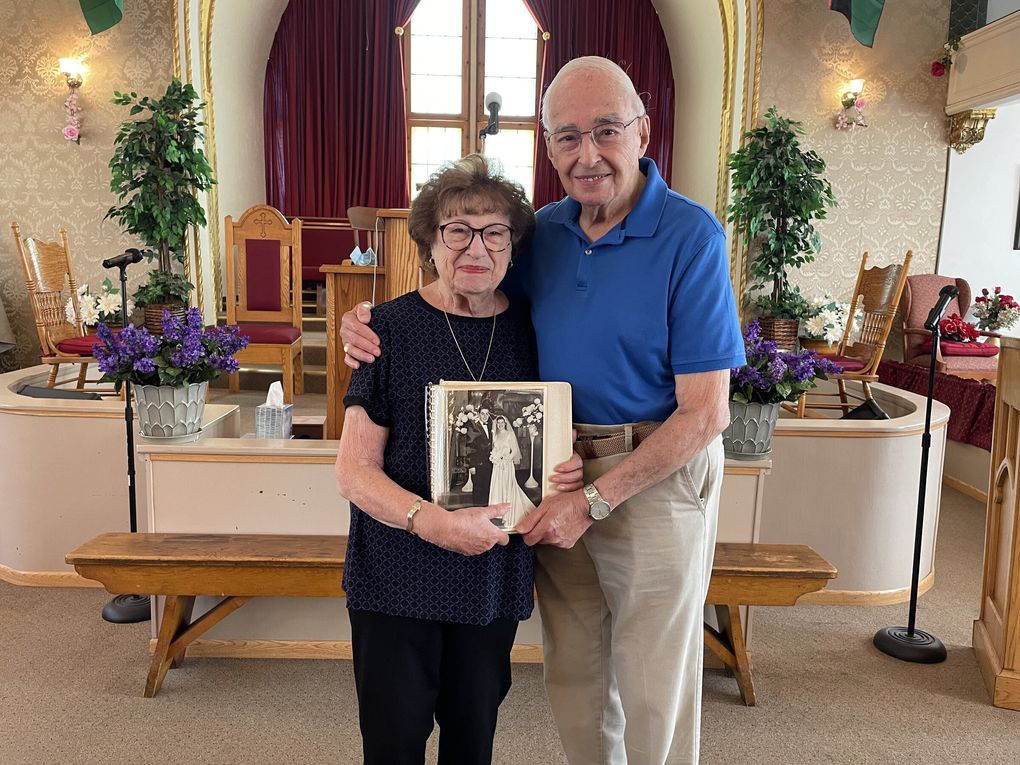
Regina and Victor C. Amira hold their wedding album inside Tolliver Temple Church of God in Christ during the launch of the Seattle Historic Sephardic Tour on July 25, 2021. They were married inside the historic building, when it was the Sephardic Bikur Holim synagogue. (Courtesy of Washington State Jewish Historical Society)
Regina and Victor C. Amira hold their wedding album inside Tolliver Temple Church of God in Christ during the launch of… (Courtesy of Washington State Jewish Historical Society)
“She brought people with her, a whole van full,” Wallace-Croone recalled. Congregants who once worshipped there took their grandchildren. They had a tour, took pictures and socialized. It became an annual tradition until Byrd-Wallace became ill in 2018, her daughter said.
A few years later, a woman named Jamie Merriman-Cohen wandered into Tolliver Temple after a service. She was writing a master’s thesis on the Sephardic history of the building.
“I went downstairs and I talked to her,” said Harrison, who was in an upstairs dining room sharing a meal. The push to make Tolliver Temple a landmark “just kind of went from there.”
The pastor at the time, O.J. Jenkins, was looking for a way to keep the church in the Central District. Other predominantly Black churches had moved out as the neighborhood gentrified. Among those that stayed, congregations often dwindled. Tolliver Temple was no exception.
Developers hungrily eyed its property. “Realtors right and left were leaving cards,” Harrison said.
Jenkins surmised that a Seattle landmark designation would allow the church to stay put. The designation carries restrictions on how a building can be altered and facilitates grant opportunities to help maintain the site.
Church and Sephardic community members joined forces. Merriman-Cohen’s historical research proved invaluable to tell the Jewish side of the story, said Sarah Martin, a consultant hired to work on the application. For the church side, Wallace-Croone had a treasure trove of historical records and photos, passed on from her mother.
They included a prized 1944 picture of church leaders, including Tolliver. That picture and many other historical records — a 1920s ledger showing donations to the synagogue building fund, a 1966 Seattle Times clipping about a Churches of God in Christ food program, a photo of a gospel group and another of Jewish boys with prayer shawls and choir books — made their way into Tolliver Temple’s 100-page city landmark application.
That application will form the basis of the church’s pitch to become a national landmark, Martin said. Joining the National Register of Historic Places imposes no restrictions on how a building can be used, so it doesn’t foster preservation in that way. Still, Martin said, it’s a good way to showcase underappreciated stories about people and communities — outside of the political or high-society elite — that the registry has only recently opened up to.
The drive for national landmark status comes as the church this year holds centennial celebrations marking its denomination’s launch in Washington, which also serve as another opportunity for reconnection.
“If our Jewish friends can come, we would love that,” said Harrison, the landmark committee chair.
All that work digging into Temple Tolliver’s history has fulfilled its former pastor’s wish. The church is still in the Central District, holding services every Sunday, though the congregation’s size is a fraction of what it once was.
On a recent Sunday, about 15 people attended, scattered among rows of red-cushioned pews lit by chandeliers and sun streaming through the windows. But the service pulled out all the stops.
Ushers in white gloves handed out programs. A three-piece band played. Pastor Kenneth Isabell Sr., his wife and two others sang. The congregation joined them in hymns and a couple of attendees jingled tambourines.
Isabell preached with his whole body. “You are everything!” he exclaimed as he raised an arm to the sky.