

At the meeting, student Faithe Smith was trying to organize a spiritual outlet for Black students. Her enthusiasm was infectious, and as far as Younger knew, there weren’t other VCU organizations geared to Black students.
When Smith asked the small roomful of attendees if anyone played an instrument, Younger raised her hand. And with that, the Black Awakening Choir was born – Smith its first director, and Younger its first musician.
Smith “was kind of like the be-all and end-all,” Younger said. “She was [the recruiter], the publicity manager, the road manager. … She was really, really excited about finding places for us to perform, and she created somewhat of a tour. And it started to draw people.”
It still does. More than a half-century later, BAC continues to share its strong voice as one of the oldest student organizations at VCU.
That first year in 1970, BAC had about 15 members. Current Director Frankie James said membership, which is open to all students, has ebbed and flowed over the years, sometimes swelling to more than 100 students and currently numbering around 35.
His own ties run deep: James, who joined BAC as a student in 2009, has been involved ever since, serving as chaplain, choreographer and assistant director before becoming director in 2018.
Early challenges and perseverance
Smith graduated soon after founding BAC, and Younger, an education major, took over as choir director. She remembers how busy the choir kept her and her fellow students. They practiced at Johnson Hall several days a week, performed at local churches and traveled around Virginia and beyond to sing and spread the Gospel.
She distinctly remembers the challenges of those early years, from struggling to get support from the university to finding space to rehearse.
“I will never forget this,” she said of the time BAC was told to find a new rehearsal space. “We went over to Johnson Hall. There was this little room, no bigger than maybe a 9-by-12 bedroom, that had an old acoustical upright piano in it. With missing keys. It was not tuned.”
But the group persevered, moving to different spots around campus to rehearse over the decades, from Rhoads and Johnson halls to University Student Commons, even taking a shuttle bus to the MCV Campus to practice for a time.
In the early 1970s, VCU was a new university, having formed in 1968 when the Richmond Professional Institute merged with the Medical College of Virginia. It came into being on the heels of the Civil Rights Movement. Richmond was embroiled in battles over desegregating its schools, with children being bused across the city and many white families moving to the suburban counties.
At VCU, controversy erupted around the time BAC was formed, when the contract of Vincent Wright, a popular Black faculty member and assistant dean of students, was terminated in 1971. Students and faculty rose up in protest, and someone set fire to the office of Vice President for Student Affairs Richard Wilson, who had terminated Wright.
The first mention of the Black Awakening Choir in The Commonwealth Times, VCU’s student newspaper, came shortly beforehand, in November 1970 – the report noted that the group sang at Black Solidarity Day, a rally that began at Monroe Park and ended at the state Capitol.
A focus on substance and style
For Black students, the choir was a place where they could connect socially and spiritually on a predominately white campus. It was also an avenue to finding a larger audience.
A November 1971 concert earned a rave review by Commonwealth Times music critic Steven Lasko, whose report also quoted choir member Andrea Williams giving context to BAC and its members.
“We sing for enjoyment, but we also sing to relieve our frustrations,” Williams said. “It’s hard being a minority on campus, and singing gives us inspiration.”
Turning to the performance, Lasko was impressed – and took special notice of Younger.
“Two hours of excellent and unadulterated gospel music,” he wrote, “performed with such conviction that it would have proved testing for the most convinced atheist. … The pianist, Annesto Highsmith, showed anyone in the audience who wasn’t already familiar with it what real gospel piano accompaniment should sound like.”
Lasko concluded with this: “VCU is lucky in having such talent, and maybe we ought to provide more chances for the Black Awakening Choir to sing. It might help some of us relate a little better to another culture.”
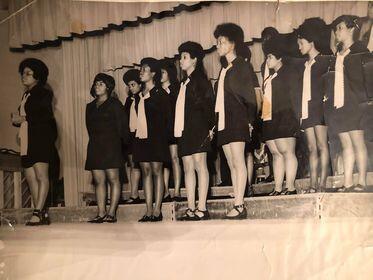
Younger was busy with her studies and life outside of school, and at the end of her sophomore year, she had to bow out of BAC. But she recalled another memorable – and stylish – concert on campus that took place in spring 1972.
“I remember us having these dresses made,” she said. “They were pink and we all looked like we were walking off the cover of a magazine.”
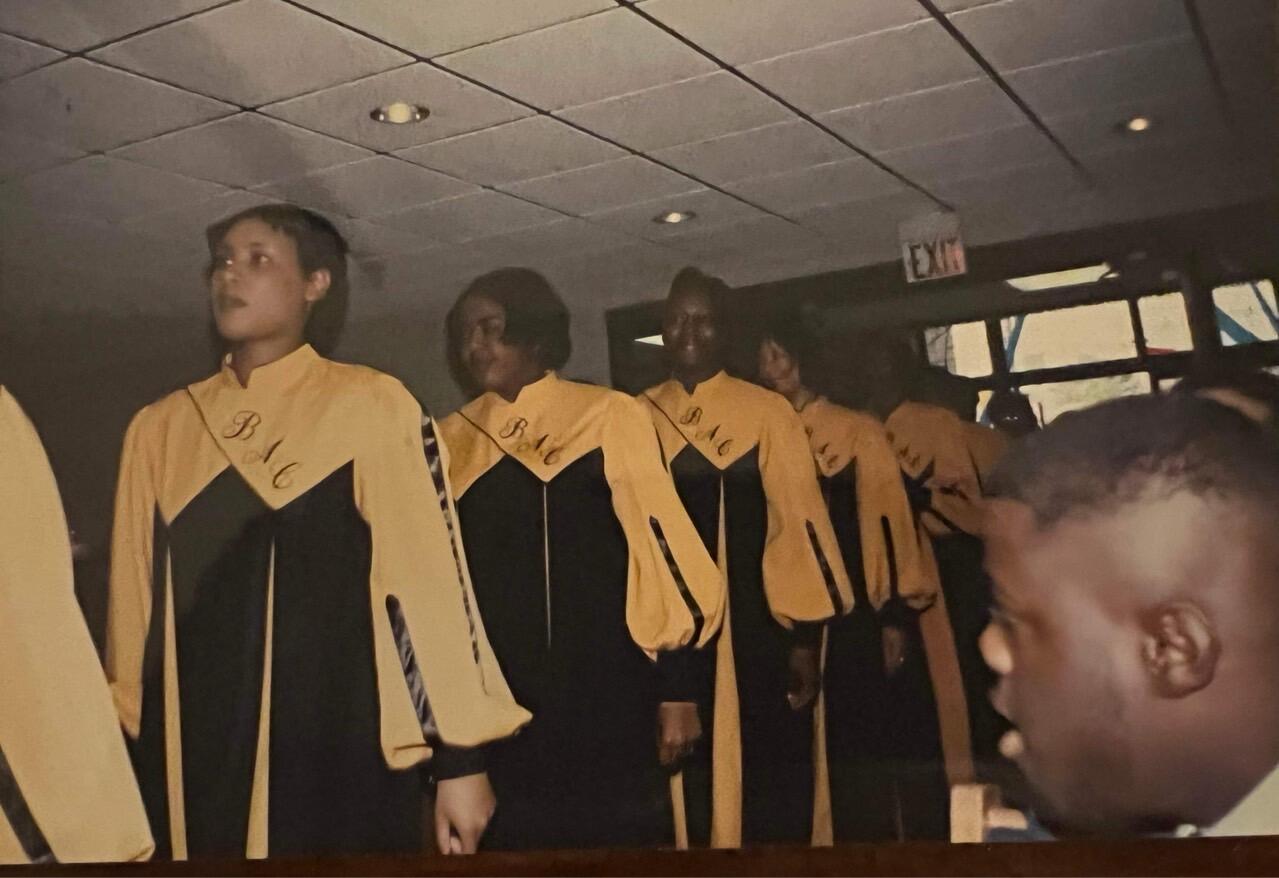
Then – and now – outfits and choreography were a big part of the choir’s presentation, though robes were more popular then than they are today.
“Uniformity was the order of the day,” Younger noted. “There was no individual, you know, where you wear this and I wear that. We all had to dress alike. Decorated robes were huge back then.”
Deepened roots and expanded reach
After Younger left BAC, it went dormant for a semester or two before student Charles Smith reassembled and reorganized it. Under his leadership, he formed an executive board, and the choir was recognized as an official student organization. Napoleon Peoples, Ph.D., served as BAC’s first advisor.
Charles Smith also helped the choir record an album in the 1970s titled “If You Just Believe in God,” and several of its songs are available on YouTube.
During Charles Smith’s tenure as choir director, the BAC recorded an album, including the song “Inspire Me Lord.”
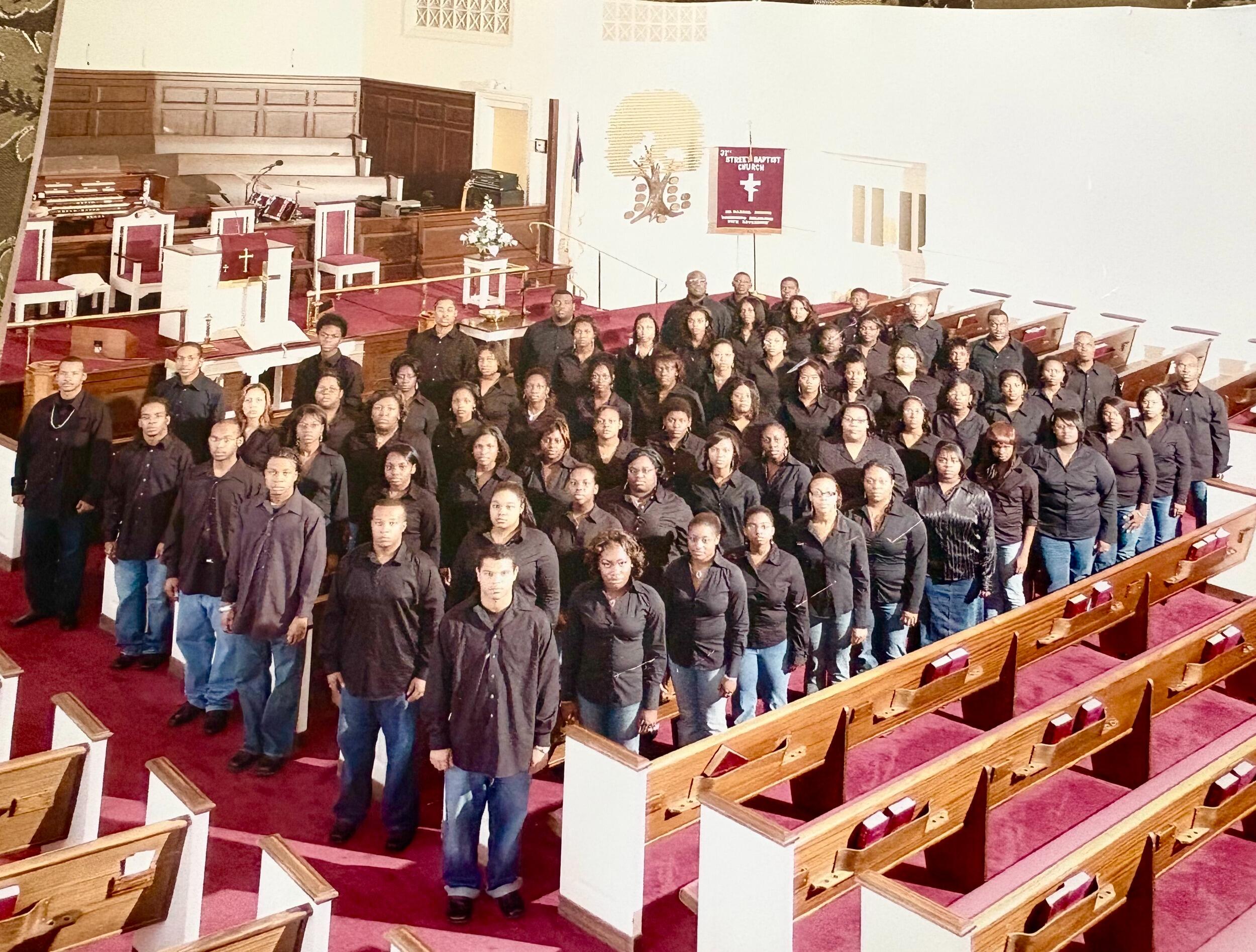
Over the years, many directors have led the choir, with Donald Fonville holding the longest tenure from 1982 to 1997. Hundreds of student members have found community, faith and a second home during their years at VCU. And BAC has delivered countless performances in Virginia and beyond.
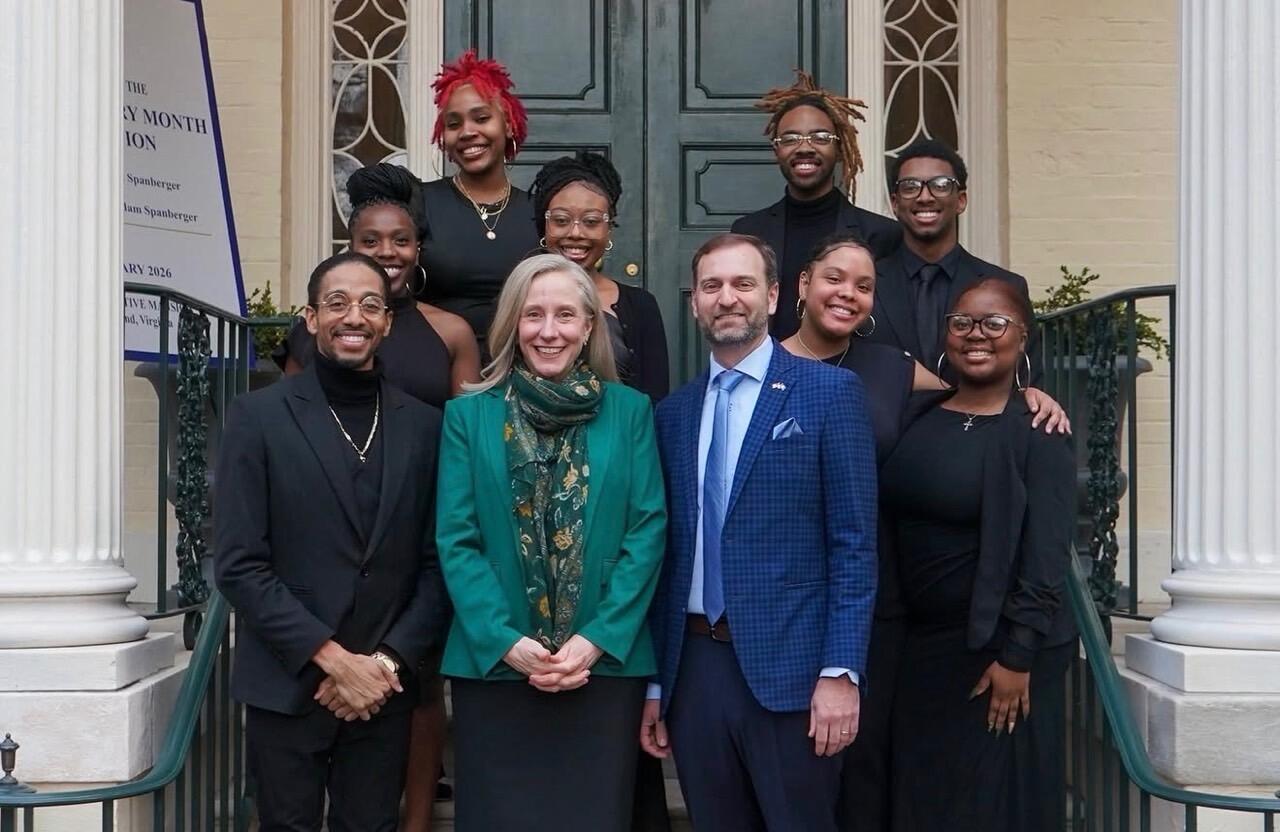
The choir has appeared on television, sang with gospel recording artists and won awards, including first place in the National Baptist Student Union Choir Competition in 1988, 2002 and 2005. It has ministered at churches and sung at campus concerts, the Virginia Museum of Fine Arts, the Executive Mansion, dance majors’ senior capstone performances, step shows, funerals and weddings. Days after the 9/11 terrorist attack in 2001, when the community gathered for a memorial service, BAC was there, singing “America the Beautiful.”
Decades earlier, a Commonwealth Times article from January 1974 documented the choir’s visit to the state prison on Spring Street in Richmond, near VCU, where an audience of roughly 150 inmates filled the prison chapel.
“By the time the choir had finished the second song,” the article says, “the prisoners had [begun] clapping and swaying rhythmically with the choir. Bill Mickens’ solo of ‘Joshua’ filled the chapel with the spirit of gospel music. … The choir ended its performance on the upsurge and received a standing ovation and demands for an encore.”
A musical space, a spiritual space, a safe space
Today, BAC practices twice weekly, for two to three hours, at the Pace Center. It holds a concert at the end of each semester and, in between, ministers at Sunday church services around town as well other events and venues. It’s a serious time commitment.
“The choir is hard work,” said James, the current director. “But it’s also fun. Sometimes the hard work doesn’t feel like hard work when you’re around people who are all working for the same goal.”
In spring 2024, the BAC, led by Frankie James, held its annual spring concert.
Aside from the chance to make music together and participate in ministry, BAC members find leadership opportunities, chances to network and, perhaps most important, a supportive community. The choir gets together for Bible study, field trips and social outings, and it tries to partner with other student organizations.
“The choir provides, yes, a musical and spiritual space, for sure — to learn and grow in ministry. Our choir motto is ‘Ministry first, in earnest and in excellence,’” James said. “But it also provides a safe space for [students] to come. And some people look forward to rehearsal twice a week, every week, because it is their escape from their school, their social life, things that may be going on in their personal lives as well.”

Current choir President Nasir Jackson, a junior majoring in exercise science with a pre-medicine minor, appreciates the camaraderie in the choir – “We call it BA Family” – and the chance to hear wide-ranging perspectives.
“There’s so many different backgrounds,” he said. “There are people like me who grew up in church and have been singing for some time. There’s people who are classically trained, and there’s people who have never sung at all and didn’t go to church at all.”
A self-professed introvert, Jackson remembers going to open auditions the fall of his sophomore year and being surprised at how comfortable he felt.
“They talked to me and they welcomed me,” he said. “And I definitely felt just at home.”
Lasting legacy
BAC will lift its voice in a special way May 3 at 4 p.m. at Cedar Street Baptist Church of God in Richmond. More than 150 choir alums from across the decades, including Younger, will join current choir members in a reunion concert.
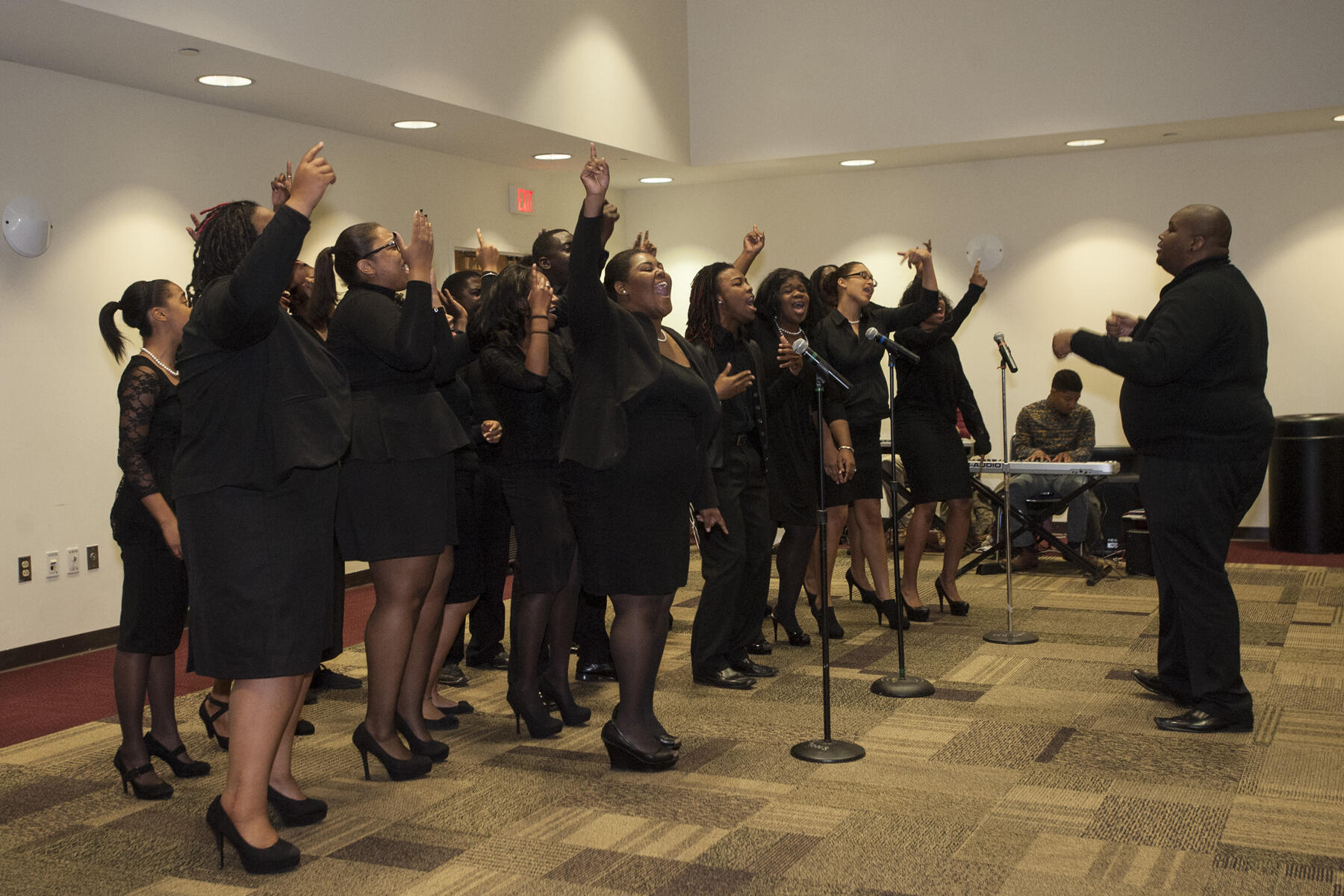
Younger is looking forward to singing some songs from her last BAC concert as a student in spring 1972. Looking back, she is proud of her role in the choir’s origin.
“The preservation of the legacy, it’s huge,” she said. “And having been a part of something that has been sustained through all the politics, all the ups and downs of [the] university, and people being able to embrace what that means, not only to the to the community at large but to the African American community and preserving gospel music.
“And,” Younger continued, speaking as an ordained minister, “not to even mention the fact that this may be the only Jesus that some of the students get exposed to.”
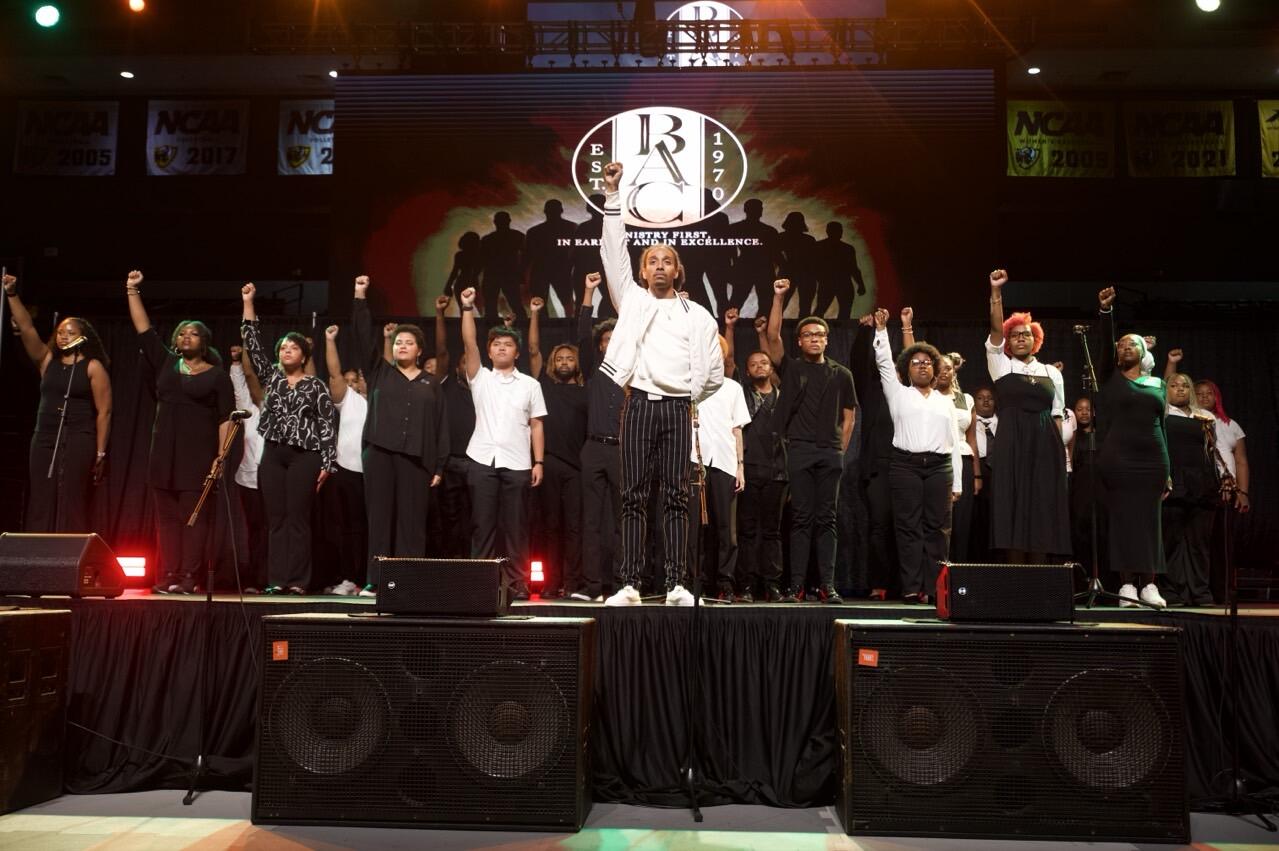
James, too, is proud to be part of the tradition as BAC’s current director and proud of its impact on so many students’ lives. He calls the legacy “monumental.”
“Even looking at the hardships that we had to overcome in that time, to still be such a present and active force on campus, to have traveled across the country, to have worked with recording artists, to have shaped the lives of students for over 50 years – it provides that historical cognizance and understanding,” James said.
“But it also provides an outlet for students of all walks of life to come and be a part of something that’s bigger than themselves. We are a faith-based organization, but like we say all the time, you don’t have to be a Christian or a believer to join the choir, you just have to respect the ministry and know that we sing about the Gospel of Jesus Christ. … We’ve had people join the choir just because they like to sing, and then their lives were changed because of it.”
Subscribe to VCU News
Subscribe to VCU News at newsletter.vcu.edu and receive a selection of stories, videos, photos, news clips and event listings in your inbox.


