

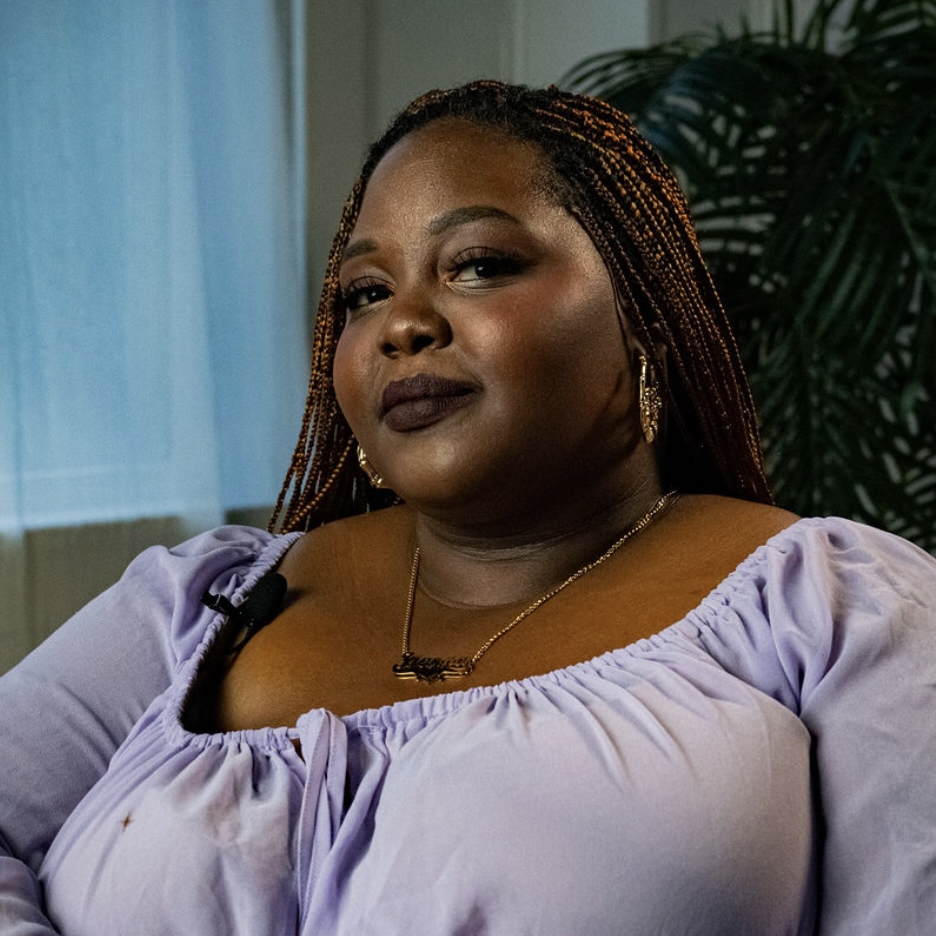
In her heart, Iyanna Bridges believes she is an entrepreneur, and for years, she channeled her focus into Bey’s Temple, a natural skincare company. However, after a negative experience giving birth to her fourth child, Bridges felt a different calling, and traded body butters and soaps for The Birthing Hut.
Operating since 2018, the doula collective offers services such as breastfeeding support, birth planning, and labor and delivery preparation. Bridges sees the nonprofit as a necessary tool to combat Pittsburgh’s birth climate, which often has negative outcomes for Black mothers and babies. That’s why, in addition to the services offered, The Birthing Hut trains the next generation of doulas to help fill in the gaps in the form of its Blacktivist Birthkeeper cohort.
“I pride myself on the fact that the Birthing Hut Blacktivist Birthkeeper training emphasizes on the historical components as to why Black birth workers and midwives are necessary,” Bridges says. “We go over the disparities as far as how they are a problem, but also provide tangible solutions that can combat the statistics which we are seeing.”
A doula is a trained, non-medical professional whose job is to provide physical, emotional, and informational support to a pregnant person and their family before, during, and after the birth. Statistically, Black women are three times more likely to experience a pregnancy-related death in the U.S., and Pittsburgh is considered one of the worst places for Black maternal health.
Bridges herself received her training under DONA International, the National Black Doula Association, and is certified in childbirth education. With studies showing that doulas improve outcomes and mitigate systemic racism present in the healthcare system, Bridges feels that training more doulas addresses an unmet need in Pittsburgh.
“Racial discrimination, complicit bias, and medical racism have found [a] home in Pittsburgh, and so far, none of the medical systems have found a solution as to how we can resolve the issues that we’re facing,” Brides says. “And so the best way to combat the disparities would not be by looking within institutions and systems themselves to fix it, but to look within a community to fix the disparities and the birth and height is community.”
In 2024, Pa. Gov. Josh Shapiro signed legislation allocating medicare funding to provide coverage for doulas into law. In the case of Pennsylvania, however, researchers have noted a shortage in doulas, particularly in rural areas.
Since 2023, the Blacktivist Birthkeeper training has hosted six cohorts in the form of weekly two-hour classes over the course of three months. Within the training, in addition to certification, participants are given hands-on training, mentorship, and a crash course in Black birth history. Additionally, Bridges says the curriculum includes training that encourages a community-centered approach to being a doula. The reasoning is that in her own experiences as a doula, Bridges found that something lacking in the training was community work, community engagement, and community resources that clients might need.
“It is perfectly fine for you as a doula to work individually, one-on-one with your clients, but when you take on birth, work from a historical and a Black component, we are helping the whole community birth,” Bridges says. “We’re helping the whole community thrive. Is not an individualistic societal idea. It is communal; it’s tribal; it’s a village.”
With that in mind, Bridges stressed that she created The Birthing Hut to be a maternal health ecosystem for Pittsburgh’s Black community. Not only that, but where some programs end with the certification, Bridges tells Pittsburgh City Paper that The Birthing Hut offers professional development beyond the cohort’s last day. Sometimes that means professional and personal development, other times it means inviting other doulas and birthworkers to showcase their expertise.
“We need sisterhood, we need somewhere to debrief, we need somewhere to get additional skill sets to add on to our resumes as birth workers, and sometimes we just need a safe space to sit down and breathe, and that’s not always offered in a lot of birth worker communities,” Bridges says. “So, yes, we offer a lot when it comes to the birthing community, and a lot when it comes to the birthing profession community.”
Looking to the future, whether it’s continuing her own birth worker education or bringing others into the fold, Bridges is committed to doing her part to dismantle systemic causes of Black maternal mortality in Pittsburgh and find tangible solutions. In the meantime, the cohort welcomed its most recent participants this April and looks forward to hosting many more.
“To anyone who might not be familiar with it, I would want them to understand that there is no one birth worker training that will completely prepare you for the work that you are getting ready to indulge in. However, if I were to recommend a training that will encompass all of the different spectrums and avenues of birth worker capabilities and profession, I would definitely recommend the Blacktivist Birth Keeper training,” Bridges says. “It is a full-spectrum community multidisciplinary training that is offered [on] understanding how Black women and families are centered within the birth disparities in the United States.”


