Only HBCU President on National Panel — Knight Brings $69.3M Economic Impact Story
and Data-Driven Innovation to Beverly Hills
FAIRFIELD, AL [May 18, 2026]— Miles College, Birmingham’s only four-year Historically Black College and University (HBCU), sent its President to one of the world’s most elite finance and philanthropy conferences earlier this month to make the case for sustained HBCU investment. President Bobbie Knight represented Miles College at the Milken Institute Global Conference 2026 in Beverly Hills, California, delivering remarks and participating in a featured panel discussion, “Investing in the Resiliency of HBCUs,” held in the Astor Ballroom at the Waldorf Astoria Beverly Hills.
The session was moderated by Ayesha Rascoe, host of NPR’s Weekend Edition Sunday and Up First, and opened with remarks from Common, the Academy Award-, Emmy-, and 1Grammy-winning artist and activist with deep ties to the HBCU community. The panel drew on sweeping national data that underscores why Miles College’s presence on this stage matters.
The economic case for HBCU investment is well-documented. Nationally, HBCUs generate $16.5 billion in economic impact, support 136,000 jobs, and produce $146 billion in projected lifetime earnings for graduates, with the average HBCU graduate earning more than $1 million in additional lifetime income. Miles College reflects that impact at the local level: the institution generates $69.3 million in annual regional economic impact, supports 641 jobs, and serves as the largest employer in the City of Fairfield. Miles graduates are projected to earn more than $1.2 million in additional lifetime income compared to non-graduates.
Image
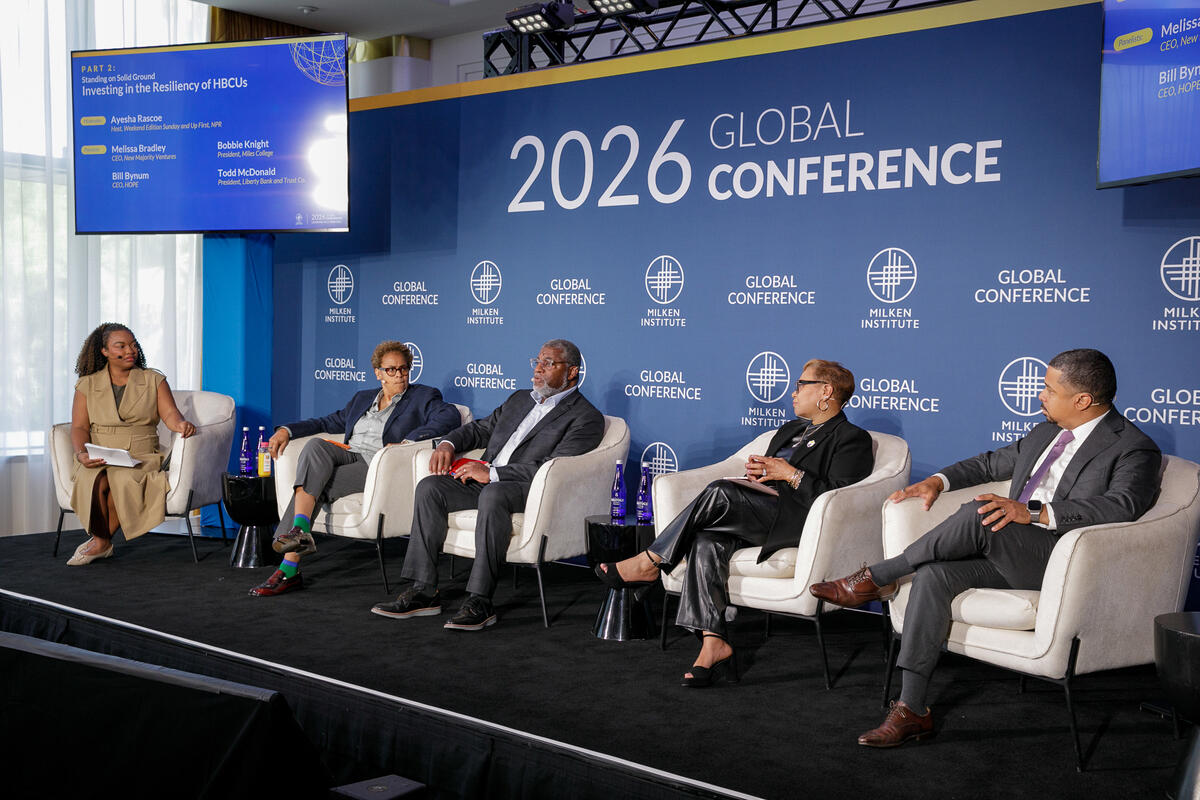
President Knight also highlighted Miles College’s participation in a UNCF matching investment program designed to build long-term endowment capacity across HBCU institutions. Miles College has committed to contributing $5 million in unrestricted funds to the program, which UNCF will match dollar-for-dollar, with matched funds generating annual interest payments back to the institution. For Miles College, it is both a financial strategy and a direct invitation: philanthropists, corporations, and investors who believe in the transformational power of HBCUs now have a concrete opportunity to help Miles College reach its $5 million commitment, and double their impact through UNCF’s match.
President Knight joined a distinguished lineup of national leaders, including Melissa Bradley, CEO of New Majority Ventures and General Partner at the 1863 Venture Fund; William J. Bynum, founding CEO of HOPE (HOPE Enterprise Corporation, HOPE Credit Union, and HOPE Policy Institute); and Todd McDonald, President of Liberty Bank and Trust Co. As the only sitting HBCU President on the panel, Knight brought a practitioner’s perspective, representing an institution that is both living proof of HBCU impact and a laboratory for the next generation of that mission.
The discussion centered on the economic impact of HBCUs and the urgent need for sustained investment in institutions that continue to drive educational attainment and economic mobility. Data presented during the session reinforced what Miles College embodies every day: while HBCUs represent approximately 3% of colleges and universities in the United States, they produce nearly 20% of African American graduates.
At Miles College, that outsized impact is unmistakable. The college is the largest employer in Fairfield, a city that has navigated six years of bankruptcy, generating $69.3 million in annual regional economic impact and 641 jobs, while preparing graduates to earn more than $1.2 million in additional lifetime income.
“It was an honor to represent Miles College and the broader HBCU community on a global stage alongside leaders who understand the transformational impact of these institutions,” said President Knight. “HBCUs continue to be engines of opportunity, innovation, workforce 2development, and economic advancement for communities across this nation. My students are not going to be left behind. Miles is investing in AI fluency, in workforce alignment, in revenue-generating partnerships, because resilience is not a concept for us. It’s a strategy.”
Image
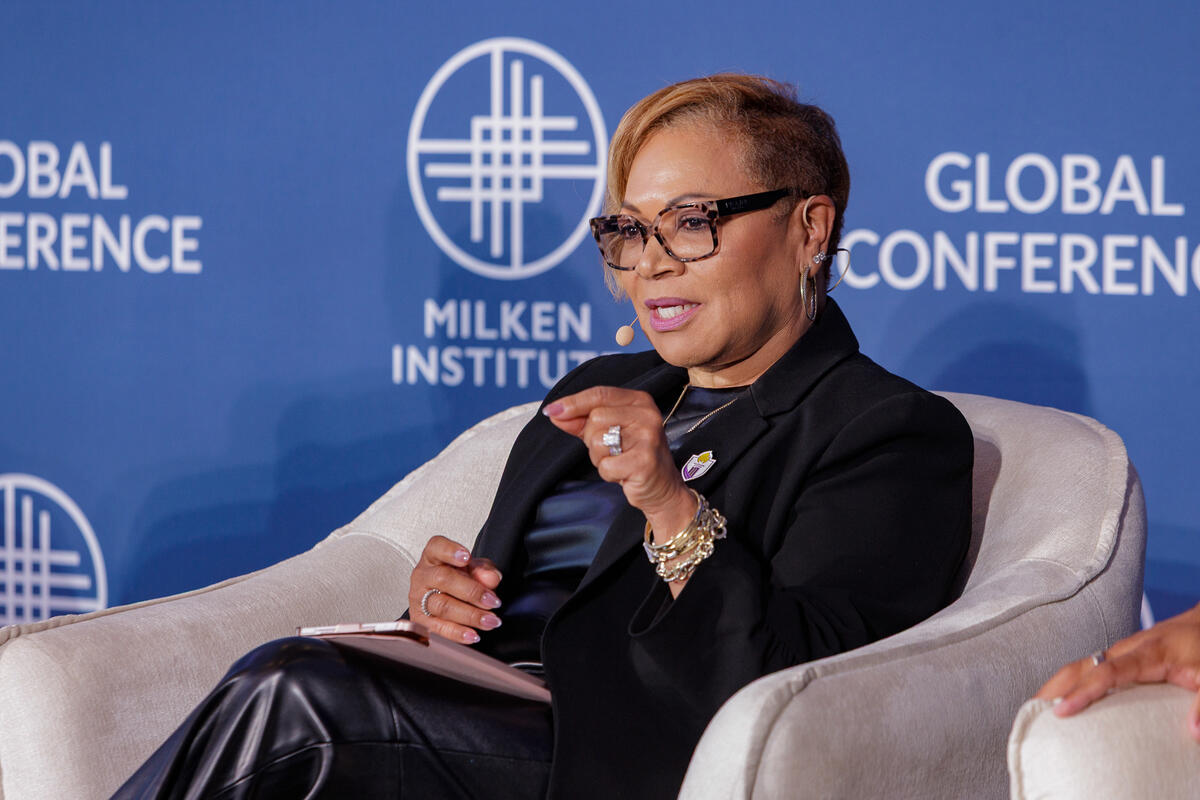
“When you think about the fact that these HBCUs are able to move people, they are the greatest economic mobility driver for the Black community,” said Bradley during the discussion. “HBCUs are not just a good investment,” said Bynum during the panel. “They are a critical part of the economic future of communities across the South and across this country.”
“For us not to invest or not double down on these institutions would be a mistake,” added McDonald. “The statistics and the proof are really in the institutions themselves.” The panel aligned with the conference tracks Human Capital, Workforce Development & Education, and Access, Opportunity & Economic Mobility, themes that are not aspirational at Miles College: they are operational. From a data-driven curriculum strategy aligned to Alabama’s highest-growth workforce sectors, to being the only HBCU to have fully integrated the NVIDIA Spark AI platform and developed a systemwide efficiency dashboard and an immersive admissions and enrollment platform, Miles College is building resilience not just as a mission, but as a business model.
Following the panel, President Knight and fellow panelists joined Milken Institute HBCU Fellows for a special recognition moment honoring the completion of the fellows’ year-long fellowship experience. The recognition of the HBCU Fellows underscored the broader ecosystem of investment in HBCU talent pipelines that institutions like Miles College are helping to build.
The fellowship engagement and panel coordination were organized by Melanie Schwartz, Associate Director on the Milken Institute Finance team. Founded in 1898, Miles College has long served as a cornerstone of educational access and civic engagement in Birmingham. Under President Knight’s six-year tenure, the College launched its first-ever Master of Management program; forged a landmark MOU with NVIDIA, becoming the only HBCU to fully integrate the NVIDIA Spark AI platform and develop a systemwide efficiency dashboard and an immersive admissions and enrollment platform, both designed to be licensed to other HBCUs as a new institutional revenue stream; developed the 2150 Center for Commercialization and Growth; launched initiatives with Nebius and StudyFetch; and signed an MOU with Kemet Productions, connecting Miles students to AI and augmented reality production opportunities at Katt Williams’ Fort McClelland facility. The College has also earned federal designations through the Department of the Interior, the Small Business Administration, and the National Science Foundation, collectively positioning Miles as a national model for HBCU excellence, innovation, and resilience. As Fairfield’s largest employer, Miles generates $69.3 million in annual regional economic impact and supports 641 jobs, anchoring a city that has navigated six years of bankruptcy.
President Knight’s selection as the sole HBCU President on this panel reflects both Miles College’s rising national profile and the broader recognition that HBCUs are not legacy institutions; they are leading ones.
The Milken Institute Global Conference is widely recognized as one of the world’s premier gatherings of leaders in finance, philanthropy, business, government, media, education, and social innovation. The annual conference convenes global decision-makers to address critical issues shaping the future of economic mobility, health, technology, education, and capital investment.