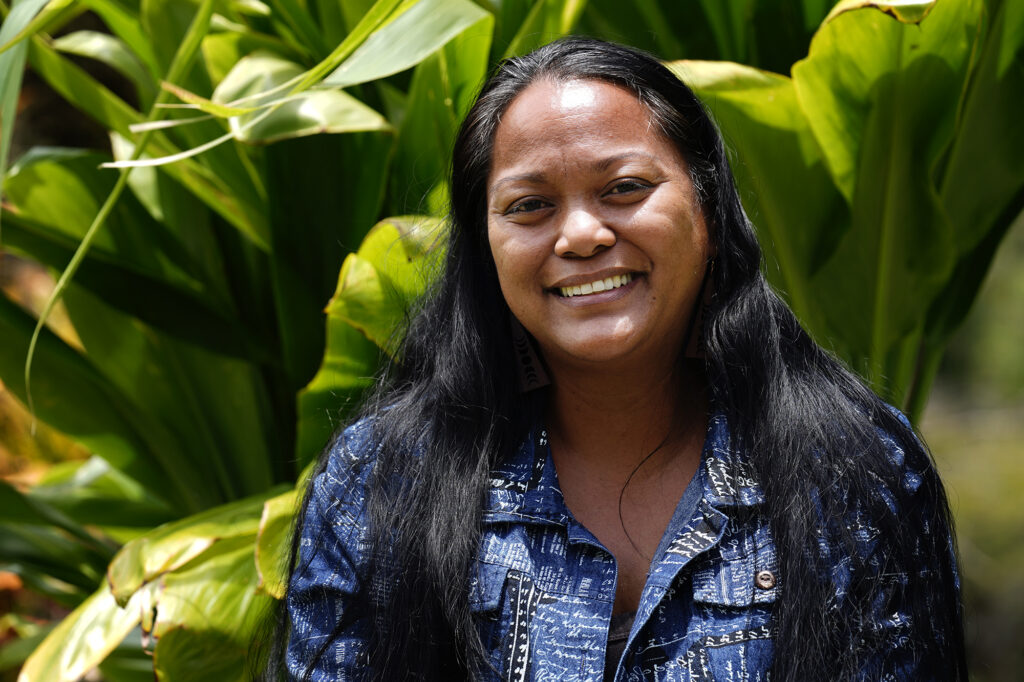
Learning about a land foreclosure at Punaluʻu provided an instant wave of relief for Nohea Kaʻawa.
The way she read it, a recent court decision means that prime coastal lands on the Big Island’s southeastern shore, ones that sustained her grandfather and ancestors before him, would be off the chopping block. A chance to start anew.
“We have been fighting development after development for generations,” Kaʻawa said.
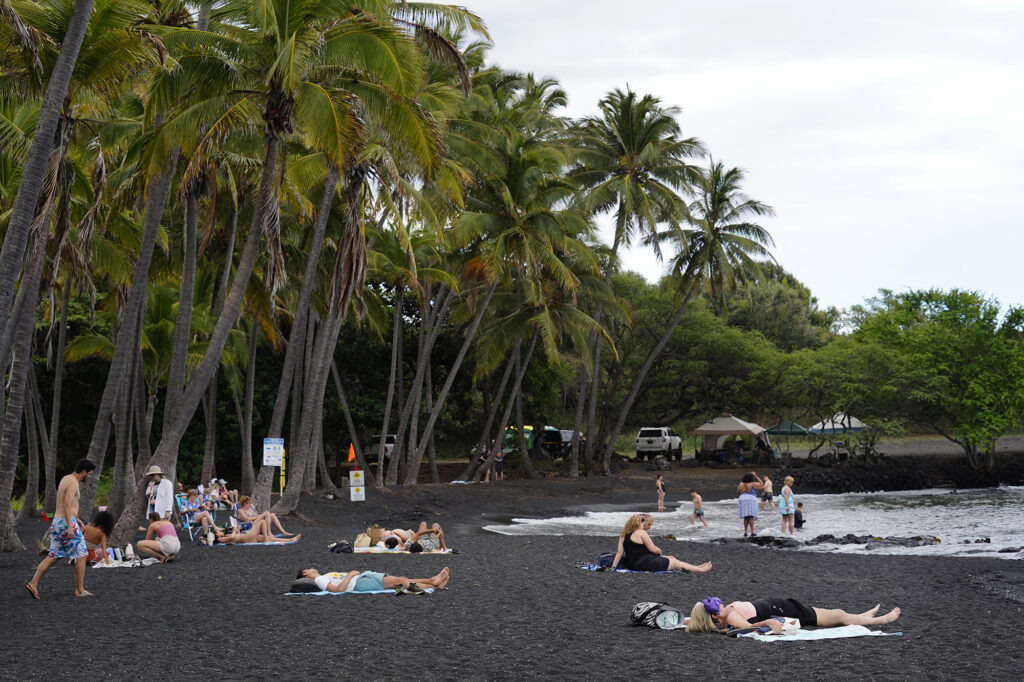
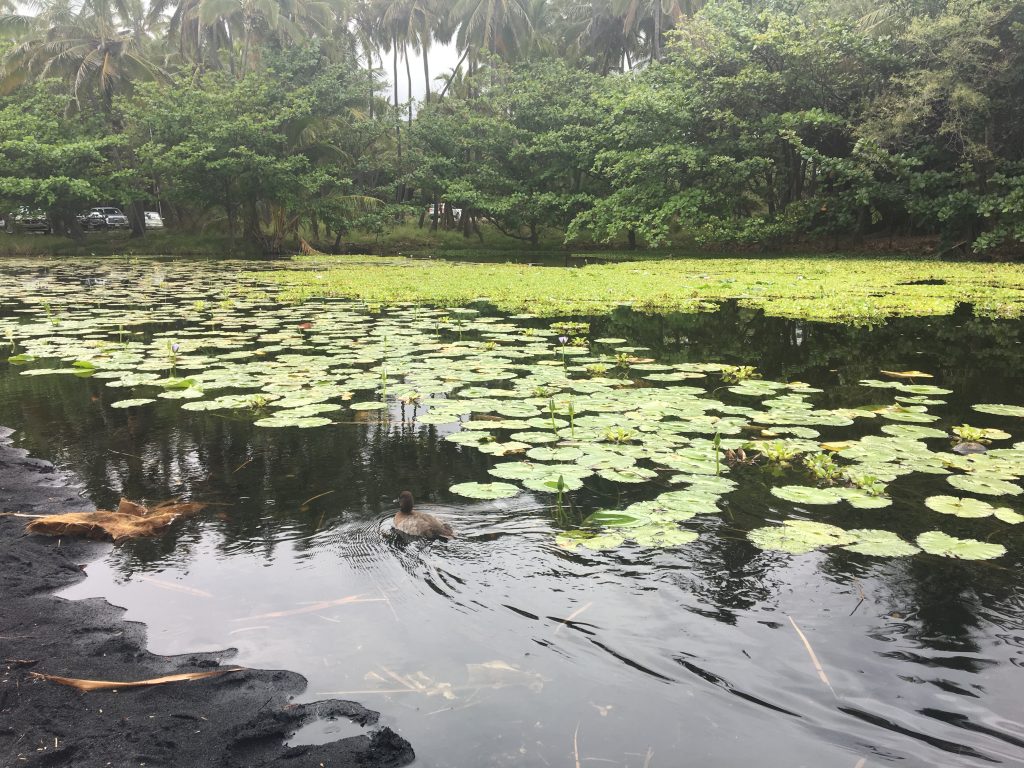
Punaluʻu is a strip of black sand beach on the Big Island in the rural Kā’u District. Popular with tourists and locals, it’s known for its freshwater springs, brackish ponds, heiau or ancient temples, petroglyphs and burial sites.
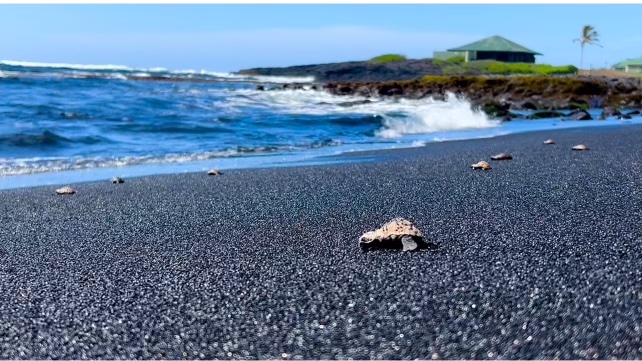
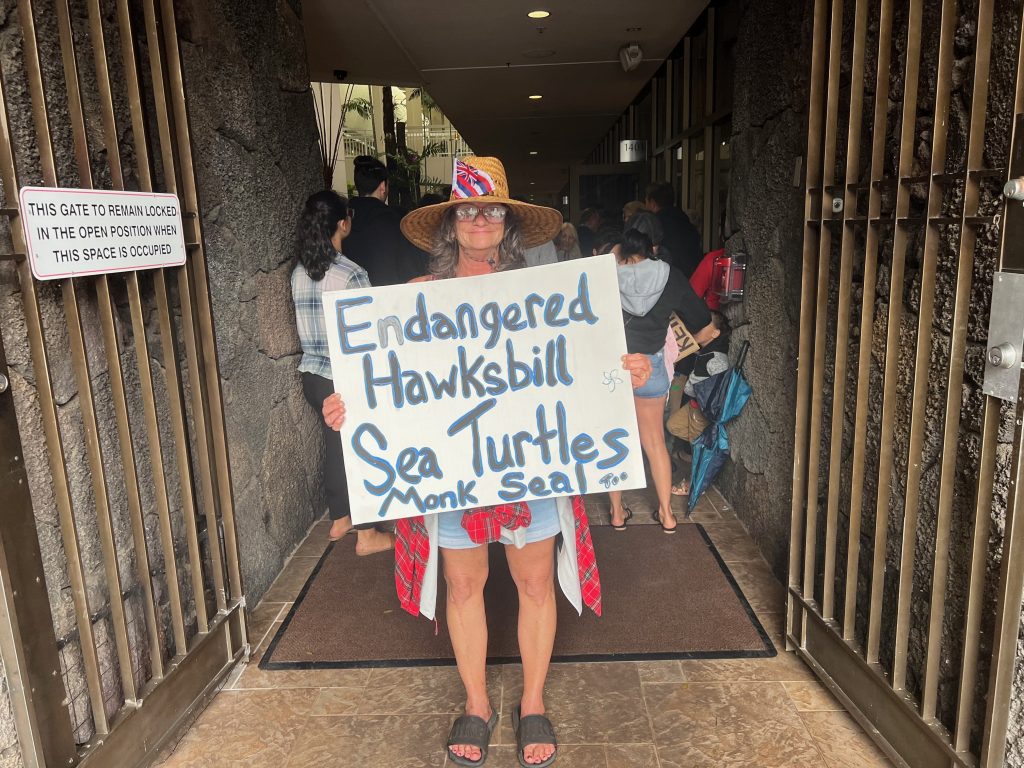
The ocean there supports a wealth of sea life — critically endangered hawksbill and threatened green sea turtles as well as endangered Hawaiian monk seals, spinner dolphins, humpback whales and other iconic species.
Despite the ecological and cultural significance, nearly 150 acres at Punaluʻu were slated for commercial development, endorsed by Hawaiʻi County’s former planning director Zendo Kern.
Although the developer, Black Sand Beach LLC, still needed a Special Management Area permit, the company’s plan was to construct 225 residential and vacation homes, retail space, a wellness center, a seafood restaurant and a fish market.
Kern said in a February 2024 memo that the project would have no substantial adverse environmental or ecological impacts and that Native Hawaiian cultural resources would be reasonably protected.
Like many other proposed shoreline developments in Hawaiʻi, the Punaluʻu resort project sparked intense backlash from locals, many of whom have experienced an overall weariness with industrial-scale tourism.
Kaʻawa joined the chorus vigorously opposing the development in written testimony and at packed public meetings.
They decried not just overtourism, but concerns about endangered species and the potential desecration of culturally significant resources, including iwi kūpuna — ancestral bones — present through the project area. Bones from Ka’awa’s family are among them, she said.
Supporters, including the county’s former administration, said the project would create jobs, generate tax revenue and conform with the island’s general and community plans, zoning codes and other ordinances.
When a district court ruled recently that Black Sand Beach LLC had defaulted on a $3.4 million mortgage and ordered the property into foreclosure, Kaʻawa joined those celebrating. In their view, the foreclosure spelled opportunity.
“My initial impression was like, OK, now the real work starts,” she told Civil Beat last week.
With help from the Center for Biological Diversity, plans are brewing to turn a new page in Punaluʻu’s history. Rather than a resort-style development, perhaps Punalu’u could become a place where Hawaiian culture and the natural environment could be the central focus.
“We have the chance to potentially purchase this land and give it the protection it deserves,” said Kaʻawa, who founded ʻIewe Hānau o ka ʻĀina, a community group dedicated to conserving Punaluʻu in perpetuity.
Shaky Finances
Black Sand Beach’s interest in Punaluʻu dates back six years, to when owner Eva Liu bought 433 acres there with the goal of developing it into a commercial operation.
Liu also owns a nearby water and wastewater treatment plant, Punaluʻu Water and Sanitation, that serves about 75 condo units, 14 single-family homes and a beach park at Punaluʻu. Its condition is often described in regulatory filings and public testimony as somewhere between rundown and dilapidated.
Signs that Liu was facing financial trouble surfaced in February, according to David Kimo Frankel, an attorney representing ʻIewe Hānau o ka ʻĀina.
That’s when Liu’s attorneys asked the Hawaiʻi Public Utilities Commission to approve a temporary rate hike for the utility. Punaluʻu Water and Sanitation “no longer has the financial capability to pay its monthly obligations and continue its operations without this increase,” according to their filing.
The commission granted the request for a temporary rate increase of a whopping 2,795%, allowing the company to increase revenues from $22,090 to $617,415 to pay for repairs. maintenance and other expenses.
In another sign that she was under financial stress, Liu has also had property foreclosed on in California and elsewhere in the Kāʻū District recently, Frankel said. Given all that, the May 15 court decision to foreclose on the Punaluʻu property “was not unexpected,” he said.
Lincoln Ashida, an attorney for Liu, did not return a phone call or an email seeking comment. Daryn Arai, a former county land use planner who was helping Liu secure permits to build the commercial and residential complex, said he no longer works on the project. Civil Beat asked Arai to relay an interview request to Liu. He agreed but Civil Beat never heard back.
Now that the property is in foreclosure, Frankel expects community groups will try to work with the county to acquire the land and get it placed into some form of conservation easement.
“The community is going to attempt to secure it,” he said. “It’s not going to be developed.”
Community members have met several times in recent months to discuss what they’d like to see happen next. A draft stewardship or land management plan is being formulated but it’s not ready for public consumption yet, Kaʻawa said.
There’s general agreement on the need for protection of cultural resources, subsistence gathering, beach access, limits on tourism and “having our way of life free from inundation from outside influences,” she said, but other details will be discussed as community meetings continue.
Next Steps
Punaluʻu’s future could lie with an obscure county body called the Public Access, Open Space and Natural Resources Preservation Commission, or PONC.
When Big Island property owners pay their tax bills annually, 2% goes into a PONC fund. The money is for land acquisition so that worthy tracts can be used for purposes such as public outdoor recreation and education, historic or cultural preservation, buffer zones to protect natural resources, and conservation of beaches, coastal areas and watersheds for water quality and species protection.
The process for designating land as such begins with the public. Suggestions must be submitted before the last business day in January every year.
The PONC commissioners evaluate and rank the suggestions and pass a list along to the mayor who then makes recommendations to the Hawaiʻi County Council. If most council members approve the mayor’s recommendations, the finance director can proceed with negotiations and the property management division can finalize a deal.
Back in 2006, parts of the Punaluʻu area, including the beach park, Nīnole Springs and Nīnole Pond, were on the priority list for places to put into conservation status.
It’s unclear why the designation didn’t move forward.
This time around, there’s momentum to ensure that Punaluʻu gets permanently protected, said Maxx Phillips, Hawaiʻi director and staff attorney with the Center for Biological Diversity.
“This is really a turning point for Kāʻū’s future, or Punaluʻu’s future,” Phillips said. “Do we want private roads, fancy hotels and golf carts, or do we want to invest in our ecosystem and our culture and our climate resiliency, our food sovereignty, and any myriad of things the community has talked about?”
The administration of Big Island Mayor Kimo Alameda appears to be receptive to working with local entities to chart a new course for Punaluʻu. While it’s not a party to the foreclosure process, the county is interested in working with current or future owners on preserving shoreline access, spokesman Tom Callis said by email.
“We will see how the process plays out,” Callis wrote, “and we look forward to participating in conversations regarding the protection of ocean access as well as natural and cultural resources.”
For Kaʻawa, settling Punalu’u’s future now, once and for all, would ensure that the next generation wouldn’t have to continue the battle.
“If we can give this place the long-term protection it needs from developers, then that’s one less fight that our kids have to go through, and they can finally relax and enjoy Kāʻū, Punaluʻu,” she said, “without having threats to the lifestyle that we live.”