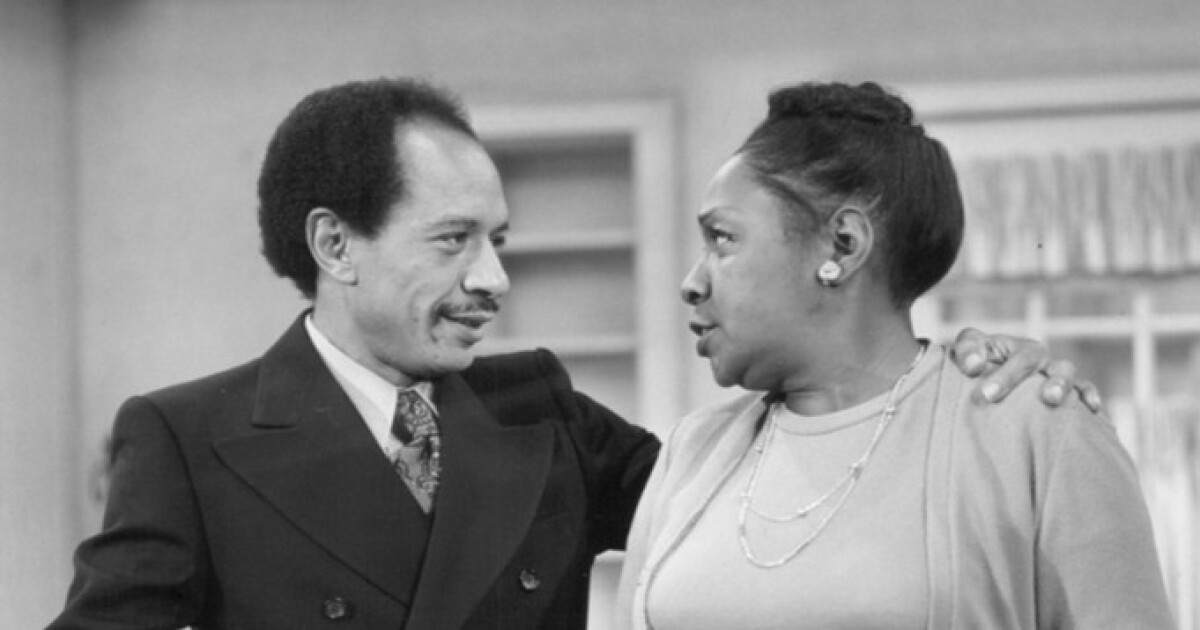
Texas luminaries for decades filed into 1906 Maple Ave. home for parties, politics and power.
The late U.S. Rep. J.J. “Jake” Pickle. U.S. Rep. Lloyd Doggett. Former state Sen. Gonzalo Barrientos.
They all trekked to the multilevel house with the stone facade in East Austin, climbed the front stairs, walked across the long porch and through the front door. Waiting on the other side was Irene Hill-Thompson.
Hill-Thompson’s house, finished in 1964, recently named a historic landmark by the Austin City Council.
The historic designation is another step toward not just saving old Austin homes under threat of being lost to development, but memorializing the contributions of Black community members long ignored in preservation efforts. Just 47 of Austin’s 629 local landmarks honored Austin’s Black heritage, according to 2021 data collected by Preservation Austin, said Meghan King Namour, the nonprofit’s policy and outreach planner.
In 2024, the City Council passed the Equity-Based Preservation Plan, a strategy aimed at saving historic structures by prioritizing diversity and cultural heritage. Hill-Thompson’s niece, Marilynn Poole Webb, says she thinks her aunt would be glad to see her historic home preserved.
“She was proud of this house,” said Webb, who now owns the property. “She was a hostess. She liked (doing) that.”
Honoring a legacy
The single-story home with the low-pitched roof and carport reflects more than just Hill-Thompson’s accomplishments. Her husband, Oscar L. Thompson, was the first Black graduate of the University of Texas at Austin. The home’s visionary, John Chase, was the first Black graduate from the UT School of Architecture and the first licensed Black architect in Texas.
-

A look at the dining area at the Hill-Thompson House on Thursday, June 4, 2026. The house was named a historic landmark by the city of Austin. Marilynn Poole Webb, the niece of the original owner Irene Hill-Thompson, enjoys maintaining and upgrading the home while honoring its history. SERGIO FLORES FOR AUSTIN CURRENT -
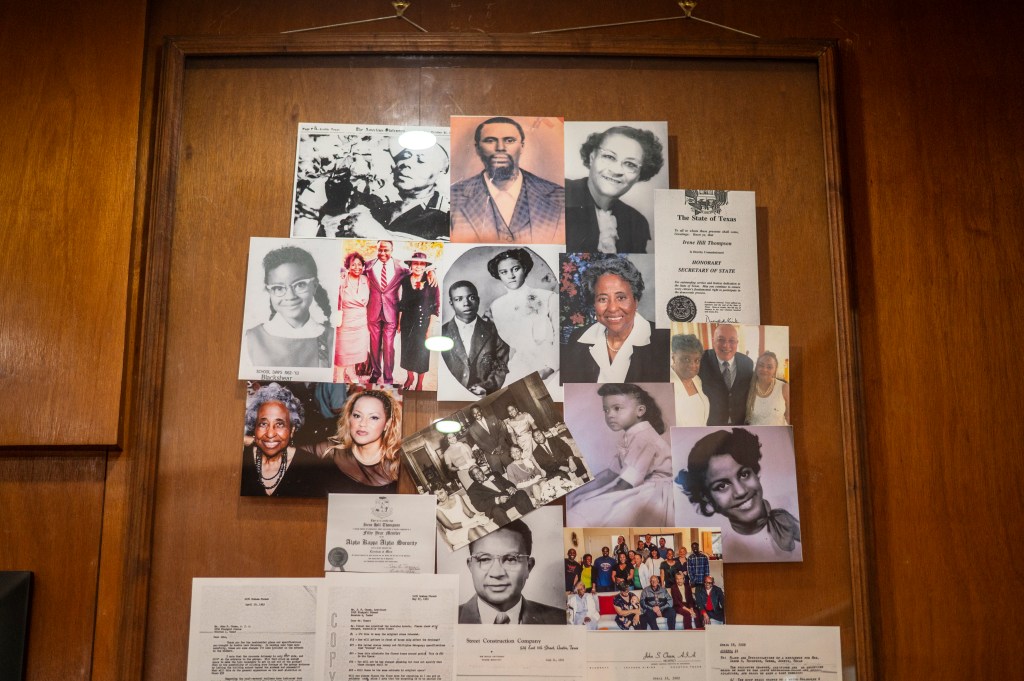
A display of family photos at the Hill-Thompson House on Thursday, June 4, 2026. The house was named a historic landmark by the city of Austin. Marilynn Poole Webb, the niece of the original owner Irene Hill-Thompson, enjoys maintaining and upgrading the home while honoring its history. SERGIO FLORES FOR AUSTIN CURRENT -
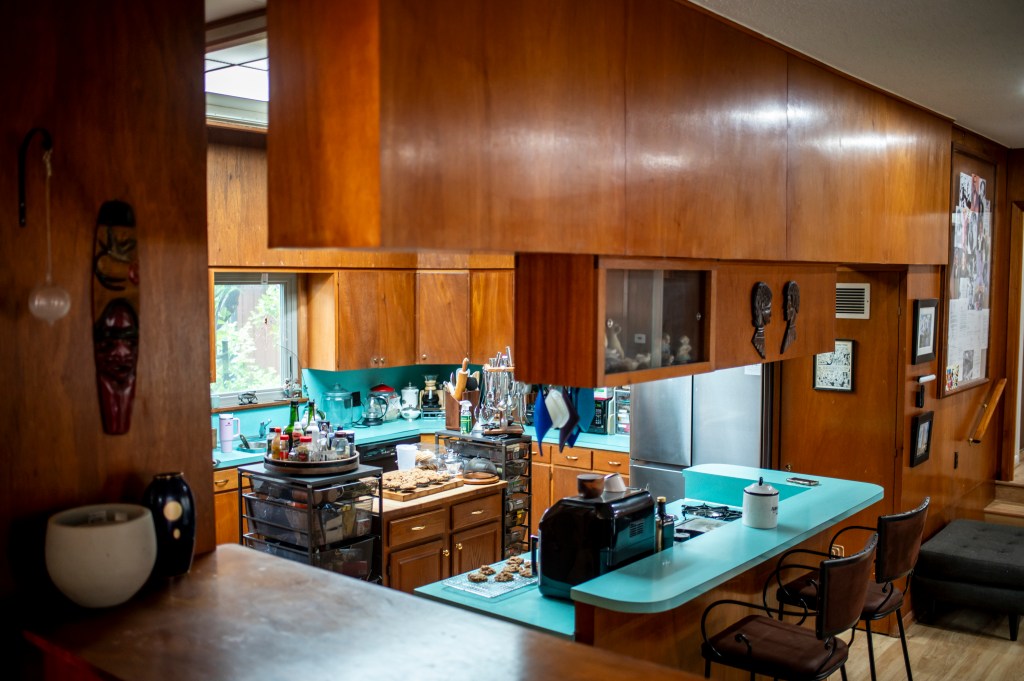
The kitchen at the Hill-Thompson House on Thursday, June 4, 2026. The house was named a historic landmark by the city of Austin. Marilynn Poole Webb, the niece of the original owner Irene Hill-Thompson, enjoys maintaining and upgrading the home while honoring its history. SERGIO FLORES FOR AUSTIN CURRENT -
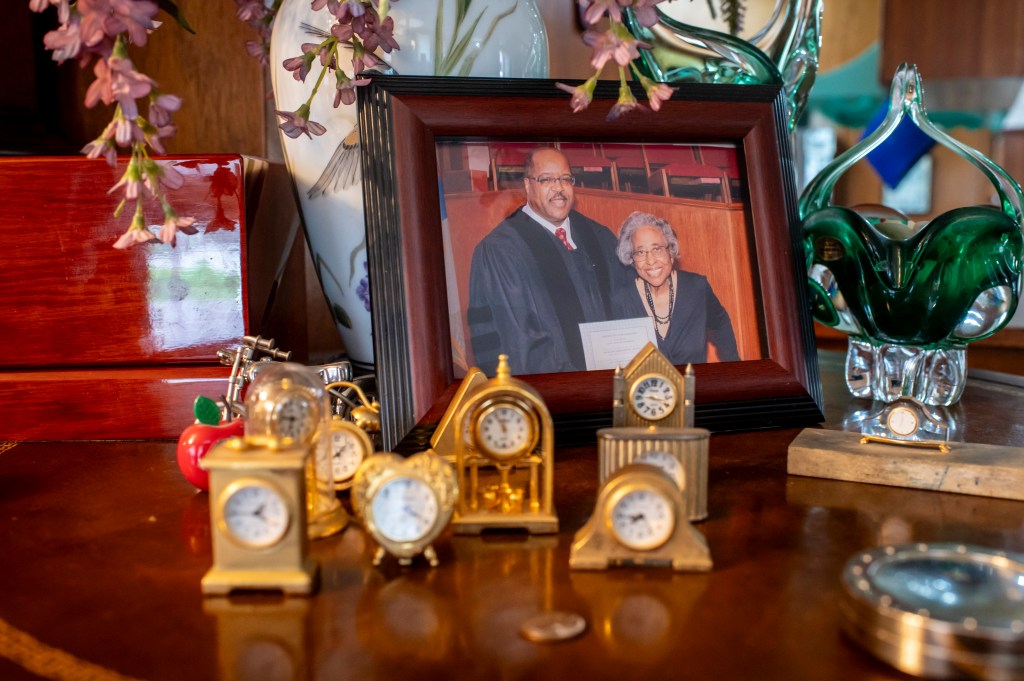
A side table at the Hill-Thompson House on Thursday, June 4, 2026. The house was named a historic landmark by the city of Austin. Marilynn Poole Webb, the niece of the original owner Irene Hill-Thompson, enjoys maintaining and upgrading the home while honoring its history. SERGIO FLORES FOR AUSTIN CURRENT -
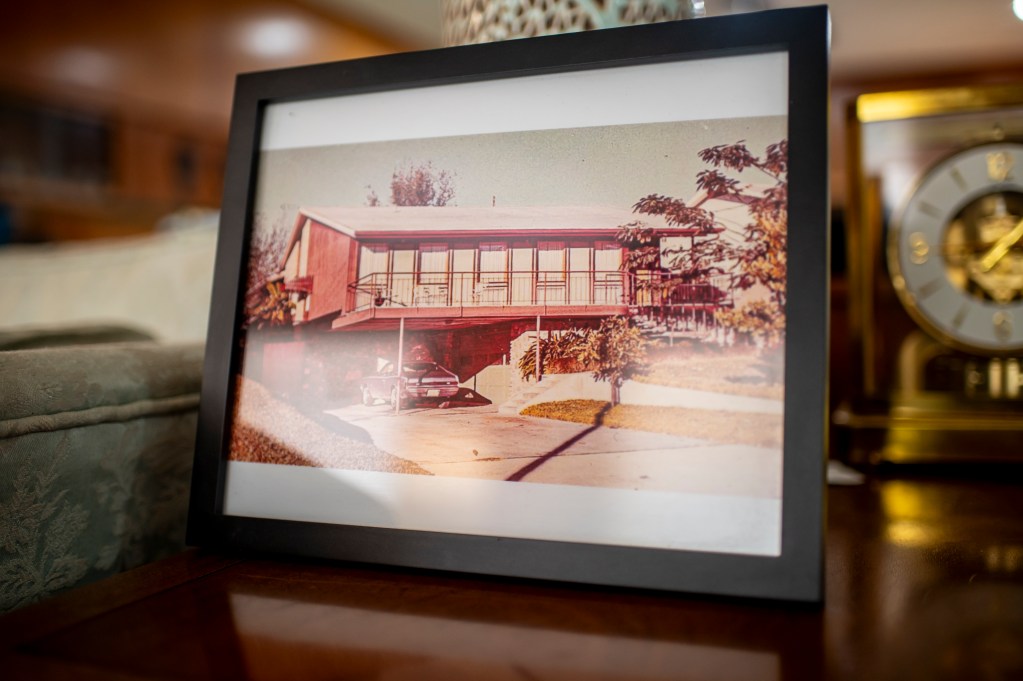
An old photo of the Hill-Thompson House on Thursday, June 4, 2026. The house was named a historic landmark by the city of Austin. Marilynn Poole Webb, the niece of the original owner Irene Hill-Thompson, enjoys maintaining and upgrading the home while honoring its history. SERGIO FLORES FOR AUSTIN CURRENT
Hill-Thompson built the house after her husband died in 1962. Tucked in the Rogers Washington Holy Cross Historic District, the city’s only historic district that exclusively pays tribute to Black heritage, the home became a gathering place because of her civic activism and community roots.
Hill-Thompson spent decades as an administrative secretary, attendance clerk and registrar at the old L.C. Anderson High School, which was segregated. She watched generations come through the school, watching as children grew and had their own families. She served as the first African-American president of the Austin Educational Secretaries Association.
Her deep community connections led her mid-century modern home with its mahogany walls, turquoise kitchen and open floorplan to become a magnet for politics. Hill-Thompson hosted events to support Lyndon B. Johnson’s 1964 presidential campaign. She and her daughter, Ida Dawne, were designated “Blue Birds,” trusted supporters who took on outreach and voter registration.
She served as secretary of the United Political Organization, a Texas coalition of African American Democratic leaders.
A graduate of Huston-Tillotson University, she was devoted to her sorority, Alpha Kappa Alpha. Her home, including the carpet, incorporated the group’s pink and green colors.
The home’s deep history made it a perfect historic landmark, King Namour said. Preserving older structures, which must be more than 50 years old to be considered historic, enshrines culture, people and history in a city quickly losing it.
“It’s really such a spectacular house and such an important piece of Austin’s architectural history and Black history,” King Namour said. “The people associated with this house are incredible.”

But it also makes business sense, she said. Landmark status provides tax breaks for owners. Older homes can provide affordable housing because the older buildings often cost less to rent, they serve as good homes for independent businesses and they reduce the amount of construction and demolition debris new builds create.
For Poole Webb, Hill-Thompson’s home reflects more than politics and community service. To her, it was Aunt Irene’s house. It is the place where the two would sit and talk about life and politics and God; where Hill-Thompson hosted large holiday gatherings; where she made turkey and stuffing and homemade rolls; where she hosted baby showers and insisted her niece needed good china.
She was the consummate hostess. And Poole Webb learned a thing or two from her aunt.
Visit her home and she’ll offer you water, peach milk or fresh-baked oatmeal pecan cookies on cooling racks. She’ll show you a wall display of photos and documents showcasing letters from John Chase about the design of 1906 Maple Ave. and family photos.
She’ll tell you about how the home fell into disrepair after Hill-Thompson died in 2017. They got rid of mold, replaced floors and added a room to the back of the house. But it still had to keep that John Chase look, Webb said. They hired Ken Smith with Venture Four Architects to ensure that happened.
Webb considers herself a steward of the home. She has also worked to preserve other houses in the neighborhood.
The legacy of the people is important, she knows. But she is also devoted to preserving the structures themselves.
To her, it’s one thing to hear about history. It’s another to see it.
This <a target=”_blank” href=”https://austincurrent.org/2026/06/08/austin-historic-preservation-landmark-doggett/”>article</a> first appeared on <a target=”_blank” href=”https://austincurrent.org”>Austin Current</a>.<img src=”https://i0.wp.com/austincurrent.org/wp-content/uploads/2025/11/cropped-ac-favicon-teal.png?resize=150%2C150&ssl=1″ style=”width:1em;height:1em;margin-left:10px;”>
<img id=”republication-tracker-tool-source” src=”https://austincurrent.org/?republication-pixel=true&post=3990″ style=”width:1px;height:1px;”><script> PARSELY = { autotrack: false, onload: function() { PARSELY.beacon.trackPageView({ url: “https://austincurrent.org/2026/06/08/austin-historic-preservation-landmark-doggett/”, urlref: window.location.href }); } } </script> <script id=”parsely-cfg” src=”//cdn.parsely.com/keys/austincurrent.org/p.js”></script><script async src=”https://ping.austincurrent.org/ping.js” data-source=”repub” data-canonical=”https://austincurrent.org/2026/06/08/austin-historic-preservation-landmark-doggett/” crossorigin=”anonymous”></script>