the August 28, 1963. The sound of 260,000 people marching filled the air in Washington DC, marching for justice, freedom, and an end to racial segregation. People were sick and tired of being sick and tired, and they felt the need to come and say that to the nation. Starting at the Washington Monument, people from all over the country made their way towards the Lincoln Memorial chanting for change. While Courtland Cox sat on the floor of the memorial changing *** speech that would be *** part of history. I thought I had *** typewriter all these for years until I saw that photo, so I can’t believe that John was able to read my chicken scratch. Courtland Cox was *** college student and member of the Student Nonviolent Coordinating Committee, one of the sponsoring organizations. The chairman of the organization, John Lewis, was set to speak before Dr. Martin Luther King Jr. John’s speech criticized the Kennedy administration for not doing enough. When the administration asked for the speech to be toned down and more supportive of its proposed civil rights bill, Cox and the team went to work to make those edits. It was important. to make sure that the coalition held together and you know fortunately our youth youth didn’t override our clear thinking. The clear thinking that this march would be *** pivotal moment in the civil rights movement. The importance of the march in Washington in many ways was the first time the African American community as *** community of any size and strength. Spoke to the country before the march, the civil rights movement was defined by sit-ins and freedom rides met with violence and police brutality, making it hard for people to understand what the end goal of the protests were. Freedom Now movement, hear me. But the march on Washington. Swung the pendulum in *** different direction to change the dynamic of how people saw the black community and the activists as opposed to being people who were troublemakers. They were now people who were spreading democracy. I have *** dream. And that was the driving force and the purpose of the famous I Have *** Dream speech delivered by Dr. Martin Luther King Jr. asking the question, What do you Negroes want? followed by the answer, the answer that King put out that we have *** dream that’s deeply rooted in the American dream. And once that answer was given, And people had *** different perspective of what, what we are about. *** new perspective led to change over time with the Civil Rights Act of 1964, the Voting Rights Act of 1965, and the Fair Housing Act of 1968, which helped set the tone for civil liberties moving forward. When you think about it and look back at it, it’s amazing how, how much. People who were very young were able to do in, in such *** short time. You’re making this happen and everything and you believe in it and I mean you were prepared to die for it and even if you achieve what you try to do, there’s always more to be done. Free at last, free at last. we are Marking America’s 250, I’m John Cardinelli in Washington DC.
America 250: Reflecting on the March on Washington and how it shaped the Civil Rights Movement

Updated: 7:39 AM PDT Jun 26, 2026
Editorial Standards
Many moments helped shape the Civil Rights Movement, but one event is credited with transforming it. On Aug. 28, 1963, more than a quarter-million people marched in Washington, D.C., demanding justice, freedom, and an end to racial segregation. “People were sick and tired of being sick and tired, and they felt the need to come and say that to the nation,” said Courtland Cox, one of the last living planners of the march.How Courtland Cox got involved At the time, Cox was a college student and member of the Student Nonviolent Coordinating Committee, one of the sponsoring organizations of the march. He was involved in sit-ins, marches and voter registration for years before political activist and civil rights leader Bayard Rustin asked him to be another organizer in planning the march. “Bayard was one of the most brilliant people that you’ve ever met,” Cox said. “Not only could he organize, he understood how to navigate politically.”Remembering the day It only took about eight weeks to plan, but when that day came, Cox and Rustin got out to the memorial around six in the morning. Nobody was there. That’s when Rustin turned to him and said, “Do you think anybody’s coming?” Just as he said that, kids from the NAACP youth came around the corner. Cox explains, “The reason that nobody was there at that time was the roads were so jammed and clogged up, nobody could move. All the highways were parking lots!”Then the time came for the march. Starting at the Washington Monument, people from all over the country made their way towards the Lincoln Memorial, chanting for a change. For Cox, that morning played out differently. Historical pictures show Cox, seated on the floor of the Lincoln Memorial, making changes to a speech that was to be given moments later. “I thought I had a typewriter all these years until I saw that photo,” Cox said. “I can’t believe that John was able to read my chicken scratch.” John Lewis, chairman of the Student Nonviolent Coordinating Committee, was set to be one of the speakers before Dr. Martin Luther King Jr. His speech criticized the Kennedy administration for not doing enough to advance civil rights. The Kennedy administration called the Archbishop of the Catholic Church, which then threatened to pull from the unity of the movement. “John Lewis’, Jim Forman’s, and my first reaction was… OK, see you.”That’s when the more senior planners came to the men, convincing them to make the changes. “It was important to make sure that the coalition held together,” said Cox. “Fortunately, our youth didn’t override our clear thinking.””I must say, John did a hell of a job because you would not have known the changes were made.”The other part of the day Cox remembers well was standing with all of the movie stars that were there, like Charlton Heston, Gregory Peck, and Marlon Brando. He vividly remembers Gospel singer, Mahalia Jackson, doing an Amen chorus, back and forth with Dr. Martin Luther King, Jr. when he got up to speak.Significance of the march and the ‘I Have a Dream’ speech Cox reflected on the significance of the march, saying, “The importance of the March on Washington in many ways was the first time the African-American community, as a community of any size and strength, spoke to the country.” Before the march, the civil rights movement was defined by sit-ins and freedom rides, often met with violence and police brutality, which made it difficult for many to understand the movement’s goals. The march shifted public perception. “It changed the dynamic of how people saw the Black community and the activists. As opposed to being people who were troublemakers, they were now people who are spreading democracy,” Cox said. The march also set the stage for Dr. Martin Luther King Jr.’s iconic “I Have a Dream” speech, which Cox says answered the question, “What do you Negroes want?” “The answer that King put out, that we have a dream that’s deeply rooted in the American dream. And once that answer was given, people had a different perspective of what we were about,” Cox said. The march’s impact led to legislative milestones, including the Civil Rights Act of 1964, the Voting Rights Act of 1965, and the Fair Housing Act of 1968, which helped shape the future of civil liberties. “It’s amazing how much people who were very young were able to do in such a short time,” Cox said. “You’re making this happen, and you believe in it, and you are prepared to die for it.”But even though the civil rights victories Cox helped achieve were successful and prominent, he explained that no movement ever reaches a point where the work is completely done. “Even if you achieve what you try to do, there’s always more to be done.” What Courtland Cox is up to now Courtland is now the chairman of the Student Nonviolent Coordinating Committee Legacy Project. The SNCC Legacy Project reflects a continuation of SNCC’s work. The organization is preserving historical documents and videos from history, aiming to pass stories and facts down from generation to generation. As he reflected, Cox shared some valuable lessons, including one on progress always facing some resistance: “A lot of things that you see as a solution, other people see as the problem. And therefore, as you think that you’re moving forward, they’re always trying to move backward,” Cox said. “You have to be constantly vigilant.”He then shifted from politics to personal philosophy, saying he still spends time mentoring younger generations. How does he want to be remembered? “All I want said about me is that he tried to help somebody.”
Many moments helped shape the Civil Rights Movement, but one event is credited with transforming it. On Aug. 28, 1963, more than a quarter-million people marched in Washington, D.C., demanding justice, freedom, and an end to racial segregation.
“People were sick and tired of being sick and tired, and they felt the need to come and say that to the nation,” said Courtland Cox, one of the last living planners of the march.
How Courtland Cox got involved
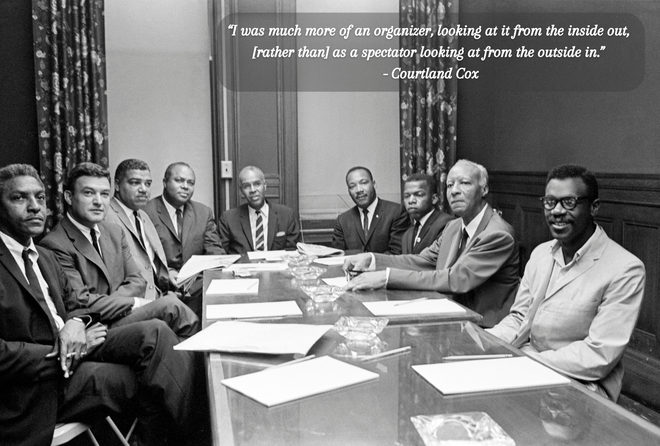
At the time, Cox was a college student and member of the Student Nonviolent Coordinating Committee, one of the sponsoring organizations of the march. He was involved in sit-ins, marches and voter registration for years before political activist and civil rights leader Bayard Rustin asked him to be another organizer in planning the march.
“Bayard was one of the most brilliant people that you’ve ever met,” Cox said. “Not only could he organize, he understood how to navigate politically.”
Remembering the day
It only took about eight weeks to plan, but when that day came, Cox and Rustin got out to the memorial around six in the morning. Nobody was there. That’s when Rustin turned to him and said, “Do you think anybody’s coming?” Just as he said that, kids from the NAACP youth came around the corner. Cox explains, “The reason that nobody was there at that time was the roads were so jammed and clogged up, nobody could move. All the highways were parking lots!”
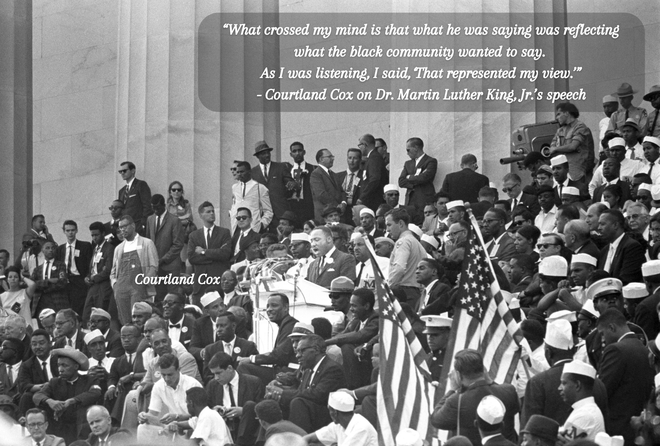
Then the time came for the march. Starting at the Washington Monument, people from all over the country made their way towards the Lincoln Memorial, chanting for a change.
For Cox, that morning played out differently. Historical pictures show Cox, seated on the floor of the Lincoln Memorial, making changes to a speech that was to be given moments later.
“I thought I had a typewriter all these years until I saw that photo,” Cox said. “I can’t believe that John was able to read my chicken scratch.”
John Lewis, chairman of the Student Nonviolent Coordinating Committee, was set to be one of the speakers before Dr. Martin Luther King Jr. His speech criticized the Kennedy administration for not doing enough to advance civil rights.
The Kennedy administration called the Archbishop of the Catholic Church, which then threatened to pull from the unity of the movement. “John Lewis’, Jim Forman’s, and my first reaction was… OK, see you.”
That’s when the more senior planners came to the men, convincing them to make the changes.
“It was important to make sure that the coalition held together,” said Cox. “Fortunately, our youth didn’t override our clear thinking.”
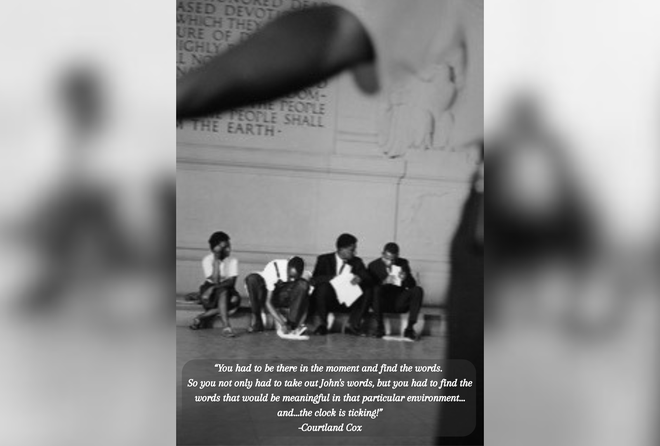
“I must say, John did a hell of a job because you would not have known the changes were made.”
The other part of the day Cox remembers well was standing with all of the movie stars that were there, like Charlton Heston, Gregory Peck, and Marlon Brando. He vividly remembers Gospel singer, Mahalia Jackson, doing an Amen chorus, back and forth with Dr. Martin Luther King, Jr. when he got up to speak.
Significance of the march and the ‘I Have a Dream’ speech
Cox reflected on the significance of the march, saying, “The importance of the March on Washington in many ways was the first time the African-American community, as a community of any size and strength, spoke to the country.”
Before the march, the civil rights movement was defined by sit-ins and freedom rides, often met with violence and police brutality, which made it difficult for many to understand the movement’s goals. The march shifted public perception.
“It changed the dynamic of how people saw the Black community and the activists. As opposed to being people who were troublemakers, they were now people who are spreading democracy,” Cox said.
The march also set the stage for Dr. Martin Luther King Jr.’s iconic “I Have a Dream” speech, which Cox says answered the question, “What do you Negroes want?”
“The answer that King put out, that we have a dream that’s deeply rooted in the American dream. And once that answer was given, people had a different perspective of what we were about,” Cox said.
The march’s impact led to legislative milestones, including the Civil Rights Act of 1964, the Voting Rights Act of 1965, and the Fair Housing Act of 1968, which helped shape the future of civil liberties.
“It’s amazing how much people who were very young were able to do in such a short time,” Cox said. “You’re making this happen, and you believe in it, and you are prepared to die for it.”
But even though the civil rights victories Cox helped achieve were successful and prominent, he explained that no movement ever reaches a point where the work is completely done. “Even if you achieve what you try to do, there’s always more to be done.”
What Courtland Cox is up to now
Courtland is now the chairman of the Student Nonviolent Coordinating Committee Legacy Project. The SNCC Legacy Project reflects a continuation of SNCC’s work. The organization is preserving historical documents and videos from history, aiming to pass stories and facts down from generation to generation.
As he reflected, Cox shared some valuable lessons, including one on progress always facing some resistance: “A lot of things that you see as a solution, other people see as the problem. And therefore, as you think that you’re moving forward, they’re always trying to move backward,” Cox said. “You have to be constantly vigilant.”
He then shifted from politics to personal philosophy, saying he still spends time mentoring younger generations. How does he want to be remembered? “All I want said about me is that he tried to help somebody.”