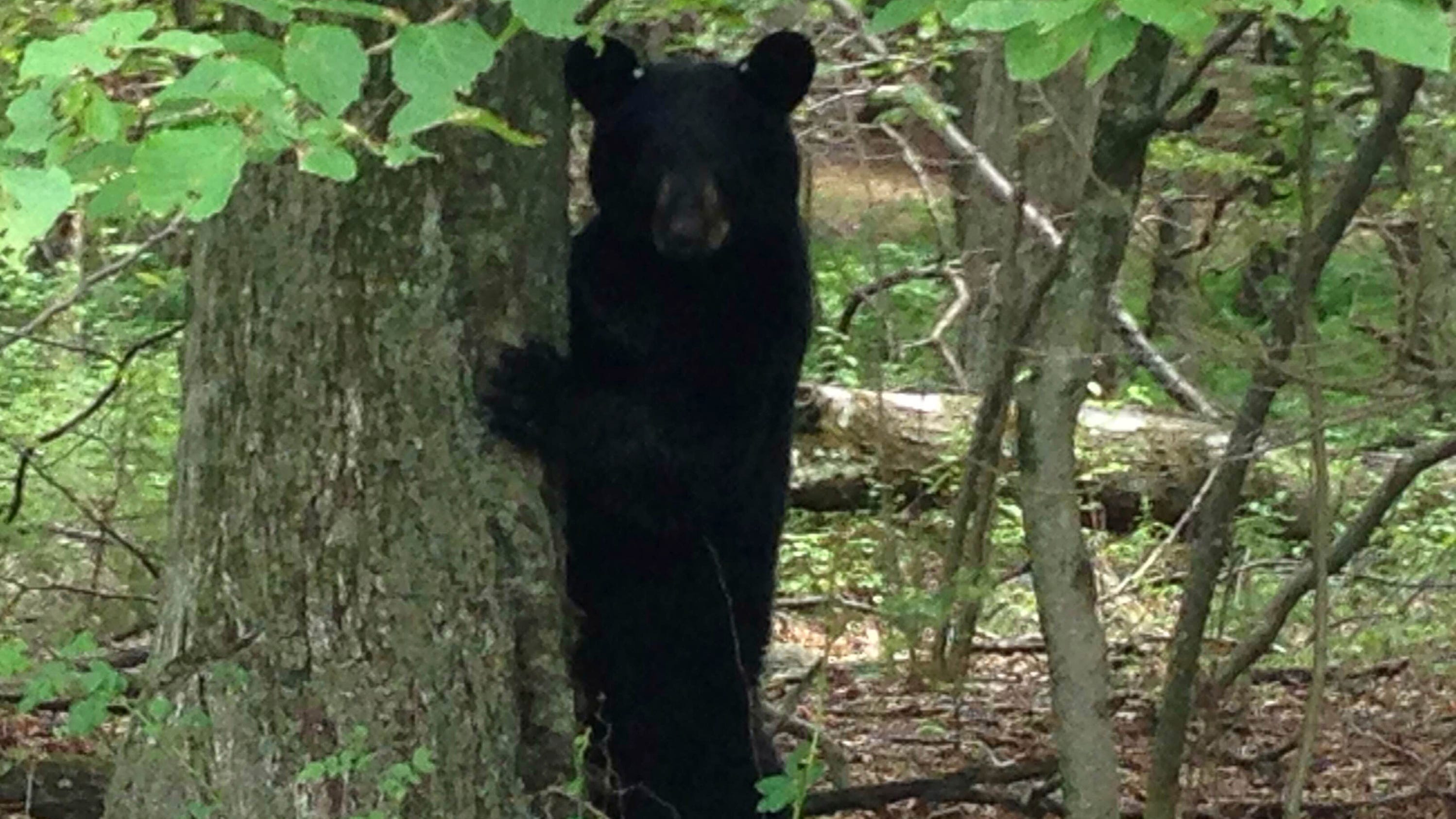

NJ bear safety tips: Video
When New Jersey’s black bears emerge from their winter hibernation, they’re hungry, having lost 20% of their body weight. Here’s how to use caution.
- Police departments and municipalities around North Jersey are informing residents of local black bear sightings.
- Black bear damage or nuisance behavior can be reported to your local police department or to Fish and Wildlife at 877-927-6337.
Police departments and municipalities around North Jersey have taken to social media in recent weeks to inform residents of black bear sightings.
Even though black bears can be active all year long, New Jersey Fish and Wildlife says they are the most active in the spring, when they emerge from their dens to forage for food; during the summer breeding season; and in the fall, while they prepare for the winter den period.
New Jersey’s black bears are most commonly found in the northwest region of the state, particularly in Sussex, Passaic, Warren and Morris counties, Fish and Wildlife says. However, as the population of bears increases, they are expanding both east and south.
Although reported sightings are down so far in 2025, as we enter the warm summer months black bears and their cubs are being spotted all over North Jersey.
On the morning of June 4, the Midland Park Police Department took to Facebook to warn residents about multiple sightings of a black bear cub in the area of Paterson Avenue by the train tracks.
“The Police Department has been advised and are monitoring the movement of the cub,” the post said.
Norwood police on June 4 also warned of a bear and cub sighting near the entrance to the trail behind Rockleigh Borough Hall.
A few days earlier, West Orange used Facebook to inform the community of recent bear sightings, writing, “Your safety is our top priority, and we urge you to follow these important guidelines to ensure both your safety and the bear’s well-being.”
The township listed several black bear guidelines such as staying calm, securing attractants such as garbage or pet food, making noise, supervising pets and children, and reporting sightings.
On May 27, the Westwood Police Department urged locals to use caution and remain cognizant of their surroundings after a resident of First Avenue reported a bear in their back yard eating from the bird feeders.
How to report bear damage and nuisance behavior
Black bear damage or nuisance behavior can be reported to local police or to Fish and Wildlife at 877-927-6337.
How to prevent bear encounters
The Department of Environmental Protection recommends that property owners practice the following safety steps to minimize black bear encounters and conflicts:
- Secure trash and eliminate obvious food sources such as pet food bowls, bird feeders and food residue left on grills. Clean outdoor grills and utensils to remove food and grease residue and store grills securely.
- Use certified bear-resistant garbage containers if possible. Otherwise, store all garbage in containers with tight-fitting lids and place them along the inside walls of the garage or in the basement, a sturdy shed or another secure area.
- Wash garbage containers frequently to remove odors, and put out garbage on collection day, not the night before.
- Avoid feeding birds when bears are active. If you choose to feed birds, do so only from Dec. 1 to April 1 during daylight hours, bringing the feeders indoors at night. Feeders should be suspended from a free-hanging wire at least 10 feet off the ground and 10 feet away from any objects a bear could climb. Clean spilled seeds and shells daily.
- Immediately remove all uneaten food and food bowls used by pets fed outdoors. If you live in bear country, walk your dog on a leash and keep them indoors or in a secure kennel overnight.
- Do not place meat, dairy or any sweet foods in compost piles.
- Remove fruits or nuts that fall from trees in your yard.
- Properly install electric fencing as an effective way to protect crops, beehives and livestock.
What to do if you encounter a black bear
If you encounter a black bear, the DEP says, follow these safety tips:
- Remain calm. Never run from a bear, as that may trigger its predatory instinct. Instead, slowly back away. Avoid direct eye contact, which could be perceived by the bear as a challenge. Always make sure the bear has an escape route.
- Scare the bear away by making loud noises such as yelling, using a whistle, banging pots and pans or blowing an air horn. Make yourself look as big as possible by waiving your arms. If you are with someone else, stand close together with your arms raised above your heads.
- Make bears aware of your presence by speaking in an assertive voice, singing, clapping your hands or making other noises. If hiking through bear country, always make your presence known. Hike in a group when possible.
- If a bear utters a series of huffs, makes popping sounds by snapping its jaws or swats at the ground, these are warning signs that you are too close. Slowly back away, avoiding eye contact. Do not run.
- If a bear stands on its hind legs or moves closer, it may be trying to get a better view or detect scents in the air. This is usually non-threatening behavior.
- Black bears will sometimes “bluff charge” when cornered, threatened or attempting to steal food. Stand your ground, avoid eye contact, back away slowly and do not run.
- If the bear does not leave, move to a secure area such as a vehicle or a building.
Families in areas that are frequented by black bears should have a “bear plan” in place for children, with an escape route and planned use of whistles and air horns, the DEP says. Attacks are rare, but if a black bear attacks, fight back.