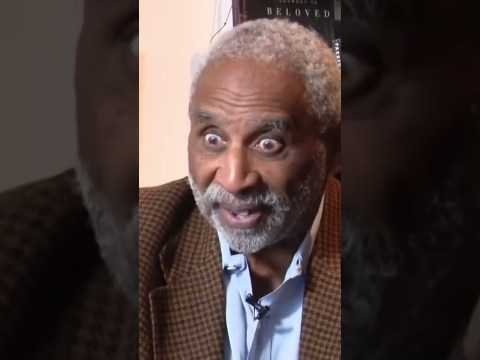
The Essence Festival, which ended Sunday, is a celebration of Black culture launched in New Orleans in 1995. More than three decades later, it is an annual July event that significantly bolsters the New Orleans and Louisiana economies, attracting thousands of visitors. But this year, perhaps more than others, there have been concerns from fans about how the events were run. Essence Ventures Executive Vice Chairman Richelieu Dennis sat down for an interview with Columnist Will Sutton and Dr. Ashonta Wyatt, who co-host WBOK’s Good Morning Show. It has been edited for accuracy, clarity and space.
WYATT: For those who may not know who you are, who are you? What’s been your road to Essence Fest?
DENNIS: My official title is executive chairman of Sundial Media Group, of which Essence Ventures is the crown jewel. Inside of that entity is (the idea of) leveraging business as investment tools into Black communities. Add Essence (magazine) along with Afropunk, Beautycon and R29 other entities that are steeped in identity and in culture.
SUTTON: You’ve heard the stuff. You’ve seen the stuff.
DENNIS: I’ve heard and seen a lot.
SUTTON: I want to say that my wife and I go to Essence Festival every year. Culturally, for us, Essence Fest is an important part of our year. I saw a number of things that are better and have improved over the course of the last few years, including the ability to walk without kind of bumping into people and the quality of the programming and the engagement of the programming.
DENNIS: It’s very intentional.
WYATT: It was Black, all things excellent, all things beautiful. I have questions. We’re going to hold each other accountable, but we’re gonna do so in love.

Dr. Ashonta Wyatt is a respected, longtime educator, former school principal and a New Orleans and Jefferson Parish community and education advocate. She co-hosts The Good Morning Show on WBOK 1230 AM weekdays, 7-9a.
DENNIS: That’s that’s why I’m here.
SUTTON: Some of the things that people have had concerns about are the Superlounges. Have you heard that? Do you understand where people are coming from?
DENNIS: I’ve heard all of that, and every year I hear a lot of what our communities are going through — because of what Essence is about, what the expectations are, what the mood of the community is.
As local as Essence Festival is, it’s really also national. I think some of that drives tension as well because, “Hey, there’s not enough focus on local, there’s, too much focus on national.” We use that to fuel our growth as a way to understand what it is that’s expected of us.
Sometimes the expectations are reasonable. And sometimes they’re unreasonable. When they’re reasonable, or even if they’re unreasonable, we take all of that into account. Our team (does) an excellent job of social listening, so we’re listening to everything that’s being said every day. Not just when we come here.
Across the board we take that information and we say, “OK, what are the things that we can change and what are the things that we should not change?”
I don’t know how many people out there know this, but Essence is, if not the largest, of the very largest festivals in this country. That festival is run by 98% Black people.
Two years ago, it was very crowded. It was very unsafe. We got it. We’ve always taken pride in the fact that when Essence comes to New Orleans New Orleans actually gets safer. So you saw we took on more space.
We expanded the aisles. We brought in more security. You saw stencils everywhere. Line queues (had) people moving the directions of the lines, moving them faster. Even with that, we were so jammed during the weekend that even with that we still had some problems in some places. (There was some) confusion as to where to go to get in.
State and local support
SUTTON: One of the things that’s been circulating, and not just this year but I think more so this year, is whether Essence is committed to New Orleans. With any large entity, festival or otherwise, there are state-supported and city-supported subsidies to help bring this wonderful event here and make it all that it is. How do you feel about our support?
DENNIS: So let’s let’s start with defining support. Support is an action. The city and the state have have been very active (supporting) Essence. We have very good relationships with both the city and the state. We believe strongly that the government officials fight hard to get us what they can. Ultimately, though, the festival is a very expensive entity to put on.
We come here every year, unlike the Super Bowl. One of the things that really had me take a do a double-take was when Super Bowl was here. The NFL is 60-plus billionaires running a very big business with tons of advertising dollars that shows up here once every 10 years. We come here every year, we invest everything we have in the city every year. Some years it goes great. Some years it doesn’t. But that doesn’t waiver our commitment, and we haven’t seen a waiver from the city or state. But do we need more money and support from the city and the state to keep the services that we provide free? We need the city and the state funding to keep pace with the increase in costs.
SUTTON: Is the city financially doing more or less in your time here and what kind of amount are we talking about, and is the state doing more or less? And, is it enough?

Times-Picayune columnist Will Sutton on Thursday, September 12, 2019.
DENNIS: So, I’ll start with the last question. Is it enough? No. Are they making efforts to make that better? Yes. So to very directly answer your question, we received significant significantly less this year than we have.
SUTTON: Two million?
DENNIS: A little more than that. But that’s collectively. That’s not just the state. That’s the overall.
Not only was it less this year from the state, but because of the DEI pullbacks, our sponsorships, were significantly lower. But that did not deter us from the investments that we needed to make to make sure our community got what they deserved.
What we will not do is put out an inferior product. So as we make the shifts and make the make the changes there’s going to be some places where we’re not going to get it 100% right.
So if you look at the lineup, on some nights there are 10 artists, right?
Maybe we don’t need that much. Time goes by faster, there’s less chances for equipment failure.
Unfortunately it impacted Miss Lauryn Hill. And then she got blamed for being late. It wasn’t her fault.
We’re not here to destroy. We are here to build up families. We are here to build up businesses. We’re here to reinvest in our communities.
The Target boycott has been going on for some time so that created a lot of uncertainty. Because we’re losing funding from the state, if brands are cutting back on their DEI budgets, like Ford — and I’ll name them because I’m not going to allow them to go hide — then there are others in the market who are taking credit, like Costco. I’ve never seen a program that they put together to support my community. I’m not saying they haven’t done it. I haven’t seen it. But yet they get the benefit.
Defending Target partnership
SUTTON: So Target, you’re saying, has invested in the Black community?
DENNIS: From where I sit and from what I know in my own lived experience with having invested in over 20 different businesses that do business in Target, it today has not pulled back on any of. the commitments that it has made to those businesses. Not that I’ve seen. There was a commitment that said they were going to invest or spend $2 billion with Black-owned businesses over a five-year period from when they made it to 2025. I know that for a fact. This year they will hit the target on time.
I understand why people would want to boycott. I understand the value of having our voices heard.
We invested in Essence when nobody else wanted to. Plenty of people had the opportunity to and chose not to. We invested in it because we believe that our community deserves a platform that will be here, that can be trusted for 100 years.
Boycott Target and a community of people follow you to boycott Target, and they boycott Essence, and then they’re celebrating online to say, “Oh, he didn’t sell as many tickets.” But think about what the impact is to the community that Essence is serving.
Give us that feedback and watch us, hold us accountable to what we do with it.

:max_bytes(150000):strip_icc():focal(749x0:751x2)/African-Lion-Cubs-1-103125-2f4ad59f299e4f82acf14b021a874f5a.jpg?w=480&resize=480,360&ssl=1 "3 African Lion Cubs Born at Audubon Zoo ‘Is Vital’ to Survival of Species: Photos")