


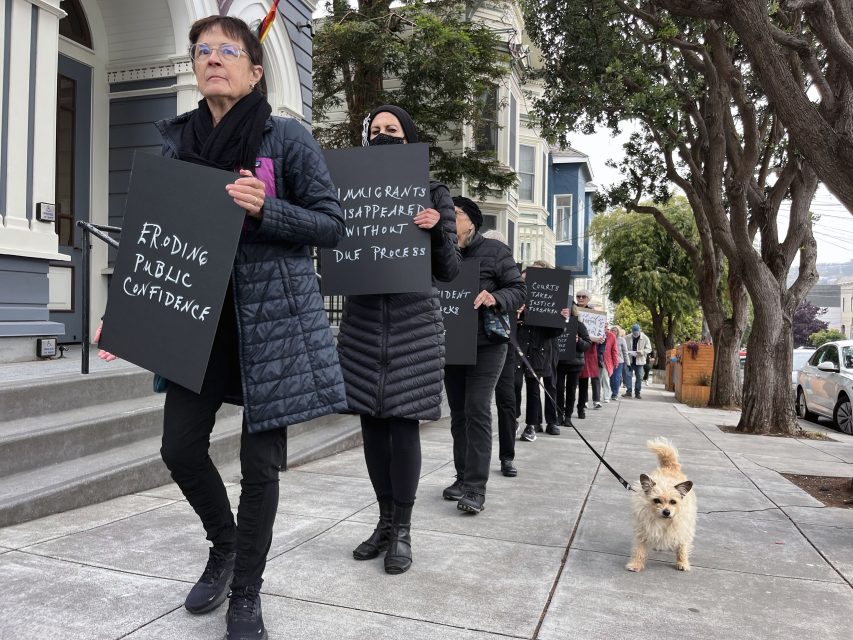
Three dozen people, all dressed in black, entered the Noe Valley Ministry last month in a silent line, filing into its front pews. On stage, Hans Kolbe — long-time international business consultant, long-time community activist — played cello, solemn as the last musician on the Titanic.
Koble and other neighbors organized this event to “lament the loss of justice” in the United States — inspired by protesters across Europe who marched in silence in 2020 against the repression of judges in Poland.
More neighbors trickled in behind the black-clad mourners, greeting each other with hugs and gossip by the snack table. Others tried to join on Zoom, but the connection wasn’t working. (I was asked to resolve the problem because, I was told, I looked like the youngest person there. Unfortunately for them, my actual technological abilities did not live up to expectations.)
All the pews were filled by the time the speakers, attorney Steven Taylor, retired judge Suzanne Ramos Bolanos, and sitting judges Linda Colfax and Michael Begert, began answering questions. The event was part of a series designed to teach the public about threats to democracy, and it was the most attended yet.
What is the greatest threat to the judiciary? The moderator asked.
“If we don’t have credibility with the public, and if we don’t have credibility with people in power, that’s a dangerous situation,” Begert said. Judges are trained to make independent decisions about how to best interpret the law, Colfax explained. But, Bolanos said, politicians who feel empowered to call judges corrupt and foment public mistrust can have a chilling effect on judges’ decisions.
When the floor opened to public comment, Kolbe stood and addressed the room. “I have a slight fear right now that the way you speak about the situation we are in is underestimating the danger,” he said. Although the now 74-year-old Kolbe has lived in the United States since he was 28, he still speaks with a mild German accent.
“Intimindation is the first step,” he continued. “That’s what the Nazis did in my country.”
Growing up in Germany after World War II, Kolbe later remembered, meant playing in the ruins of bombed houses and having classmates whose mothers had remarried because their husbands had died in the war. He said he didn’t ask his uncle what he did during the German invasion of Russia. Kolbe didn’t want him to have to lie.
“We wanted this to be a wake-up call for all of us,” he told the judges. “But also a wake-up call for you.”
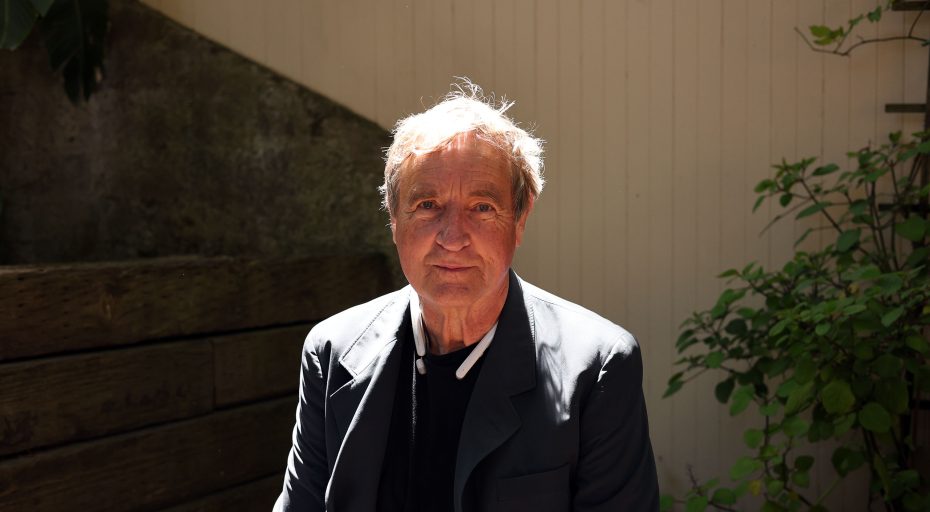
Kolbe, a former attorney, has participated in local organizing efforts throughout his three decades in San Francisco. He takes his causes, whether they be cleaner streets or the rule of law, seriously. He is also courteous – thanking each judge after the event and asking audience members for feedback on his message.
Events like these are meant to start more lasting conversations, Kolbe later said. He hopes they will move San Franciscans who want to be politically active beyond the basics, like “a march where you’re sweaty and then it’s over.” What more they can do, he isn’t sure.
“I march here with 50,000 people. Does that move the needle?” Kolbe asked wryly. “I go home and now I write a postcard. What does it help?”
“Most people in my generation are tired,” Kolbe added. What they can do to engage more young people, he also isn’t sure.
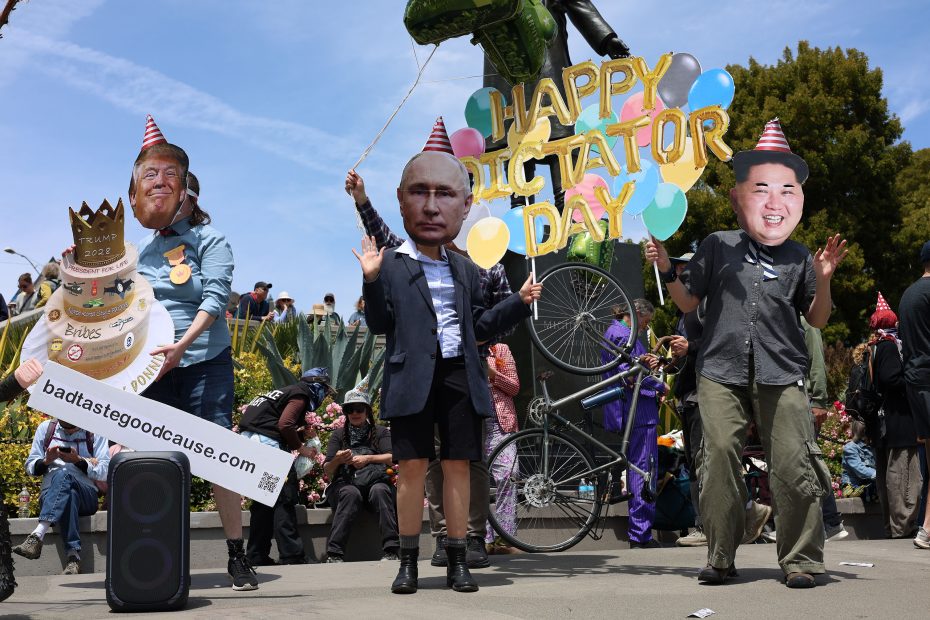
“Maybe there needs to be more entertainment,” Kolbe joked. Like 10,000 Santa Clauses rallying against President Donald Trump. He paused.
“Ok, it would be funny,” he conceded. “Why not? Let’s do that, we need to have humor.”
At the July event, organizers made a point of asking “at least one person under 60” to speak. The chosen youngster, who appeared to be well into his 20s, spoke about the slow pace of government systems. “I feel like I’m back in 2004 waiting for the Internet Explorer to load,” he told the audience.
“For many of our Black, indigenous, and other communities of color, the urgency is not new,” said a mother who’d attended San Francisco public school in the mid-90s. “What some of you may now feel as a crisis, we have lived with constantly.”
Spoken in a majority White neighborhood where over half of households earn an income over $200,000, the woman’s words carried weight. Kolbe said he was glad she’d been there.
Noe Valley may be an unlikely ground zero for a national movement. The following afternoon, the neighborhood showed no signs of civil unrest: Two girls set up a bake sale in the town square, dogs walked happily past pride flags and quaint Victorians, and a gentle breeze blew through the outdoor courtyard of the public library.
Nonetheless, Kolbe said, he and his neighbors try to make a difference where they are.
At their meeting last Monday, they discussed a range of strategies for defending immigrant rights from monitoring a corner for ICE activity to hiring day laborers. They also made some technological progress. “This time the [Zoom] connection worked,” Kolbe wrote in a follow-up email, though he noted the sound quality could use improvement. “We are working on it.”


