Unity. Depending on which version of a dictionary you thumb through, you may find different descriptions of the word. Some define it as the state of being whole. Others describe the inverse: the quality of not being multiple, separate or fractured. Though there may be several, somewhat roundabout, avenues to the root of the word, its meaning is universal: To be united. To work together. To make things better for the collective.
The principle of unity is a connecting force spanning language, country and culture. In Spanish-speaking Caribbean lands like Cuba and the Dominican Republic, “unidad” is the word of choice; In Haiti, you’ll hear “inite” in Haitian Creole or “unité” in French; In Kiswahili, or Swahili, spoken in Kenya, Tanzania and other east African countries, the word is simple and strong — umoja.
For one Fayetteville group, umoja — or unity — is the driving force.
The Umoja Group, a Fayetteville-based educational, cultural and charitable nonprofit organization, has dedicated its efforts for more than 33 years to promoting “the positive history, arts and culture of Africans, African Americans and Caribbeans,” according to the group’s mission statement. Through yearly festivals, community service projects and scholarship opportunities, this group works to create community bonds and highlight the impact that comes with being united by sharing these rich cultural ties.
Fun for a purpose
Since 1992, the Umoja Group and a number of community members have been packing Seabrook Park, located near Fayetteville State University, with vendors, dance troupes and community resources for their annual Umoja Festival. The celebration of culture and togetherness has been a source of pride and reconnection in Fayetteville, and its impact has only grown stronger since the group gained its official 501(c)(3) designation in 2005.
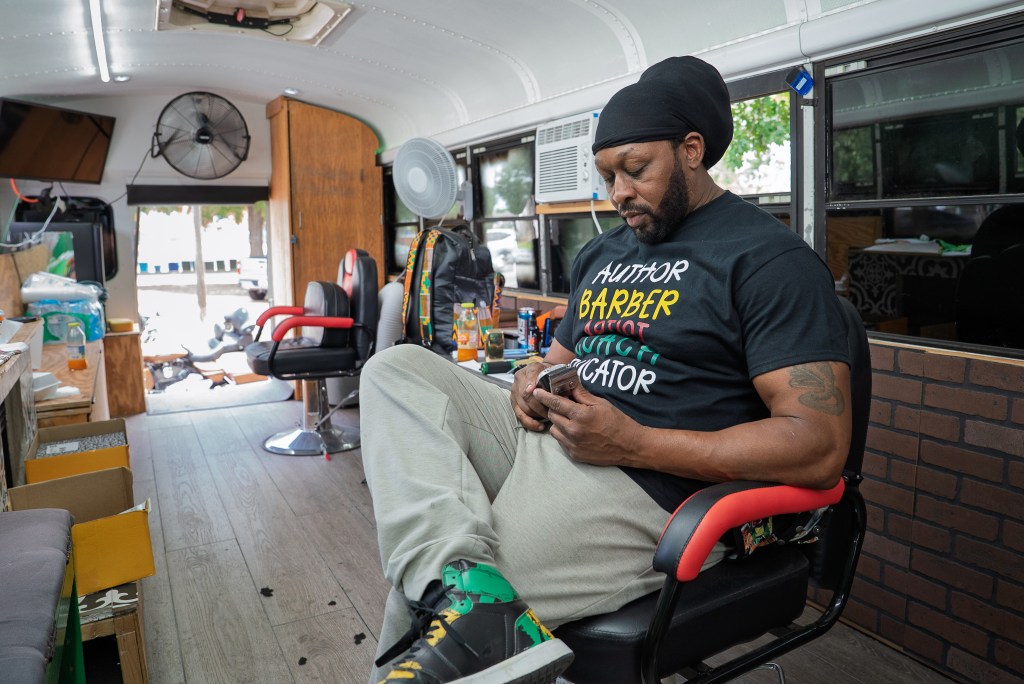
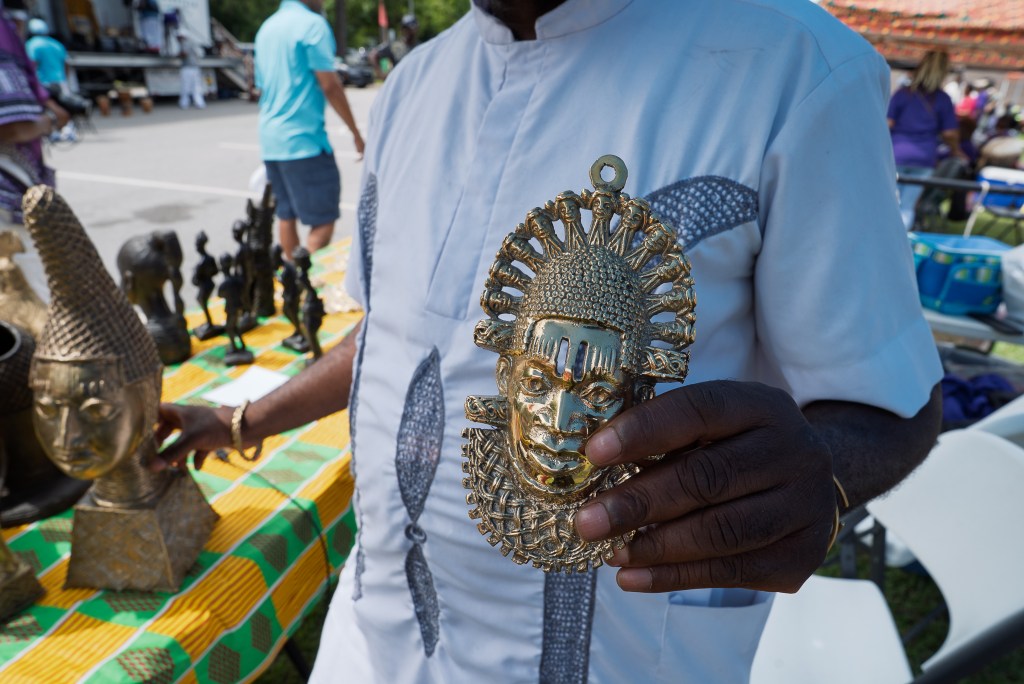
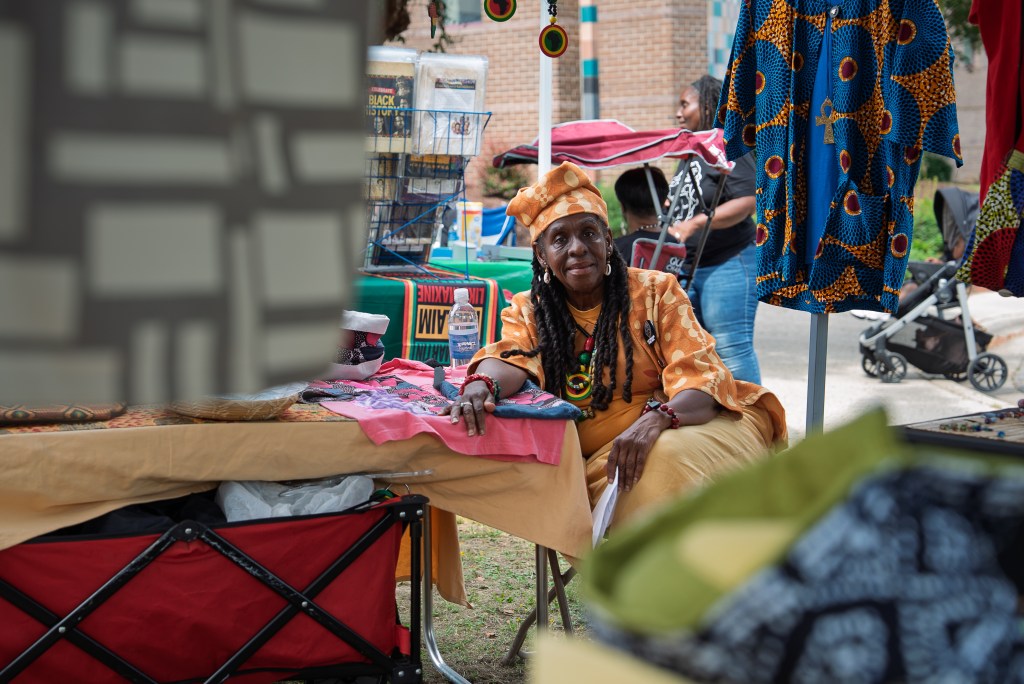

From Fayetteville State University’s Sapphire Dance Team to E.E. Smith High School’s marching band, the Magnificent Marching Machine, the Umoja Festival is filled with exciting performances from local artists. Between the whirling colors of dance costumes, the sweet, brassy ring of trumpets and trombones, and unique souvenirs and food from local vendors, the day is filled with music, culture and life.
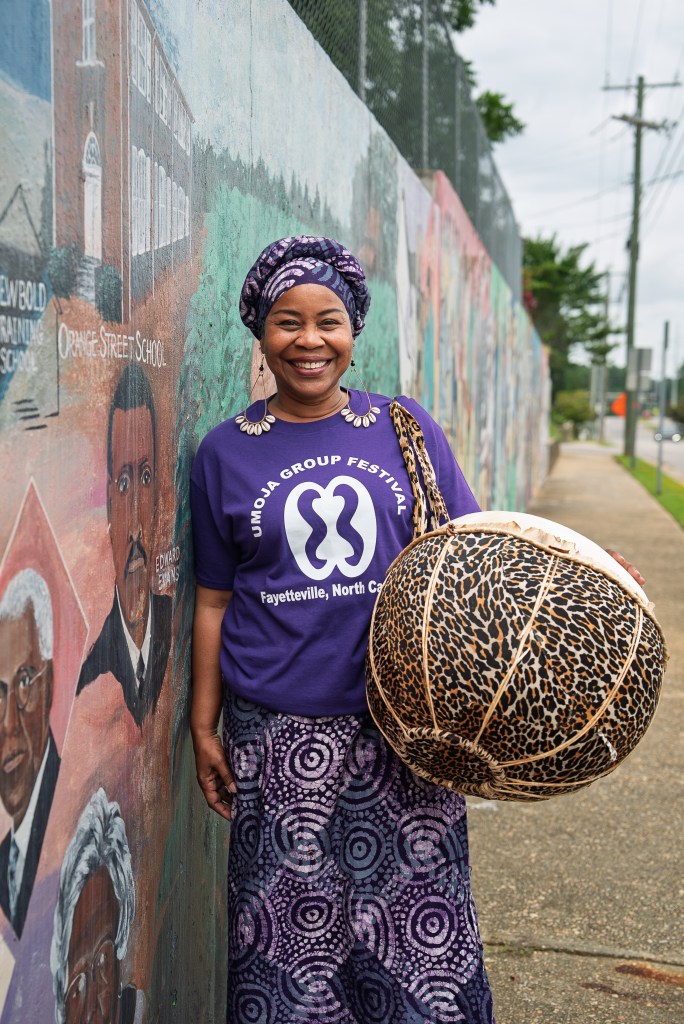
The event takes about a year to organize, Umoja Group Director Wanda Wesley told CityView, meaning the group has to gear up for the next iteration of the festival almost as soon as the current one is through. Alongside this festival, the group also hosts a yearly Kwanzaa Festival in late December, and a Malcolm X Forum event each May.
“It’s a process,” Wesley said. “A labor of love.”
While the Umoja Festival has a show order to ensure that artists are able to share their craft with the crowd, Wesley said there are opportunities for talented attendees to perform as well. She said, should there be a lull in the festivities, you might be handed a microphone.
Beyond the performances and vendors, the festival offers resource opportunities for attendees. One aspect of the festival that organizers are especially proud of is their Health Fair. Beginning as a partnership with Cape Fear Valley Health in 2010, the Health Fair doesn’t just bring tables with brochures about health care resources, but actual white-coat-clad doctors who can perform an array of medical screenings for festivalgoers. Set up inside Smith Recreation Center, adjacent to Seabrook Park, the Health Fair offers free screenings for blood pressure, glucose and cholesterol levels, pulmonary lung function and more.
Umoja Group members told CityView that the Health Fair component of their festival was greatly supported by the late Cape Fear Valley Health employee, Darvin Jones, a TV and radio journalist turned marketing professional. Jones, who passed away in 2022, was the voice of the Cape Fear Valley Health initiative “Take Charge of Your Health,” which focuses on reducing healthcare disparities, especially among the African American community in Cumberland County.
Jones is largely credited for raising awareness about health conditions like cancer, diabetes, sickle cell anemia and heart disease in the community through his work, and was at the forefront of the Covid-19 vaccine response in the African American community when the pandemic struck in early 2020, several employees of Cape Fear Valley Health said in a 2022 column by Bill Kirby Jr.
When he passed in 2022, the Umoja Group established the Darvin Jones Scholarship, awarding $1,000 each year to a Fayetteville State University student pursuing a health care-related field. The 2025 installment of thisscholarship was awarded to Wawa Tiote, president of Fayetteville State University’s Sapphire Dance Team, at this year’s 33rd Annual Umoja Festival, which took place on Saturday, Aug. 23, from 10 a.m. to 5 p.m.
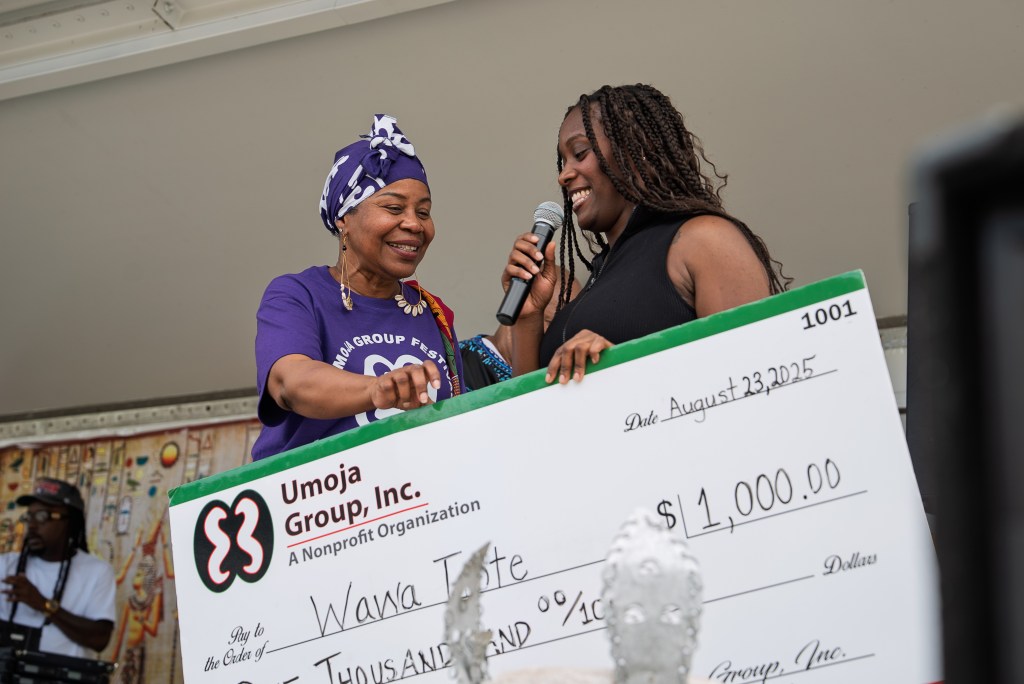
Through a day of dance, food, culture and resources, the Umoja Festival brings the Fayetteville community together with both celebration and intention.
“It’s fun for a purpose,” Wesley said.
A storied journey

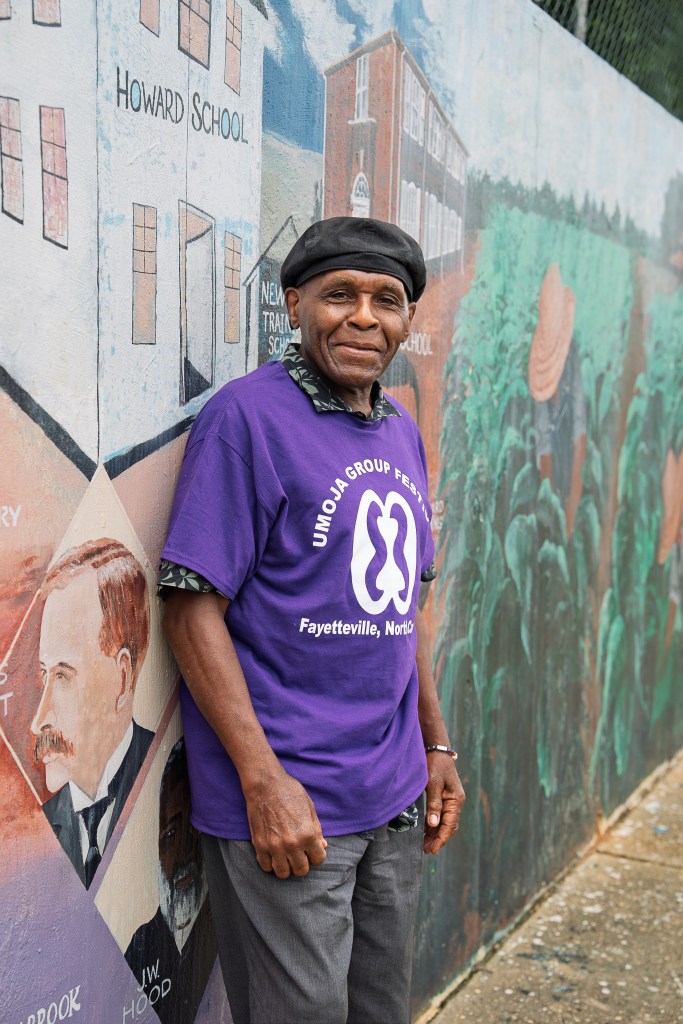
co-founder, stands in front of the Wall of Honor. Credit: Jams Throssel / CityView
Dorothy Watkins Fielder, a founding member of Fayetteville’s Umoja Group, smiled as she recalled the early days of the organization. The year was 1988, and a group of Fayetteville residents banded together with a distinct mission. They wanted to help young people learn about and develop pride in their culture and history.
“We kind of loosely organized people of like minds,” Fielder said. “People who knew about their history as Black people.” That “loosely organized” group felt that they could be a source of learning for the youth of their community.
“We felt that we should pass on our knowledge and give our experiences to young people,” Fielder said with a subtle nod. “They need experiences. They need activities. They need to be inspired.”
While working as a school social worker at both Reid Ross Classical School and E.E. Smith High School, Fielder said her main responsibility was making sure children came to school and didn’t drop out.
Through her work, she noticed that some students didn’t want to be at school, especially those who lacked an outlet like sports or music. Instead of lobbing a football or practicing their instruments, Fielder noticed a different talent in these children — they were artists.
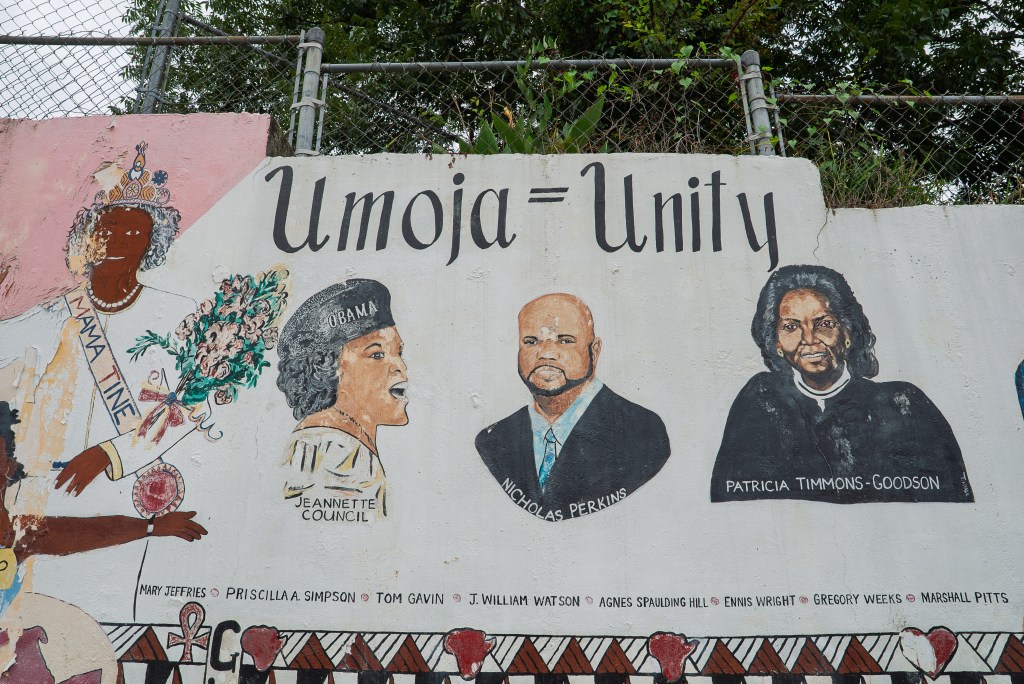
With a corps of 25 students, a team was formed. TEAM Club, an acronym for “Together Everyone Achieves More,” focused on community service projects, getting children involved in bettering their community. In 1993, TEAM Club took up a new project. They created the vibrantly painted “Wall of Honor,” an iconic Fayetteville landmark that brightens the corner of Langdon Street and Murchison Road to this day.
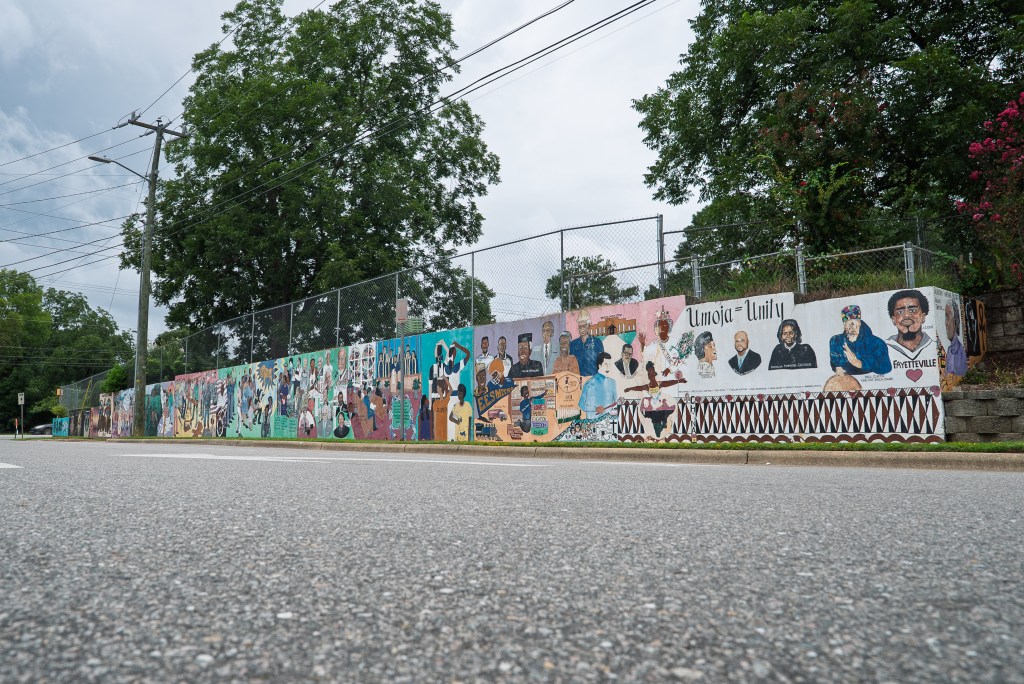
With each piece carefully chosen and painted by students, the medley of murals on the Wall of Honor serves as a reminder of Black history. The wall depicts scenes that stretch through time, from life and culture in Africa, to the journey through the Middle Passage, which forced enslaved people to America, to the struggle of the Civil Rights Movement and beyond.
The wall also serves as a local history book, honoring leaders in Fayetteville, both past and present, including Jeannette Council, a Civil Rights activist and longtime Cumberland County commissioner, Patricia Timmons-Goodson, the first Black woman to serve on the N.C Supreme Court, N.C. Music Hall of Fame Honoree Bill Curtis, and rapper and producer J. Cole, and many others.
“We know about all the people that are national leaders,” Fielder recalled her students saying. “But we want to honor our people here. You know, our parents, our grandparents.” She told CityView that the hyper-local impact she saw when the community’s young people saw their loved ones on the wall was a rewarding experience.
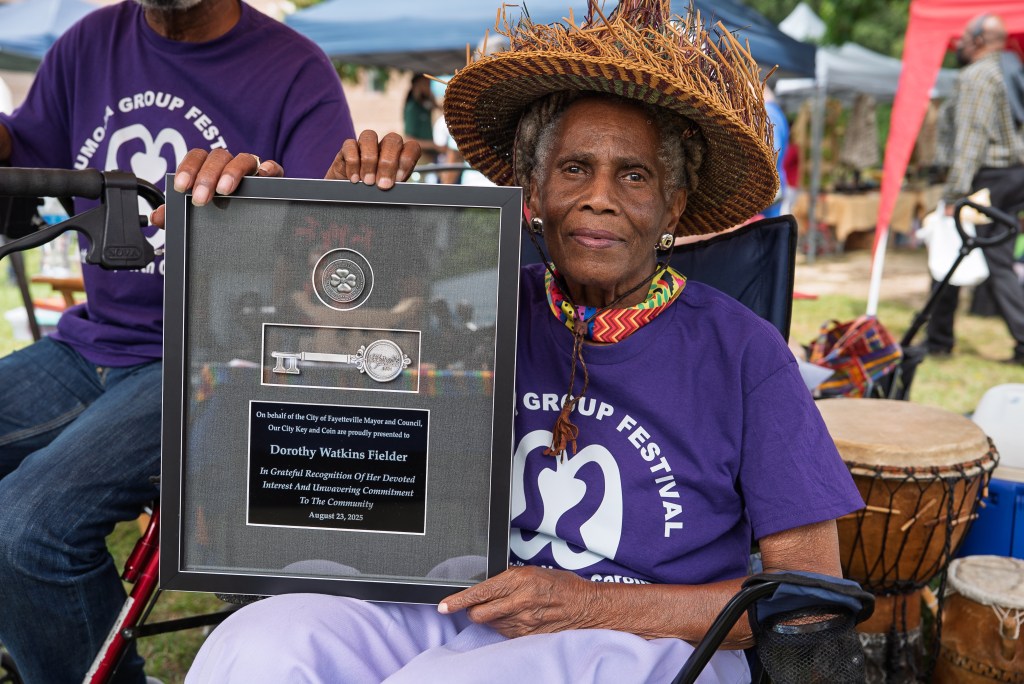
In 2019, Fielder, alongside co-author Marian Tally Simmons Brown and photographer Donna Fielder Barnes, published Wall of Honor: A Celebration of Fayetteville’s Everyday Heroes. The 34-page book depicts the art of the Wall of Honor and immortalizes the stories portrayed in every brush stroke.
Since its creation, the Umoja Group and the broader community have maintained and contributed to the Wall of Honor, and that maintenance never stops. Umoja Group member Darcy “Ghana” Fielder told CityView that the group plans to have the wall covered in mosaic tile in 2026, preserving Black history and the legacy of local leaders for many years to come.

Staying local, thinking generational
Over the years, the Umoja Group has received offers to expand its work and take it beyond Fayetteville, but with community impact at the heart of the organization, Wesley said that there’s been a conscious effort to keep the Umoja Festival local.
“We chose to stay in the community because we wanted it to be community based,” Wesley told CityView. She explained that keeping the festival in Fayetteville allows for easy access to attendees and honors the local history that inspires young people in the area, helping them to build a sense of pride in themselves, their neighbors and their personal history.
Umoja Group member Ramon Huggins said that teaching young people about their own history and local leaders is paramount.
“Knowledge of self and community is always important,” Huggins said.
While the Umoja Festival is on a mission to stay local, they excitedly invite anyone who wants to participate in the festivities, from near and far. Group members said they regularly have attendees from out-of-state, from Georgia to Kentucky and beyond. With this festival serving as an annual homecoming of sorts, the Umoja Group sees the event as a time of family and reunion. They said it’s a proud moment when they see people who may have attended the festival as children grow and flourish in the community.

“The way I see it,” Wesley said, “as individual communities get stronger and you connect the dots, the city gets stronger. The county gets stronger.”
Through collective work, resource-sharing and unwavering support of each other and the community, the Umoja Group aims to help uplift the area as a whole.
“Umoja is to be united in all things,” Darcy “Ghana” Fielder said, reciting the group’s definition of unity. “To work together as a family, as a people, as a nation for the common benefit of every member.”
No matter what language, word, spelling or definition you prefer — inite, unité, unidad or umoja — the act of unity is a daily choice for the benefit of all.
Read CityView Magazine’s “Fall in Fayetteville” September 2025 e-edition here.