

Zohran Mamdani, the progressive state assemblyman running for New York City mayor, is facing hurdles with a key constituency: Black voters.
While Mamdani has energized younger and liberal voters, his support among Black residents—a crucial bloc in citywide elections—remains uncertain, polling suggests, highlighting potential obstacles as he seeks the broad coalition necessary to win.
Newsweek has contacted Mamdani’s campaign via email for comment.
Newsweek asked experts why the November 4 mayoral election candidate might be struggling to win over this demographic.
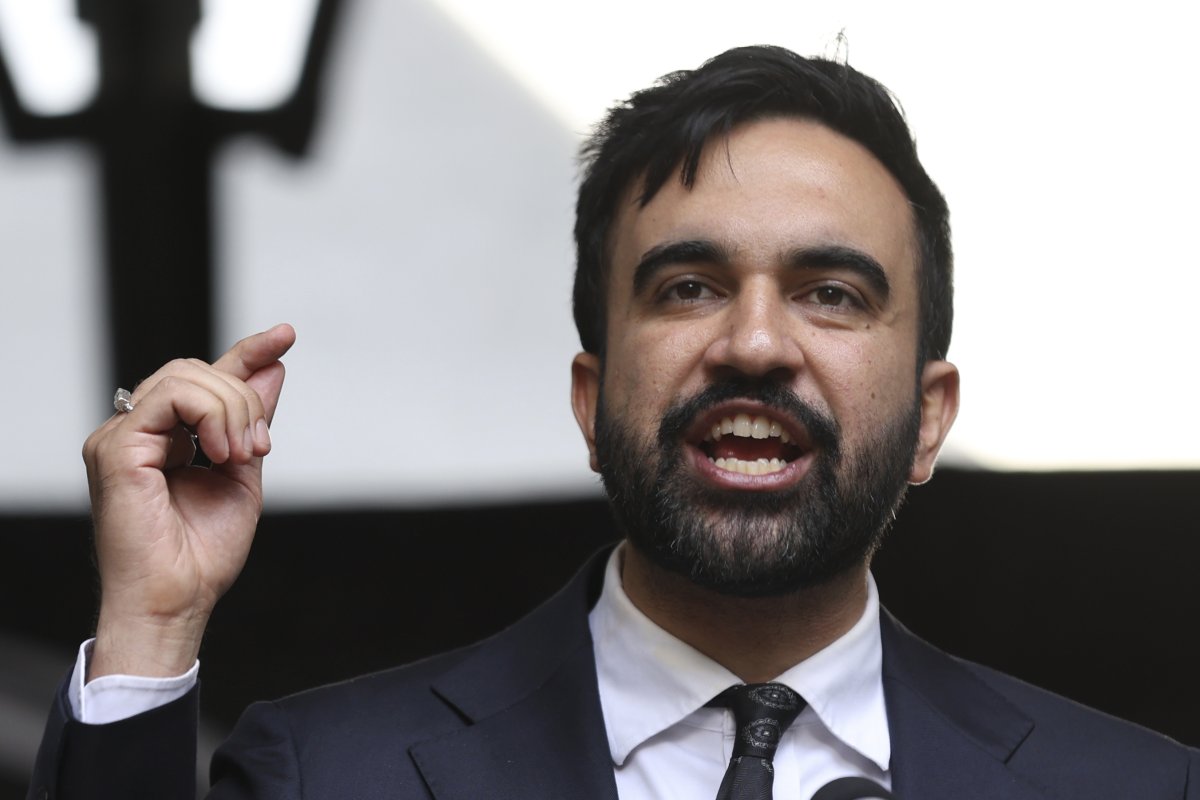
Heather Khalifa/AP
Black Voters Remain Skeptical of Mamdani’s Progressive Push
Polling over the past few months has shown Mamdani trailing in many Black-majority neighborhoods. A May Marist survey found him with just eight percent support among Black voters, compared with 50 percent for Andrew Cuomo. Mamdani also underperformed in June’s Democratic mayoral primary in precincts where over 60 percent of residents are Black and poverty rates exceed the citywide average, including East Flatbush and Brownsville.
Later surveys showed modest improvement, though challenges remain. A Data for Progress poll in July indicated Mamdani leading in the mayoral race, with 42 percent support among Black voters, versus 31 percent for Cuomo.
Experts suggest that Black voters’ hesitancy stems from a results-focused pragmatism. Darius Jones, executive director of the National Black Empowerment Action Fund, told Newsweek: “Black voters may be Democrats, but we are not socialists—period…. Our community wants advancement, not experiments.”
He added that policies like defunding the police or decriminalizing prostitution “aren’t solutions, they’re distractions.”
Mamdani has built his campaign around progressive proposals, including a citywide rent freeze, fare-free buses, municipal grocery stores, universal early childhood education and a major boost to affordable housing. He also supports decriminalizing prostitution, a stance that has drawn sharp criticism from opponents such as Cuomo, who warned it could fuel exploitation and crime.
Mamdani has likewise faced scrutiny for his past calls to “defund” the NYPD, made in the wake of George Floyd’s death in 2020. Now, as a mayoral candidate, he has moderated his tone, stressing in debates that he does not support defunding the force and instead sees police as “critical” to public safety.
Meanwhile, Cuomo has pitched himself as New York City’s problem-solver, emphasizing his past experience running the state. His campaign video earlier this year framed the city as on the brink, plagued by crime, homelessness, a “migrant influx” and public disorder, calling it “threatening” and “in crisis” due to political inaction. Cuomo has pledged to address quality-of-life issues and public safety by increasing police presence in the subways and streets and boosting affordable housing supply.
This dynamic may explain why Cuomo resonates more with Black voters, Jones said. “Cuomo isn’t perfect, nobody is, but a lot of folks see him as rooted in our communities, someone who delivered on jobs, housing, public safety,” he said. In contrast, Mamdani’s platform, while popular with progressive activists, struggles to connect with working families focused on immediate, practical concerns, Jones said.
But Alvin Tillery, founder of the Alliance for Black Equality, pushed back against the framing of Mamdani as merely a “socialist candidate,” saying that many of his policies are popular with the Black electorate.
Tillery told Newsweek: “He is a Democratic socialist in the tradition of Bernie Sanders and many strong progressive Democrats—like Summer Lee and Delia Ramirez—who are posting strong electoral returns in minority communities…. Many elements of the Democratic socialist agenda are popular with the Black electorate.”
Generational Divide Splits the Black Vote
A Zenith Research and Public Progress Solutions poll from July supports Tillery’s comments, showing that while Mamdani may not be popular with all Black voters, he has some support among young and college-educated voters within this demographic.
Among Black voters aged 18 to 44, Mamdani commanded 65 percent support, far outpacing Cuomo’s 15 percent, according to the poll. Older Black voters, however, were more aligned with Cuomo; 42 percent support him versus Mamdani’s 33 percent among those 45 and older. Undecided voters were also more prevalent in the older cohort, with 14 percent still weighing their options.
Education also plays a significant role in shaping voter preferences among Black voters. The Zenith Research/Public Progress Solutions poll showed that college-educated Black voters favor Mamdani by a wide margin, at 60 percent to Cuomo’s 10 percent. Among Black voters without a college degree, the gap narrowed: Mamdani had 45 percent support compared with 35 percent for Cuomo.
Household composition and union membership further highlight Mamdani’s base. Black voters in union households back him with 57 percent support, compared with 18 percent for Cuomo.
Nonetheless, Tillery noted that Black voters’ hesitation about Mamdani is often rooted in historical experience: “Black voters are skeptical of most politicians because there is a trail of broken promises from both parties that they can readily recall.”
“Andrew Cuomo, for all his flaws, is someone that Black voters are familiar with,” Tillery added. “The Black vote is defined by a large active group of older residents who still follow the cues of civil rights leaders and local political elites. For Mamdani to break through, he needs to keep working on winning over those elites or focus on turning out younger Black voters who are not very engaged in the process.”
Research from the Center for Information & Research on Civic Learning and Engagement (CIRCLE) estimated that in the 2020 presidential election—which saw unusually high youth turnout overall—only 43 percent of Black youth (ages 18-34) cast ballots, compared with 50 percent for all youth.
Looking ahead, Tillery suggested Mamdani’s path to victory is possible but contingent on a fragmented field. “Honestly, both Cuomo and Adams staying in the race is a dream scenario for Mamdani. They will split the Black vote, and he will sail into office with a broad multiethnic coalition,” he said.
But Jones warned that limited support among Black voters could have serious consequences. “No one wins New York City without Black voters, everybody knows that,” he said. “Even if you somehow squeak out a win without us, you won’t be able to govern.”
Full Interview with Darius Jones
Why does polling show socialism underperforming with Black voters, even in blue districts?
“Black voters may be Democrats, but we are not socialists—period. You can look at the data from the Bronx, from Harlem, from Westchester, it all tells the same story. Our community wants advancement, not experiments. We want safer streets, schools that actually work, jobs that create mobility and homes we can pass down to our kids.
“Things like defunding the police or decriminalizing prostitution—those aren’t solutions, they’re distractions. And let’s be honest, when those experiments blow up, it’s not the wealthy activists who feel it. It’s grandmothers in Brooklyn and working families in Queens. That’s why socialism never really lands with us. We’ve lived long enough to know the difference between theory and reality.”
What does the backlash to Cori Bush and Jamaal Bowman (who had both been critical of Israel amid its war on Hamas and lost Democratic primaries last year) signal for Mamdani’s future?
“Bush and Bowman are perfect examples of what happens when you start listening more to Twitter than to the people who put you in office. Loud online, but out of touch at home. And when that happens, voters move on.
“Black voters are not swayed by slogans. We measure leaders by whether the neighborhood feels safer, whether jobs are available, whether schools are improving. When you choose ideology over those priorities, it catches up with you. That’s the risk Mamdani is running right now—our community has no patience for vanity politics. Ignore us, and you won’t last.”
Why may Mamdani’s “luxury beliefs” not reflect real-life concerns in Black communities?
“Mamdani’s platform is built on what I call luxury beliefs—ideas you can hold if you’re insulated from the fallout. Defund the police, decriminalizing prostitution, government grocery stores—it sounds edgy in a Columbia University faculty lounge, but go ask a grandmother in Brownsville what she thinks.
“For her, this isn’t an abstract debate, it’s life and death. Black voters don’t have the luxury of experimenting with ideology when safety, jobs and schools are on the line.
“We’ve been burned too many times before. That’s why we’re quick to reject ideas that sound radical but make daily life harder, not better.”
Why do Black voters specifically support Cuomo and not Mamdani?
“Black voters are pragmatic—we’ve always been results-first, not slogan-first. Cuomo isn’t perfect, nobody is, but a lot of folks see him as rooted in our communities, someone who delivered on jobs, housing, public safety. That history matters.
“Mamdani, on the other hand, speaks a language that connects with activists but not with working families. And that’s the difference showing up in the polling. You can’t just talk to faculty lounges and think you’ve spoken to Southeast Queens. Black voters aren’t looking for symbolism—we’re looking for leaders who deliver, period.”
What impact could the lack of support for Mamdani among Black voters have on the election?
“No one wins New York City without Black voters, everybody knows that. And it’s not just about winning an election—it’s about legitimacy. Even if you somehow squeak out a win without us, you won’t be able to govern.
“That’s why Mamdani’s weakness with Black voters is an existential threat. The most consistent Democratic bloc is saying loud and clear, ‘We don’t buy it.’ If you don’t have us, you don’t have a coalition. It’s that simple.”
Why are Black voters reluctant to support a socialist candidate?
“Because we know the cost of failed experiments better than anyone. Our communities have been the testing ground for broken schools, reckless policing shifts, housing policies that never panned out—you name it. We’ve lived through promises that collapsed when it counted.
“So when socialism comes packaged as the new answer, we’re skeptical. It doesn’t make the block safer, it doesn’t make the rent more affordable, it doesn’t put food on the table. Black voters are looking for practical progress, not experiments. That’s why socialism keeps falling flat with us.”
“For background, in my experience working on several congressional campaigns against socialism, I’ve found that Black voters are often hesitant to embrace socialism. This isn’t a rejection of progress, but a pragmatic stance rooted in experience. For generations, Black communities have been on the front lines when policy experiments fail. We’ve seen firsthand what happens when grand theories and promises fall short of delivering safer streets, affordable housing, and genuine economic opportunity.
“The rhetoric of socialism—promising widespread benefits and radical change—often sounds good on paper, especially to those on the far left. However, these promises don’t always translate into a better quality of life in our neighborhoods. Policies like “defund the police,” for example, have been met with skepticism because the consequences of such experiments—like rising crime—disproportionately impact our communities.
“Black voters aren’t looking for ideological agendas; they’re looking for tangible results. They want practical, real-world solutions that address the immediate challenges they face. This is why our organization, NBEAF, is starting conversations across Black New York—to bridge the gap between political theory and the lived realities of our communities.”
What does it say about politics right now that Black voters are reluctant to support Mamdani?
“It says there’s a realignment happening, and Black voters are at the center of it. Our loyalty to the Democratic Party is not blind. It’s not a blank check. We want solutions that match our lived experience, not theories parachuted in from elite circles.
“We’re pragmatic, we’re politically sophisticated, and we measure leaders by results. That’s the reminder this polling sends. And any candidate—left, right, or center—who forgets that will fail, because Black voters are insisting that our priorities come first.”
Full Interview With Alvin Tillery
Why does polling show socialism underperforming with Black voters, even in blue districts?
“The first thing I would like to do is gently push back on the framing of Mamdani as a ‘socialist candidate,’ which is the framing of his antagonists in both the Democratic Party and the Republican Party. He is a Democratic socialist in the tradition of Bernie Sanders and many strong progressive Democrats—like Summer Lee and Delia Ramirez—who are posting strong electoral returns in minority communities.
“While it is true that the Black electorate nationally has tended to prefer more centrist Democrats in national elections, as they did in 2020 when they were the bulwark for Joe Biden against Bernie Sanders in the Democratic Party’s primary rounds, it is not clear from my research and work as a Democratic pollster that this is an ideological issue. On the contrary, my own polls show that many elements of the Democratic Socialist agenda are popular with the Black electorate.”
What does the backlash to Cori Bush and Jamaal Bowman signal for Mamdani’s future?
“On the one hand, the backlash to Bush and Bowman shows that groups like AIPAC are their allies are willing to spend tremendous amounts of money to defeat candidates whom they deem to be hostile to Israel’s interests. Mamdani should worry about that, as there will be a blitz of ad spending aimed at portraying him negatively over the next few weeks.
“On the other hand, I think that the cases of Bowman (who was overperforming in a majority white district) and Bush won’t matter at all. Strategists who will tell you that the stands they took against Israel’s actions in Gaza were out of touch with their districts are just wrong. My own polling shows that about 10 percent of Black voters who supported Joe Biden in 2020 stayed home in 2024 because they disagreed with his position on Gaza. So, I don’t think wanting a ceasefire is going to hurt Mamdani with Black voters at all.
“Finally, it is definitely the case that Cori Bush was perceived by many in her district to be out of touch with the voters and unions because she spent a lot of time talking about foreign policy and did not support the Inflation Reduction Act. Mamdani is just a much better politician than Bush, as his entire agenda speaks to the affordability crisis that disproportionately hurts Black voters.”
Why may Mamdani’s “luxury beliefs” not reflect real-life concerns in Black communities?
“I don’t agree with this interpretation at all (see the answer above). What I will say is that Black voters are skeptical of most politicians because there is a trail of broken promises from both parties that they can readily recall.”
Why do Black voters specifically support Cuomo and not Mamdani?
“Andrew Cuomo, for all his flaws, is someone that Black voters are familiar with. You have to understand that in a place like New York, the Black vote is defined by a large active group of old people in the Gen X and baby boomer generations, who still follow the cues of civil rights leaders and local political elites. Right now, Cuomo (and Adams as well) benefits from the fact that those leaders have not yet fully embraced Mamdani.
“For Mamdani to break through, he needs to keep working on winning over those elites and/or ignore the old people altogether and focus on turning out younger Black voters who are not very engaged in the process.”
What impact could the lack of support for Mamdani among Black voters have on the election?
“Honestly, both Cuomo and Adams staying in the race is a dream scenario for Mamdani. They will split the Black vote, and he will sail into office with a broad multiethnic coalition. The really curious thing to me is why the traditional Black leaders don’t move now to enhance their stature within Mamdani’s coalition and support him.”


