

Contact: Crystal Drake, Office of Strategic Communications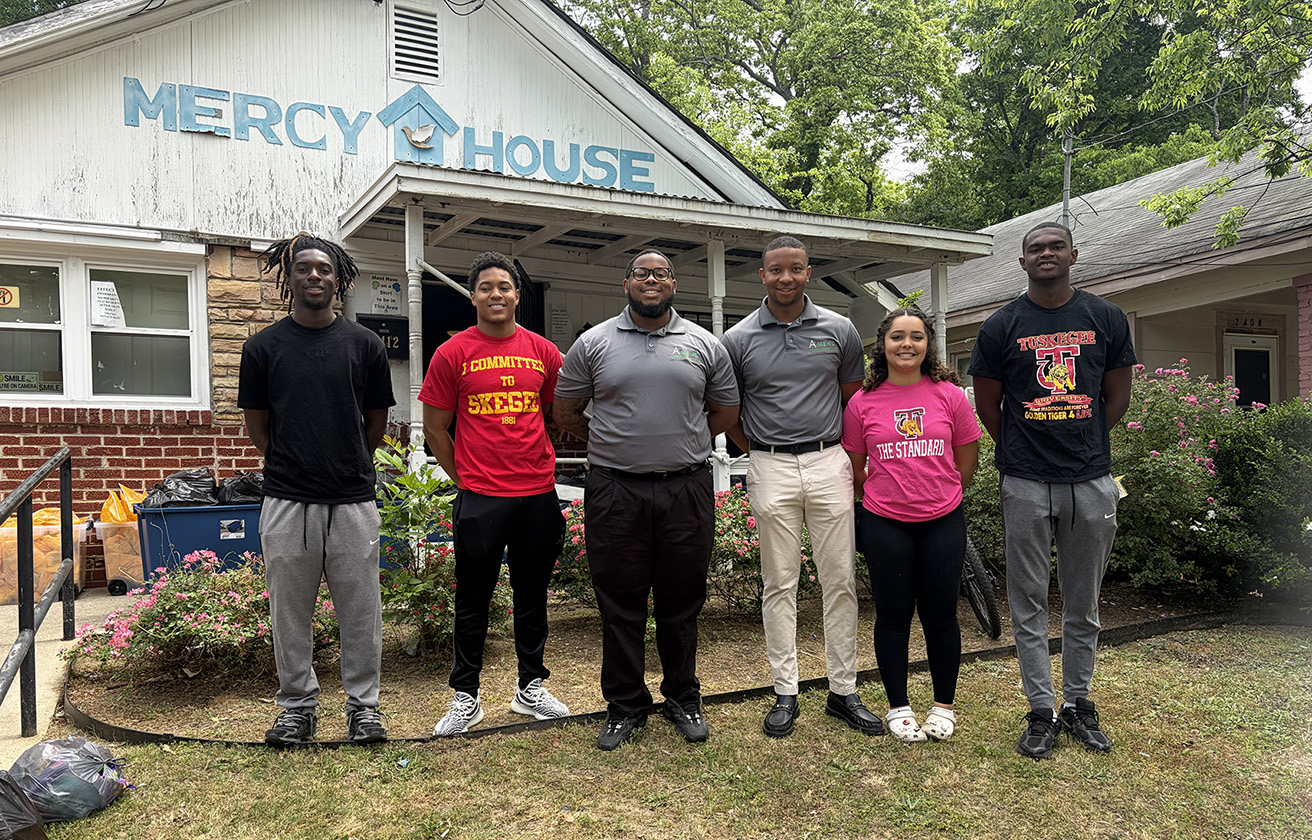
The group will stay focused on their strategic planning throughout the summer
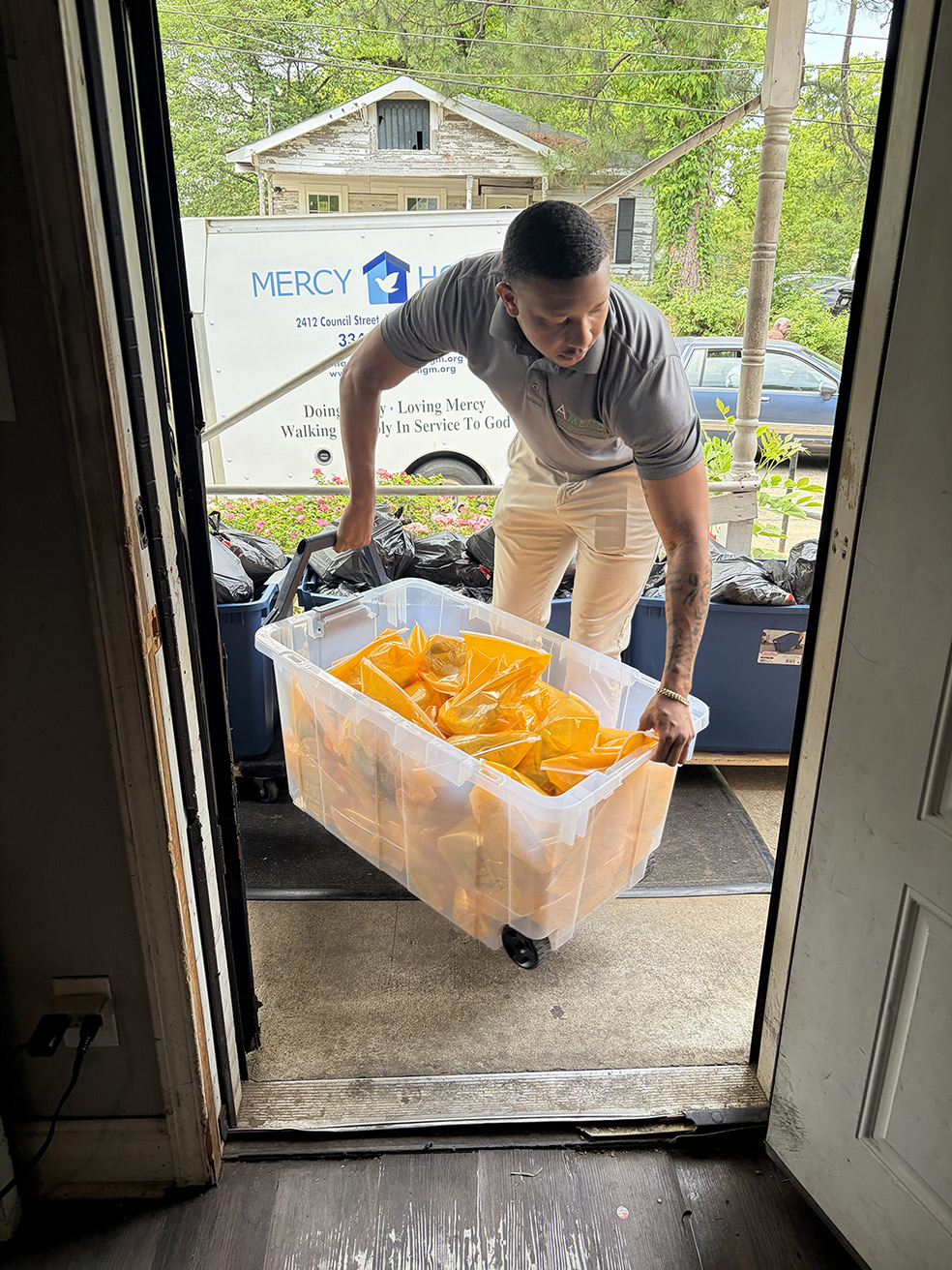
Wiping sweat from his brow, just back to campus from a road trip to Montgomery to pack lunches and meals at a food pantry with other members of Tuskegee’s chapter of African American Male Education Network & Development (A²MEND), chapter president Richard Scott was clear about why service projects are a demonstration of leadership and an integral part of the A²MEND experience – and Tuskegee’s Renaissance Era.
“It was a privilege to serve today,” said Richard, a sophomore Psychology major from Largo, Maryland. “Because I know it is a luxury of time and opportunity to be able to do so.”
In his view, volunteerism should be seen as a fundamental responsibility – but also something more than altruism because it is an opportunity to be strategic, identifying specific gaps and narrowing focus to fill them, lifting people up for long-term, sustainable success. This focus on effecting change – on doing – is driving why A²MEND is growing so quickly on campus (the only chapter on an HBCU campus) with a membership of 70.
Richard pointed out that the A²MEND volunteers were doing two things at one time – direct impact with the meals for people who may go hungry without them, but also expanding capacity for the small but mighty organization Mercy House. Well-known in the community as a comprehensive resource hub, it has grown from a day shelter for the unhoused, to providing GED and financial literacy classes, barber services, and food pantry.
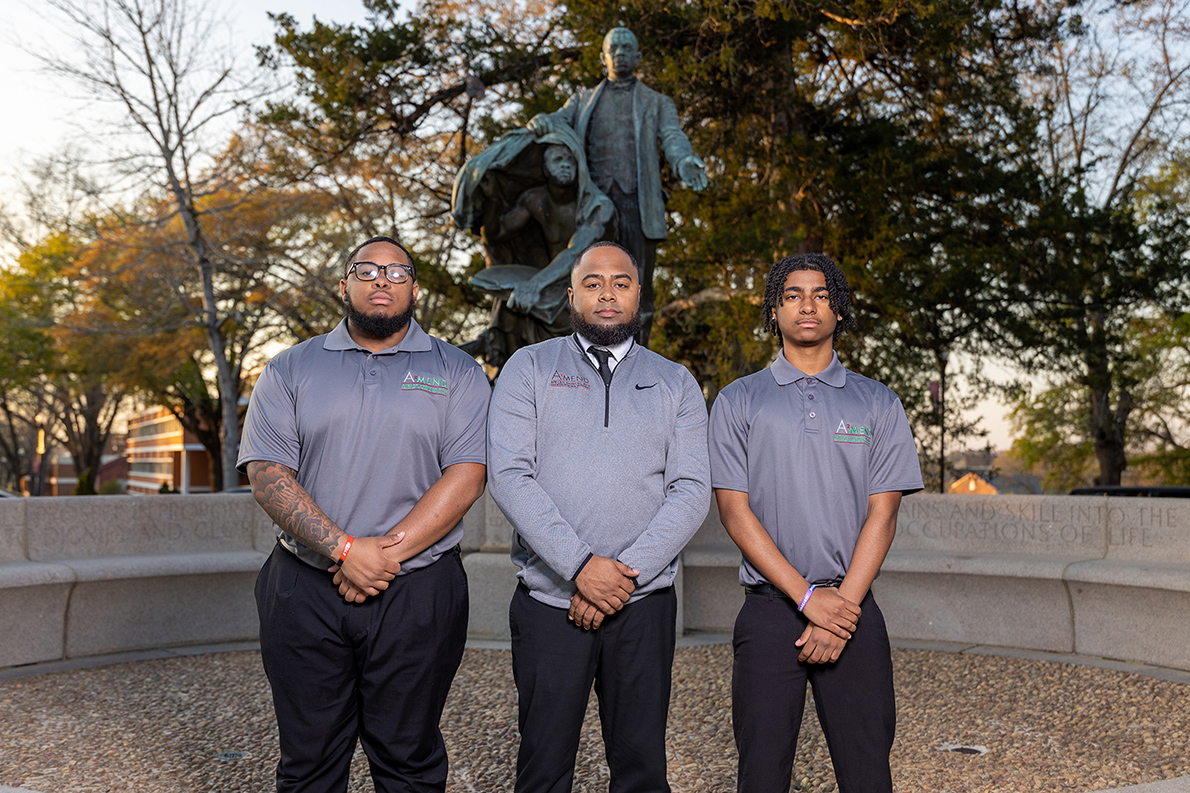
Soon after the Mercy House event, A²MEND participated in the Kings in the Making event in conjunction with Tuskegee’s chapter of Page by Page, a national literacy initiative, to read to young Black boys at D.C. Wolfe Elementary School in Shorter, Alabama. A²MEND members served as living examples for the students “because we recognize that young kings must see themselves as such,” said Richard.
Members also recently participated in the kick-off of the new ongoing effort to clean up and help restore public spaces in the city of Tuskegee, called Roots 2 Restoration. Members look forward to contributing measurable impact in alignment with Tuskegee University’s commitment to deepen the town and gown relationship between the university and its neighbors.
“A²MEND is capturing the true spirit of the Renaissance Era in the ways they are addressing complex problems, especially those specific to young Black men, but also from an inclusive mindset that positions their members as leaders, allies and champions of the entire community,” said Dr. Mark A. Brown. “These young men understand what it means that ‘we are the help we need, and we are enough’ and they have been consistent in their fresh thinking about what leadership looks like, just as our founders decided that building Tuskegee would require a combination of new ideas, investment and a willingness to be bold.”
Dallas Scott (not related to Richard), a freshman Chemistry major from Oakland, California serves as vice president of A²MEND, another example of how the group sets itself apart – even as freshmen. Leaders are being identified and put to work. Of the 13 leadership roles in the chapter, 10 are freshmen or transfers. The organization welcomes all like-minded newcomers.
Dallas added that it is the wide range of shared experiences of being Black and male that give A²MEND members the ability to support one another – there is built-in and authentic empathy but also the unapologetic power to say no to excuses.
“We understand the demands of growing up quickly, being perceived as adults before we are, and when critical thinking and emotional maturity are not taught,” he said. “A²MEND can be a factor in addressing that – supporting our brothers but also checking them, holding them accountable for their actions.”
Dallas also shared that what drew him to the organization is that A²MEND makes it clear that membership does not exclude any other collegial relationships young men might
aspire to, like fraternities, student government roles, or athletics.
“This isn’t an either/or situation,” Dallas said. “A²MEND is doing a great job of addressing our desire to excel in every capacity, in all spaces we step into.”
Both students agreed A²MEND’s focus on building the character and capabilities of its members is mission-critical, particularly as it relates to topics at the forefront of their experiences now: naming and navigating struggles with mental health, choosing a college education over other options, and defining Black excellence on their own terms.
Another way A²MEND defines itself is with a signature handshake. The students greet each other eye to eye with heads held high to give two daps with a hand, then two peace signs to their chests – what might be seen as a powerful reflection of Booker T. Washington’s “head, hand and heart” philosophy that focused on building a whole, healthy person imbued with dignity and purpose.
The group also spends time together in what is known as “the King Circle” where members speak openly in a safe space about the journeys as Black men. The idea was the brainchild of the Wellness Chair of the group whose name, as it happens, is King Johnson.
“Nationally, we are also confronting rising mental health challenges among college-aged Black men,including increasing rates of depression and suicide often compounded by stigma, isolation, and limited representation,” said Dr. Kellei Samuels, Chief of Staff and the co-advisor to A²MEND along with Rev. Dr. Cecil A. Duffie, Dean of the University Chapel. “This reality calls for courageous conversations, consistent mentorship, and environments that normalize both excellence and vulnerability.”
Research continues to affirm that Black male students who engage in structured mentorship and support systems are:
- 20–30% more likely to persist and graduate
- More likely to report a strong sense of belonging
- More likely to achieve higher academic performance
“Tuskegee has long been known as a nurturing ‘mother.’ In this moment, we must also be a father, providing not only care, but structure, discipline, accountability, and visible models of manhood that our students can both relate to and aspire to be,” said Dr. Samuels.
Earlier this year, Richard and Dallas were among the Tuskegee team who joined thousands of higher education administrators, corporate leaders, workforce development experts and students at the 19th Annual A²MEND Summit– as the organization continues to cultivate black male success on college campuses and strengthen healthy support systems for them in the community.
In his keynote address at the conference, the largest gathering in the nation focused on Black male student success, Dr. Brown commended the organization for, as Richard described it, being “doers.”
“A²MEND is not admiring the problem,” said Dr. Brown. “These dedicated leaders are addressing the multi-layered root causes head-on and moving beyond statistics to drive strategy,” said Dr. Brown. Since its founding in 2006, A²MEND has mentored hundreds of young men, awarded over a million dollars in scholarships, and built dozens of student charters across the country.
“Much the same way our founding principal, Booker T. Washington asserted that investing in Tuskegee education gave Black people practical skills and built self-reliance, which in turn built economic advancement and, ultimately the peace and power of true community support, I know that young Black men can find that at Tuskegee University today.”
“We will be continuing to meet throughout the summer via Zoom,” said Richard. “We aren’t stopping. We have so much more in common than meets the eye. We protect each other and speak our brothers’ names in rooms they are not in. This is a brotherhood and a family.”
Tuskegee students interested in joining A²MEND are encouraged to reach out to Students First Academic Advisor Da’ Monik Millan at dmillan@tuskegee.edu.
© 2026 Tuskegee University


