

At the age of 16, Dr. Suban Nur Cooley performed her first poem at a Somali cultural festival in Australia. It was her first public foray into the poetry world, marking the beginnings of an illustrative career that would lead to her appointment as the Greater Lansing area’s poet laureate for the 2026-2028 term in April.
Born in Geneva, Switzerland, Nur Cooley lived in Kenya as a child before spending a year in Somalia, her ancestral home. Before the age of 10, Nur Cooley’s family would move to Australia, where she remained until she finished her undergraduate degree. The new poet laureate moved to Lansing after marrying her husband, a local, whom she met in the United States.
Throughout it all, Nur Cooley was always curious and always reading, a trait she says comes from her father. She began to write following the strong encouragement of an English teacher, Mrs. Kensington, while in school.
This culminated in Nur Cooley earning her doctorate in Rhetoric and Writing from Michigan State University in 2020, later becoming an assistant professor in MSU’s Department of African American and African Studies.
Much of Nur Cooley’s work has focused on the art of poetry in Black communities, a recurring theme in many of her classes, including Creative Expression as Craft: Black Poetics. When teaching a class on Black Ecologies, she made poetry part of the curriculum. She believes that, when learning about the environment and the systems of power associated with it, poems can help create understanding.
“I think that that’s what is really powerful, especially for multiple marginalized communities, about poetry — it’s not about what you experience alone,” Nur Cooley said. “Maybe there’s something that’s misunderstood about your community and you have the power of storytelling to share that, so people can see that we’re really not that different.”
In what she considers to be a society that centers individualism, Nur Cooley said people have a responsibility to understand how the world impacts everyone and not just oneself. Part of this can be linked to her globetrotting background, which has led Nur Cooley to fuel her creativity by chasing new experiences and adventures in pursuit of turning her Notes app drafts into Google Docs masterpieces.
“You get in patterns and you stop noticing life,” Nur Cooley said. “I love the experience of removing yourself from the environments that you know. Even going a different way to work, driving down different roads. I really appreciate finding newness in the normal.”
Poetry allows for the same exploration within the written world through its focus on imagery, she said. Nur Cooley pointed to poets Nikky Finney and Danez Smith as examples of utilizing imagery in their poems to help strengthen their message.
“It’s really about expanding your mind to believe in the possibilities of writing,” Nur Cooley said. “In dreaming up these possible futures so that they become realities, changing and shaping how people see the world so that better realities are possible. These tools, all the combination of the storytelling, the imagination, the press — the more we can think beyond, the better capacity we have of building better worlds.”
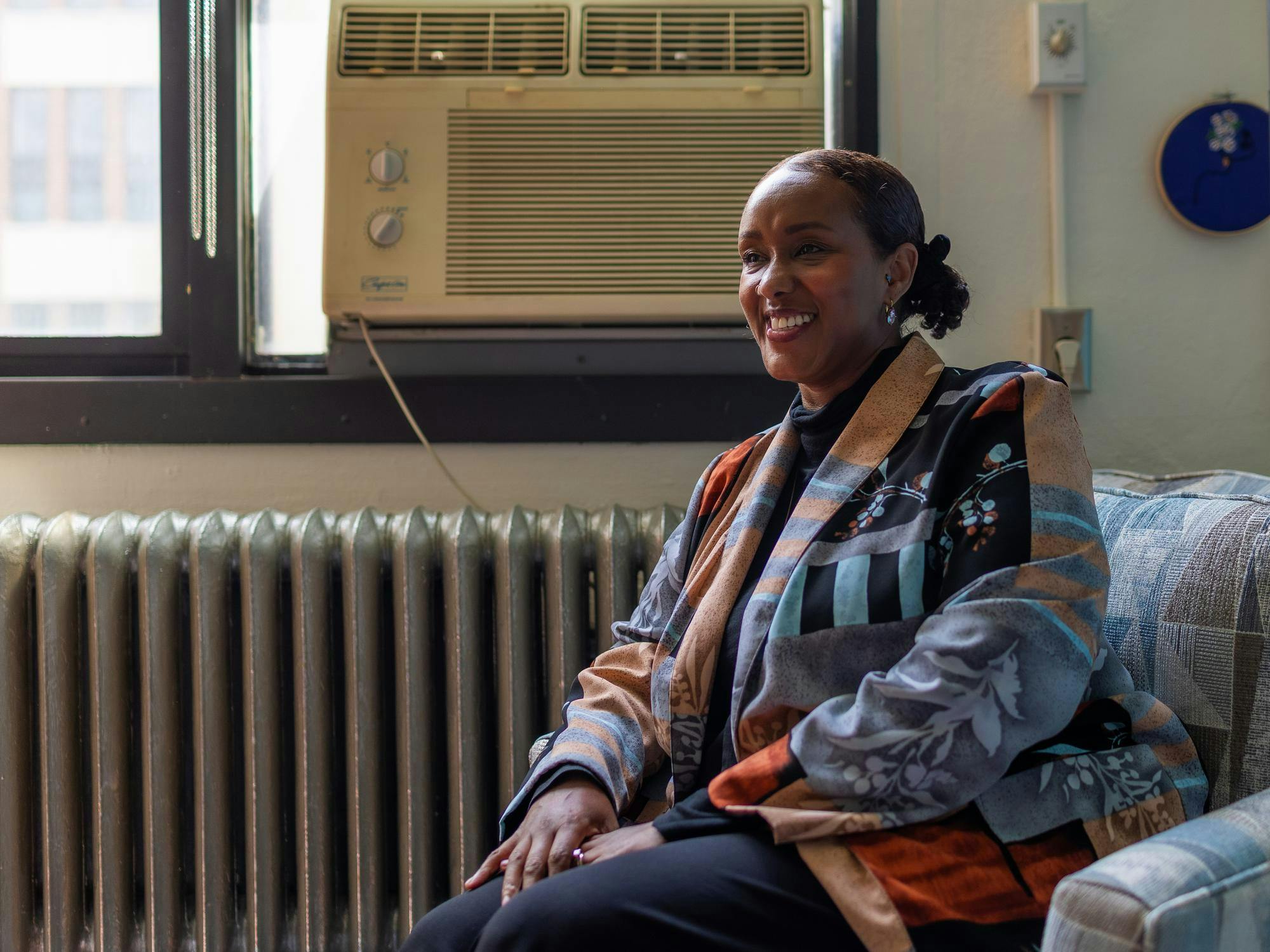
While a woman of many experiences, the poet laureate is also a woman of many mediums. Nur Cooley serves as a board member for the All of the Above Hip Hop Academy in Lansing, to support other prominent art forms within the community. Poetry, prose, short stories, essays, academic books and technical writing are some of the forms that have shaped Nur Cooley’s life.
For her, writing has always been a community-based endeavor. It’s something that is meant to be shared and serves as proof that you are less alone in the world, Nur Cooley said.
It’s how she makes sense of the world. “Thoughts are there for critical thinking, but writing gives me the space, time and energy to really flesh out what it is (that) I think or feel or know about the world.”
Outside of creative writing, Nur Cooley also spent time as a journalist. Writing as a journalist was a “learned practice” with a “specific outcome,” a far cry from poetry, which Nur Cooley says “feels the freest.”
“Poetry doesn’t have to explain itself, it can be what you want it to be,” Nur Cooley said. “There’s some power in taking from it what you need, it feels like care between the writer and the audience.”
Because she considers poetry her “safe space,” Nur Cooley typically shares her other forms of writing with the world, such as essays or articles. Her performance in Australia, however, changed things.
The experience was “validating” and “powerful,” so Nur Cooley felt emboldened to keep sharing her poetry.
“I think my favorite is when I’m done reading poetry, and people come up to me afterwards and share either a story or feeling or thank me and thank me for seeing something that they also have seen,” Nur Cooley said. “I love the private shared moments where someone will just say, ‘I really appreciate your words or what you shared up there.’”
Nur Cooley describes her affinity towards poetry as “meant to be.” Of Somali ancestry, the nation of poets, she says “it’s in the bloodline.”
Support student media!
Please consider donating to The State News and help fund the future of journalism.
“It feels like it’s in my ancestry to think about poetry and write poetry, so I’m grateful that I have the passion for it,” Nur Cooley said. “We have some really famous poets in our history and even culturally. Thinking like a Somali also really helps me to be poetic because of the way our language is structured, it just gets you thinking differently.”
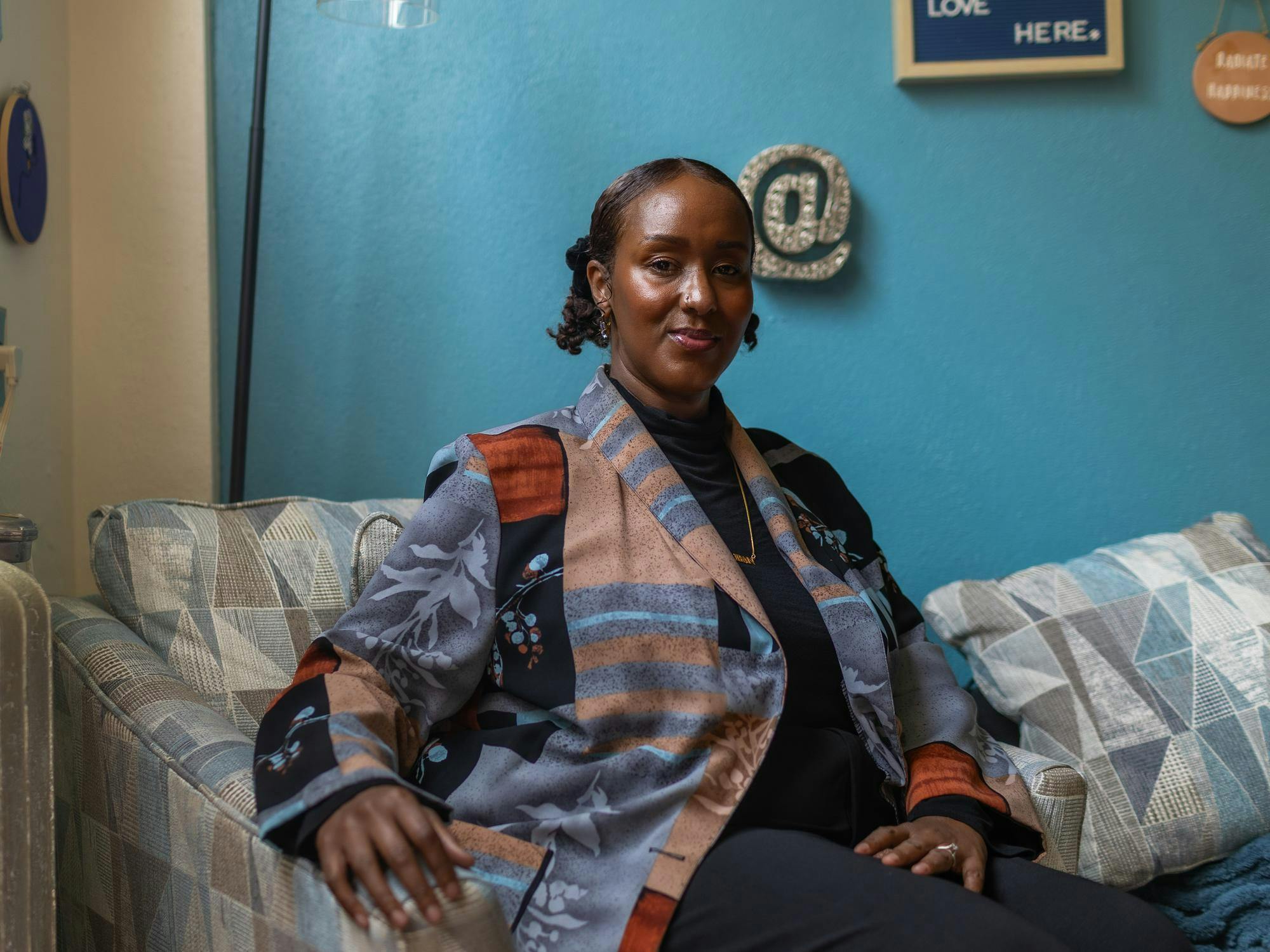
Nur Cooley became the first Somali Greater Lansing area poet laureate on April 7, when the baton was handed off by 2024-2026 poet laureate Ruelaine Stokes at the “Passing of the Laurel” event at The Robin Theatre. Being recognized by her peers was a “beautiful” experience and an “outpouring of love.”
Stokes and Nur Cooley also share more than just the poet laureate title and were once neighbors, living on the same block as 2017-2019 poet laureate Dennis Hinrichsen.
In her new role, Nur Cooley is excited to start workshops to “energize the local community” by getting them interested in poetry and its connection to the greater world.
Her program, titled “Poetry in Motion,” aims to spark participants’ enthusiasm with both art and their surroundings through planned excursions into the Greater Lansing area. Nur Cooley is a big believer in drawing inspiration from the outside world, so she finds that submersing herself and the community in nature is the perfect way to get her audience into poetry.
Scenic walks alongside Lake Lansing, hiking through Burchfield trail and downtown strolls through REO Town and Old Town are a few of the trips Nur Cooley currently has planned. While the writing might come after these adventures, the poetry begins with them.
“Nature in itself can teach us a lot,” Nur Cooley said. “There’s peace, there’s quiet, things grow after dying; nature sends us a lot of messages. I think the more time we spend out there, the more connected we feel to ourselves and to each other.”
A central element to Nur Cooley’s tenure as poet laureate is empathy. Her hope is to help people understand each other, connect, and in doing so, foster a better world.
“The more time and energy people place into knowing more about one another, the better the world will be,” Nur Cooley said. “If my writing can help someone feel less alone, feel more connected, and engaged or cared for, I feel like it’s a win.”
Discussion
Share and discuss “As Lansing’s new poet laureate, MSU professor says poetry is a path to discovery” on social media.


