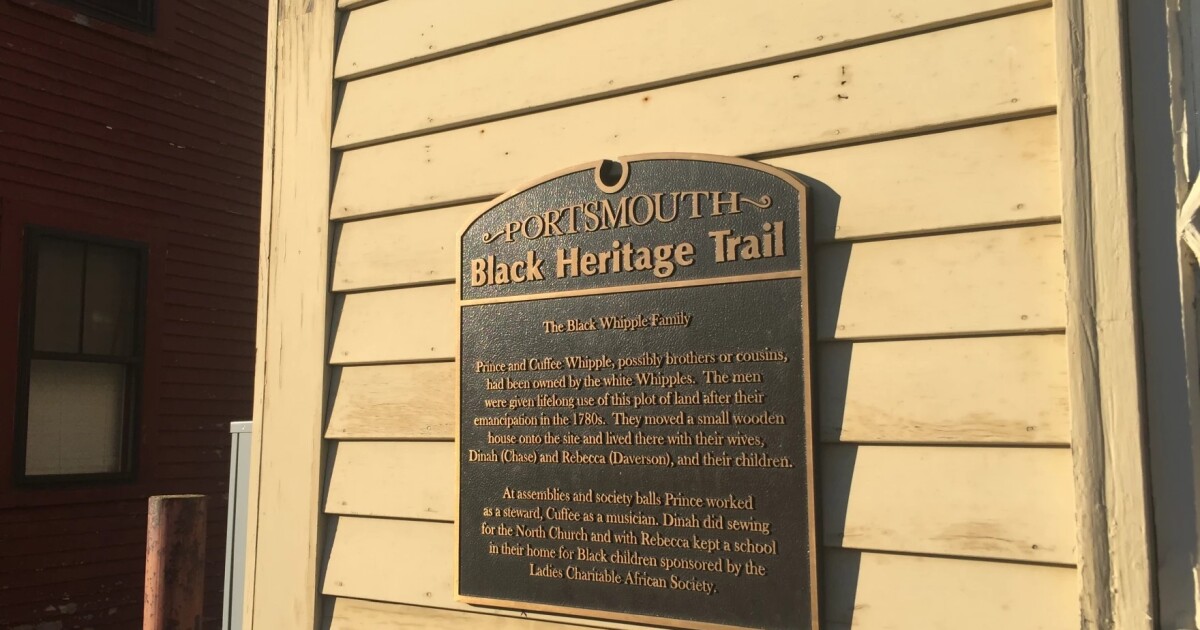
As New Hampshire gears up to celebrate the 250th anniversary of the signing of the Declaration of Independence, the Black Heritage Trail of New Hampshire is hosting a series of events to highlight the role of Black people in American history this month.
“We want to show that Black people have been here, we still are here, and our history is American history,” said Dariya Steele, who is helping organize several of these events.
The first event is a freedom walk and drumming circle in Portsmouth on June 19 to mark Juneteenth.
Upcoming 250th events from Black Heritage Trail of NH
Juneteenth Freedom Walk
Friday, June 19 @ 9:00 AM | Community Walk | John Paul Jones Memorial Park, Portsmouth
The healing rhythm of the drums
Friday, June 19 @ 10:00 AM | African Drumming | African Burying Ground, Portsmouth
Meet New Hampshire’s 5 to know
Sunday, June 21 @ 11:00 AM | Living History Interpretation, M&T Bank Parking Lot, 325 State St., Portsmouth
What to the slave is your Fourth of July: Frederick Douglass readings
Saturday, June 27 @ 12:00 PM | Statewide | Free
Acton Minutemen Musket Salute
Sunday, June 28 | 10:00 AM | Langdon Park | Portsmouth | Free
Guided Bus Tour: Reclaiming History, Declaring Dignity
Sunday, June 28 | 10:00 AM – 3:00 PM | Cost $55 per person
Interactive Living History & Exhibit
Sunday, June 28 | 1:00 PM | American Independence Center | Exeter | Free
The Heritage Trail is also hosting living history exhibits with reenactors from New Hampshire’s Black history, including Ona Judge, who was enslaved by Martha Washington, and Prince Whipple, a Revolutionary War veteran. Prince Whipple was enslaved by William Whipple, a New Hampshire delegate to the Continental Congress and a signer of the Declaration of Independence, and served with William Whipple in the Revolutionary War.
Prince Whipple is best known for signing a 1779 petition for freedom presented to the early New Hampshire government, which was dismissed.
“When we’re taught about the Revolutionary War, it often takes away from the Black soldiers who were fighting for liberty and freedom for this country while also being denied their own — but they fought for it anyways,” Steele said. “It’s such a big part of New Hampshire’s history that we really wanted to shed some light on it going into the 250th.”
About 20 communities across the state are hosting simultaneous readings of “What to the slave is your Fourth of July?,” a historic speech delivered by Frederick Douglass in 1852.