

PHILADELPHIA—As America marches toward its 250th anniversary, the nation prepares fireworks, parades, and patriotic spectacles. But in Black Philadelphia—the city of Richard Allen, Octavius Catto, Cecil B. Moore, and MOVE—the mood is far more complex. This milestone is not simply a birthday. It is a mirror. And what that mirror reveals depends entirely on who is allowed to stand in front of it.
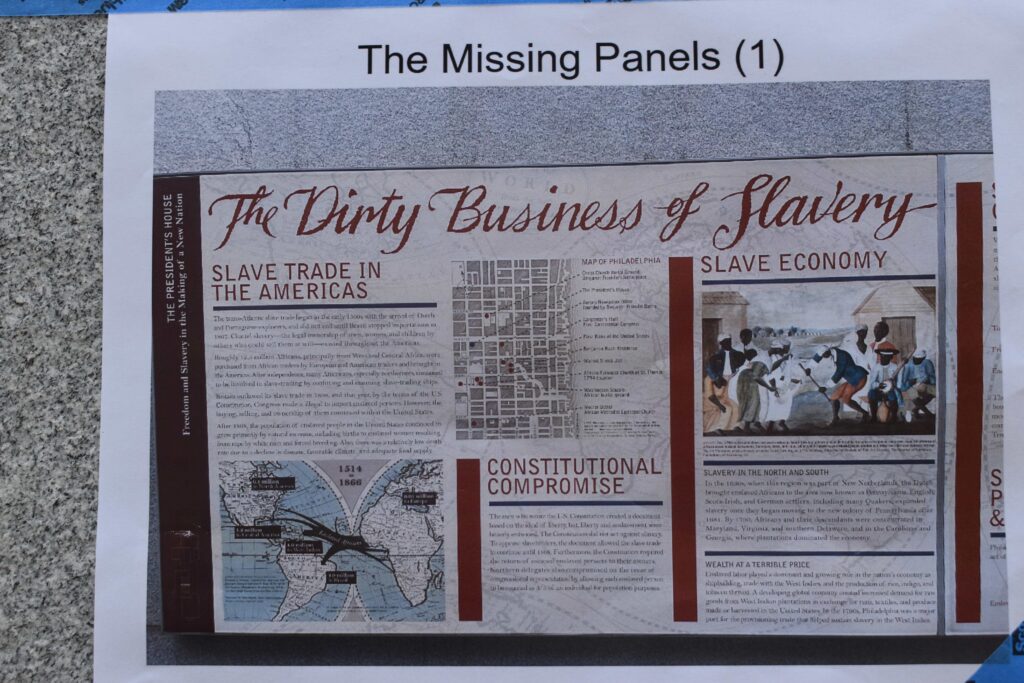
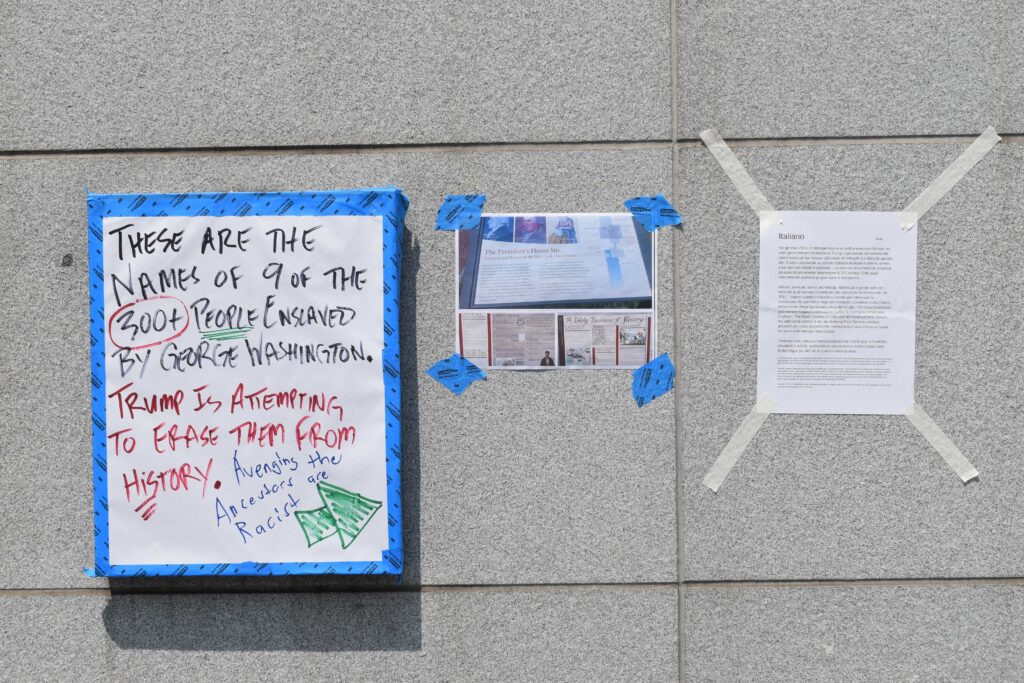
Nowhere is this tension more visible than at the President’s House site on Independence Mall, where the recent removal of images depicting enslaved Black Africans—including President George Washington’s enslaved chef Hercules and the young freedom seeker Ona Judge—has ignited outrage.
And on June 18, a federal court intensified that outrage when it ruled that the administration is within its rights to remove and replace the slavery exhibits at the site.
The ruling landed just weeks before July 4th celebrations marking the Semiquincentennial—a moment when Philadelphia expects millions of visitors seeking the story of America’s founding. Instead, many Black Philadelphians see a story being rewritten in real time.
—
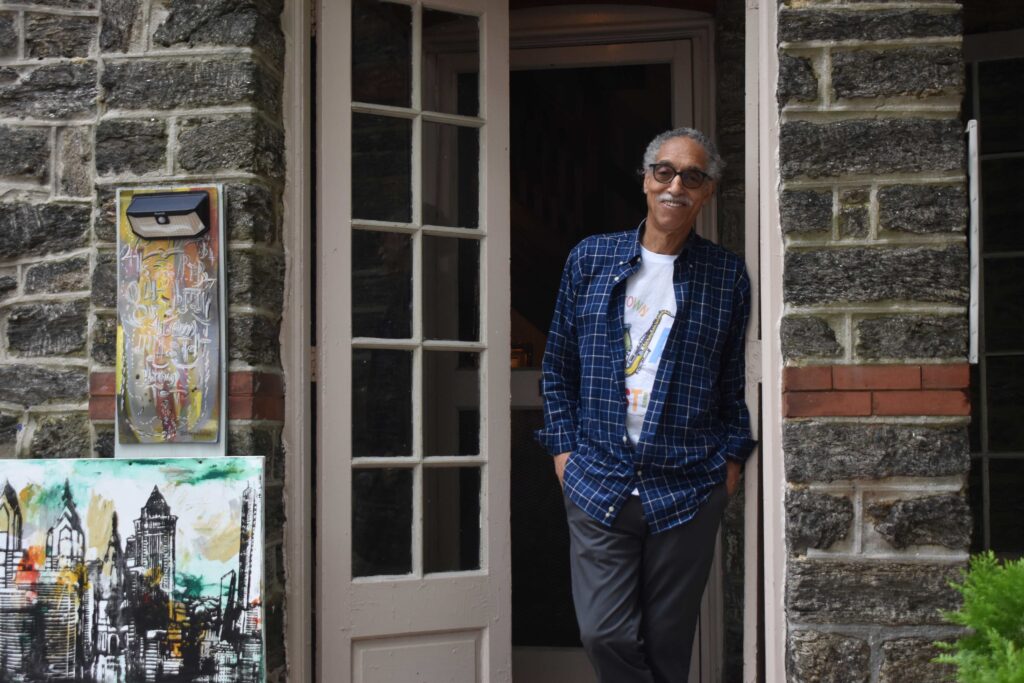
“It’s something to celebrate the fact that we’ve come this far,” said Diane James, a former social worker from North Philadelphia, “but in terms of doing things for the people who helped build the country, I don’t think we’ve come far enough.”
Her words echo across the city like a drumbeat.
Ms. James remembers visiting the President’s House years ago and seeing the attempt—however limited—to acknowledge the enslaved Black people who lived and labored in Washington’s household. Seeing those images removed in the lead up to the 250th anniversary struck her as painfully symbolic.
“They cherry-pick the people they want you to see,” she said. “It was always Booker T. Washington, Frederick Douglass, Thurgood Marshall—a few people. But not all the people who made the inventions that made this country move forward. They didn’t get mentioned at all.”
The court’s ruling only deepened that sense of erasure.
The Avenging the Ancestors Coalition (ATAC)—the group that fought for the original exhibit in the early 2000s—expressed disappointment but vowed to continue the legal battle. Attorney Michael Coard, who heads the coalition, posted that “this definitely is not the end of the fight.”
Philadelphia City Council President Kenyatta Johnson issued a sharply worded statement, calling the decision “deeply disappointing,” especially during the Juneteenth holiday.
“The President’s House site represents a critical chapter in our nation’s history,” he said. “African American history is American history. … We must not retreat from telling the complete story of who we are as a nation.”
The question hangs in the air: How can America celebrate 250 years of independence while erasing the people it kept unfree and in bondage?
Nation of Islam Delaware Valley Region Student Minister Rodney Muhammad is based in Philadelphia at Mosque No. 12. He is a student of the Most Honorable Elijah Muhammad, Eternal Leader of the Nation of Islam, under the leadership of the Honorable Minister Louis Farrakhan.
“Too much has happened in the country that Black people have not shared in for collective celebration,” he told The Final Call, noting that some are now questioning whether to sit out the holiday. He pointed to Frederick Douglass’s famous message on what the Fourth of July means for Black Americans, called, “What to the slave is the Fourth of July?”
“After 250 years, America has the entire human family within her borders,” Student Min. Rodney observed, but he argued that while many who came to the country have advanced, “Black people who were here at her inception have yet to collectively advance” and enjoy fundamental rights and opportunities. “If anyone should be involved in deep reflection, it should be Black people,” he said.
He cited the recent court decision ordering the removal of the monument to the nation’s past enslavement of Black people, days before the Fourth of July, as evidence of a reluctance “to tell the truth about her history.”
For Brother John Muhammad, a registered member of the Nation of Islam at Mosque No. 35 in Wilmington, Delaware, located 40 miles from Philadelphia—America’s 250th anniversary is not a party—it is a spiritual checkpoint.
“Although America’s celebrating their 250th anniversary,” he said, “for me … that date means a lot because Master Fard Muhammad declared our independence on that day.”
Master Fard Muhammad, The Great Mahdi, Founder of the Nation of Islam and Teacher of the Most Honorable Elijah Muhammad, the Eternal Leader of the Nation of Islam, declared independence for the Black man and woman of America.
“Now, the history of the 4th of July shows that it is the Independence Day of the American White man. They wrote the Declaration of Independence for themselves.
The White man did not put anything in the Declaration of Independence for the benefit of the Black Man, who was the servitude-slave of the White man, at that time,” the Most Honorable Elijah Muhammad wrote on page 68 of His book, “The Fall of America.”
Brother John Muhammad echoes that clarity. “I think it is something for White America to celebrate. The Founding Fathers meant well, but at the root of their founding was the disrespect of darker peoples of the world.”
For Black people, he said, the moment of the country’s 250 years demands reflection, not revelry. “It’s something we should reflect on and have conversations about our role in America as the chosen people of God,” he said.
While the federal government struggles with how—or whether—to include Black stories in the national narrative of commemoration and celebration, Black institutions in Philadelphia are stepping into the void.
At the October Gallery in Germantown, the “Black Philadelphia 250” project is doing what the President’s House failed to do: tell the truth boldly.
Now in its 41st year, the gallery has unveiled a sweeping visual tribute to Black Philadelphians who shaped the city and the nation. The centerpiece is a poster pairing historical ancestors with modern figures, surrounded by portraits of icons like Richard Allen, Rev. Leon Sullivan, Cecil B. Moore, and Dr. Rebecca Cole. Gallery representative Mercer Redcross describes the exhibit as “a celebration, a protest, a remembrance, and a reckoning.”
“I don’t see how you can pull one out,” he said. “Celebration, struggle, and resilience have defined the Black American experience from the beginning.”
On the gallery’s third floor, the “Instagram” wall features 21 portraits—from former President Barack Obama to late U.S. Congressman John Lewis—that many young visitors cannot identify. For Mr. Redcross, that gap is the very reason the exhibit exists.
“Transform, then transact,” he said. “Education first. Always.”
Across Philadelphia—where the Founding Fathers drafted and signed both the Declaration of Independence and the U.S. Constitution—Black residents are wrestling with the meaning of this anniversary.
Duridra Buren, a state worker and artist, sees the milestone as both a challenge and an opportunity. “You can’t tell that story without us,” she said. “We built this country whether we wanted to or not. You didn’t allow us to be anything but underneath your feet.”
She refuses to let the moment pass without joy—but insists joy must be paired with truth.
“I am going to celebrate, but as I celebrate, I am also going to educate,” she said.
Renee Dupre, a financial services professional, sees the anniversary as a chance for visibility.
“Finally, our voice will be heard,” she said. “We are Americans and we should be proud. This is our home.” But she is clear eyed about the nation’s unfinished business. “They owe us to be equal. We are not equal.”
Jeff Hart, a former radio host and television producer, warns against patriotic amnesia. “This should be an educational campaign,” he said. “Not a glossing over of the heartaches that brought us here,” he said.
Mercer Redcross pointed The Final Call toward the manifesto hanging on the gallery wall in the second-floor room designated “The room of Philadelphia Black Genius”—a declaration that reads less like an exhibit label and more like marching orders for a people who refuse to be erased.
It begins with a simple, unflinching truth: A Black centered commemoration cannot be built on myth. It must be built on memory—the memory of those who survived the Middle Passage, who labored without pay, who resisted in fields, churches, courtrooms, and streets.
The manifesto outlines the work ahead:
• Expose the gap between American ideals and Black reality;
• Honor the ancestors whose blood fertilized the soil of this nation;
• Challenge the country to confront the systems still rooted in slavery’s logic.
“This is not bitterness,” the text reads. “It is clarity.”
And, then comes the line that cuts through the patriotic noise of the Semiquincentennial like a blade: “A Black celebration is not a party—it is a statement.”
If America celebrates its independence, then Black America must celebrate its endurance.
Our commemoration, the manifesto insists, must highlight:
• The brilliance of Black survival against impossible odds;
• The creation of Black culture, institutions, and intellectual traditions;
• The ongoing fight for justice, dignity, and self-determination
Mr. Redcross concluded, “While America waves flags, we raise truth. And in a year when images of enslaved Africans are quietly removed from the President’s House— when the nation tries once again to tidy up its origin story for public display—that truth becomes not just a remembrance, but a responsibility.
Black Philadelphia is not waiting to be included in America’s 250th anniversary. It is declaring, with the force of history behind it, that there is no America without us. The question is not whether we will be written into the story. The question is whether the nation is finally ready to face the story we tell.”
In the book “The Fall of America,” in Chapter 17, titled “Independence,” the Honorable Elijah Muhammad writes, “Now what do we have to celebrate in the fact that the white man is enjoying freedom over us? In celebrating the White man’s independence, we make a fool out of ourselves. We cannot celebrate his day.”


