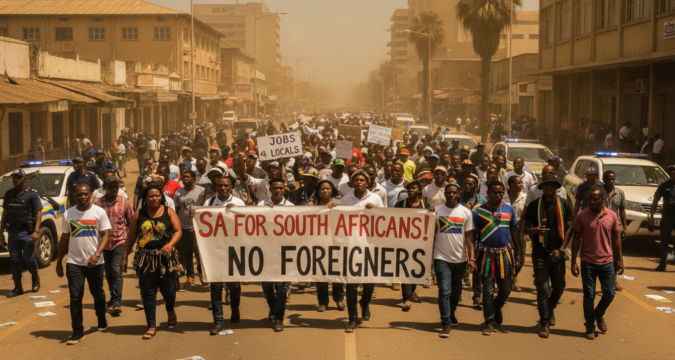
Pretoria, South Africa – South Africa is currently experiencing widespread demonstrations against undocumented immigrants, with tensions escalating as an unofficial deadline set by anti-immigrant groups passed on Tuesday, June 30, 2026. Thousands of foreign nationals, many from other African countries, have fled their homes and businesses in fear of escalating violence and threats. Law enforcement agencies remain on high alert, with police deployed to contain marches and address incidents of looting and violence.
The protests, which saw participants marching in various cities, were marked by clashes between demonstrators and police, and reports of attempted looting and vandalism. In some areas, police fired rubber bullets and deployed tactical vehicles to manage the situation. The South African government has condemned the actions of protest leaders who have incited violence, emphasizing that while the right to protest exists, it does not extend to intimidation, vandalism, or violence. President Cyril Ramaphosa has stated that “taking the law into one’s own hands is vigilantism.”
Despite assurances from organizers that marches would be peaceful, some demonstrations devolved into chaos, with individuals breaking windows and creating commotion. There have been reports of at least four fatalities and significant damage to property and businesses owned by foreign nationals in recent months leading up to these protests. The situation has created an atmosphere of “extreme fear” among immigrant communities, leading to widespread displacement.
The root causes of these anti-immigrant sentiments are often linked to socio-economic challenges within South Africa, including slow economic growth and high unemployment rates, which hover around one-third of the population. While South Africa remains Africa’s largest economy and a significant draw for migrants, the country’s immigrant population constitutes a relatively small percentage of the total. Authorities have highlighted that over 100 criminal cases have been opened against anti-foreigner vigilantes since March, underscoring the state’s commitment to ensuring peaceful demonstrations and maintaining public safety.
In parallel, the South African government is engaged in other national initiatives, including efforts to improve air quality and a campaign to plant ten million trees on Heritage Day as part of a broader one billion trees program. Furthermore, the country is making strides in public health, with the introduction of Lenacapavir marking a new era in HIV prevention, aiming to significantly reduce new infections and work towards ending AIDS as a public health threat by 2030. The government also recently announced changes to the National Executive, with President Ramaphosa wishing the incoming ministers and deputy ministers well in their roles.