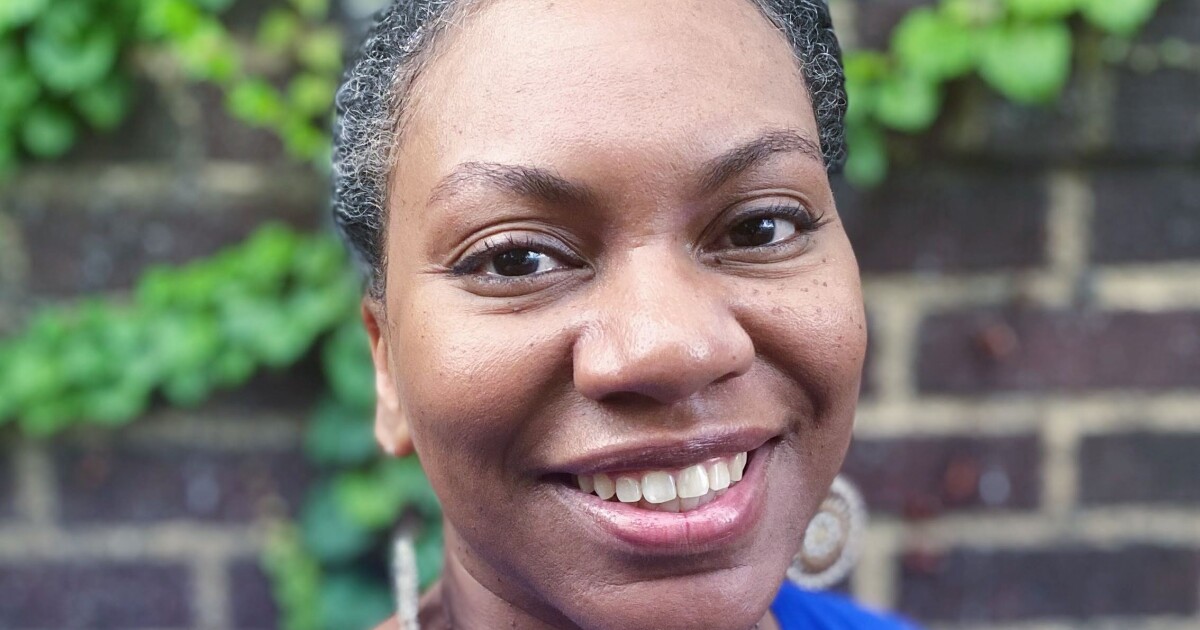
Last summer, Michelle Walker was watching the local 5 o’clock news in her St. Louis living room when a segment about a real estate opportunity caught her attention.
The anchor described a new housing community in the Ozark Mountains, an area Ms. Walker, 49, her husband and three children knew well from frequent vacations. Land could be purchased there, the anchor said, for about $1,000 an acre. Ms. Walker, a real estate broker, immediately recognized the price as significantly below market value.
The catch was that membership in this development was limited only to applicants who were white and heterosexual, because the land was part of a compound run by white nationalists looking to build a community for white Americans only.
Ms. Walker applied to join the community and was rejected. On Wednesday morning, she sued them for discrimination, citing civil rights laws dating back to 1866.
The community, Return to the Land, received an explosion of news coverage last summer after two of its founders went public about their plans for building a network of whites-only compounds across the United States. Their efforts are currently focused on a pilot community in Ravenden, Ark., where they’re building houses, a community center and farm pens on 160 sun-burnished acres. Jews, Black people, homosexuals and anyone with heritage that isn’t white and European are banned.
Galvanized by a federal government that has aggressively backed “reverse discrimination” legal cases, including against The New York Times, white nationalists are increasingly pushing the boundaries of the nation’s civil rights laws. Those boundaries include several landmark fair housing laws, which explicitly ban discrimination in real estate on the basis of race and religion.
But since its founding in September 2023, no legal challenge has been mounted against Return to the Land, allowing its founders to continue building and recruiting unhindered. Tim Griffin, the Arkansas attorney general, announced he had opened an investigation into potential legal violations by Return to the Land after reports on the community were published last summer, but has not made any announcements since. Nearly a year later, his communications director, Jeff LeMaster, said the investigation was ongoing but there are “no updates to share at this time.”
Ms. Walker’s lawsuit, filed Wednesday morning in Arkansas federal court, is the first civil case to allege discrimination by the group. She is being represented by Relman Colfax, a leading fair housing law group based in Washington, D.C., as well as Legal Aid of Arkansas and the NAACP Legal Defense Fund.
Her lawyers say that in addition to damages, they are seeking a court order from a judge that demands the group stop discriminating, and they believe the law supports their demand. The founders of Return to the Land have said they believe their community to be in compliance with the law because of a line in the Fair Housing Act of 1968 that allows private associations and religious groups to give preference to their own members when offering housing. It’s a rule, legal experts say, designed to allow groups like churches to offer a house for clergy on their property.
The founders of Return to the Land run a limited liability company that owns the land the compound stands on, as well as a membership association. Members who buy a share, currently priced around $6,600, are given three acres of land on which they can build a home. Since members are buying a stake in the L.L.C. and not directly buying the acreage, the organization says they aren’t breaking any laws. According to the complaint, however, that arrangement provides no shield from the law, because the value of the share “is tied to the value of the associated land, not the percentage of the L.L.C.” and the associated land is a member’s property.
Legal scholars have dismissed Return to the Land’s justifications, and Ms. Walker’s lawsuit cites violations of not just the Fair Housing Act, but the Civil Rights Acts of 1866 and 1871, which contain no such carve out for membership groups.
Reached by phone, Eric Orwoll, the community’s co-founder and its de facto spokesman, said he wasn’t surprised to hear the organization was being sued.
“It’s not something we hadn’t anticipated,” he said. “This is going to be a competition between our right to freely associate and then civil rights laws, which seem contradictory to our claims.”
He said he believed that the First Amendment and the right to freely associate would help Return to the Land prevail, and then declined to comment further, saying he wanted to first read the suit himself.
Ms. Walker considers herself white, but said she does not share the mind-set of the white nationalists living on Return to the Land. She is a practicing Christian with Jewish ancestry on her mother’s side, and her husband is Black. They have three biracial children. In 2021, she chaired the diversity committee of the National Association of Realtors, the powerful national trade group representing more than one million real estate agents.
According to her lawsuit, she applied for membership to clinch what she saw as a killer real estate deal and was rejected based on her ancestry and the race of her husband and children.
She wasn’t concerned that her politics might clash with the residents, or that her interracial marriage could cause a disturbance, she said, because she wasn’t planning to ever live on the land herself. She was hoping, she told The Times, to learn about how renting it out might work — but first she wanted to be approved.
“A good investment is a good investment,” Ms. Walker said, adding that she did not set out with the goal of mounting a legal challenge when she applied. “There was never a plan for my husband and children to go there. I’m bold but I’m not stupid.”
Last summer, there were about 40 members living in the Return to the Land community, many in makeshift cabins accessible by rough gravel roads. They haven’t publicized their numbers since.
Mr. Orwoll gave The Times a limited tour, showing off goat pens, a small children’s playground and an air-conditioned shed with fiber internet that serves as his office. During the tour, he pulled a copy of “Mein Kampf” from a bookshelf and turned it around to hide its spine so it wouldn’t be photographed.
In November 2025, Ms. Walker completed an application form on Return to the Land’s website, which included a questionnaire with several questions about her ethnicity, religion and political beliefs.
Other questions asked her views on gay marriage, the Covid vaccine and abortion. The questionnaire also asked her to indicate how often she thinks about the Roman Empire.
The Times reviewed screenshots of her application.
“I was stunned when I saw the questions on the application,” Ms. Walker said. “That’s when the radar really started going off. I didn’t expect them to be asking such openly fair-housing-related questions.”
She answered honestly, she said, explaining that she was a white Christian woman with Jewish relatives and a husband who had African and Irish ancestry.
“I was hoping I would be accepted. I see myself as a white woman,” she said. “I wanted that land.”
After completing her questionnaire, Ms. Walker said she was invited to do a video interview with a member of Return to the Land. She was instructed to download the app Telegram, and on the day of her interview, in December 2025, the video did not work. She nevertheless answered the interviewer’s questions, she said, which were similar to those in the initial application. According to the complaint, the interviewer also asked Ms. Walker “if she belonged to any other white nationalist organizations.”
When the interview was completed, since the video had not worked, she was asked to upload a video of herself and send it over Telegram, she told The Times. She complied. Mr. Orwoll told The Times last year that it’s important for the group to see what the applicant looks like.
“Seeing someone who doesn’t present as white might lead us to, among other things, not admit that person,” he said.
Ms. Walker filmed a five-second video while seated on her sofa, where she waved to the camera.
“This is Michelle Walker, we just had our interview,” she said in the video, which she shared with The Times. “Just wanted to say hello. Merry Christmas.”
Just over her shoulder, a photograph of her family, including her husband and her three children, was visible on the living room wall.
A month passed and Ms. Walker did not hear anything from Return to the Land. In January, she said, she reached out via Telegram to her interviewer to ask about the status of her application.
The interviewer, the complaint reads, “told Ms. Walker that she should not expect an approval.”