

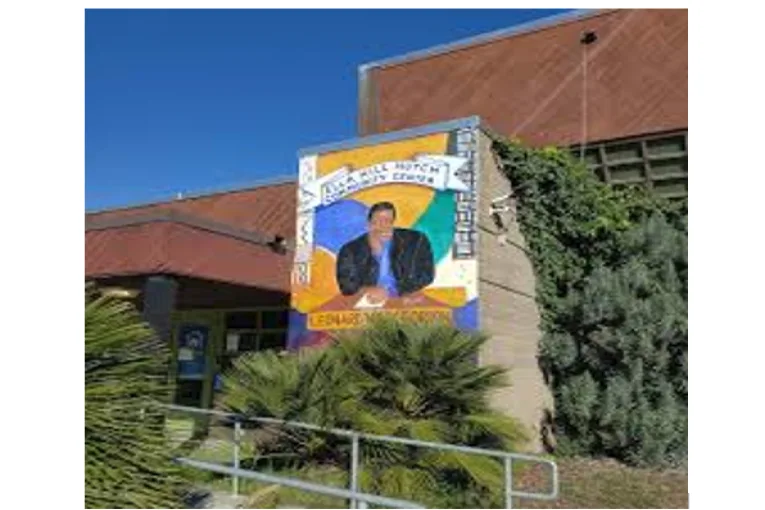
Ella Hill Hutch Community Center
“The questions raised deserve transparency. The children and families served by Ella Hill Hutch deserve continuity. And the Black community deserves a process that does not turn disagreement into destruction.”
By Malik Washington, Destination Freedom Media Group | The Davis Vanguard
There are some places in San Francisco that carry more than history.
They carry spirit.
The Ella Hill Hutch Community Center is one of those places.
Its walls hold the echoes of children laughing after school. Of elders telling stories about a Fillmore many young people now know only through photographs and memory. Of mothers searching for help. Of organizers gathering around folding tables trying to stop violence before another candlelight vigil became necessary. Of a Black San Francisco fighting — generation after generation — to remain visible in a city that too often treated our existence like an inconvenience to redevelopment.
Long before the current controversy, before the lease negotiations, before the accusations, before the headlines and political maneuvering, Ella Hill Hutch was simply what Black institutions at their best have always been:
A refuge.
A sanctuary.
A declaration that our children deserved somewhere sacred to belong.
That is why the public struggle over the future stewardship of Ella Hill Hutch has stirred emotions far deeper than a dispute over a building. This is not simply about contracts.
It is about memory. About trust. About displacement. About survival. About who gets to speak for Black San Francisco while Black San Francisco itself continues to shrink.
And perhaps most importantly, it is about whether a historically wounded community can disagree without destroying itself.
The San Francisco Chronicle recently reported that Mayor Daniel Lurie’s administration initially supported a temporary lease arrangement that would have allowed Booker T. Washington Community Service Center to oversee programming at Ella Hill Hutch after the collapse of Collective Impact amid the widening Dream Keeper scandal. Concerns were raised by respected community voices regarding transparency, process, and Booker T.’s proximity to figures connected to the broader investigation.
Those concerns deserve to be heard seriously.
At the same time, Chronicle reporting also noted that Booker T. Washington Community Service Center and Executive Director Shakirah Simley have not been accused of wrongdoing. Booker T. pointed to years of youth programming, clean audits, community service, and longstanding relationships throughout San Francisco.
Those facts matter too.
All of them.
Because truth requires completeness.
And then something important happened.
Rather than escalating conflict, Booker T. stepped back from pursuing the lease, publicly acknowledging the need for broader community engagement and a more deliberate public process regarding the future of Ella Hill Hutch.
In an era when public life increasingly rewards confrontation over wisdom, that restraint matters. Because Black unity has never required uniformity. Unity is not agreement. If agreement were required, Black people never would have survived America.
We survived slavery, segregation, redevelopment, redlining, mass incarceration, environmental racism, political betrayal, and displacement because our institutions gave us places to struggle with one another without abandoning one another.
That lesson matters now.
Especially in the Fillmore.
Because beneath every tense meeting, every social media argument, every newspaper article, and every whispered conversation about Ella Hill Hutch lives an older wound — the memory of a neighborhood repeatedly dismantled in the name of progress.
The Fillmore remembers.
It remembers jazz clubs disappearing.
It remembers homes bulldozed.
It remembers families scattered across Oakland, Antioch, Vallejo, Stockton, Sacramento, and beyond.
It remembers promises made in public and broken in private.
That history is still alive.
Which is why many longtime residents do not see Ella Hill Hutch as a building to be assigned through administrative process alone. Community advocates like Ericka Scott — a Fillmore native, business owner, and member of the Fillmore Community Action Plan Committee — have spoken passionately about the need for decisions regarding the center to emerge from genuine neighborhood participation rather than political urgency or top-down selection.
That perspective deserves respect.
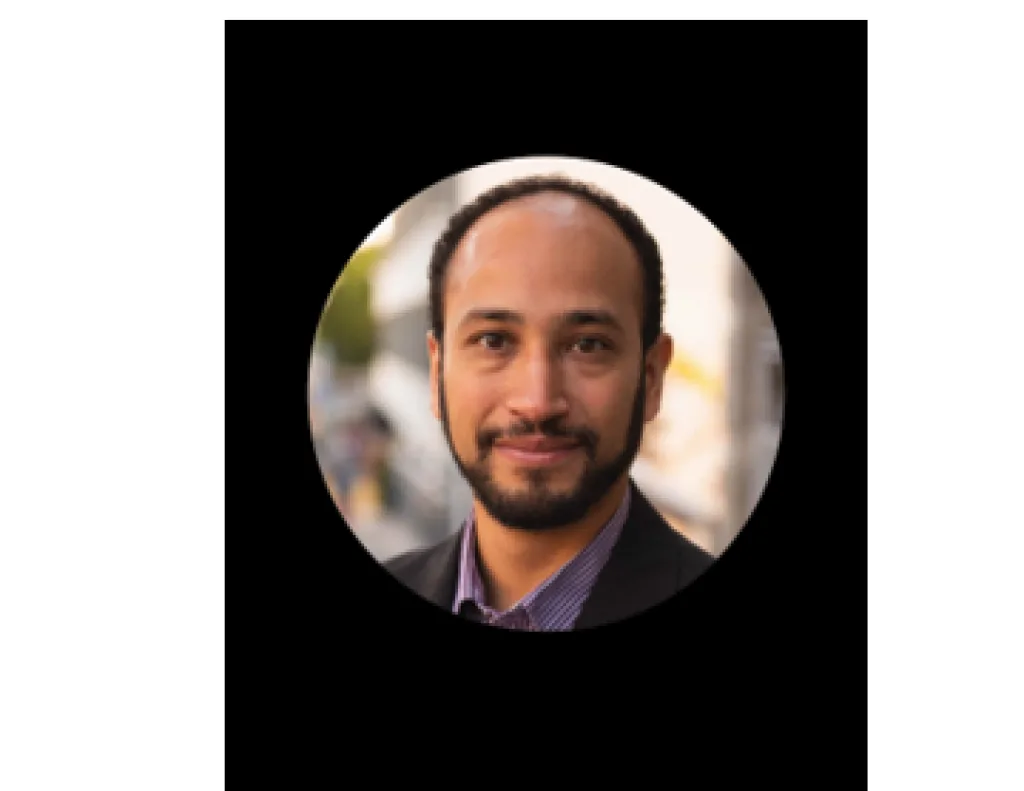
Attorney Julian Davis, a former president of the Booker T. Washington Community Service Center board and a longtime San Francisco attorney, told Destination Freedom Media Group that the deeper issue extends beyond any single organization or personality. In his view, the controversy surrounding Ella Hill Hutch exposed longstanding frustrations within the Fillmore about how decisions involving historic Black institutions are too often made without meaningfully centering the people most connected to them.
“We all want Ella Hill Hutch open as a place of refuge with continued programming this summer,” Davis told me during our interview. “The question many residents keep asking is: Why wasn’t there an open community process?”
Davis said community members had raised concerns weeks earlier about transparency, leadership structure, and the need for broader neighborhood participation in determining the future stewardship of the center. According to Davis, proposals were discussed that could have created a collaborative leadership framework involving Youth 1st founder Renard Monroe alongside existing institutional partners — an approach some residents believed could preserve continuity of services while also strengthening public trust.
“What people wanted was not chaos,” Davis said. “They wanted collaboration. They wanted a process where the voices of the neighborhood actually mattered.”
Because communities already carrying the trauma of displacement cannot afford to feel erased from decisions involving the few institutions they still recognize as their own.
But neither can the city afford to allow another sacred Black institution to drift into paralysis, vacancy, or collapse while adults argue and children wait. That is the tension at the center of this moment.
And perhaps that is why so many community members have increasingly rallied around another name now emerging from the neighborhood itself:
RENARD MONROE.
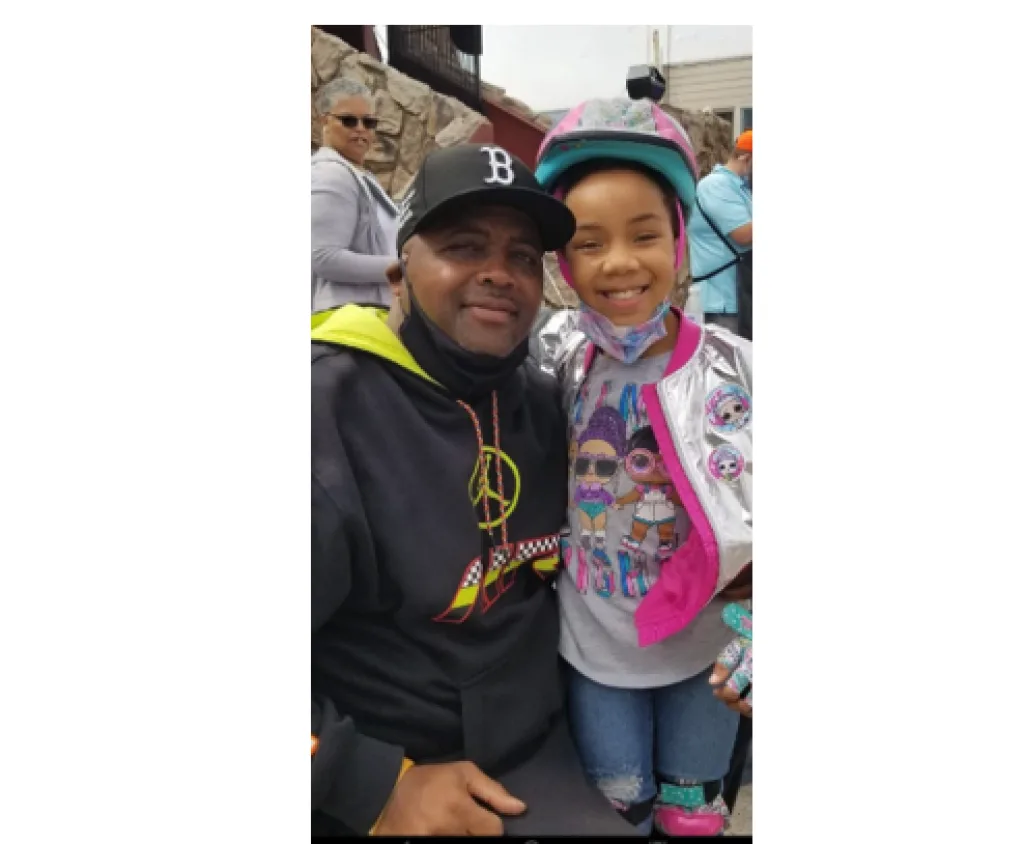
Not because he arrived with political fanfare. Not because City Hall selected him. Not because of headlines or influence. But because he showed up.
For months, residents say Monroe attended meetings, listened to families, engaged directly with the community, and earned trust through presence rather than appointment. In neighborhoods shaped by abandonment and broken promises, people notice the difference.
Monroe is the founder of Youth 1st, a San Francisco youth-serving program established in 1999 and rooted for decades in the OMI/Lakeview community. Operating out of Merced Heights Playground and connected to partnerships with schools, San Francisco State University, and the Department of Children, Youth and Their Families, Youth 1st has spent years providing after-school programming, mentoring, tutoring, sports, summer activities, food distribution, and youth support services.
During the pandemic, Youth 1st reportedly pivoted toward food delivery, virtual learning support, internet access assistance, and direct outreach to struggling families when many communities were isolated and overwhelmed.
That work matters.
Especially because Black communities in San Francisco have learned to recognize organizations that remain present after the cameras leave. And Monroe’s public posture throughout this controversy has reflected something increasingly rare in civic life: a willingness to center the institution and the children above personal ambition.
“Ella Hill Hutch is a community space that needs to be held in community,” Monroe said recently.
That sentence carries wisdom far beyond this controversy.
Because the deeper crisis facing Black San Francisco is not merely about one nonprofit or one lease.
It is existential.
Can Black institutions survive in a city where Black residents now comprise less than six percent of the population?
Can organizations competing for limited resources still recognize their shared responsibility to the larger community?
Can accountability coexist with grace?
Can process coexist with urgency?
Can people disagree fiercely without participating in the destruction of institutions generations fought to build?
Those are the real questions now.
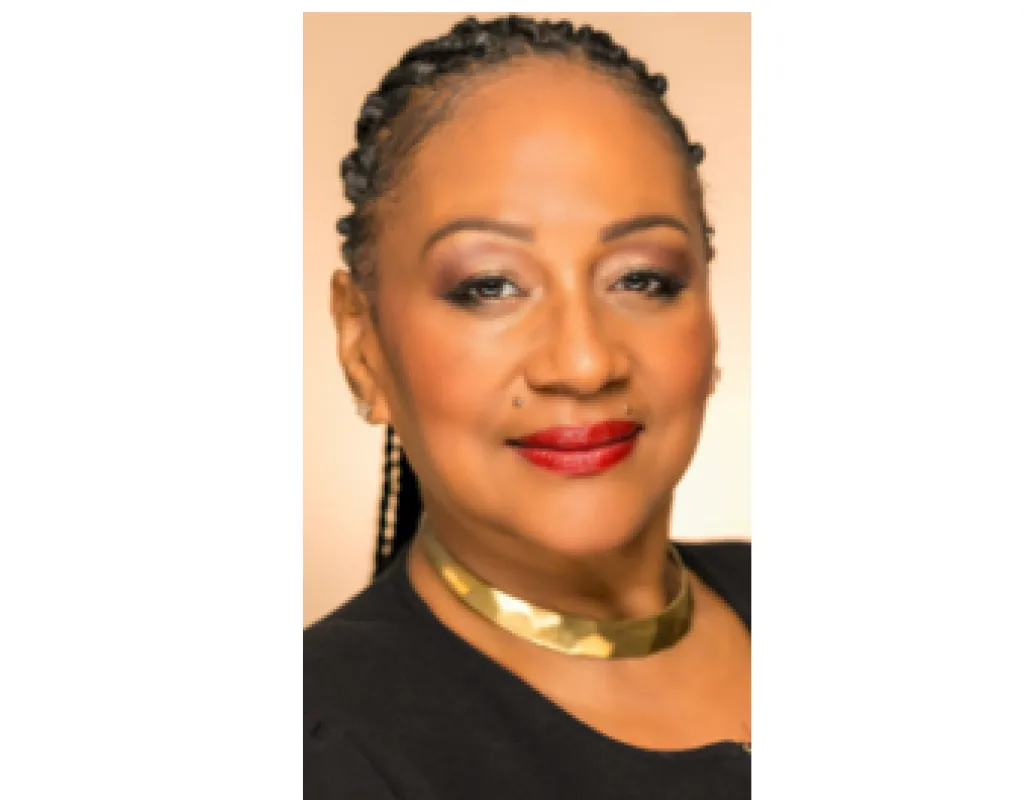
Dr. Gina Fromer is the President and CEO of the Glide Foundation. Before joining Glide, Dr. Fromer served as President and CEO of the Children’s Council of San Francisco from 2019 to 2023. During her time at the Children’s Council, she managed a staff of more than 140 and oversaw a $240 million budget which supported children, their families and early educators in San Francisco. She led the organization’s partnership with the San Francisco Department of Early Childhood along with other City and State agencies, as well as organizations. She holds a Ph.D. in Organizational Development and Leadership from the University of Arizona Global Campus. She also holds a B.S. in Psychology Organizational Leadership from Dominican University of California
And perhaps the answer will not come from any single organization standing alone.
Perhaps the future of Ella Hill Hutch requires a coalition rooted in transparency, intergenerational leadership, cultural trust, and shared stewardship. Perhaps it requires organizations like Youth 1st, neighborhood elders, violence prevention workers, churches, artists, educators, and existing community nonprofits working together instead of being forced into political camps. And perhaps trusted institutions like GLIDE Memorial Church — with its longstanding history of direct service, radical compassion, poverty outreach, harm reduction, and multiracial moral leadership — could help anchor a broader framework capable of rebuilding trust while protecting continuity of services for children and families.
Not as conquerors.
Not as political victors.
But as stewards.
Because what the Fillmore may need most right now is not another power struggle.
It needs conveners.
People and institutions capable of bringing wounded parts of the community back into conversation before another historic Black space becomes another casualty of fragmentation.
And let us be honest about something else.
The children cannot wait for adults to perfect politics.
Anyone who stood near Golden Gate and Laguna after 15-year-old Jayda Mabrey was killed earlier this year understands that truth instinctively.
I remember leaving Ella Hill Hutch that evening and watching police cars flood the neighborhood while young people stood outside crying in shock. Before the city even learned Jayda’s name, the deeper question was already hanging in the air:
Who protects our children before the violence happens?
Twenty police cars can respond after shots are fired.
But one open door… One trusted mentor… One elder who stays late… One after-school program… One violence interrupter… One community center filled with love and structure…can change the trajectory of a young life forever.
That is why continuity matters.
And that is why this conversation must remain grounded not in ego, rumor, factions, or institutional competition — but in love.
Black love.
Not the performative kind.
The difficult kind.
The kind that tells the truth while still protecting the community from collapse.
The kind that says: I may disagree with you, but I will not help destroy what our elders fought to build.
Unity is when I see you stumble, and I do not step over you — I step under you and lift.
Unity is choosing each other on the days it is hard.
And if Black San Francisco is to survive what is coming — displacement, economic pressure, political fragmentation, cultural erosion, and institutional scarcity — then we will need more of that spirit, not less.
Because Ella Hill Hutch is bigger than this controversy.
It is part of the soul of the Fillmore.
Part of the unfinished story of Black San Francisco. Part of the ongoing struggle to ensure that future generations of Black children can still walk through doors where they are protected, challenged, nourished, mentored, and loved.
The children must remain at the center.
Not personalities. Not factions. Not political camps.
The children.
Their safety. Their future. Their joy. Their possibility.
Because community centers at their best are not simply buildings. They are promises.
Promises that despite everything this city has taken, Black San Francisco still believes its children deserve somewhere sacred to belong.
The fire that binds us is older than this controversy.
Older than City Hall. Older than redevelopment. Older than politics itself.
And if we are wise enough to protect it, that fire will carry us forward together.
We are still here.
And that must mean something.
Journalist’s Note: I have spoken to numerous community leaders and advocates regarding stewardship of the Ella Hill Hutch Community Center. I know that Mayor Lurie’s administration is interested in having San Francisco Rec and Park Department operating programs at the Ella Hill Hutch Community Center. I will be speaking to District 5 Supervisor, Bilal Mahmood, this week. It’s easy to criticize and bring down one another; it’s harder to lift each other up and find common ground. If there is anything that you take away from this piece, I hope that it is related to loving each other and not sowing seeds of chaos, violence, and harm. We can do this. I believe. Do you?

ABOUT THE AUTHOR
Malik Washington is a San Francisco-based journalist and co-founder of Destination Freedom Media Group, an independent nonprofit newsroom dedicated to accountability reporting at the intersection of civil rights, public integrity, disability justice, structural accountability within American institutions, and community survival. He has been a published journalist for over 14 years.
His work—published in partnership with the Davis Vanguard—focuses on government power, criminal justice, environmental justice, and the human consequences of policy decisions too often insulated from public scrutiny. Washington’s reporting amplifies the voices of impacted communities while insisting on documentary evidence, transparency, and the unvarnished truth—especially when institutions demand silence.
His work appears on platforms such as Muck Rack and Black Voice News, examining the intersection of justice, governance, and community.
You can reach him via email: mwashington2059@gmail.com or call him at (719) 715-9592.
Facebook: facebook.com/destfreedom13
Instagram: @destinationfreedom13
X: @dest_freedom
Follow the Vanguard on Social Media – X, Instagram and Facebook. Subscribe the Vanguard News letters. To make a tax-deductible donation, please visit davisvanguard.org/donate or give directly through ActBlue. Your support will ensure that the vital work of the Vanguard continues.
Categories:
Breaking News San Francisco


