The streets around the Southside Community Center were filled with dance, community and conversation on Saturday during its annual Juneteenth celebration, marking a longstanding Ithaca tradition. Attendants noted the festival as an opportunity for them to reconnect with community members while also celebrating a year’s worth of hard work at the SCC.
Festivalgoers could visit over 20 tents from crafts to political-based tabling, including Ithaca Democratic Socialists of America, Tompkins County Workers Center, Ithaca Neighborhood Housing and the Ithaca Cortland NAACP, alongside a variety of tents selling Jamaican food and soul food. Many went to Mama Fern’s kitchen, which offered free food made by local community members.
Performers from Ithaca and beyond took stage in front of SCC, including Ade Jembe Fola drummers, Greater Ithaca Activities Center jumpers and the Southside Panthers dance group, who closed off the festival.
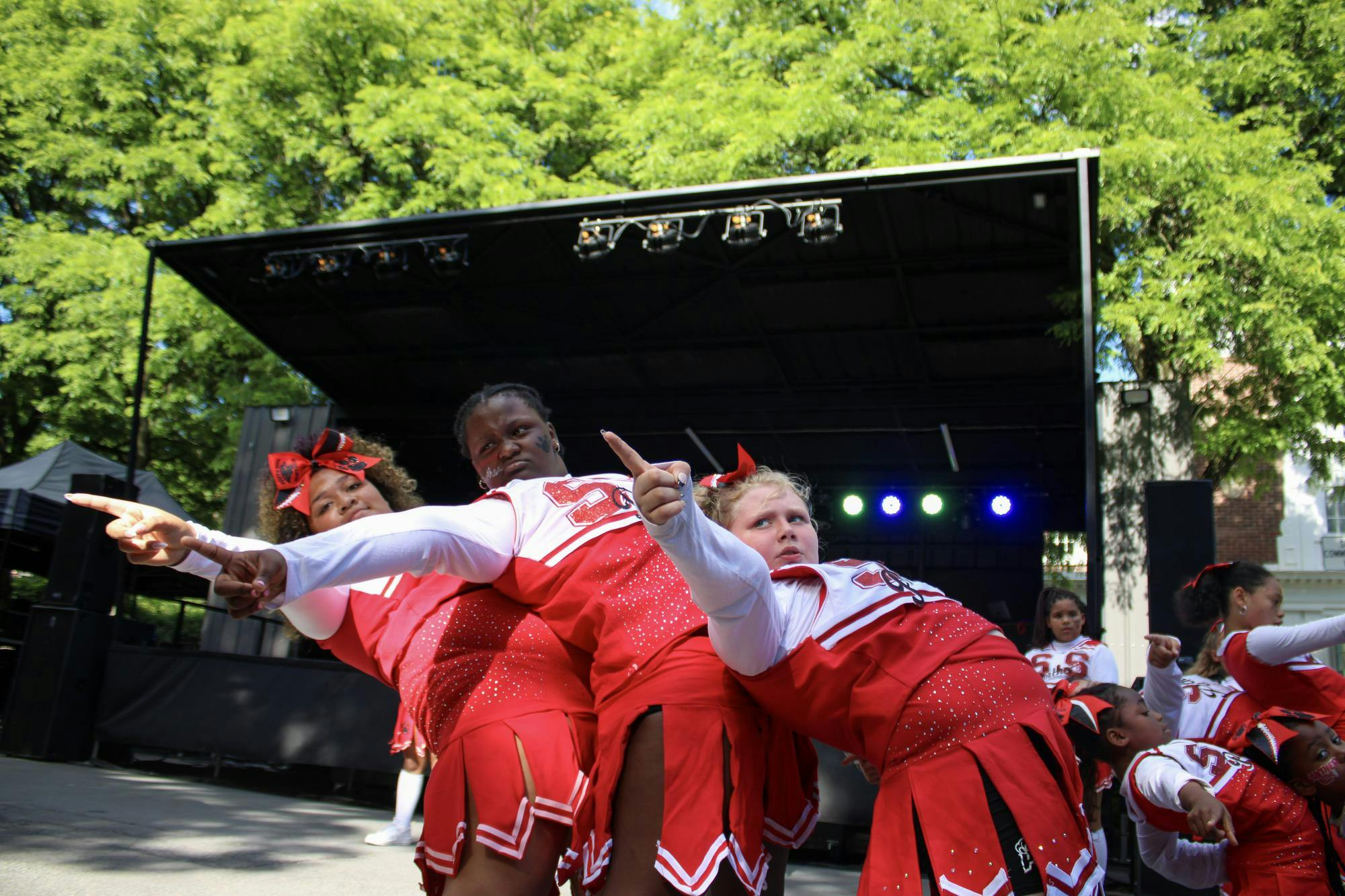
The Southside Panthers dance group performed at the festival.
“This is what Black excellence looks like,” said Leon Holden, board president at the SCC, addressing the crowd. “We need to celebrate each other every single day, not just on Juneteenth.”
Juneteenth, which was recognized as a federal holiday in 2021, celebrates the anniversary of the emancipation of enslaved people on June 19, 1865.
This year’s theme focused on voting, with an image of Shirley Chisholm, the first Black congresswoman, wearing a shirt bestrewn with images of the SCC and phrases including “resist,” and “democracy, wake up,” designed by Terrance Vann, a local artist.
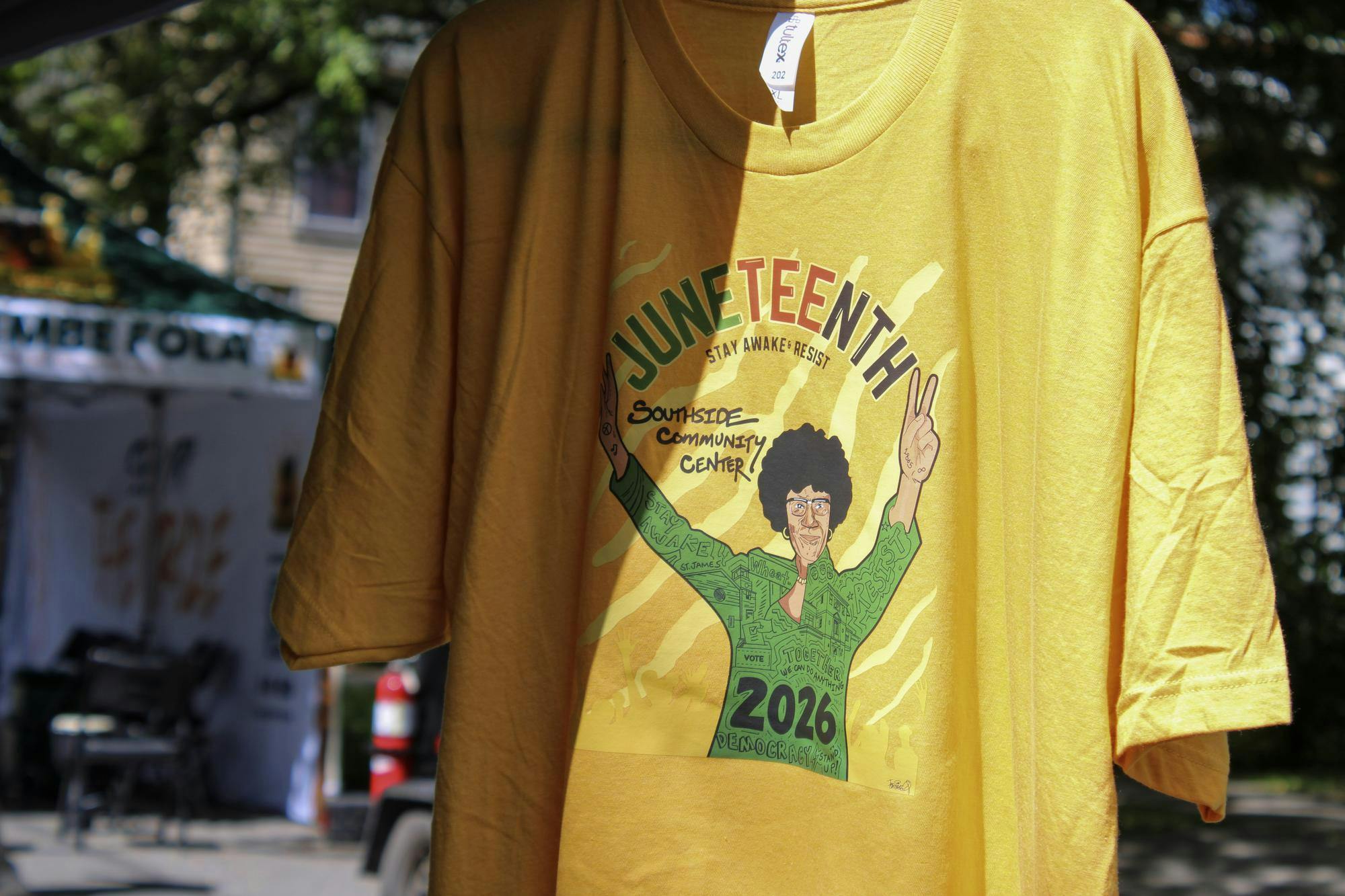
The merchandise reflected this year’s theme of voting.
Kayla Matos, deputy director at the SCC, explained that the theme was chosen to “bring light” to this year’s midterm elections. The SCC is also a voting center, and Matos placed an emphasis on having conversations about voting within the community.
Matos also commented on how the festival provided an important space for Black residents of Ithaca.
“Being that Ithaca is a predominantly white city, a lot of our folks don’t really feel like they have spaces to be themselves or for themselves,” Matos said. “When they come to celebrations like this, or they stop by the center and they see that we are amongst the community of one another, they feel good, they feel excited, they feel like they are actually fitting in and finally having a place that belongs to them.”
Children were able to freely run around and play on SCC’s playground and basketball courts. Tables allowed them to explore their creative side with painting prints.
Chavon Bunch, executive director of the SCC, explained her love for the festival’s family aspect.
“My favorite part is seeing the families and the kids running around. I haven’t seen mine in like two hours… And I just love that … everyone’s looking out for everyone,” Bunch said. “Southside started 92 years ago with women in this neighborhood wanting to look out for other women and kids in the neighborhood, and that’s just what I see out there right now.”
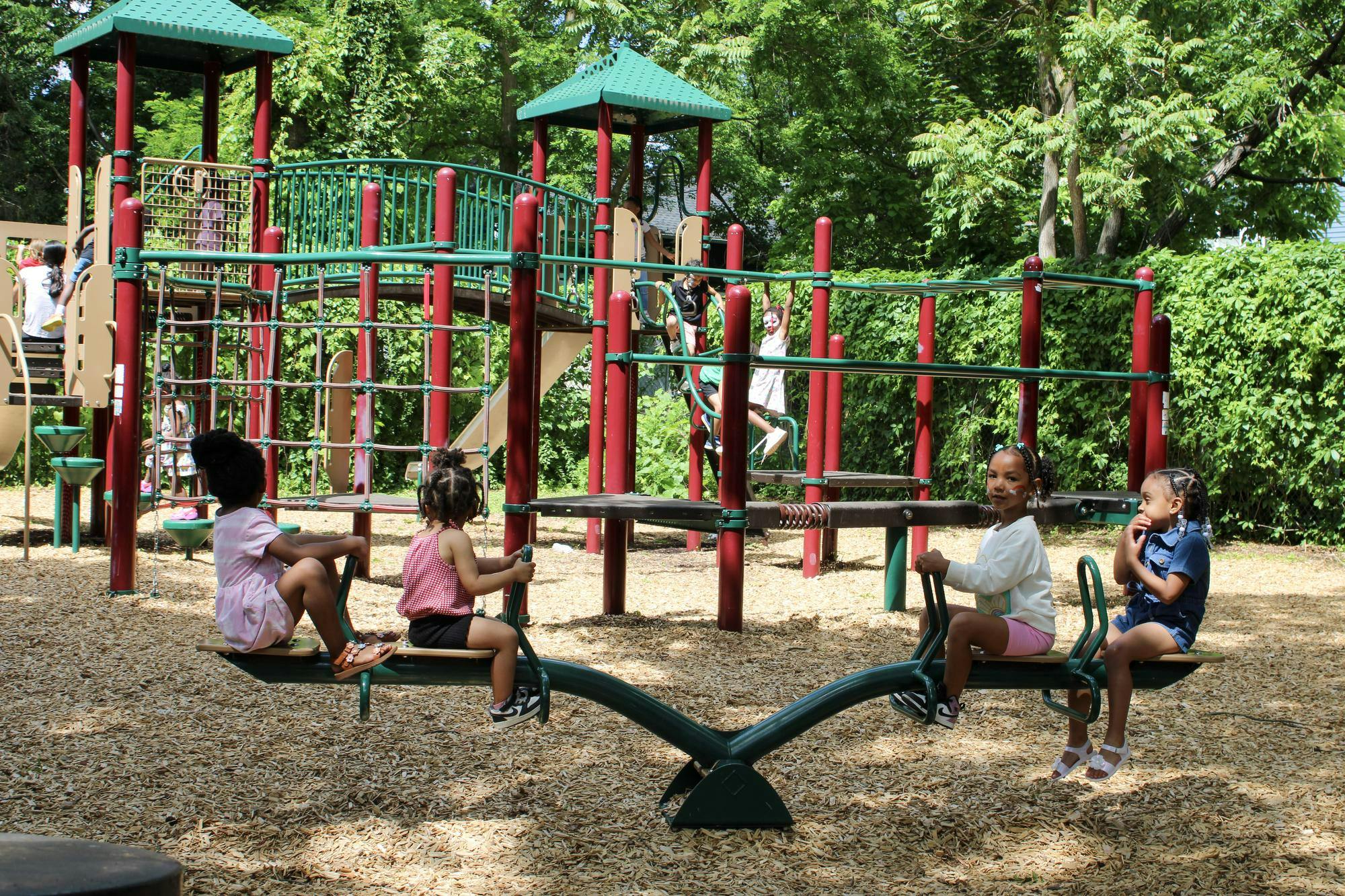
Children played on the community center’s playground during the festival.
Keyshawn Johnson, who moved from Rochester two years ago and attended the festival the first time this year with his daughter, commented on the festival’s safe and family-friendly atmosphere.
“I haven’t seen even a kid argue over basketball games, so it’s been a really good day,” Johnson said, contrasting the festival with larger celebrations in Rochester which he felt were not as peaceful.
Johnson also noted that he wanted to sign his daughter up for the dance groups after watching them perform, noting how the groups accepted everyone in their ranks.
For many members of the community, the festival was not just a celebration but also a reminder of work that still needs to be done.
Taili Mugambee, director of the Ultimate Re-Entry Opportunity and collaborator with the SCC since 2016, expressed a desire for improvement within Ithaca’s Black community, asking “how would [the festival] look different?” if children were given greater access to STEM and other educational resources.
Mikia Eatman, who works at the SCC and runs the Black Momba program supporting Black mothers and caregivers, commented on inequity that still exists in children’s programs.
“If you go to the middle school play in town, you’ll notice that none of the great actors, dancers and performers that you see out here will be in those performances, and the teachers say they don’t try out, but no one’s really trying to get them there,” Eatman said.
She encourages people to recognize the “bigger picture of what Juneteenth is about,” and aim for equity and equal access to programs across Ithaca.
Eatman also criticized gentrification of the Southside neighborhood, alongside a lack of acknowledgement of the struggles that members of the Southside community face.
“A lot of these people are in poverty, but they will be the first person that will organize a nonprofit or a march to help somebody else,” she said. “When you’re a town like this that is so divided, and when the wealth is so inequitably kept up at Cornell … it’s very easy to not be aware of any of [the gentrification].”
Kenneth Glover, former director of Ujamaa Residential College, a program house to serve Black students, called for students at Cornell to volunteer and play a part in their community after observing a decline in student participation.
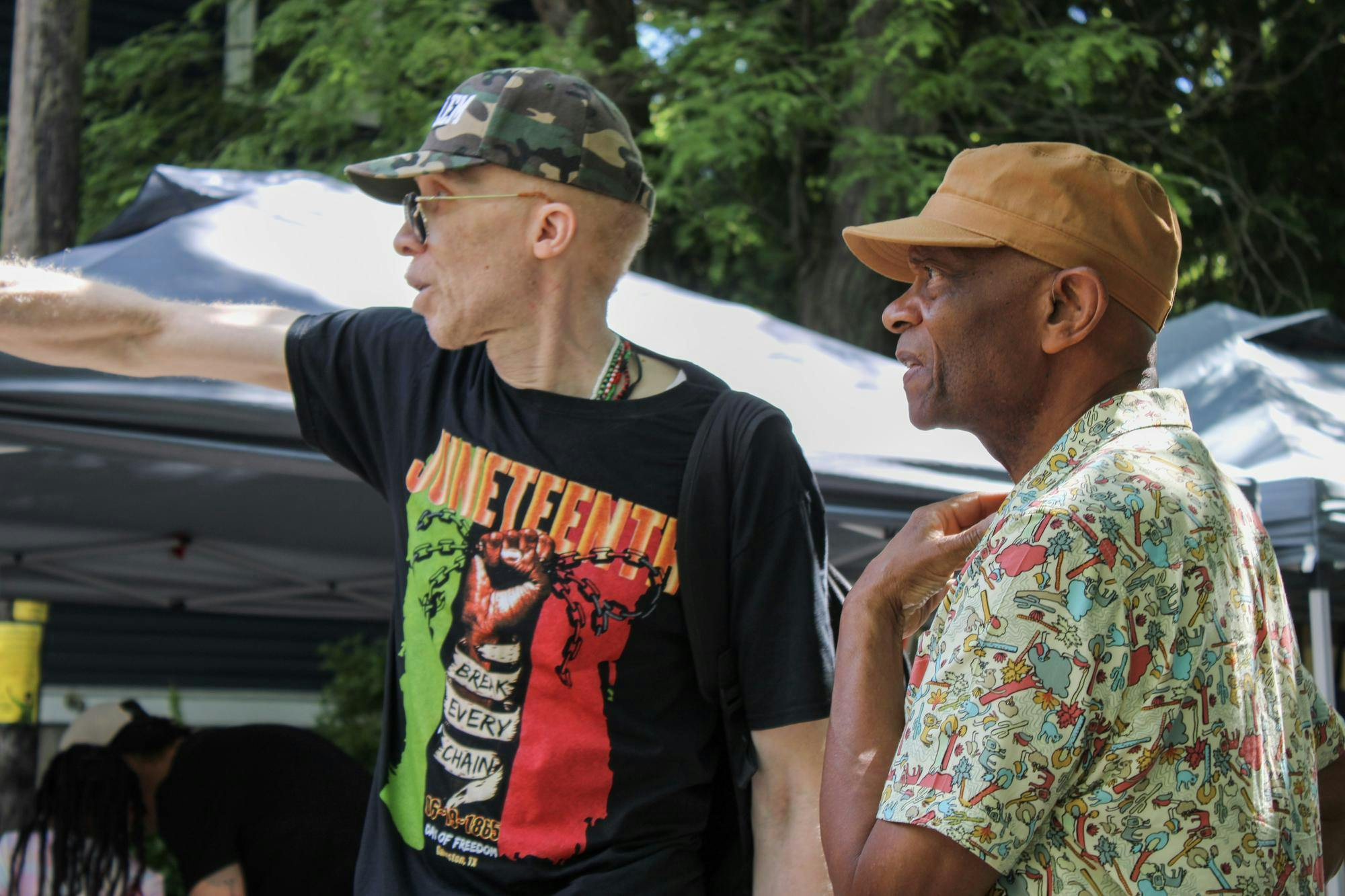
Kenneth Glover, former director of Ujamaa, expressed hope for more community involvement from Cornellians.
“What role will the students at Cornell — African American as well as other students — play in helping to create a better future for you in the community?” Glover asked. “That’s what Juneteenth is about, creating a better future for African American and other youth, but particularly African American youth in the Ithaca community, and that’s why Southside is here.”
To Matos, Juneteenth is about creating educational opportunities, fostering “conversations that are not normally happening in our community,” and “being around Black love, Black joy, Black excellence [and] celebrating liberation.”
Everett Chambala is an assistant news editor for the 144th board. He is working as the primary summer reporter for The Cornell Daily Sun through The Sun’s summer fellowship program.

Everett Chambala is a member of the Class of 2027 in the School of Industrial and Labor Relations. He is a staff writer for the News department and can be reached at echambala@cornellsun.com.
Read More