For some, segregation feels like ancient history. But for Reita Bynum-Smith, 89, Byron Potts, 69, and Ronald Barnes, 74, it was their childhood.
“I’m almost 90,” said Bynum-Smith, a historian and community activist. “I can still visualize being 5 and 6 years old.”
Born in 1936, Bynum-Smith grew up in an America where Black children attended separate schools, Black families were restricted to certain neighborhoods, banks denied them loans and property ownership was often out of reach.
“When I went to West High School, [I learned] that I couldn’t be a cheerleader,” Bynum-Smith said. “I couldn’t do a lot of things because I was a Black student.”
The Civil Rights Act of 1964 prohibited discrimination in public places, but Potts said segregation did not simply disappear. There were unwritten rules.
He recalls going downtown in Columbus to shop, where Black customers were not welcome in certain stores and were not allowed to try on clothes.
“You knew where to stay in your place,” Potts said. “You knew where to live. You knew where to go… It wasn’t on the books. But you knew.”
Strength in Community
In response, Black communities built their own networks of support. Neighborhoods became self-sufficient, with Black doctors, Black teachers and Black-owned businesses serving families shut out of white institutions.
“We were strong because we had to be,” Bynum-Smith said.
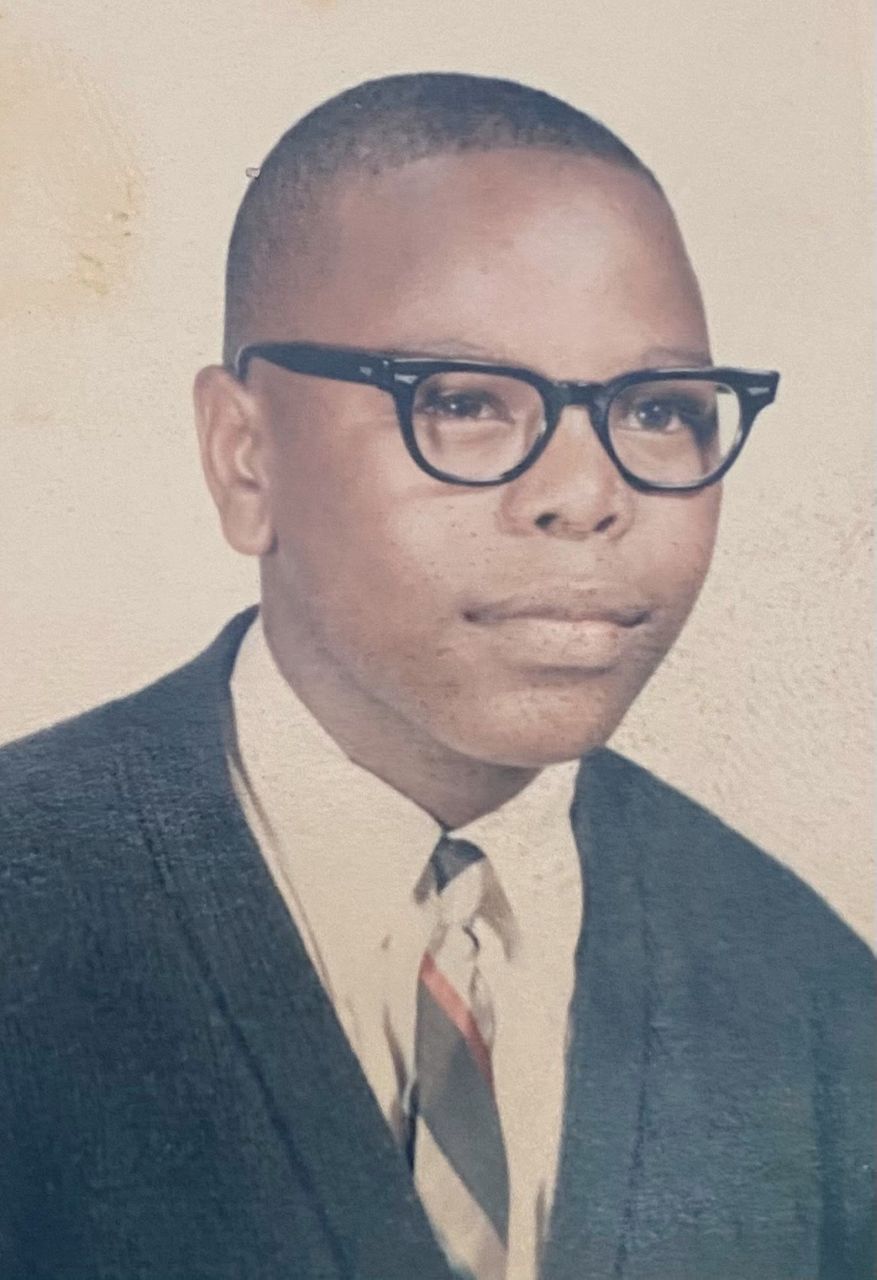
Ronald Barnes in high School. (Submitted Photo)
Barnes said that, even with limited resources, hope endured.
“The Black schools, we received the books that the white kids threw out. We didn’t get any books. Our football team got the equipment from the white school and so that was the growing up and the understanding,” Barnes said. “No, we didn’t have books. No, we didn’t have the best equipment. Our library was barren. But we did have one thing – our Black teachers instilled in us at that time that we could achieve and we were very fortunate of that.”
As one generation survived quietly, the next was taught to speak up, said Bishop Herman Ware Jr., 55, senior pastor of Oakley Full Gospel Baptist Church.
“My parents did not raise us to be mealy-mouthed, quiet,” Ware Jr. said. “They didn’t raise us to be dependent upon the structure of the society. They raised us to be very outspoken and that taught us, in a sense, to keep your head up, look people in the eye when you’re being spoken to, speak directly and speak succinctly.”
Progress Is Not Permanent
Today, as Diversity, Equity and Inclusion programs are being scaled back nationwide, Mwatabu Okantah, a professor in the Department of Africana Studies at Kent State University, said the struggle has not ended — it has evolved. He calls it a reminder that progress is not permanent.
“Black Lives Matter now is just a new name for a struggle for freedom that began in 1619… when the first Africans were traded for supplies at the Jamestown Settlement in Virginia,” Okantah said. “Black History Month is about learning about all of that. And not just for Black people. That is a part that is an essential and a crucial part of the American story… And from this generation’s point of view, what’s being taken away from them is the progress that previous generations struggled to achieve. And so they’re going to have to struggle to get it back, because I think that can happen. You know, but once again, it’s the same struggle.”
Black History Month originated at Kent State University in 1970. Proposed in 1969 by Black United Students and faculty, the first monthlong celebration ran from Feb. 2 to Feb. 28, 1970, expanding on Carter G. Woodson’s “Negro History Week” before receiving national recognition.
“The Black experience can teach everybody that it’s possible, in spite of the odds, to make a way out of no way,” Okantah said.
The recognition of Black History Month later paved the way for other heritage celebrations, including Women’s History Month and Latino Heritage Month.
“It has allowed other populations who have been marginalized in this country to stand up for themselves and to demand that not only should their stories be told, but that their stories should be valued,” Okantah said.
The Gaps That Remain
Even in 2026, centuries after the first enslaved Africans arrived in Virginia, the Center for American Progress reports Black Americans continue to lag behind white Americans in wealth, health and education — disparities driven by structural, historical and systemic policies.
“We are 400 years behind our white counterparts,” Potts said. “We still have de facto segregation. I believe that we’re segregated based on our income, based on our color, where we stay and, and the schools, how they are done. So I still believe that there is some form of segregation.”
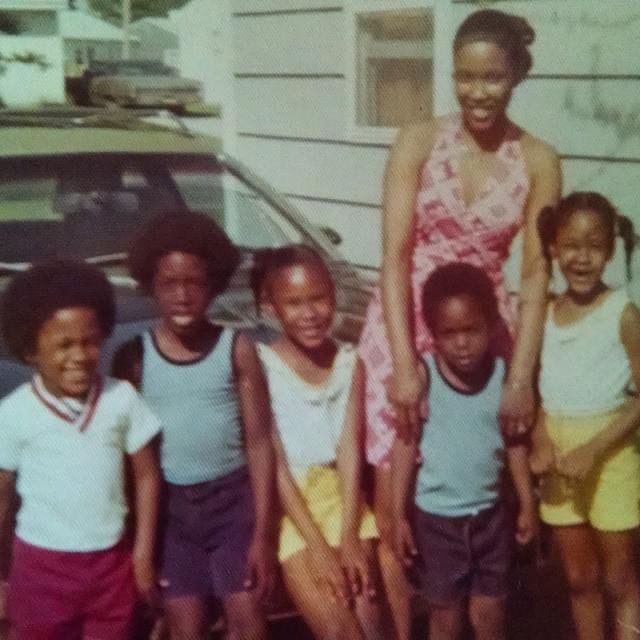
Bishop Herman Ware Jr., (bottom left) with his mother and family. (Submitted Photo)
The organization reports that even when Black Americans achieve higher education, secure strong jobs or purchase homes, they often hold significantly less wealth due to employment discrimination, lower home equity and higher debt levels.
“If you understood how we were denied access to education, you would not sit in class and be on your cell phone and not do your best on tests,” Ware Jr. said. “If you understood the fact that you are even blessed to be in the home that you’re in, you would not destroy your home nor your neighborhood, that type of way.”
Preserving the Stories
Together, these elders share a common message: history must be learned, not ignored.
Using the image of a tree, Bynum-Smith said young people must understand their roots and the branches of their family tree.
“I’m just one of those ancestors of strong Black people who came through a lot of difficulties but made something out of nothing all along,” Bynum-Smith said. “If we know our stories, if we know our roots, then we know how we are the fruit of all of the work of those that came before us.”
Because they said if people do not know where the Black community once was, they may forget how far they still have to go.
“Besides the Bible, you need to know the Constitution and you need to know the Bill of Rights,” Bynum-Smith said. “Today, our children don’t know what’s in there. They don’t know what’s being taken away. That’s why we need to tell our stories.”
As the elders continue to age, they stress the urgency of preserving those stories.
“One day we’ll look up while we’re doing whatever we’re doing, and those elders will not be there,” Ware Jr. said. “And if the elders are not there, those stories are not there. So we have to make time to let those stories be known and learned, because it’s one thing to hear the history. It’s another thing to learn your history, because when you learn it, you will not repeat the same cycles… And if we don’t stand up and take full charge of our identity, somebody else will tell us what our identity is and that’s not right.”
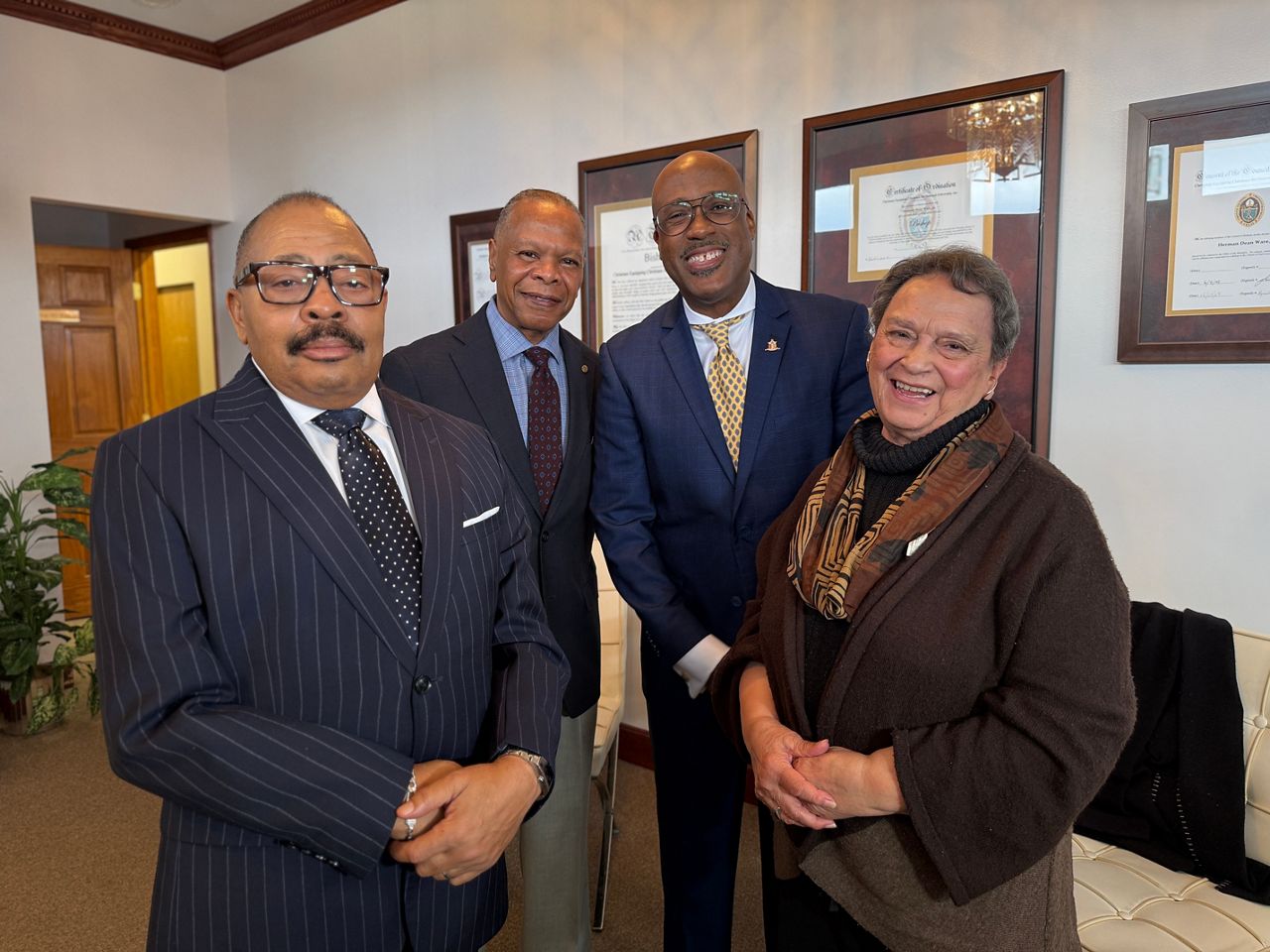
Byron L. Potts, 69 (left) with Ronald Barnes, 74 (middle left), Bishop Herman Ware Jr., 55 (middle right) and Reita Bynum-Smith, 89 (right) at Oakley Full Gospel Baptist Church. (Spectrum News 1/Taylor Bruck)
Potts said elders must also take responsibility for teaching younger generations. He said many parents in his generation did not speak openly about the racism they endured, hoping to shield their children. But silence, he said, can cost valuable lessons.
“I think it’s up to the elders to teach the young to sit down and talk to them about it, and hopefully it will start an interest for them to start reading and learning on their own,” Potts said. “I believe that we have a duty as elders to teach our young people what’s going on, and hopefully that they’ll be receptive to hearing it.”
Barnes said the responsibility doesn’t stop with remembering the past, but with shaping what comes next.
“There are underlying cultures that will prevent and do everything it possibly can to keep people of color and marginalized communities continue to be held down,” Barnes said. “I witnessed history, but I work to shape history. And so we are living history every day. We can shape history and shape it for justice… The young people are witnessing history right now. We didn’t have AI two years ago. We didn’t have Facebook and all that 10 years ago. They are witnessing this as a new history that we’re moving through. Grab it, take a hold of it and shape it for the future — with justice being the clarity.”
For those looking to learn more abobut Black history, Okantah encourages studying leaders who shaped the movement, including Martin Luther King Jr., Malcolm X, W.E.B. Du Bois, Marcus Garvey, Fannie Lou Hamer, Ida B. Wells-Barnett, Rosa Parks and Daisy Bates.