

In a rapidly shifting security landscape across West Africa, new strategies are emerging that challenge traditional assumptions about how nations protect themselves. This story explores a critical transformation unfolding in Burkina Faso, where the nature of threats has evolved beyond conventional battlefields into the fabric of everyday life.
Across the SAHEL region, armed groups are no longer confined to remote areas. Instead, they move fluidly through borders, villages, and cities, blending into civilian environments. This shift has exposed the limitations of purely military responses, which are often reactive and struggle to address threats before they escalate. As highlighted in AFRICA NEWS discussions, the real challenge today is not just eliminating visible threats, but identifying early warning signals hidden within society itself.
To address this, Burkina Faso has introduced a new security framework known as WIBGA-2, replacing the earlier WIBGA-1 model. While WIBGA-1 focused on large-scale enforcement operations, WIBGA-2 represents a deeper structural change. It emphasizes early detection, behavioral monitoring, and the active participation of civilians in identifying unusual activities. This transition marks a move from controlling territory to understanding patterns within it.
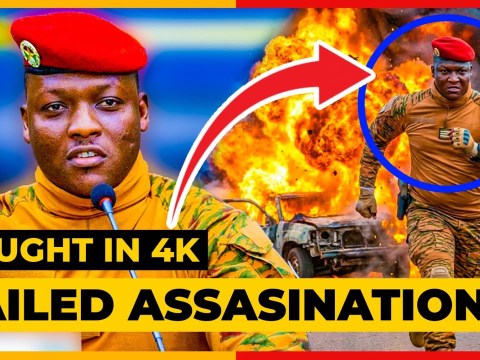
At the center of this transformation is Ibrahim Traore, whose leadership reflects a broader rethinking of national security. Rather than relying solely on centralized forces, his approach integrates communities into the security process. This distributed model aims to create a network of awareness that extends across all levels of society, enabling faster and more proactive responses to potential risks.
However, this shift is not without challenges. Expanding the role of civilians raises important questions about trust, coordination, and the responsible use of information. International observers, including voices within the AFRICAN UNION, have noted both the potential and the حساس balance required to maintain social stability while enhancing security measures.
The implications of WIBGA-2 extend beyond Burkina Faso. As part of a broader trend in the SAHEL and AES-aligned strategies, this model reflects a growing emphasis on regional adaptation and internal capacity building. Countries across Pan AFrica, including South Africa, are closely watching how such approaches evolve and what lessons they may offer for future security frameworks.
Ultimately, this story is about more than one country. It is about a turning point in how security is understood in West Africa and beyond. Can nations move from reactive defense to proactive prevention? Can societies become active participants in their own protection without compromising trust?
As the situation continues to develop, the answers to these questions will shape the future of stability across the region. Stay informed as we continue to explore the strategies, challenges, and transformations redefining security in Africa today.
#IbrahimTraore
#AfricanDiasporaNewsChannel
#BurkinaFaso
#BurkinaFasoPresident
#CaptainIbrahimTraore
#IbrahimTraoré
#PanAfricanism
#IbrahimTraoreBurkinaFaso



Proactive intelligence driven vigilance if possible facial recognition technology
All hail the 3kings
Human Rights Watch taking notes hating on the sidelines
Vdekje per terroristet
That is simply what KGB used to do in those decades, where everybody spies on everybody else. Guess it is advice from Putin. The unseen danger however is if people use the mechanism to solve personal scores by falsely accusing others using fabricated stories. Idi Amin used it with his State Research Bureau and many lives innocently perished!
The first act of protection ❤❤❤
One bold president is making the world panic.
A slap in the face of Western hypocrisy!