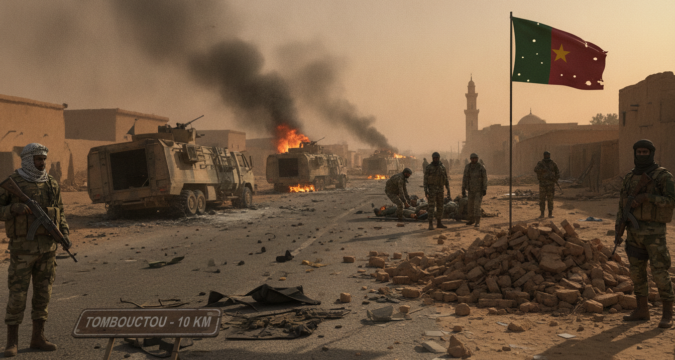
Militants linked to the Islamic State group, operating under the banner of Boko Haram, have claimed responsibility for a recent attack in Mali that resulted in a significant number of casualties. The assault targeted a military outpost in the Mopti region, a volatile area that has been plagued by extremist violence and intercommunal conflict for years. Details emerging from the region suggest the attackers launched a coordinated assault, overwhelming the security forces stationed at the base.
The group’s claim of responsibility, disseminated through its usual communication channels, specifically mentioned the targeting of Malian soldiers. While the exact death toll remains unconfirmed by official sources, initial reports indicate heavy losses for the Malian army, with some unverified accounts suggesting dozens of soldiers may have been killed or injured. The attack underscores the persistent threat posed by extremist groups in the Sahel, despite ongoing international and national efforts to combat them.
This incident is part of a broader pattern of instability in Mali, which has been grappling with a multifaceted crisis involving jihadist insurgencies, political instability, and ethnic tensions. The Mopti region, in particular, has become a hotbed for violence, with various armed groups, including those affiliated with al-Qaeda and the Islamic State, vying for influence and carrying out attacks against both civilians and security forces. The Malian government has struggled to regain control over vast swathes of its territory, leading to a dire humanitarian situation.
The claim of responsibility by Boko Haram, specifically its West Africa Province (ISWAP) faction, highlights the interconnectedness of extremist networks across West Africa. While ISWAP is primarily known for its activities in Nigeria and surrounding areas, it has demonstrated a capacity to project its influence and operations into neighboring countries like Mali. This expansion is often facilitated by porous borders, local grievances, and the exploitation of weak governance structures.
International partners, including France and the United Nations peacekeeping mission (MINUSMA), have been involved in efforts to stabilize Mali and counter terrorism. However, the continued success of these attacks raises serious questions about the effectiveness of current strategies and the need for a more comprehensive approach that addresses the root causes of extremism, including poverty, marginalization, and political exclusion. The latest attack is a somber reminder of the challenges that lie ahead in restoring peace and security to Mali and the wider Sahel region.