By Jim Embry
My journey into the global food movement began on a Black family farm in Madison County, Kentucky, located at the foothills of eastern Appalachia. Long before I ever traveled to Italy, met Carlo Petrini, or sat across a table from Edie Mukiibi, I learned lessons about food, land, family, and community from people whose names would never appear in newspapers or history books but who laid the foundation for my work as an agrarian, intellectual activist. Those lessons from my ancestors1 eventually carried me from Appalachia to Terra Madre, the global gathering of farmers, food producers, Indigenous leaders, educators, cooks, and community organizers convened by Slow Food International in Torino, Italy.
Since 2008, I have had the privilege of serving as a Slow Food USA delegate to Terra Madre eight times.2 My understanding of these connections has also been shaped through opportunities that brought together food systems, environmental stewardship, storytelling, and community leadership. These include participation in the North American Association for Environmental Education’s EE 360 Fellowship (2018),3 receiving the James Beard Foundation Leadership Award (2023),4
serving as an Appalachian Foodways Practitioner Fellow through Grow Appalachia (2024),5 and participating in the Black Appalachian Storytellers Fellowship sponsored by the National Association of Black Storytellers and South & Mid Atlantic Arts (2024–25).6
Through those experiences, I have come to understand something that may surprise many people: the stories of Black Appalachia have much more in common with the stories of farmers and food producers around the world than we often realize.
That understanding has been strengthened by two extraordinary leaders: Carlo Petrini, the founder of Slow Food, and Edward (Edie) Mukiibi, the Ugandan farmer who now serves as President of Slow Food International.
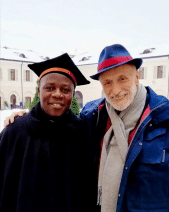
Edie Mukiibi and Carlo Petrini
A few weeks ago, I wrote a reflection on Carlo Petrini and what I called The Great Remembering7—the process of reconnecting humanity to the relationships that sustain life: relationships with soil, seeds, water, culture, community, and one another. As I reflected on Carlo’s legacy, I found myself thinking about Edie Mukiibi and what his leadership means not only for Slow Food but also for communities like ours throughout Appalachia.8
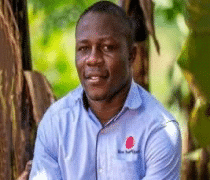
When Edie was elected President of Slow Food International in 2022, becoming both the youngest president in the organization’s history and the first African to hold the position, it represented far more than a routine leadership transition.9
It represented a vision of the future.
And that future has important lessons for Black Appalachia.
The Future Belongs to Young People
Perhaps the most obvious message conveyed by Edie’s election is that the future belongs to young people.
At just thirty-five years old when he assumed the presidency, Edie embodied a commitment to cultivating younger leadership capable of addressing climate disruption, biodiversity loss, food insecurity, and growing inequality.
Yet Edie’s story is also a reminder that leaders do not emerge in isolation. Before becoming president, he was a student.
Like many young people searching for ways to contribute to their communities, Edie benefited from opportunities created by Carlo Petrini’s vision and the broader Slow Food movement. His years at the University of Gastronomic Sciences10 in Pollenzo, Italy, helped prepare him for the leadership role he now occupies.
Today, he is extending similar opportunities to others.


One of the most inspiring dimensions of Edie’s leadership has been his commitment to engaging students and young people. Over the past decade, he has developed a meaningful relationship with the faculty and students of Dillard University, one of America’s Historically Black Colleges and Universities (HBCUs).
His visit to Dillard University in 2015 and his continuing engagement with Dillard students and faculty through Terra Madre gatherings demonstrate a long-term commitment to cultivating the next generation of food system leaders.11
These relationships carry special significance.
HBCUs emerged after the Civil War as educational institutions created to expand opportunities for formerly enslaved Africans and their descendants. Today, partnerships between African leaders such as Edie Mukiibi and institutions like Dillard University create opportunities for renewed dialogue and collaboration across the African diaspora.
In 2024, Edie recorded a special message for participants attending the Black Urban Gardeners and Farmers of Color Conference (BUGS),12 one of the nation’s leading gatherings of Black growers, food activists, educators, and community leaders.13 His message emphasized youth leadership, international solidarity, and the importance of building regenerative food systems.
For those of us living in Appalachia, these efforts resonate deeply.
Black Appalachian communities have always invested in young people. Whether through churches, schools, gardens, family farms, storytelling traditions, or mutual aid networks, our communities have understood that survival depends upon preparing the next generation.
The same principle applies globally.
Just as Carlo Petrini invested in Edie Mukiibi as a young student and emerging leader, Edie is now investing in others. Leadership, like farming, requires cultivation.
The Future Increasingly Lies in Places Often Overlooked
The second lesson of Edie’s presidency is that the future increasingly lies in places often overlooked by centers of power.
For generations, economic and political narratives have tended to focus on major cities, wealthy nations, and powerful institutions of the Global North. Yet many of the most important solutions to contemporary challenges are emerging from places long dismissed as peripheral.
Uganda is one such place.
Appalachia is another.
At first glance, these regions may appear vastly different. One lies in East Africa. The other stretches across the mountains of the eastern United States.
Yet both regions share important characteristics.
Both possess rich agricultural traditions. Both contain communities that have experienced economic marginalization and exploitation. Both have produced people whose resilience, creativity, and ecological knowledge often exceed the recognition they receive.
While Appalachia and Uganda are separated by thousands of miles, both regions remind us that communities often dismissed as peripheral possess knowledge and resilience essential to humanity’s future.
Edie brings to the presidency of Slow Food the perspective of a farmer rooted in the daily realities faced by millions of small-scale food producers. His leadership helps ensure that Slow Food remains a truly global movement rather than one centered primarily in Europe or North America.

Africa has become increasingly important within the Slow Food movement. More than thirty-five African countries now participate in Terra Madre and related initiatives. Under both Carlo Petrini and Edie Mukiibi, African farmers, educators, youth leaders, and community organizers have become increasingly central to the movement’s vision of food, biodiversity, and ecological stewardship.14 The values embodied by these efforts are not unfamiliar to Black Appalachians.
Across Kentucky, West Virginia, Tennessee, Virginia, and other parts of Appalachia, Black farmers and gardeners have long practiced forms of stewardship rooted in cooperation, biodiversity, seed saving, and cultural memory. These traditions often developed in response to exclusion from mainstream institutions and markets.
What Terra Madre reminds us of is that these experiences are part of a larger global story.
The Future Requires Remembering and Repair
One of the most powerful themes I encountered when I first attended Terra Madre in 2008 was Carlo Petrini’s insistence that Europe—and indeed much of the modern world—owes a profound debt to Africa.
Carlo spoke openly about centuries of enslavement, colonialism, extraction, and exploitation. He understood that modern food systems were deeply implicated in those histories.
For Carlo, recognizing this debt was only the beginning.
The challenge was to identify meaningful ways to begin addressing it.
Looking back nearly two decades later, it is striking how far ahead of his time Carlo was. Conversations about reparations and historical justice have become increasingly prominent within international institutions, including the African Union and the United Nations.15
What made Carlo’s perspective distinctive was that he approached these questions through food, culture, and agriculture.
Under his leadership, Slow Food developed initiatives that can be understood as practical expressions of restoration and repair. These included the 10,000 Gardens in Africa Project,16 educational opportunities for African students at the University of Gastronomic Sciences, Indigenous Terra Madre, Earth Markets, the Ark of Taste, and numerous programs supporting women, youth, and small-scale food producers.
These initiatives do not erase centuries of injustice.
No single organization can accomplish that.
But they reflect an important principle: acknowledging a debt carries with it a responsibility to act.
One of the most meaningful forms of repair may be the rebuilding of relationships among people of African descent across continents.
When African leaders such as Edie Mukiibi engage students at Dillard University, when Black farmers from Appalachia meet farmers from Uganda, and when young people gather through Terra Madre to exchange ideas and experiences, they help restore relationships that slavery, colonialism, and segregation sought to sever.
In this sense, education, cultural exchange, and relationship-building become pathways toward healing.
Black Appalachian Voices and the Global Food Movement
As I reflected on Eddie Mukiibi’s leadership, I found myself thinking about several friends whose work has helped shape my understanding of Black Appalachia.
Among the most important is William H. Turner, whom I met when we were students at the University of Kentucky in 1967, and have been lifelong friends.17
Along with Edward J. Cabbell, Turner co-edited Blacks in Appalachia, a landmark 1985 volume that challenged the widespread assumption that Appalachia was an exclusively white region.18 Their work helped establish the visibility of Black Appalachian communities within both Appalachian studies and American history.
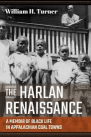
Turner’s later book, The Harlan Renaissance, documents the vibrant Black communities that helped shape Appalachian coal towns while challenging stereotypes that have long rendered Black Appalachians invisible.19
His work reminds us that storytelling itself can be an act of restoration.
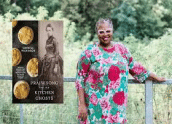
The same is true of Crystal Wilkinson’s Praisesong for the Kitchen Ghosts. Through stories, recipes, and family history, Wilkinson demonstrates how food serves as a vessel of memory, carrying the presence of ancestors through kitchens, gardens, and generations.20
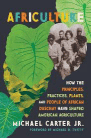
Similarly, Michael Carter’s recent book Africulture traces the profound influence of African people, plants, agricultural practices, and ecological knowledge on American agriculture.21 His work reminds us that African contributions to American food systems are not peripheral—they are foundational.
Taken together, these authors help illuminate an essential truth: food is never simply about food.
Food carries history, culture, memory, and identity.
In this sense, their work resonates deeply with the values embodied by Terra Madre and the broader Slow Food movement.
Organizations such as Black by God and Black in Appalachia22 continue this tradition by recovering stories that have too often been excluded from dominant narratives. Their work reflects the same commitment to cultural memory, dignity, and community resilience that animates Terra Madre. My own participation in the Appalachian Foodways Practitioner Fellowship and the Black Appalachian Storytellers Fellowship deepened my appreciation for the ways food, memory, storytelling, and place remain interconnected throughout the region. These experiences reinforced lessons I first encountered at Terra Madre: that cultural memory is as important to community resilience as economic development or environmental stewardship.
The Six Pathways to a Sustainable Future
Over the years, my experiences in Appalachia and Terra Madre helped me articulate what I call the Six Pathways to a Sustainable Future.23 These pathways emphasize Earth-centered values, Indigenous wisdom, the African American agrarian tradition, youth leadership, networks of seeds and relationships, and transformative systems change.
Together, they provide a framework for understanding why food matters—not only as nourishment but as a foundation for culture, ecology, democracy, and community life.
The first pathway reminds us that sustainable societies depend upon relationships of care, reciprocity, and stewardship. Across Terra Madre gatherings, women farmers, seed keepers, cooks, healers, and organizers have repeatedly demonstrated the importance of these values.
The second pathway highlights Indigenous wisdom and traditional ecological knowledge. Through the Indigenous Terra Madre Network,24 Indigenous leaders from around the world have shared teachings about biodiversity, reciprocity, and responsibility to future generations.
The third pathway draws upon the legacy of George Washington Carver and the African American agrarian tradition. Carver understood that soil health, human health, and community health are inseparable. His insights continue to inspire Black farmers and food activists throughout Appalachia and the South.
The fourth pathway emphasizes youth, art, culture, and creative expression. Edie Mukiibi’s own journey from student to president exemplifies the transformative power of education, mentorship, and cultural exchange.
The fifth pathway focuses on seeds, networks, and relationships. If seeds are biological carriers of memory, Terra Madre is a social carrier of memory. Seeds, stories, people, ideas, and relationships travel.
As someone who has participated in Terra Madre eight times and is returning this September 24-27,25 I have repeatedly witnessed the power of these connections. Farmers from Appalachia sit at tables with farmers from Uganda. Seed keepers from Kentucky exchange stories with Indigenous leaders from Mexico. Community organizers from Detroit learn from rural cooperatives in Africa.
These encounters remind us that local struggles often possess global dimensions.
The sixth pathway embraces transformative vision and systems change. Food is never simply about food. Agriculture influences health, economics, education, culture, biodiversity, and democracy. Agriculture is not merely an economic sector. It is a systemic fulcrum capable of influencing many other dimensions of society.
The Future of Slow Food—and Our Place Within It
Looking back, it is clear that Carlo Petrini’s support for Edie Mukiibi represented more than a leadership transition.
It was the continuation of a long-term vision.
Carlo understood that the future of Slow Food would require younger leadership, deeper engagement with Africa and the Global South, stronger partnerships with Indigenous communities, and a more honest reckoning with historical injustice.
In Edie Mukiibi, he found a leader capable of carrying those aspirations forward.
I have been fortunate over the years to learn directly from many of the people mentioned in these reflections—from Carlo Petrini and Edie Mukiibi to William Turner, Crystal Wilkinson, Michael Carter, and countless farmers, storytellers, educators, and community leaders whose work continues to illuminate pathways toward a more just and regenerative future.
The future of Slow Food will not be built by institutions alone.
Like the best gardens, it will be cultivated through relationships.
From the mountains of Appalachia documented by William Turner, celebrated by Crystal Wilkinson, and nurtured by generations of Black farmers and storytellers, to the farms of Uganda championed by Edie Mukiibi, the future is being shaped by people who understand that food is far more than a commodity…food is culture, memory, relationship, and responsibility.
Most importantly, it is a reminder that our local stories are connected to a much larger human story.
Under Edie Mukiibi’s leadership, the work of the Great Remembering continues. He reminds us that even though the “baton has been passed, our work continues:
“Today more than ever, we must come together around Carlo’s memory — not with nostalgia, but with renewed energy and commitment towards the global movement. The International Participant Assembly awaits us, but above all, the daily work to support Slow Food activities in our territories, communities, and networks will be a concrete way to honor Carlo’s legacy and vision. The baton we have received is not only an inheritance; it is a shared responsibility. And together, as a network, we can continue building a food system that is truly good, clean, and fair for all.” 26
And for Black Appalachians, that story is not happening somewhere else. We are part of it.
Footnotes
1 http://www.sustainlex.org/Embry_WeAreEachOther%27sHarvest_uneditedversion.pdf
2 https://civileats.com/2024/02/22/from-civil-rights-to-food-justice-jim-embry-reflects-on-a-life-of-creative resistance/
3 https://naaee.org/programs/cee-change-fellowship/ee360-community-fellows
4 https://www.youtube.com/watch?v=0lEzmRFuPEw; https://www.jamesbeard.org/stories/the-2023- leadership-award-winners
5 https://www.midatlanticarts.org/media-release/2024-appalachian-foodways-practitioner-fellows announced/
6 https://nabs.memberclicks.net/assets/sponsor-logos/Black%20Appalachian%20Storyteller%20Fellows.pdf
7 https://blackbygod.org/articles/bbg-agriculture/carlo-petrini-and-the-great-remembering-through-food/
8 https://www.slowfood.com/blog-and-news/honoring-carlo-through-daily-commitment-and-the-joy-of-a shared-vision-by-edward-mukiibi/
9 https://www.slowfood.com/our-governance/; https://www.slowfood.com/blog-and-news/slow-food-in 2022-a-historic-year-for-our-movement/
10 https://www.slowfood.com/insights/university-of-gastronomic-sciences
11 Dillard University, “Edward Mukiibi Visit to Dillard University,” November 2015, video, https://youtu.be/qRcbC1xrQb4; “Dillard University Students and Faculty at Terra Madre 2022,” video, https://youtu.be/3Dvx0L1Jt_w.
12 https://www.blackurbangrowers.org/2025-bugsconference
13 Edward Mukiibi, video message to the Black Urban Gardeners and Farmers of Color Conference (BUGS), 2024, https://youtu.be/c-gErGbQPUM
14 https://slowfoodusa.org/ark-of-taste/
15 https://www.theguardian.com/news/2026/jun/06/africa-exception-slavery-reparations-african-union justice
16 https://www.slowfood.com/biodiversity-programs/food-gardens
17 https://blackbygod.org/articles/community-and-culture/honoring-a-life-of-storytelling-accepting-the nabs-zora-neale-hurston-award-on-behalf-of-dr-william-h-turner/
18 https://theafricanamericanfolklorist.com/afro-indigenous-folklore/dr-william-h-turner-black-appalachia coal-camp-memory-and-the-folklore-of-our-people
19 https://booktimist.com/2021/09/07/the-harlan-renaissance-an-interview-with-william-h-turner/
20 https://www.crystalewilkinson.net/new-page-2
21 https://rep.club/products/africulture-how-the-principles-practices-plants-and-people-of-african-descent-have-shaped-american-agriculture?srsltid=AfmBOop1Fc5EtcaqHH6GJSWKLVndQ_KnvGdQAkbT9ot2ewRnEY5HCwA https://africulturepodcast.com/carterfarmsva/
22 https://www.blackinappalachia.org/podcast
23 https://linktr.ee/seedcommonsoe6a
https://sites.google.com/view/systemstransformationpartners/
24 https://www.slowfood.com/thematic-network/indigenous-peoples-network/
25 https://www.slowfood.com/events/terra-madre-salone-del-gusto-2026/
26 https://www.slowfood.com/blog-and-news/honoring-carlo-through-daily-commitment-and-the-joy-of-a-
shared-vision-by-edward-mukiibi/