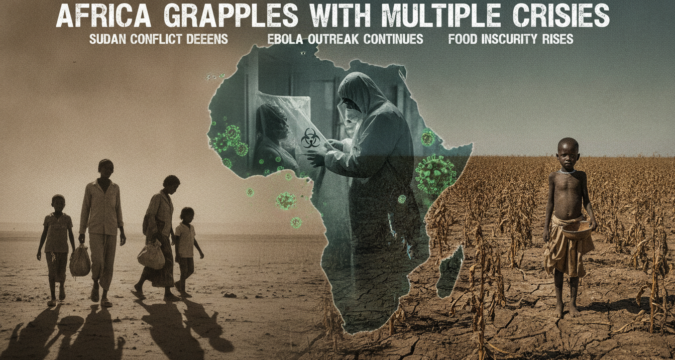
The African continent is currently facing a confluence of severe challenges, with ongoing conflicts, health emergencies, and escalating food insecurity demanding urgent attention. In Sudan, the persistent war continues to exact a devastating toll, with recent reports indicating that over 300 children have been killed or injured. The United Nations has warned that the conflict in Sudan is at risk of further escalation, particularly around the strategic city of El Obeid, which has been under relentless drone attacks. These attacks have targeted civilian infrastructure, including markets, schools, and hospitals, exacerbating an already catastrophic humanitarian crisis. More than 500,000 people are currently at risk in some areas facing siege-like conditions, and the conflict has displaced over 13 million people, pushing millions closer to famine. The UN implores global leaders and the Security Council to intervene to prevent further atrocities and ensure safe humanitarian access.
Meanwhile, the Democratic Republic of Congo (DRC) is battling a significant Ebola outbreak, with the death toll now exceeding 500 confirmed deaths. As of July 6, 2026, the DRC has reported a total of 1,561 confirmed cases, with cases also reported in Uganda. Health officials are struggling to trace thousands of contacts, and there are concerns that unpaid health workers could disrupt containment efforts. The World Health Organization (WHO) is expanding its response, but critical funding and resources remain a challenge. Several health zones across Ituri, North Kivu, and South Kivu provinces in DRC are affected, and Uganda has reported imported cases linked to the DRC outbreak.
Adding to the continent’s woes, northern Nigeria is facing its worst food insecurity in nearly a decade, with the World Food Programme (WFP) warning that over 17 million people across nine conflict-affected states are at risk of severe hunger. This crisis is fueled by ongoing violence, mass displacement, and critical funding cuts to humanitarian aid. Borno State is particularly affected, with over three million people experiencing acute food shortages. The WFP has emphasized the urgent need for $89 million to sustain food assistance, highlighting how the lack of aid and continued conflict are forcing families to flee and leaving opportunities for young people to be exploited by armed groups.
Beyond these major crises, other significant events are unfolding across Africa. Militant attacks linked to Jama’at Nusrat al-Islam wal-Muslimin (JNIM) and their allies have intensified in Mali, leading to coordinated assaults on towns and cities, deepening the country’s instability. In South Africa, tensions remain high amidst rising anti-immigrant sentiment, with reports of Nigerian citizens being killed. Nigeria has accused South Africa of failing to adequately protect foreign nationals, leading to diplomatic friction.
The continent is also witnessing political shifts and security realignments. The new U.S. Assistant Secretary for Africa is expected to visit Nigeria, Ivory Coast, and Mali, signaling a renewed focus on security cooperation, particularly in the Sahel region, as the U.S. seeks to partner with countries in the fight against jihadist groups. Concurrently, Tanzania has reimposed a ban on public political rallies, citing security concerns, a move that has drawn criticism from opposition leaders concerned about democratic space. These multifaceted challenges underscore the complex and interconnected nature of the issues facing Africa today.